
.svg)
Basement Remodel Ideas and What They Cost
by 10 Federal Storage
Published on April 23, 2026
The basement is the most variable-cost room in the house. A simple finish and a full in-law suite are both called "basement remodels" on Pinterest. One costs $15,000. The other costs $150,000. That 10x range is wider than any other room, and it's the reason so many basement projects blow up: homeowners start with a vague vision, a contractor quotes to match the vision, scope creeps from "finish the rec room" to "add a bathroom, egress window, and a wet bar," and a $30,000 project becomes $90,000 before the drywall goes up.
The useful news is that most basements don't need the full in-law suite. Most need one clearly defined thing, a finished rec room, an office, a guest suite with egress, and the discipline to not talk yourself into the other seven while you're down there. Below are the most common basement remodel ideas, what they actually cost, and how to tell which version is worth it for you.
First, Decide If It's a Finish or a Remodel
The word "basement remodel" covers two genuinely different projects, and almost every budget mistake starts with confusing them.
A basement finish turns raw space, bare concrete, exposed joists, visible ductwork, into livable square footage for the first time. Framing, insulation, drywall, flooring, ceiling, electrical, HVAC extension, the works. A basement remodel improves a basement that's already finished. Maybe it was done poorly in the 90s with dark paneling and popcorn ceilings. Maybe you want to carve up an open rec room to add a bedroom. The scope is usually smaller, but the cost can sometimes be higher because you're tearing out before you build.
Within that, most projects fall into one of four scope tiers:
- A DIY stabilization ($1,500–$8,000), seal the floor, improve the lighting, deal with moisture, add storage. The basement stays unfinished but becomes a place you'll actually use.
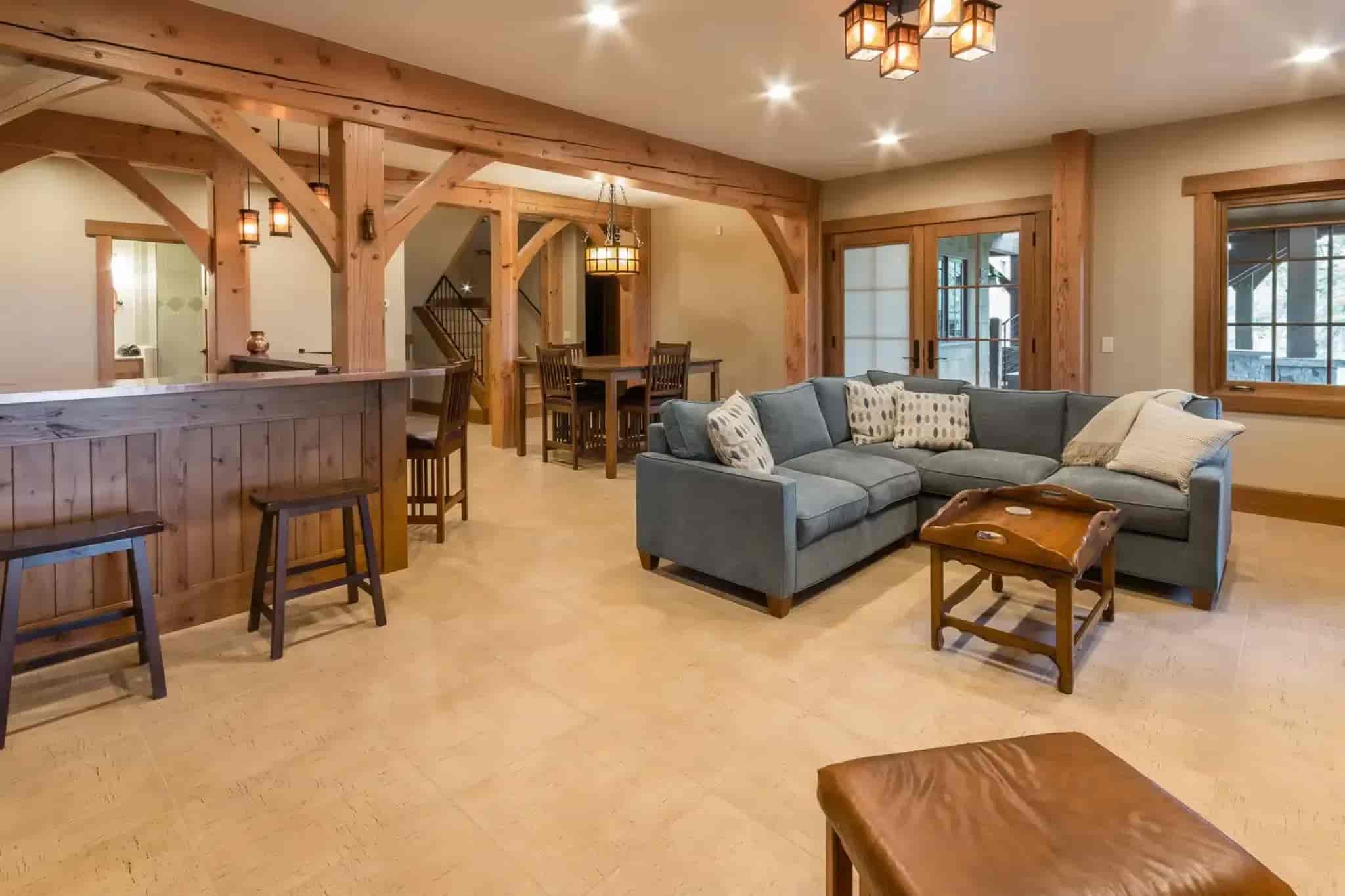
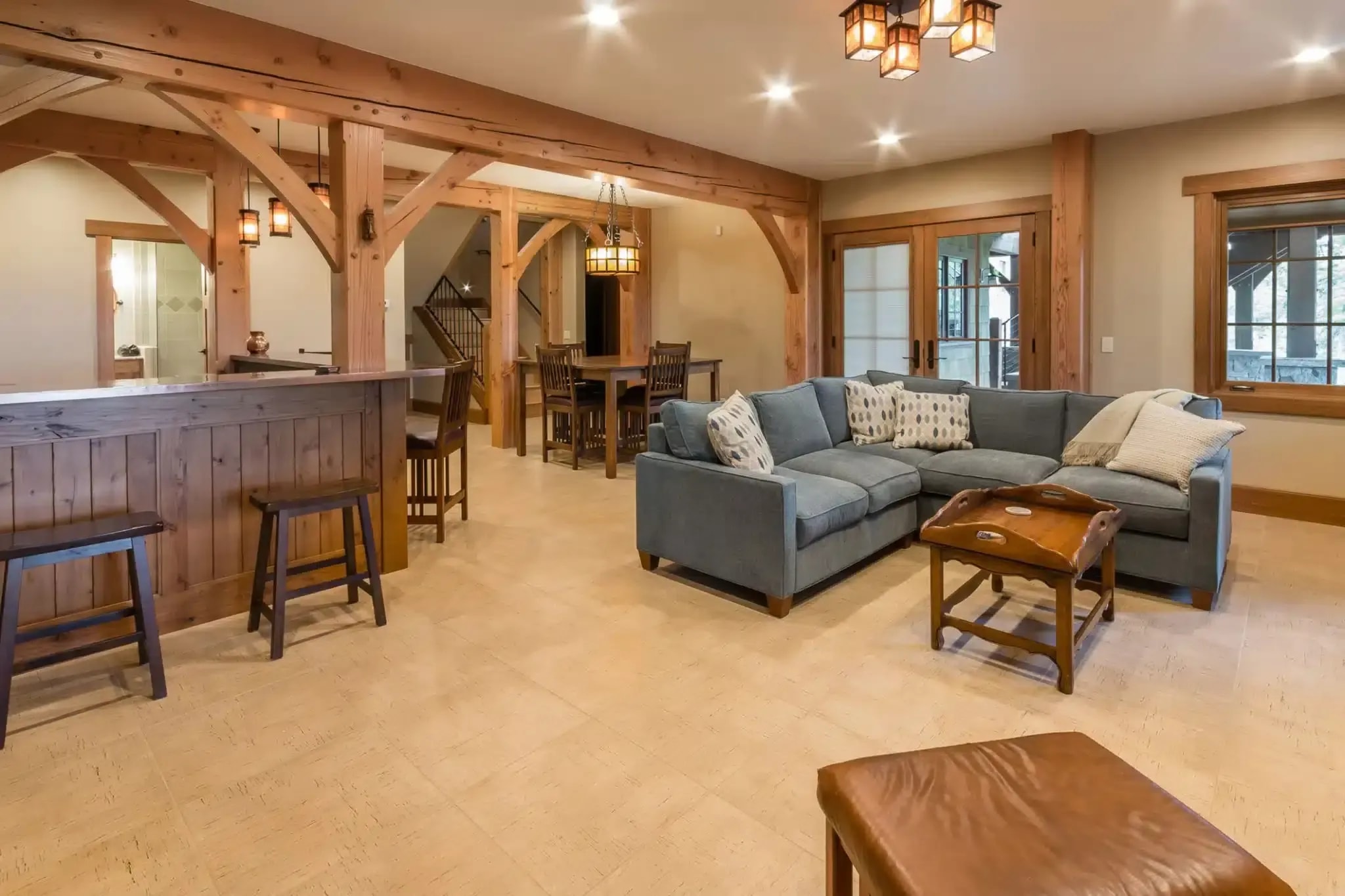
- A basic finish ($20,000–$45,000), framing, drywall, flooring, ceiling, paint, lighting, HVAC extension. One open room or two, no bathroom, no specialty builds. This is what most buyers picture when a listing says "finished basement."
- A mid-range finish with specialty rooms ($45,000–$90,000), everything above plus a bathroom, an egress window, a bedroom, a wet bar, or a dedicated theater. The mid-range is where most serious basement projects land.
- A full in-law suite or ADU conversion ($75,000–$200,000+), bedroom, full bath, kitchenette or kitchen, sometimes a separate entrance. A construction project with permits, inspections, and months of work.
Nationally, the average basement remodel lands around $22,000 to $35,000, with most projects falling between $30 and $75 per square foot. Luxury projects push past $120 per square foot. Labor runs roughly 45 to 65 percent of the total, which is higher than most other rooms, basements require more trades (plumbers, electricians, HVAC, sometimes structural) than a comparable above-grade remodel, and everything that has to go under or through concrete adds labor hours.
One useful benchmark before you read on: Remodeling Magazine's Cost vs. Value Report has consistently placed basement remodels in the middle of the pack for resale return, typically recouping around two-thirds to three-quarters of their cost at resale. That's lower than a minor kitchen remodel but higher than a luxury bathroom. More importantly, the added livable square footage often matters more to buyers than the dollar-for-dollar recoup, because finished basement square footage appraises at a lower rate than above-grade space but still clearly adds value on a listing.
Idea 1: The DIY Stabilization
Budget: $1,500–$8,000 · Timeline: 1–3 weekends
The project for the basement you don't want to finish but do want to use. Seal or epoxy the floor, add real lighting, deal with moisture, set up shelving and a workbench. The basement stays unfinished, exposed joists, concrete walls, but becomes a functional workshop, gym, storage zone, or hangout space. It's also the right first step before any larger finish, because the moisture work has to happen anyway.
What goes into it:
- Concrete floor epoxy or porch paint, $2–$4 per square foot DIY in materials, $5–$10 installed
- A solid dehumidifier, $200–$400 for a 50-pint unit, the single best investment in most basements
- LED shop lights or plug-in recessed fixtures, $200–$800 depending on how many
- Insulating the rim joists with rigid foam, $200–$500 in materials, one weekend
- Shelving, pegboard, a workbench, $300–$1,500 depending on ambition
- Sealing any visible cracks in the foundation with hydraulic cement, $30 in materials
The honest outcome here is a basement that's clean, dry, bright, and usable as a gym, shop, or rec zone, not a "finished" basement. That's a legitimate endpoint, not a compromise. Plenty of homeowners stop here and are happier than the ones who spent $40,000 on a rec room they use twice a month.
Idea 2: The Basic Finish
Budget: $20,000–$45,000 · Timeline: 4–8 weeks
The most common basement project in America. You frame walls against the foundation (with a vapor barrier and rigid foam behind them), insulate, drywall, put down flooring, install a ceiling, extend HVAC, add outlets and lighting, and paint. One open rec room or two defined rooms, no bathroom, no specialty builds. The result is a finished basement that a real estate listing can honestly call finished.
What goes into it for a typical 600 to 900 square foot basement:
- Framing, insulation, and vapor barrier ($3,000–$8,000)
- Drywall, taping, and finishing ($3,500–$9,000, pros will get a much better finish than most DIYers)
- Ceiling: drop, drywall, or hybrid ($2,000–$7,000)
- Flooring, usually LVP for moisture reasons ($3,000–$8,000 installed)
- Electrical: new circuits, outlets, recessed LEDs ($2,500–$6,000)
- HVAC extension or mini-split addition ($1,500–$5,000)
- Paint, trim, interior doors ($1,500–$4,000)
- Permits and inspections ($300–$1,500)
This is the tier that adds the most livable square footage per dollar, and it's where the Cost vs. Value math works best. Skip the specialty rooms, keep the layout simple, and you end up with a flexible space that can be a family room, a playroom, a home gym, a home office, or any combination, without the cost of purpose-built builds.
Idea 3: The Home Office or Flex Space
Budget: $5,000–$20,000 within an already-finished basement · Timeline: 2–4 weeks
If your basement is already finished, carving off a dedicated office from the open rec space is one of the highest-impact small projects you can do. Basements make unusually good offices, quiet, naturally cool, separated from household traffic, and the lighting and sound considerations that make them feel cavey are cheap to fix.
The scope typically involves building one or two partition walls, adding a door, upgrading the lighting, running a couple of dedicated circuits for gear, and sometimes adding a mini-split for better temperature control if the existing HVAC barely reaches. Where the money goes:
- One or two framed-and-drywalled partition walls ($1,500–$4,500)
- A prehung interior door with hardware ($400–$1,000 installed)
- Layered lighting, recessed cans plus task lighting ($600–$2,500)
- Two to three dedicated 20-amp circuits for workstation gear ($500–$1,500)
- Optional: a ductless mini-split for climate control ($3,500–$6,000)
- Optional: soundproofing the shared wall with resilient channel or double drywall ($500–$2,500)
The upgrade that's easy to overlook here is lighting. A basement office lit by a single overhead fixture feels like a storage closet. The same room with three or four recessed cans plus a desk lamp feels like a real office. That's a few hundred dollars of fixtures and a half-day of electrician time.
Idea 4: The Home Gym
Budget: $3,000–$30,000 · Timeline: 1–4 weeks
Home gyms are among the most requested basement uses and the cheapest to set up well, because the basement already has what a gym needs: concrete subfloor that can carry heavy weight, cool temperatures, few windows, and enough ceiling height for most movements. The major build-out is flooring and lighting.
Three rough tiers:
- The budget home gym ($3,000–$7,000), rubber horse-stall mats over the existing concrete, a rack and barbell, adjustable dumbbells, a mirror, better lighting. Zero construction.
- The mid-range home gym ($7,000–$15,000), proper rolled rubber or interlocking rubber flooring installed over vapor barrier, dedicated circuit and outlets for equipment, improved ventilation, wall-mounted storage, a platform for Olympic lifts.
- The premium home gym ($15,000–$30,000+), all the above plus a functional trainer or cable system, a sauna or cold plunge, a quality mirror wall, maybe a mini-split for serious temperature control during summer workouts.
Two cautions. First, check your ceiling height honestly before buying a squat rack, anyone six feet or taller needs about eight feet of finished ceiling to press overhead in a rack, and plenty of basements come in at seven feet or less. Second, if you're doing any lifting involving dropped weight, budget for proper rubber flooring over a subfloor layer or platform. Dropping a 225-pound deadlift on bare concrete, even with a thin mat, will crack your slab.
Idea 5: The Home Theater or Media Room
Budget: $8,000–$60,000 · Timeline: 3–8 weeks
Basements are almost perfectly suited for home theaters. Low ambient light, few or no windows, isolation from household noise, concrete walls that already damp some sound. A shelf-pull TV with a soundbar and a sectional is the $3,000 version; a tiered-seating, projector-and-screen, acoustically-treated room is the $50,000 version. Most people are happier with something in the middle.
What drives the price range:
- The big-TV media room ($8,000–$15,000), 75-to-85-inch TV mounted on a feature wall, quality soundbar or modest 5.1 system, sectional or theater-style recliners, blackout shades on any windows, dimmable recessed lighting.
- The mid-range theater ($15,000–$30,000), short-throw or ceiling-mounted projector, 100-to-120-inch fixed screen, full 5.1 or 7.1 surround with in-ceiling or in-wall speakers, basic acoustic panels, tiered seating for two rows.
- The dedicated theater ($30,000–$60,000+), proper projector in an acoustically-treated room, tiered platforms for seating, dedicated subwoofers, wall fabric treatment, soundproofed walls and ceiling, smart lighting control, sometimes a snack bar.
The single biggest value upgrade at the mid tier is doubling up the drywall on shared walls and ceilings with a damping compound like Green Glue between the layers. A few hundred dollars of material, an extra day of drywall labor, and the noise bleed to the rest of the house drops dramatically. Do this before the finish work if you're planning for theater, adding it later means tearing out drywall.
Idea 6: The Guest Suite With Bedroom and Bath
Budget: $35,000–$80,000 · Timeline: 8–14 weeks
This is where basement projects jump from finishing to serious construction. To legally call a basement room a bedroom, it needs an egress window, a window big enough for a firefighter to climb through, with a window well deep enough to stand in and a way out of the well. Then the bath adds a plumbing rough-in that usually involves cutting the slab. Those two line items alone add $15,000 to $30,000 before you've hung a single piece of drywall.
Components for a typical guest suite:
- Egress window with excavation, cutting the foundation, window well, and drainage ($3,500–$8,500)
- Full bathroom rough-in, including breaking the slab for drain lines ($3,000–$8,000 for rough-in alone)
- Full bathroom finish, toilet, vanity, tub or shower, tile, vent, lighting ($8,000–$18,000)
- Bedroom framing, insulation, drywall, closet ($3,500–$9,000)
- Code-compliant door sizing, smoke and CO detectors, possibly a second egress path ($500–$1,500)
- The share of general finish work, flooring, ceiling, HVAC, paint, allocated to that portion of the basement
Two details that trip up homeowners. First, a "basement bedroom" that's called one in a listing but doesn't have egress is a legal problem waiting to happen at resale; inspectors and appraisers flag it, and it cannot be counted as a bedroom in the home's square footage. Adding egress retroactively costs $3,000 to $8,000 but almost always pays for itself in appraised value. Second, if your basement floor sits below the level of the main sewer line, common in deeper basements or sloped lots, you need a sewage ejector pump, which adds $1,500 to $3,500 and makes the bathroom slightly noisier. Your plumber will tell you which situation you're in on the first walk-through.
Idea 7: The Wet Bar or Entertainment Zone
Budget: $8,000–$35,000 standalone · Timeline: 2–6 weeks
A bar area is one of the most visible value-adds at resale and one of the easiest to overbuild. A simple dry bar with base cabinets, a solid countertop, a beverage fridge, and some pendant lighting can be installed for under $10,000 and will do 90 percent of what a fully-built wet bar does for $30,000.
Cost depends primarily on whether you add plumbing:
- A dry bar ($8,000–$15,000), base and wall cabinets, quartz or solid-surface counter, beverage fridge, lighting, seating. No plumbing, no drain cuts.
- A wet bar with a sink ($15,000–$25,000), everything above plus a sink, a faucet, plumbing rough-in, and a drain tied into the main or an ejector pump. Adds $3,000 to $8,000 depending on distance to the nearest drain line.
- A fully-loaded entertainment bar ($25,000–$35,000+), wet bar plus kegerator, ice maker, dishwasher drawer, wine fridge, upgraded cabinetry, custom back-bar shelving, stone feature wall.
A few honest notes on bars. A full-size ice maker requires a water line and a drain, which is non-trivial in most basements. A kegerator runs on electricity alone but the kegs are heavy and awkward to swap. The most-used bar feature in most houses is the beverage fridge, and it costs under $500 to add one to any cabinet run. Think about what you'll actually use before specifying any of the rest.
Idea 8: The In-Law Suite or ADU Conversion
Budget: $75,000–$200,000+ · Timeline: 4–7 months
The full accessory dwelling unit. Bedroom (often two), full bathroom, kitchen or kitchenette, living area, and in most cases a separate entrance, either a walkout basement door or an exterior stair with its own code-compliant landing. This is not a basement finish with extra rooms; it's a second residence inside your house, and it comes with the permit load, inspection schedule, and cost to match.
Where the money goes beyond a standard mid-range finish:
- A separate exterior entrance, either enlarging an existing walkout or cutting a new one with a proper stair well ($8,000–$25,000)
- A second full kitchen with cabinets, counters, appliances, and venting ($15,000–$40,000 for a kitchenette, $25,000–$55,000 for a full kitchen)
- Separate HVAC zoning or a dedicated mini-split system ($4,000–$10,000)
- Potentially a second electrical subpanel ($1,500–$4,000)
- Potentially separate water heater or on-demand unit if usage justifies it ($1,500–$4,500)
- Additional soundproofing between the suite and the main house
- Permits, engineering, and potentially zoning variances depending on jurisdiction
Before committing to this path, check your local ADU ordinance carefully. Some jurisdictions are actively permissive and even incentivize conversion. Others require added parking, impose occupancy restrictions, forbid short-term rental, or treat the conversion as a tax reassessment event. A basement ADU can generate meaningful rental income or house aging parents affordably, or it can turn into a regulatory headache that never legally operates as intended. Know which jurisdiction you're in before the first sledgehammer swing.
Where the Money Actually Goes
Every basement project is built from the same handful of components. Here's the deeper breakdown for the decisions you'll make with a contractor, a plumber, or at the flooring store.
Waterproofing and Moisture Management
Do this first, or don't do the rest. A basement that takes on water, from hydrostatic pressure, a cracked foundation, poor grading outside, or a window well with no drainage, will destroy a finished interior faster than you can say "musty smell." Before any framing, address visible water issues. Interior perimeter drain systems cost $4,000 to $12,000 installed. Exterior waterproofing with excavation and a membrane is the gold standard at $8,000 to $20,000 but invasive. A sump pump with battery backup is a $500–$1,500 insurance policy that every finished basement should have. Budget $5–$10 per square foot for interior waterproofing measures layered in during the finish, vapor barriers, rigid foam against the foundation, moisture-resistant drywall at the bottom courses.
Framing, Insulation, and Drywall
Basement walls aren't framed the way upstairs walls are. The right assembly, from the foundation out, is usually: rigid foam insulation directly against the foundation (sealed at edges), then a stud wall with batt insulation in the cavity, then drywall. The rigid foam is what prevents condensation on cold foundation walls from rotting the framing later. Total cost for framing, insulation, and vapor barrier lands at $3–$8 per square foot. Drywall and taping runs another $1.50–$3 per square foot for hang and finish, with pro labor being noticeably smoother than DIY.
Ceilings: Drop vs. Drywall
The single biggest functional-versus-aesthetic decision in a basement finish. A drywall ceiling looks like a real ceiling, preserves nearly all your headroom, and is what most buyers expect in a finished basement. A drop ceiling (suspended grid with tiles) costs more per square foot installed but gives you permanent access to the plumbing, HVAC, and electrical runs that usually live in basement ceilings.
- Drywall ceiling, $1.50–$4.50 per square foot installed. Loses about a half-inch of height. Permanent; every future repair means cutting and patching.
- Drop ceiling, $3–$6 per square foot installed with standard tiles, $8–$15 per square foot with premium coffered or wood-look tiles. Loses 3–6 inches of height. Easy utility access forever.
- Hybrid approach, drywall in the main living areas, drop in mechanical/laundry zones. Most flexible, most common in larger finishes.
If your basement is already tight on headroom, seven feet or less at the joists, drywall is usually the only option that still clears the seven-foot finished-ceiling minimum that most codes require for habitable space.
Flooring
Basement flooring has to survive moisture. That eliminates most solid hardwood and drives most projects to one of three options:
- Luxury vinyl plank (LVP), $3–$8 per square foot installed. Waterproof, warm underfoot, comes in convincing wood looks, DIY-friendly click-lock installation. The dominant choice in basement finishes for good reason.
- Porcelain or ceramic tile, $8–$20 per square foot installed. Fully waterproof, cold without an area rug, durable forever. Good in bathrooms and entry zones, overkill for a whole basement.
- Carpet over subfloor, $3–$7 per square foot installed. Warm and quiet, but a moisture event will ruin it. If you go carpet, install over a dimpled plastic subfloor panel like DRIcore that lifts the pad off the slab.
Engineered hardwood and laminate are both technically options in very dry basements with vapor barriers, but the risk-adjusted math rarely favors them over LVP.
Electrical and HVAC
Most basement finishes need several new dedicated circuits, one or two for lighting, one for outlets, often a dedicated circuit for any significant appliance (beverage fridge, home-gym equipment, home-theater gear). Budget $2,500–$6,000 for electrical on a typical finish, more if you're upgrading the main panel to accommodate. For HVAC, extending existing ductwork into the basement runs $1,500–$4,000 and works well if the main system has capacity. If it doesn't, or if you want independent temperature control in a media room, office, or suite, a ductless mini-split is usually the better answer at $3,500–$6,000 installed per zone.
Egress Windows
Required for any basement bedroom by code in every state, and cheap insurance against a tragedy regardless. A standard egress window install runs $3,500–$8,500 and includes the window unit, cutting the foundation, excavating the window well, installing the well and drainage, waterproofing the opening, and permit fees. Block foundations are cheaper to cut than poured concrete. Deep basements below grade level require deeper wells with integrated steps, adding a few hundred dollars. An egress window retrofitted to legalize an existing basement bedroom almost always recoups its cost at resale through the appraised-bedroom upgrade.
Basement Bathrooms
The single most expensive component of any basement project, and the one where costs vary most based on what's already in place.
- If your builder roughed in plumbing, most homes built in the last 30 years have capped drain stubs under the basement slab for a future bathroom. A finish-only bathroom over existing rough-ins runs $8,000–$15,000 all in.
- If you're cutting the slab for new rough-in, the plumber jackhammers the concrete, trenches for drains, ties into the main line, repatches. Rough-in alone runs $3,000–$8,000; the full bath lands at $12,000–$25,000.
- If your basement is below the sewer line, you need a sewage ejector pump ($1,500–$3,500) or an upflush macerating toilet system ($1,500–$2,500 for the unit).
- The upflush option, a macerating toilet lets you add a bathroom without breaking the slab at all. Slightly noisier, slightly more maintenance, but can save $5,000+ versus traditional rough-in in the right situation.
Permits and Inspections
Almost every basement finish requires a permit, and most jurisdictions require separate permits for framing, electrical, plumbing, and HVAC. Total permit cost lands at $300–$2,000 for a standard finish and up to $3,500 for a full ADU conversion. This is not an area to skip. Unpermitted basement finishes consistently cause problems at resale, a buyer's inspector will flag them, an appraiser won't count the square footage, and the mortgage lender may require remediation before closing. The permit fee is always cheaper than the retroactive permit fee.
What's Worth Doing Yourself
Basements have a wider DIY lane than kitchens. The finishes are more forgiving, the stakes are lower in terms of daily function, and most of the trades-heavy work is concentrated at the beginning of the project. A homeowner willing to put in weekends can realistically handle a meaningful portion of a basic finish and save $8,000–$15,000 in labor.
Fair game to tackle yourself:
- Demolition of any existing partition walls, ceilings, or flooring
- Framing straight interior walls on flat floors (basement perimeter framing against foundation is more technical and benefits from a pro)
- Installing batt insulation in stud cavities
- Hanging drywall (tedious but not hard)
- Painting everything, walls, ceilings, trim
- Installing luxury vinyl plank flooring
- Trim, baseboards, door casings
- Swapping light fixtures where a junction box already exists
- Installing prehung interior doors
- Sealing foundation cracks with hydraulic cement
- Installing basic shelving and built-ins
- Backfilling plumbing trenches and patching the slab after the plumber runs drain lines
Worth hiring out:
- Waterproofing and drainage system installation
- Cutting the foundation for egress windows (specialized saws, structural implications)
- Plumbing rough-in below the slab
- Any electrical work involving new circuits or the panel
- HVAC extensions, duct modifications, or mini-split installation
- Drywall finishing and taping, DIY drywall hanging is fine, but the mud work separates amateur from pro more obviously than almost any other trade
- Structural work of any kind
- Gas line work
- Permit-inspected rough-ins (you can do the work yourself in some jurisdictions, but the permit implications vary and the liability sticks)
The pragmatic middle path for most basement projects: do the demo, framing, insulation, drywall hanging, flooring, and paint yourself; hire pros for waterproofing, rough-in plumbing, electrical, HVAC, and drywall finishing. That split consistently produces the best cost-to-quality ratio on basement finishes.
The Storage Problem Nobody Plans For
Ask any basement-finish contractor what surprises homeowners most about the project, and it isn't the cost or the schedule. It's that their basement was holding far more stuff than they realized, and all of that stuff has to go somewhere, not for a week, but for two to four months.
The average unfinished basement quietly holds an extraordinary volume of belongings: holiday decorations, off-season clothing, suitcases, sports and recreation gear, baby gear the kids have outgrown, tools and tool chests, leftover building materials, old electronics, photo albums and memorabilia boxes, wedding keepsakes, spare furniture, lamps nobody wants but nobody wants to throw out, paint cans, the artificial Christmas tree, seasonal items for the yard and pool, and the boxes from the last three moves that nobody ever unpacked. For most houses, the basement is the single largest storage space on the property.
A basement finish project displaces every cubic foot of it. The project itself will take:
- 4–8 weeks for a basic finish
- 8–14 weeks for a mid-range finish with specialty rooms
- 4–7 months for a full in-law suite or ADU conversion
Stacking boxes in the garage usually doesn't work, because the garage is already full. Stacking them in spare bedrooms works for a week and then you're living in a labyrinth. And the dust generated by framing, drywall sanding, and concrete cutting makes leaving boxes of family photos, textile items, or anything soft-sided near the work zone a guaranteed damage event.
There's a second problem that doesn't hit until after the project is done. Unlike a kitchen remodel, where the stuff comes back once the cabinets go in, a basement finish is a permanent storage displacement. That 800 square feet of open basement that used to hold everything is now a rec room with a sectional and a TV. The items that lived down there still exist and still need a home, but they no longer have one. Most homeowners finish their basement, move everything back to find it doesn't fit, and end up with overstuffed closets, a garage they can't park in, and bins stacked in the laundry room.
This is where self-storage quietly becomes a standard part of most serious basement projects, both during and after. 10 Federal Storage operates 130+ fully automated self-storage facilities across 16 states, and basement finishes are one of the most common reasons customers rent a unit. Because every location is fully automated with contactless online rental and 24/7 access, the logistics line up with a construction schedule rather than fighting it:
- Reserve a unit online the week before demo, no office visit required
- Move basement contents over one or two weekends before the contractor starts
- Access the unit whenever you need to grab something during the project
- Keep the unit for a month after completion to sort what actually returns versus what doesn't, no long-term commitment
For the long-term storage displacement piece, a small unit, 5x10 or 10x10, solves the permanent overflow problem cleanly without forcing the decision of what to get rid of right now, which is a terrible decision to make under time pressure. The Christmas tree, the camping gear, the keepsakes, the stuff that's genuinely worth keeping but doesn't need to be in the house every day, all of that lives in the unit, leaves the finished basement usable, and keeps the garage for the car.
Start Smart: Your Next Steps
A basement remodel is the rare home project where a clear head before the first quote is worth more than any line-item savings during the build. The same 1,000 square feet can cost $15,000 or $150,000, and both numbers are defensible. The deciding factor is scope clarity, knowing exactly what you want the basement to be before a contractor starts suggesting what else you could add.
If you're ready to move forward, this is the order that saves the most money and stress:
- Name the project honestly. Stabilization, basic finish, mid-range with specialty rooms, or full ADU conversion. Write it down. Every other decision flows from that one.
- Deal with water before anything else. Walk the basement after a heavy rain. Check the corners, the base of the foundation walls, around any penetrations. Any active moisture problem gets solved before a single stud goes up, no exceptions.
- Measure your ceiling height, locate your sewer line, and verify egress requirements before planning rooms. These three constraints rule out more ambitious floor plans than any other factor.
- Get at least three itemized quotes for the work you're hiring out. Basement-finish pricing varies dramatically between bidders on identical scopes, 30 to 50 percent spreads are common.
- Reserve a storage unit before demo starts. Find your nearest 10 Federal Storage facility and book online in a few minutes, automated access, no long-term commitment, and easy to cancel when the basement's back online or to keep for long-term overflow.
- Do the demo, framing, paint, and flooring yourself if you have the weekends. Hire pros for waterproofing, plumbing rough-in, electrical, HVAC, and drywall finishing. That mixed approach consistently beats full-DIY and full-contractor on the cost-to-quality curve.
- Hold 15 to 20 percent of your budget in reserve. Something under the slab, behind the foundation, or inside a joist bay will surprise you. The only question is what.
Whatever version of a finished basement you're building, the best time to start planning is before you call the first contractor. Walk the space, check for moisture, measure honestly, decide what the basement is going to be, and work backward from there.
About the Author
10 Federal Storage
Our team at 10 Federal Storage has been in the self storage industry for decades. With knowledge gained from multiple universities and in the field, we are well-prepared and excited to assist with your storage needs. When you rent a unit with us, you can feel confident that our seasoned customer service team’s help will make your transition as seamless as possible. Customer satisfaction is our number one priority, and we strive to make your experience exceptional with our automated leasing options, diverse unit sizes, and a strong commitment to sustainability.