
.png)
Garage Remodel Ideas and What They Cost
by 10 Federal Storage
Published on April 22, 2026
The garage is the most neglected square footage in most American homes. It's where lawn chairs, holiday bins, and half-used paint cans go to die, and somewhere underneath all of it, maybe, a car. That's a shame, because a garage is usually the cheapest space in the house to transform. You've already got the foundation, the walls, and the roof. Everything from here is finish work and decisions.
The hard part isn't the cost or the construction. It's deciding what you actually want the space to do. Below are the most popular garage remodel ideas homeowners are pulling off right now, along with honest price ranges for each one.
First, Decide Your Scope
Before you pick an idea, know which of these three project types you're signing up for. They look similar on Pinterest and cost nothing alike.
- A cosmetic refresh ($500–$5,000) — paint, a floor coating, basic storage. The garage still looks like a garage, it just looks like one you'd want to hang out in.
- A full garage remodel ($7,000–$30,000) — insulation, drywall, finished walls and ceiling, real flooring, and a proper storage system. Still parks cars and holds gear, but it's a finished room.
- A garage conversion ($20,000–$120,000+) — turning the garage into legal, permitted living space. Bedroom, office, ADU. A different animal from a remodel.
Nationally, the average garage remodel lands around $18,000. Labor runs about half the total, which matters because it's the biggest lever you have if you're willing to do some of the work yourself.
Idea 1: The Organized Garage
Budget: $1,500–$8,000 · Timeline: 1–2 weekends
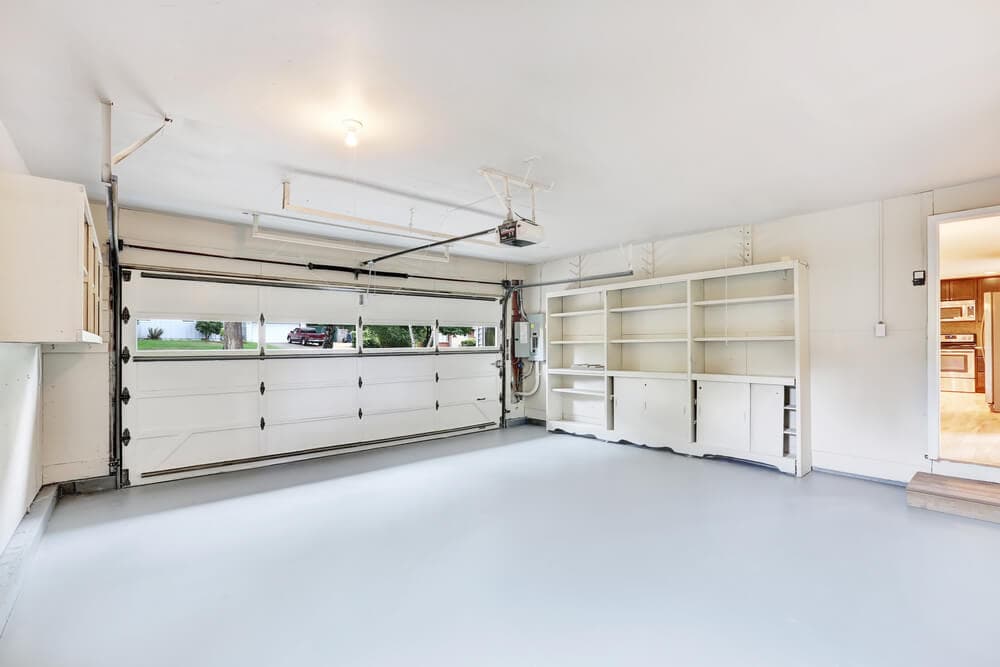
The most popular garage project isn't glamorous. It's just "I want to park my car in my garage again." Translation: coated floor, wall of cabinets, slatwall for frequently-used gear, and overhead racks for seasonal stuff.
What goes into it:
- Floor coating (DIY epoxy kit $150–$600, pro epoxy $1,200–$2,800, polyaspartic $1,800–$4,500)
- Slatwall panel system with hooks and baskets ($300–$1,500)
- Overhead ceiling racks for bins ($100–$400 each)
- Modular cabinets ($600 starter to $6,000 for a full wall)
- LED shop lights ($30–$80 each — a massive upgrade from a single bulb)
This is the highest-ROI-per-effort project on the list. Two weekends and a few thousand dollars and you get a garage that feels intentional instead of accidental.
Idea 2: The Home Gym
Budget: $800–$6,000 · Timeline: 1 weekend to 1 month
The pandemic made this the second-most-popular garage remodel, and it stuck. The good news: you can build a legit functional gym for under $1,000 if you're strategic. The bad news: the garage environment is rough on equipment, so cheap out at your peril.
Core components:
- Rubber horse-stall mats or interlocking rubber tiles ($200–$800 for full coverage)
- Wall mirror or pair of mirrors ($100–$400)
- Power rack, barbell, plates starter setup ($500–$1,500)
- Adjustable dumbbells or a dumbbell rack ($300–$1,200)
- A fan, because you will regret not having one ($50–$200)
If you want the gym usable year-round, add insulation ($1,900–$7,700) and a mini-split ($3,000–$6,000 installed). Skip the treadmill if you're in a hot climate without climate control — belt electronics don't love 110°F garage summers.
Idea 3: The Workshop or Maker Space
Budget: $2,000–$10,000 · Timeline: 2–4 weekends
For woodworkers, gearheads, and anyone who's tired of doing projects on the driveway. The workshop garage is one of the best uses of the space because it doesn't require you to give up parking — half the garage becomes the shop, the other half still parks the car.
What you'll actually need:
- A real workbench with a vise ($400–$1,500 bought, $150–$500 DIY)
- Pegboard or French cleat wall for tools ($100–$500)
- Additional electrical — dedicated 20-amp circuits for power tools, possibly a 240V outlet for bigger machines ($500–$2,500)
- Task lighting over the bench ($100–$400)
- Dust collection if you're woodworking — shop vac minimum, small collector ideal ($100–$1,200)
- Tool storage — rolling cabinet or wall cabinets ($300–$2,000)
Pro tip: insulate and drywall at least the workshop wall before you load it up with pegboard. Retrofitting insulation behind a fully-outfitted tool wall is miserable.
Idea 4: The Showroom Garage
Budget: $15,000–$50,000+ · Timeline: 4–8 weeks
For the car enthusiast who wants the garage to look like the dealership floor. This is where polyaspartic flooring, custom cabinetry, professional lighting, and climate control all come together.
The upgrades that actually matter:
- Polyaspartic floor with decorative flake ($2,500–$6,000)
- Full wall of matching custom or semi-custom cabinetry ($3,000–$12,000)
- Finished and painted drywall, often in a bright white ($2,000–$5,000)
- Track lighting or accent lighting over vehicles ($500–$2,500)
- Insulated, often glass-panel garage door ($2,500–$5,000)
- Mini-split for climate control ($3,000–$6,000)
- Optional: car lift ($2,000–$5,000 for a two-post residential lift)
The thing that separates a showroom garage from a nice garage is restraint — matching finishes, consistent color palette, nothing on the floor that doesn't belong there. Hence the storage investment.
Idea 5: The Entertainment Space or Hangout
Budget: $5,000–$25,000 · Timeline: 3–6 weeks
A semi-converted garage that still opens to the driveway on nice days but functions as a den, bar, or game room the rest of the time. Popular variations: the poker garage, the game room for the kids, the neighborhood hangout bar.
What makes it work:
- Insulation and drywall, fully finished ($3,500–$8,000)
- Quality flooring — polyaspartic, stained concrete, or even LVP if you're fully converting ($1,500–$4,500)
- A mini-split for year-round comfort ($3,000–$6,000)
- Bar, seating, mounted TV ($500–$5,000 depending on taste)
- Better garage door — insulated, possibly with windows ($1,500–$3,700)
The key decision is whether you're keeping the garage door functional (for that "roll up the door on a summer night" vibe) or walling it up and going full conversion. The first option is cheaper and more flexible; the second nets you true year-round living space.
Idea 6: The Home Office or Studio
Budget: $10,000–$25,000 · Timeline: 3–6 weeks
Remote work made garage offices common. Detached garages are especially appealing — separate structure, no housemate interruptions, a real "commute" of forty feet. This usually means a partial or full conversion.
The must-haves:
- Insulation plus drywall ($3,500–$8,000)
- Real flooring — LVP, engineered wood, or stained concrete ($1,500–$4,500)
- Mini-split HVAC ($3,000–$6,000)
- Upgraded electrical — multiple circuits, plenty of outlets, good lighting ($1,500–$3,500)
- An egress window or two for natural light ($800–$2,400 each, more if cutting new openings)
- Soundproofing if you're on video calls a lot ($500–$2,000)
- Hardwired ethernet, because Wi-Fi through a garage wall is unreliable ($100–$500)
Idea 7: The Mudroom Drop Zone
Budget: $1,500–$5,000 · Timeline: 1–2 weekends
Often overlooked: you don't have to remodel the whole garage. A dedicated mudroom zone inside the garage, right by the house entry, is one of the highest-impact small projects you can do. Cubbies, hooks, a bench, a boot tray, and some good flooring in that corner handle 90 percent of the "stop tracking mud through the house" problem.
What goes in the zone:
- Built-in cubbies or lockers ($300–$2,000)
- Bench with storage underneath ($150–$800)
- Coat hooks and a shoe rack ($50–$200)
- Rubber or tile flooring in that section ($200–$800)
- A runner or mat to catch water and grit ($50–$200)
- Task lighting — nobody ever has enough ($100–$300)
Idea 8: The Full ADU Conversion
Budget: $60,000–$120,000+ · Timeline: 3–6 months
The big one. A legally permitted accessory dwelling unit with kitchen, bathroom, bedroom, and private entrance. This is a construction project, not a remodel, and you need to treat it that way.
What's required to make it legal habitable space:
- Permits — $300–$1,400 for basic, higher for ADU designation
- Framed subfloor (most garage slabs slope toward the door)
- Proper wall and ceiling insulation to residential code
- Egress-compliant windows
- Full electrical tie-in to the main panel, often a subpanel
- HVAC — usually a dedicated mini-split system
- Plumbing rough-in for kitchen and bath ($1,500–$4,000) plus fixtures
- A new exterior wall where the garage door was
- Replacement parking if your jurisdiction requires it
The internet loves to quote $10,000 garage conversions. Those aren't legal habitable spaces and won't appraise as additional square footage. Real ADU conversions start at $60,000 and can easily clear $150,000 in expensive markets. The upside: a legally permitted ADU can return 60 to 80 percent of its cost at resale, or generate real rental income if you're staying in the home.
Where the Money Actually Goes
Whichever idea you're chasing, the same handful of components drive the cost. Here's the deeper breakdown for the decisions you'll actually make with a contractor or at the hardware store.
Flooring
Nothing changes the feel of a garage faster than what's under your feet. Bare concrete cracks, stains, and throws dust. Realistic options, cheapest to most expensive:
- Concrete stain and seal — $1–$3 per square foot DIY. The cheapest honest upgrade you can make.
- Interlocking floor tiles — $2–$4 per square foot. Fully DIY, easy to replace damaged pieces.
- DIY epoxy kit — $150–$600 for a two-car garage. Real upgrade over bare concrete, but cheaper kits yellow and chip. Expect to redo in about five years.
- Professional epoxy — $3–$7 per square foot ($1,200–$2,800 for a two-car garage). Lasts 5–10 years.
- Polyaspartic or polyurea coating — $5–$12 per square foot ($1,800–$4,500 for a two-car). Cures in a day, resists UV yellowing, lasts 15–20 years.
If you can stretch the budget, polyaspartic is the single best dollar-for-dollar upgrade in the whole project. Don't DIY it, though — the material has a short working window and punishes mistakes.
Insulation and Climate Control
If you want to use the garage in July or February, you need to insulate. Total insulation jobs run $1,900–$7,700 depending on material and garage size, with about $4,700 being typical. Options:
- Fiberglass batts — $0.65–$2 per square foot installed. Very DIY-friendly in open walls.
- Blown-in insulation — $1.65–$3.80 per square foot. Good choice if walls are already drywalled.
- Spray foam — $3–$7.50 per square foot. Best performance, air-seals at the same time, needs a pro.
- Garage door insulation kit — $50–$200 DIY. Worth it on any insulated garage.
- New insulated garage door — $1,500–$3,700 installed.
For actual heating and cooling, a ductless mini-split is almost always the right answer. Figure $3,000–$6,000 installed. Cheaper alternatives (wall-mount electric heater, window A/C) work in a pinch but aren't long-term comfort solutions.
Drywall and Finishing
Drywalling a two-car garage costs roughly $1,500–$4,000 installed, depending on ceiling height, whether you want a smooth finish or a quicker textured one, and whether code requires fire-rated drywall on the wall adjoining the house (it usually does). DIY drops that by 40 to 60 percent if you're comfortable with taping and mudding — which is the hardest part. Hanging the sheets is easy; making them look good is not.
Storage and Organization
The main categories:
- Slatwall panel systems — $300–$1,500 for a full wall, plus a few hundred in hooks, baskets, and shelves.
- Modular cabinet systems — $600 for a starter set up to $6,000+ for a full wall of powder-coated steel.
- Overhead ceiling racks — $100–$400 each. The single most overlooked storage in most garages. Perfect for seasonal bins.
- Workbench with pegboard — $200–$1,500 depending on whether you build it or buy it.
Electrical
Most garages ship with the bare minimum: one overhead light and a couple of outlets, often on a single circuit. A real remodel usually means more outlets, dedicated circuits for workshop tools or a freezer, better overhead lighting (LED shop lights at $30–$80 each are a massive upgrade), and possibly an EV charger circuit. Budget $500–$3,000 for electrical, more if you need a subpanel or panel upgrade.
The Garage Door Itself
A new insulated two-car garage door costs $1,500–$3,700 installed, with high-end carriage-house and modern glass styles reaching $5,000 and up. Worth noting: garage door replacement consistently tops industry ROI reports — Remodeling Magazine's Cost vs. Value Report has repeatedly ranked it as one of the highest-returning home improvements you can make, often recouping well over 100 percent of the cost at resale. If your door is old, ugly, or noisy, this is a rare case where a curb-appeal upgrade actually makes financial sense.
What's Worth Doing Yourself
Some of this is great DIY work. Some isn't.
Fair game to tackle yourself:
- Painting walls and ceiling
- Interlocking floor tiles and budget epoxy kits
- Fiberglass batt insulation in open walls
- Assembling modular cabinets
- Installing slatwall panels and overhead ceiling racks
- Building a workbench and pegboard wall
- Adding simple outlets on existing circuits (where legal for you to do so)
Worth hiring out:
- Polyaspartic floor coatings (short working window, no margin for error)
- Spray foam insulation
- Drywall finishing if you want it smooth under raking light
- Anything involving a subpanel, new circuits, or a 240V outlet
- Gas lines and HVAC installation
- Structural work like cutting in new windows or removing the garage door
The honest middle ground: do the demo, prep, painting, and organization yourself. Hire pros for the stuff where a mistake costs more to fix than the labor would've cost to avoid.
The Storage Problem Nobody Plans For
Here's the thing nobody tells you: the hardest part of a garage remodel isn't the drywall or the flooring. It's figuring out where all your stuff goes while the project is happening.
A typical two-car garage holds an astonishing volume of things — bikes, tools, lawn equipment, holiday decorations, camping gear, old furniture, the kids' outgrown sports equipment, paint cans, extension ladders. Some of it you use weekly. Most of it you use twice a year. All of it has to go somewhere while the walls come down, the floor cures, and the new cabinets get installed. That process typically takes:
- 1–2 weekends for a cosmetic refresh or organization project
- 2–6 weeks for a real remodel
- 2–6 months for a conversion or ADU
Leaving it in the driveway under a tarp works for about a day. Cramming it into the basement or a spare bedroom works until someone needs that room. A short-term self-storage unit is the move almost every serious remodeler lands on eventually.
This is the reason 10 Federal Storage exists. We operate 130+ fully automated self-storage facilities across 16 states, and short-term overflow during a home project is one of the most common reasons people rent a unit with us. Because every 10 Federal location is automated with 24/7 access and contactless rental, you can:
- Reserve a unit online on a Friday night
- Pull up the next morning with a trailer full of garage contents
- Start demo on Monday without waiting for a leasing office to open
- Cancel when you're done — no long-term commitment for short-term projects
There's a second angle worth mentioning. If you're converting your garage into a bedroom, office, or ADU, you're not just temporarily displacing your stuff — you're permanently losing your household's main storage space. Even a beautifully finished garage with custom cabinets holds a fraction of what an unfinished one crammed to the rafters does. A lot of our customers end up keeping a small unit long-term after a conversion for exactly this reason: seasonal bins, holiday decor, camping gear, and rarely-used tools that no longer have a home in the new floor plan.
Either way, the math is easier than people expect. Keeping the remodel stuff out of your hallway, living room, or driveway for a few weeks usually pays for itself in sanity alone.
Start Smart: Your Next Steps
A garage remodel is one of the rare home improvements where you can spend $500 or $100,000 and both numbers make sense, depending on what you want. The direction you pick matters more than the budget.
If you're ready to move forward, here's the order that saves the most money and heartache:
- Pick your idea first. Organized garage, gym, workshop, office, ADU — the idea dictates the budget, not the other way around.
- Get at least three quotes for anything involving insulation, drywall, electrical, or flooring. Prices vary wildly by installer.
- Reserve a storage unit for the transition. Find your nearest 10 Federal Storage facility and book online in minutes — no office hours, no commitment.
- Do the jobs you're genuinely good at and hire the rest. The middle ground beats full-DIY and full-contractor on both cost and quality.
- Empty the garage before day one. A remodel you can't walk into is worse than the one you started with.
Whichever version of a new garage you're building, the best time to start planning is before the first contractor shows up. Measure the space, pick your idea, and work backward from there.
About the Author
10 Federal Storage
Our team at 10 Federal Storage has been in the self storage industry for decades. With knowledge gained from multiple universities and in the field, we are well-prepared and excited to assist with your storage needs. When you rent a unit with us, you can feel confident that our seasoned customer service team’s help will make your transition as seamless as possible. Customer satisfaction is our number one priority, and we strive to make your experience exceptional with our automated leasing options, diverse unit sizes, and a strong commitment to sustainability.