

How to Organize Your Basement: A Storage-Smart Guide That Survives the Humidity
by 10 Federal Storage
Published on May 6, 2026
Most basement organization advice treats the space like a clean slate: shelves, bins, labels, done. The problem is the basement isn't a clean slate. It's the one room in your house that's actively working against half of what gets stored in it, and most homeowners don't notice until the damage is permanent.
The temperature's stable, the light's dim, the door closes behind you, and you stop paying attention. Two years later you head down to find something and discover the box of family photos has bloomed with mildew, the holiday tree skirt has turned gray, and there's a faint smell you can't quite place coming from the back corner.
The trap is that basements feel like indoor space, walls, a roof, a door, but the climate is fundamentally different. Below grade, even a finished basement runs cooler, damper, and quieter than the rest of the house. That makes it tempting to use as an everything-shelf. It also makes it slowly hostile to a long list of common possessions.
This guide walks through the full process, declutter, sort, zone, build systems, and figure out what doesn't belong in the basement at all. The goal: a basement that does the job you want it to do, without quietly destroying what you put in it.
First, Decide What Your Basement Is For
A basement can be a storage space, a laundry room, a workshop, a home gym, a rec room, a guest suite, a wine cellar, or some mix. The trap is letting it default to "storage" because that's what's easiest in the short term. Six years later, you've built a wall of cardboard between yourself and the dryer.
Pick what you actually want it to be. Common combinations:
- Laundry + utility + organized long-term storage
- Finished living space + small storage room + utility
- Workshop or home gym + utility, with most storage moved offsite
- Pure storage, if your basement is unfinished and you only use it for that
Whatever you pick, your storage allocation is what's left over after the active uses are accounted for, not the other way around. If you don't make this call, the storage will eat the rest.
Step 1: Inspect Before You Touch Anything
The stairs are a chokepoint, so a basement empty-out doesn't work the way it does in other rooms, you can't spread everything out on a driveway and triage from there. Before you start hauling anything up or out, do an inspection pass instead. This is the cheapest, highest-leverage thirty minutes you'll spend on the whole project.
- Walk the perimeter looking for water staining at the floor-wall joint, efflorescence (the white powdery deposit on concrete), or warped baseboards
- Look for old water lines on the walls, usually a faint discolored ring six to eighteen inches up
- If you have a sump pump, confirm it's plugged in, the float moves freely, and the discharge line isn't cracked. Pour a bucket of water into the pit and watch it cycle.
- Note where utilities are: water shutoff, electrical panel, water heater, furnace, HVAC. These need clearance and access, three feet minimum, and that's a code requirement, not a suggestion.
- If you haven't tested for radon recently, do it. Test kits are cheap and basements are where radon concentrates.
If you find evidence of past or ongoing water intrusion, don't store anything moisture-sensitive in those areas. Fix the cause first, exterior grading, gutter extensions, a French drain, or an interior perimeter system, depending on the source. Organizing around an unsolved water problem is rearranging deck chairs.
Step 2: The Four-Pile Sort
Same four piles as anywhere else, but with a basement-specific lens.
- Keep in the basement, items that don't mind cool, slightly damp conditions and either need to be near utilities (laundry supplies, water softener salt, water heater drain hose) or are seasonal items rugged enough to survive: holiday decorations in sealed bins, hardware, tools that aren't humidity-sensitive.
- Toss or recycle, broken items, expired anything, exercise equipment that hasn't moved in two years. Basement-specific call: if a cardboard box has gone musty, the contents are usually compromised even if they look fine on first inspection. Smell test, then decide.
- Donate or sell, usable items you don't use. Be honest: if it's been sitting unused for eighteen months and it isn't seasonal, it's not coming back into rotation next year either.
- Store offsite, items you want to keep but the basement environment will harm. This is the biggest category for most households, and it's the one homeowners systematically under-fill because they don't realize what the basement is doing to their things.
Step 3: Zone the Space
Basements come with constraints other rooms don't: support posts, low ducts, mechanical equipment, sometimes oddly shaped rooms. Zone around these instead of fighting them.
A workable zoning approach:
- Mechanical zone, three feet of clearance around the furnace, water heater, and electrical panel. Non-negotiable.
- Laundry zone, if applicable, this is the most "indoor-like" zone and the one you'll be in most often. Treat it like a small room and don't let storage creep into it.
- Active storage zone, wall shelving along the dry walls, mid-height, for items you reach for monthly or more
- Long-term storage zone, upper shelves and corners, for items that have actually passed the climate test (more on this below)
- Workshop or hobby zone, if applicable, against the longest unobstructed wall with the best lighting and an outlet
- Walking lanes, and yes, mark them. A basement without lanes becomes a basement where you only access the front three feet of every shelf.
Chalk the zones onto the floor before you bring anything back in. Walk through. Adjust. Move chalk, not shelving.
Step 4: Build the Storage Systems
Now buy hardware. The big four for basements:
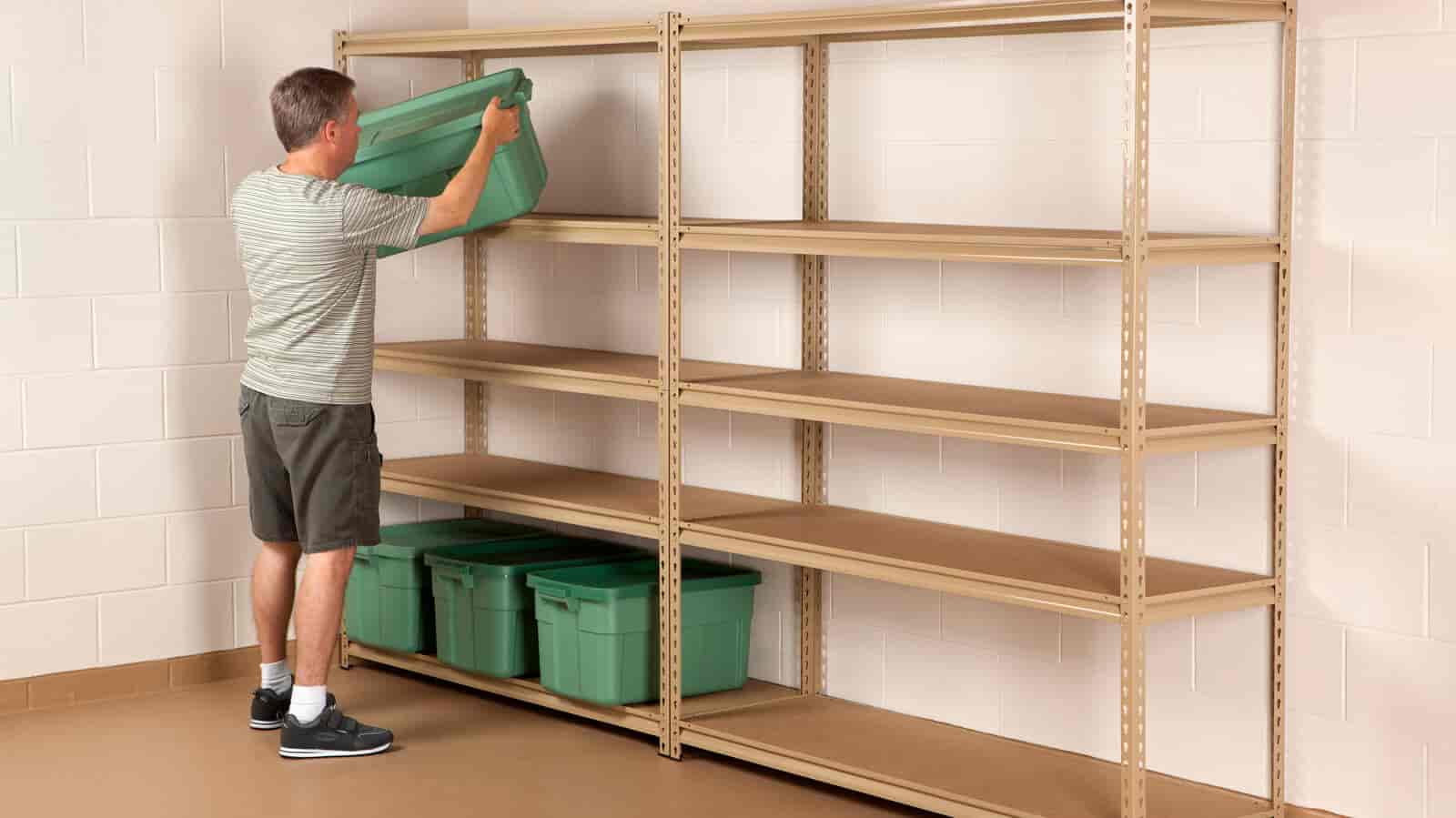
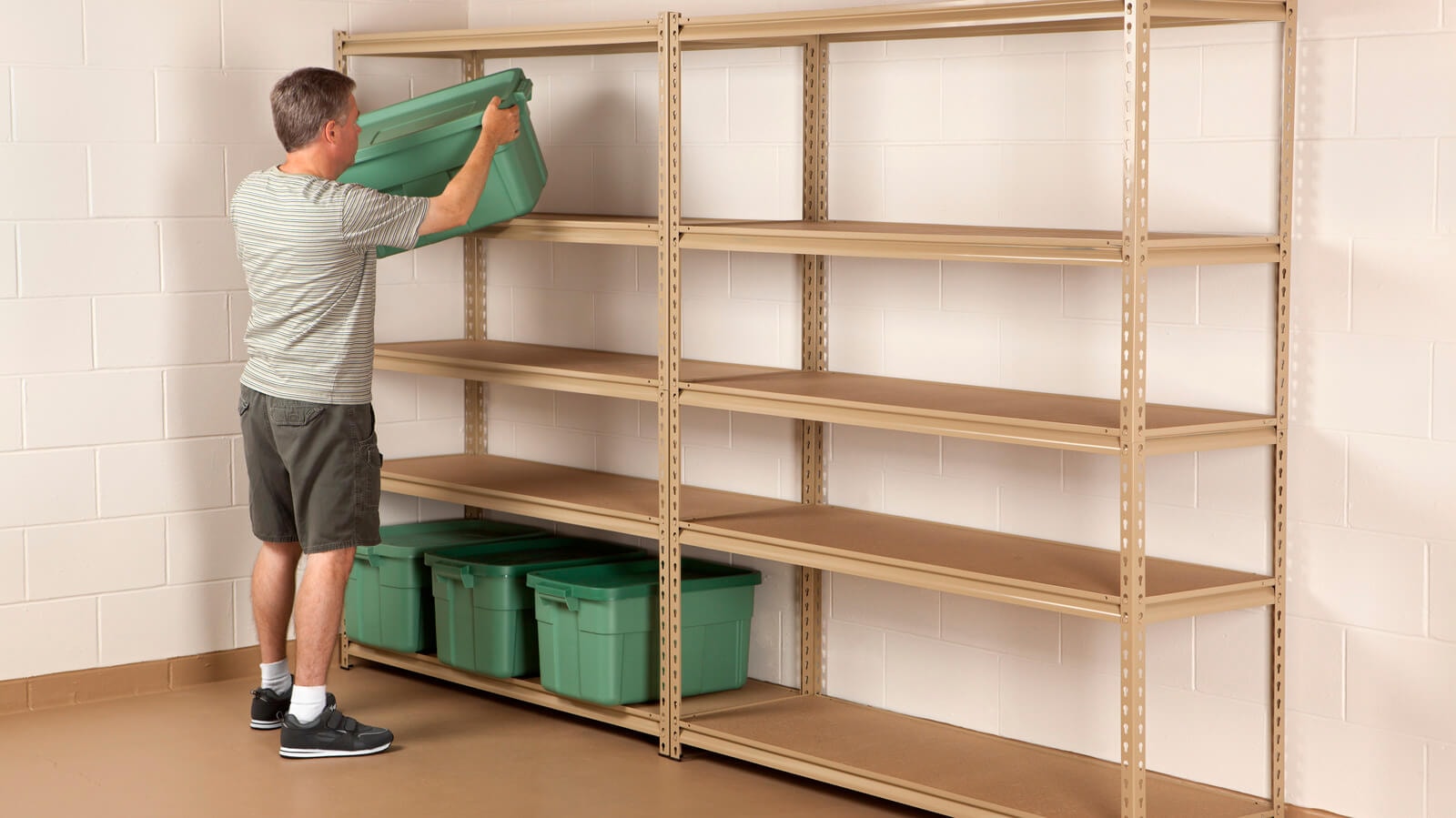
Wire shelving over solid shelving. Counterintuitive, but in a damp basement, wire shelving lets air circulate around stored items, which dramatically reduces mildew risk. Solid shelves trap humid air against whatever's sitting on them. Chrome or epoxy-coated wire shelving rated 350 lbs per shelf handles most household needs.
Elevation off the slab. This matters more in a basement than anywhere else in the house. Cheapest method: plastic risers or 2x4 sleepers under shelving so the bottom shelf is at least four to six inches off the concrete. If your basement has any history of water, even one storm event, go to twelve inches minimum on anything you'd be sad to lose. Pallets work for bulkier loads.
Gasketed plastic bins. Skip cardboard entirely. In a basement, cardboard is mold food, pest food, and structural failure waiting to happen. Use clear, locking-lid bins with rubber gaskets, the gasketed ones cost more but actually keep humidity out of the contents instead of just slowing it down. Standardize on one or two sizes so they stack cleanly. Label both lid and long side.
A dehumidifier. Often the single highest-leverage purchase for basement storage. A decent unit costs less than $300 and pays for itself in damage prevention within a season. Set it to hold 50% relative humidity and run a drain hose to the sump pit or floor drain so you're not constantly emptying the tank. Without one, a closed basement in a humid summer routinely sits at 70-80% RH, which is enough to mildew almost anything organic given a few months.
If your basement has a real moisture problem, periodic seepage, persistent damp smell, visible efflorescence, fix the moisture before you build out storage. None of these fixes are exciting. All of them are cheaper than replacing what the moisture destroys.
What NOT to Store in Your Basement
Basements are forgiving on temperature. They're brutal on humidity. The damage is slow and quiet, which means it's usually advanced before you notice it.
Here's what shouldn't live in your basement:
- Family photos and documents, humidity makes pages stick, ink run, and photo emulsion separate. By the time you notice, the damage is permanent.
- Books, same problem as photos, plus mildew sets up shop in the spines and binding glue fails
- Leather goods, couches, jackets, bags, saddles will mildew within a single humid summer
- Wood furniture, joints loosen with humidity cycles, veneer lifts, unfinished wood absorbs moisture and warps
- Upholstered furniture, once a sofa absorbs basement humidity, the smell often never leaves. Storing grandma's couch "down there for now" is how it becomes unsalvageable.
- Electronics, humidity corrodes solder joints and contacts; cold cycles aren't great for lithium batteries
- Musical instruments, pianos, guitars, anything wood-bodied: humidity swings damage them, sometimes irreversibly
- Artwork, canvases mildew, paper foxes, frames warp
- Mattresses and bedding, once a mattress absorbs basement moisture, it's done
- Off-season clothing in cardboard or fabric containers, moths and silverfish find these reliably
- Tax records, deeds, birth certificates, anything legally important, humidity, pests, and flood risk all argue against
- Anything sentimental and irreplaceable, wedding dresses, baby clothes, heirlooms. The basement is the worst possible room in the house for these.
That list looks long because it is. The basement is genuinely good at storing: holiday decorations in sealed bins, hardware and tools, bulk paper goods if elevated and dry, and items that are rugged and don't mind humidity. Almost everything else is on borrowed time.
For everything on the no-store list, you have two options: find space inside the climate-controlled part of the house, or move it offsite to climate-controlled storage. 10 Federal Storage's climate-controlled units hold humidity and temperature in the same range your living room does, which is the range where photos, leather, electronics, and wood furniture actually survive. A 5x10 climate-controlled unit holds the contents of a small bedroom, which covers most households' "preserve carefully" pile, and it costs less per month than replacing one mildewed leather couch or one box of irreplaceable family photos.
Common Mistakes That Wreck Even Well-Organized Basements
- Trusting the basement. It is not the inside of your house. The walls and door make it feel like indoor space, but the climate is fundamentally different. Plan for what it actually is, not what it feels like.
- Buying organization hardware before sorting. You cannot organize stuff you should have thrown out. The hardware run is the last step, not the first.
- Storing on the floor. The basement floor will get wet eventually. Maybe a pinhole leak, maybe a clogged floor drain, maybe one bad storm. Anything on the floor that would hurt to lose is on the floor temporarily.
- Cardboard boxes. They absorb moisture, attract pests, and disintegrate. Replacing every cardboard box with a sealed plastic bin is the single highest-impact change most homeowners can make.
- Blocking the mechanical area. When the water heater fails, and it will, eventually, a service tech needs clearance to drain it, disconnect it, and roll a new one in. Don't stack bins around it.
- Skipping the dehumidifier. Most damage in basements isn't from flooding. It's ambient humidity slowly destroying things over years. Dehumidifiers prevent the slow kind, which is the more common kind.
- Forgetting about the stairs. Anything you store in the basement, you have to carry up and down. If it's heavy and you don't use it often, the basement is the wrong place for it. Move it to a ground-floor closet or offsite.
The Maintenance Rhythm
Three rhythms keep a basement from sliding back:
- Monthly (10 minutes), confirm the dehumidifier is draining and the filter isn't clogged. Spot-check for damp spots, smells, or pest signs.
- Quarterly (45 minutes), walk the perimeter for new water staining or efflorescence. Test the sump pump by pouring a bucket of water into the pit. Check that nothing on the no-store list has quietly migrated into the basement since last quarter.
- Twice a year (half a day), seasonal swap, plus an audit of any sensitive items that have ended up here. Move them out.
- Annually, clean behind the dryer (lint plus humidity is a real fire risk), test smoke and CO detectors, run a radon test if you haven't lately.
The sump pump test is the one most people skip and the one that matters most. A sump pump that hasn't been tested in three years is a sump pump that probably won't run when you need it.
When You've Run Out of Basement
A real declutter and a real organization pass solves most basements. The cases where it doesn't usually fall into one of three buckets:
- You've absorbed another household. A parent's estate, a college kid moving home, a downsizing in-law. The basement absorbs the overflow because it's the largest available space, and now it's full of someone else's furniture and boxes.
- You're using the basement as living space. A finished gym, office, or rec room can't double as long-term storage. Trying to do both guarantees one of them suffers.
- The climate problem is unavoidable. Your basement runs damp, you have items that won't survive it, and there's no spare climate-controlled space upstairs.
In each case the move is the same: get the right category of stuff out of the basement. 10 Federal Storage operates 130+ fully automated self-storage facilities across 14 states, with climate-controlled options at most locations. Because every facility is automated with 24/7 access and contactless rental, you can:
- Reserve a unit online at midnight
- Show up the next morning and start moving in, no office visit, no waiting
- Access the unit any hour, on the schedule that actually fits your job and family
- Choose climate-controlled if you're moving out photos, leather, electronics, wood furniture, or anything else humidity will eventually harm
A 5x10 climate-controlled unit covers most households' preserve-carefully pile. A 10x10 handles the absorbed-an-estate volume. The point isn't to store everything offsite, it's to make sure the basement is doing the job you want, and the irreplaceable things aren't sitting in the one room of your house that's quietly working against them.
Quick-Start Checklist
If you're tackling the basement this weekend, the short version:
- Decide what your basement is for, and what it isn't
- Inspect for water signs, test the sump pump, locate utilities
- Sort into four piles: keep, toss, donate, store offsite
- Plan zones around mechanical clearances and walking lanes
- Buy hardware: wire shelving, gasketed plastic bins, a dehumidifier
- Elevate everything at least four to six inches off the slab, twelve if you've ever had water
- Bring the keep pile back in, by zone
- Move the store-offsite pile to climate-controlled storage within two weeks, before you talk yourself out of it
- Schedule the maintenance rhythm on your calendar
- Drop off donations and hazardous waste within 48 hours
A basement done right is a working part of the house. A basement done wrong is a slow-motion archive where your things go to deteriorate out of sight. Ready to move what doesn't belong out of the damp? Find your nearest 10 Federal Storage facility and reserve a unit online, 24/7, no office hours required.
About the Author
10 Federal Storage
Our team at 10 Federal Storage has been in the self storage industry for decades. With knowledge gained from multiple universities and in the field, we are well-prepared and excited to assist with your storage needs. When you rent a unit with us, you can feel confident that our seasoned customer service team’s help will make your transition as seamless as possible. Customer satisfaction is our number one priority, and we strive to make your experience exceptional with our automated leasing options, diverse unit sizes, and a strong commitment to sustainability.