
.svg)
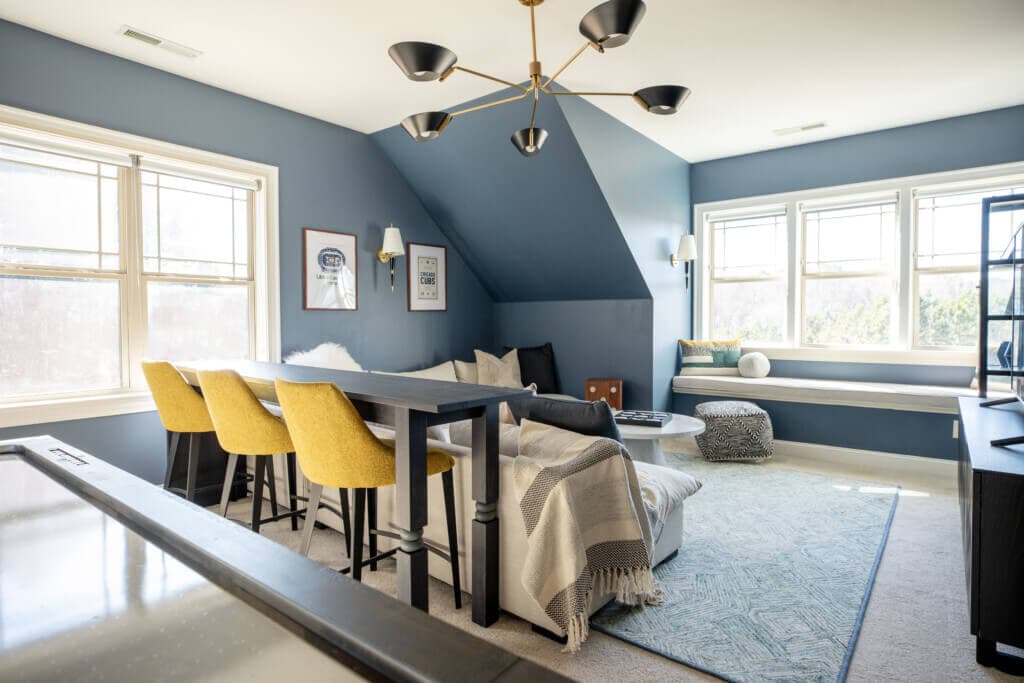
How to Organize Your Bonus Room: A Guide to the House's Most Versatile Space
by 10 Federal Storage
Published on May 6, 2026
Most bonus rooms have the same identity crisis. They're a playroom on Saturdays, a guest room when family visits, a home office on Mondays, an exercise room every January, a craft room in October, and a graveyard for everything else the rest of the year. By December, none of those things actually work. There's a treadmill nobody uses, a pull-out couch buried under toys, a desk that hasn't been seen in months, and a stack of boxes from a move three years ago that nobody can quite bring themselves to open.
The problem isn't that the room is too small. The problem is that nobody asked the harder question first: which of these things do you actually want this room to be?
This guide walks through the full reset — deciding the room's purpose, sorting what's in it, zoning the space, building real storage that fits the weird ceiling angles most bonus rooms have, and figuring out what doesn't belong here at all. Done right, this is a weekend project that gives you back an entire room.
First, Decide What Your Bonus Room Is For
A bonus room can comfortably do two things. Maybe three if one of them is small. It cannot do six.
Pick the two primary functions. Common combinations that actually work:
- Family media room + occasional guest room (pull-out sofa or daybed)
- Home office + workout space
- Kids' playroom + craft / homework area
- Hobby room (sewing, music, painting) + reading nook
- Teen hangout + study zone
Write yours down. Be honest. If your kids are five and seven, "guest room" probably loses to "playroom" — guests come twice a year, the kids are in there every day. If you work from home four days a week, the office wins and the workout equipment goes somewhere else or comes out only on schedule.
Every decision after this — what stays, what zoning makes sense, what furniture you buy — flows from this choice. Skip it and you'll end up "organizing" without solving the actual problem, which is that the room is being asked to do too much.
Step 1: Empty Everything Out
Yes, even a bonus room. Yes, all of it.
Pick a Saturday morning, recruit one other person, and pull every piece of furniture, every bin, every box, every random item into the hallway or an adjacent room. The volume will surprise you. That's useful — it tells you exactly how much stuff has accumulated in a space you thought you had under control.
While the room is empty, do four things you can't do when it's full:
- Vacuum thoroughly, including the corners and along the baseboards
- Check the HVAC vents and return — bonus rooms (especially over a garage) are notorious for being too hot in summer and too cold in winter, and the fix often starts with making sure the vents aren't blocked or partially closed
- Identify and measure the knee walls — the short vertical walls under sloped ceilings are the single most underused storage opportunity in any bonus room
- Note the location of every outlet and the lighting layout, including which fixtures are on which switch
This takes twenty minutes and prevents you from putting a desk on the wall with no outlet, or shelving in front of a return vent, or a reading chair in the room's only dark corner.
Step 2: The Four-Pile Sort
Standard decluttering uses three piles: keep, donate, toss. For a bonus room, the most useful framework is four:
- Keep in the bonus room — items that directly serve the two functions you chose. If the room is "media + guest," that's the TV and components, the sleeper sofa, guest linens, maybe a small dresser. If it's "office + workout," it's the desk, chair, weights, and mat. Anything that doesn't serve those two functions is a candidate for one of the other three piles.
- Relocate within the house — items that belong somewhere else and ended up here because the bonus room is the path of least resistance. Books that should be on the living room shelf. The coat that's been on the chair for a year. The kitchen appliance you never put away after the last party. Bonus rooms accumulate a tax of items that escaped from every other room in the house. Send them home.
- Donate, sell, or toss — abandoned hobbies, outgrown kid stuff, exercise equipment you never use, the printer you replaced two years ago, the lamp you've never liked. If you haven't touched it in 18 months and it isn't seasonal, you're not going to.
- Store offsite — items you genuinely want to keep but don't need access to, or items that are taking up space the room can't spare. We'll come back to this category, because it's the one most people get wrong.
Move through every item once and assign it. No "I'll figure this out later" pile — that pile becomes the bonus room's next mess.
Step 3: Zone the Space
Once you know what's staying, divide the room by function. The two functions you chose should each get a clearly defined zone, and the zones should be visually separate — different rugs, different furniture clusters, ideally on opposite walls or at opposite ends of the room.
A few zoning principles that hold up across most bonus rooms:
- Put the louder function farther from the door if there's a bedroom nearby. Sound travels, especially in rooms above garages.
- Anchor the work or screen zone to the outlet wall. You don't want extension cords running across the room.
- Use the brightest natural light for the function that needs it. Reading nook, craft table, home office desk — those go near the window. The TV goes on the wall opposite the window, not facing it.
- Reserve a transition strip near the door. Even four feet of empty floor near the entry keeps the room from feeling crammed and gives you somewhere to set things down on the way in.
Before you bring furniture back in, sketch the zones on paper or tape them out on the floor. Walk through. Does the path from the door to each zone make sense? Can two people use both zones at once without bumping into each other? Move tape, not furniture.
Step 4: Build the Storage Systems
Now buy hardware and furniture. The goal is storage that fits the room's actual shape, not generic shelving units that ignore the bonus room's biggest asset.
Knee wall storage is the move that turns a bonus room from cramped to spacious. The triangular space behind a sloped wall is dead square footage unless you put a door on it — and a knee wall door plus simple wire shelving inside gives you a closet's worth of storage without losing any usable floor. If you're not handy, this is one of the highest-return projects to hire out: a carpenter can frame and trim a knee wall door in a day, and the storage you gain is permanent.
Built-ins along the long wall are worth the cost in a bonus room because they replace three or four mismatched bookcases with a single clean line. They also let you build around the slope: lower in the back, taller toward the center of the room. If full custom built-ins are out of budget, modular bookcase systems (the kind designed to be ganged together) get you 80% of the look for half the price.
Multi-function furniture is non-negotiable when the room is doing two jobs. A storage ottoman in front of the sofa holds throws and remotes. A sleeper sofa or daybed handles guests without dedicating the room to them. A desk with drawers, not a desk that's just a tabletop. A storage bench under the window. Every piece in a dual-purpose room should earn its keep twice.
Bins and baskets, but visible. Bonus rooms aren't garages — they're living spaces, and ugly plastic totes shouldn't be the storage default. Use lidded fabric bins, woven baskets, or labeled storage cubes that look like part of the room. Standardize on a couple of sizes so they stack and align cleanly on shelves. Label discreetly on the back or underside so the room still looks like a room.
One note on rugs: in a multi-zone room, two rugs are almost always better than one. A rug under the sofa cluster and a separate rug under the desk or workout area visually defines the zones and keeps the room from reading as "one giant blur of stuff."
What Doesn't Belong in Your Bonus Room
Bonus rooms are climate-controlled, which means you don't have the same heat-and-humidity damage problem you'd have in a garage or attic. The bigger problem is category mismatch: a bonus room is a living space, and when it gets used as a long-term storage closet, it stops being usable for anything else.
Here's what shouldn't live in your bonus room, even though it could:
- Boxes you haven't opened since you moved in. If they've been sealed for two-plus years and you haven't missed the contents, you don't need to access them — they belong somewhere out of the way.
- Inherited furniture waiting for a decision. Your grandmother's sideboard, the dining set from the lake house, the chair your dad refinished. These often land in the bonus room because nobody can decide what to do with them. They sit for years.
- Outgrown kid gear you're saving for "the next one." Strollers, crib mattresses, baby clothes by the bin. If "the next one" isn't on the calendar, this is long-term storage masquerading as a corner of the playroom.
- Bulk seasonal decor. Christmas tree, holiday lights, fall wreaths, Easter baskets. You access these twice a year — they don't need to live in a room you use every day.
- Old electronics and the cables you can't quite throw away. The old laptop, the previous TV, three generations of phone chargers. They're not getting used and they're not sparking joy.
- Paperwork archives. Tax returns from a decade ago, old bank statements, kids' school papers from elementary school. Legally retain what you need to retain — but not in a corner of the room you're trying to enjoy.
- Hobbies you've abandoned but won't admit to yet. The sewing machine still in its box. The unstrung guitar. The half-finished model. If it hasn't moved in two years, it's furniture, not a hobby.
- Furniture you replaced but kept "in case." The old sofa, the spare dresser, the chair you don't love. The bonus room becomes the in-case warehouse if you let it.
This is where the "store offsite" pile from Step 2 earns its keep. Each of those categories is real — most households have keepsakes worth keeping, kid gear worth saving, decor worth pulling out twice a year, paperwork they can't legally shred yet. The mistake is keeping all of it inside a room you want to actually use.
This is exactly what 10 Federal Storage's climate-controlled units are built for. A 5x10 climate-controlled unit holds about a small bedroom's worth of contents — easily enough for the seasonal-decor-plus-archived-paperwork-plus-saved-kid-gear pile that's currently consuming a third of your bonus room. Climate-controlled means the same conditions your bonus room provides, so anything that's safe in the room is safe in the unit.
Common Mistakes That Wreck Even Well-Organized Bonus Rooms
A handful of patterns show up repeatedly:
- Trying to make it everything. The single biggest cause of bonus room chaos is asking it to do four jobs. Two is the limit. Three only if one is genuinely small (a reading chair tucked into a corner doesn't count as a "zone").
- Letting it become the default storage room. Every household has a path of least resistance for "I don't know where this goes." If that path leads to the bonus room, the room will lose. Pick a different default — a closet, a basement shelf, a labeled donation bin — and consciously redirect.
- Buying organizing products before sorting. Bins, baskets, and shelving are the last step. If you buy them first, you're just creating prettier homes for stuff that should have left the house.
- Ignoring the knee walls. Most bonus rooms above garages have 30 to 60 cubic feet of dead space behind sloped walls. Pretending it's not there is leaving real storage on the table.
- Fighting the HVAC instead of fixing it. If the room is uncomfortable, you'll stop using it, and an unused room becomes a storage room within months. Add a ceiling fan, a portable heater, or a mini-split if you have to. The room is only worth organizing if it's worth being in.
- Letting "temporary" storage become permanent. The boxes from the move. The stuff from the estate. The kid's outgrown bike. Set a date when "temporary" expires — typically six months — and make a real decision then.
- Mixing categories in bins. A bin labeled "miscellaneous" or "office stuff / craft stuff / kid stuff" will never get unpacked correctly. One category per bin, every time.
The Maintenance Rhythm
Organization is a system, not a one-time event. Three rhythms keep a bonus room from quietly sliding back into chaos:
- Weekly (5 minutes) — return items to their assigned zones. Books to the shelf, controllers to the basket, weights to the rack. That's it.
- Quarterly (30 minutes) — walk the room. Anything that's drifted out of its zone goes back. Anything that hasn't been touched in three months gets reassessed. Anything that arrived from another room gets sent home.
- Twice a year (a couple of hours) — the real reset. Pull furniture out, vacuum behind it, check the knee wall storage, swap seasonal items in and out of the offsite unit, and re-evaluate whether the room is still doing the two jobs you assigned it. Life changes. So do the right answers.
Put these on your calendar. Without the prompt, the quarterly walks get skipped and the system unravels in roughly nine months.
When You've Run Out of Bonus Room
After a real declutter and a real organization pass, most households find their bonus room actually works. Some don't — usually for one of three reasons:
- You have a hobby or business that legitimately needs the room. A home studio, a sewing or quilting setup, a pottery wheel, a small e-commerce operation, a serious home gym. A real workspace plus a guest room plus a playroom is too many things — one of those needs to leave the house.
- You're in a life transition. A parent's estate is in flux. The kids are between sizes and the next set of gear hasn't arrived. You downsized but haven't sold the lake house furniture. You're between moves. These are temporary overflow situations, but "temporary" can run a year or more.
- You're keeping things you genuinely should keep, but don't need to access. Family photos, grandma's china, archived business records, kid memorabilia, holiday decor. The room shouldn't be doing the work of long-term storage.
The answer in all three cases is the same: move the right category offsite. 10 Federal Storage operates 130+ fully automated self-storage facilities across 16 states, and household overflow is one of the most common reasons people rent. Because every 10 Federal location is automated with 24/7 access and contactless rental, you can:
- Reserve a unit online tonight
- Move items in tomorrow morning, on your schedule, no office hours
- Access your unit any hour of any day, whenever you need to swap seasonal gear or pull out the holiday decor
- Choose climate-controlled if you're storing photos, electronics, paperwork, or wood furniture
A 5x10 climate-controlled unit handles the keepsake-and-seasonal-and-archive pile that's currently squatting in the corner of the bonus room. A 10x10 handles "the workshop overflow" or the in-between-life-stages pile. The point isn't to store everything — it's to make sure the bonus room is doing the job you actually want it to do.
Quick-Start Checklist
If you're tackling your bonus room this weekend, here's the short version:
- Decide what your bonus room is for — two primary functions, no more
- Pick a Saturday and pull everything out into the hallway
- Sort into four piles: keep, relocate within the house, donate or toss, store offsite
- Vacuum, check the HVAC vents, measure the knee walls, note outlet locations
- Tape out two zones on the floor and walk through them before bringing furniture back
- Buy storage that fits the room: knee wall doors, modular shelving, multi-function furniture, fabric bins
- Bring the keep pile back in, by zone, with one category per bin
- Schedule quarterly walks and twice-yearly resets on your calendar
- Drop off donations within 48 hours, before you talk yourself out of any of them
- Move the offsite pile to a unit — climate-controlled if it includes photos, paperwork, electronics, or wood furniture
Done right, this is a one-weekend project that gives you back a real room — one that does what you actually want it to do, not the room that absorbed every loose end the rest of the house didn't have a place for. Ready to clear out the overflow and let the room be what you wanted it to be? Find your nearest 10 Federal Storage facility and reserve a unit online in minutes — no office hours, no waiting.
About the Author
10 Federal Storage
Our team at 10 Federal Storage has been in the self storage industry for decades. With knowledge gained from multiple universities and in the field, we are well-prepared and excited to assist with your storage needs. When you rent a unit with us, you can feel confident that our seasoned customer service team’s help will make your transition as seamless as possible. Customer satisfaction is our number one priority, and we strive to make your experience exceptional with our automated leasing options, diverse unit sizes, and a strong commitment to sustainability.