
.png)
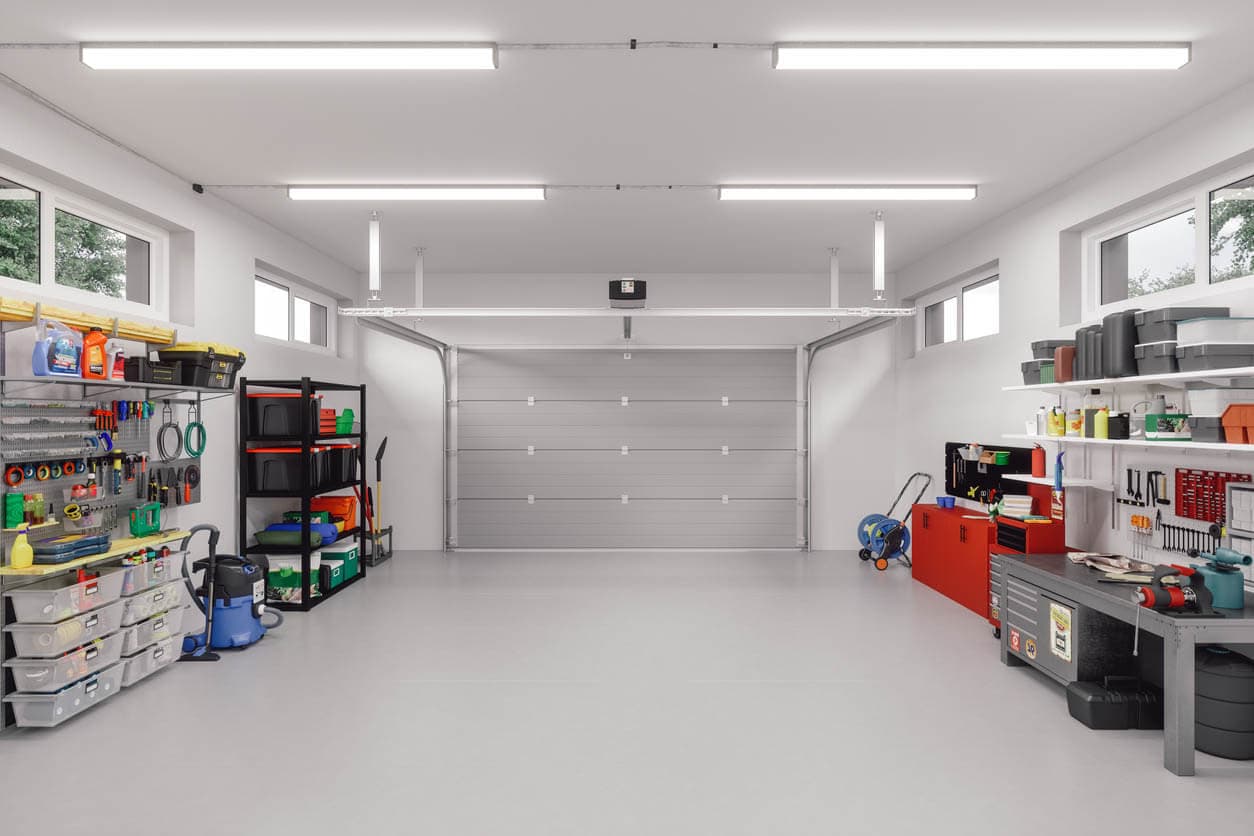
How to Organize Your Garage: A Storage-Smart Guide That Actually Lasts
by 10 Federal Storage
Published on May 5, 2026
Most garage organization advice sounds the same: clear bins, labels, hooks, vertical space. You read it, you nod, you spend a Saturday at the home improvement store, and six months later your garage looks exactly like it did before — except now the chaos is in clear plastic bins.
The problem isn't bins. It's that nobody asks the harder question first: what is your garage actually for?
This guide walks through the full process — decluttering, sorting, zoning, building real systems, and figuring out what doesn't belong in your garage at all. By the end, you'll have a garage that stays organized through the seasons, not just for the photo at the end.
First, Decide What Your Garage Is For
A garage tries to be six things at once: a parking spot, a workshop, a sports gear locker, a holiday decoration warehouse, a recycling depot, and the place where everything you "might need someday" goes to die.
Pick two or three primary functions. Common combinations:
- Parking + everyday tools + sports gear
- Workshop + lawn care + seasonal swap
- Pure storage, if you park outside
Write yours down. Every decision after this — what stays, what goes, where things live — flows from that choice. If you skip this step, you'll end up "organizing" but not actually solving anything.
Step 1: Empty Everything Out
This is the part everyone wants to skip. Don't.
Pick a clear-weather Saturday morning and pull every single thing out onto the driveway. Yes, all of it — including the boxes shoved in the corner you haven't opened since you moved in. You will be horrified by the volume. That's the point.
Now you have two things you didn't have before: a visual inventory of what you actually own, and an empty floor to plan from.
While the garage is empty:
- Sweep and degrease the floor
- Check for water intrusion at the corners and along the garage door seal
- Inspect walls for stud locations and mark them in pencil
- Note where electrical outlets, lighting, and outdoor spigots are
These four checks take fifteen minutes and shape every storage decision that follows.
Step 2: The Four-Pile Sort
Conventional decluttering uses three piles: keep, donate, toss. For a garage, you need a fourth: store offsite. Here's how the four work.
- Keep in the garage — items used at least monthly, or items required to be near the house. Lawn mower, snow shovels, recycling bins, bikes the family rides regularly, the everyday toolset.
- Toss or recycle — broken tools, dried-out paint, expired pesticides, that exercise equipment you've moved three times without using. If it's hazardous (paint, chemicals, batteries, electronics), look up your county's hazardous waste collection day rather than tossing it in the regular trash.
- Donate or sell — items in good shape that you simply don't use. Be honest: if you haven't used it in 18 months and it's not seasonal, you won't use it next year either.
- Store offsite — items you genuinely want to keep but don't need access to often, or items the garage is actively damaging. We'll come back to this in a moment, because this is the category most people get wrong.
Step 3: Zone the Space
Once you know what's staying, divide the floor into zones based on how often you'll reach for things and what they should be near.
A typical zoning approach:
- Daily-access zone (closest to the door into the house) — coats, shoes, recycling, dog leashes, anything you grab on the way out
- Weekly zone (mid-garage) — cleaning supplies, basic tools, lawn equipment in season
- Seasonal zone (back wall or upper shelves) — holiday decorations, off-season sports gear, beach chairs, ski equipment
- Workbench zone (against the longest unobstructed wall, near outlets) — tools, project supplies
- Vehicle zone (the floor space you reserve for cars) — and yes, this should be reserved deliberately, not whatever's left over
Before you bring anything back in, tape the zones out on the floor with painter's tape and walk through the empty space. Does the zoning match how you actually use it? Move tape, not shelving.
Step 4: Build the Storage Systems
Now — and only now — buy hardware. The big four:
Wall-mounted shelving is more efficient than freestanding shelving because it leaves the floor clear for parking and sweeping. Studs are typically 16 inches on center, so design shelf spans of 32 or 48 inches. For most household goods, 12-inch-deep shelves are plenty; 16-inch-deep can hold larger bins but eats into your walking space.
Slatwall or pegboard for tools, sports gear, and anything you grab frequently. Slatwall is more expensive but holds heavier items and looks cleaner. Pegboard is cheap, flexible, and fine for hand tools and lighter gear.
Overhead racks for bulk seasonal items — holiday decorations, suitcases, camping gear. Look for racks rated for at least 400 pounds and mount them directly into ceiling joists, not just drywall. Keep at least 18 inches of clearance below the rack so you can still walk under it.
Bins, but smarter. Skip cardboard. It absorbs garage moisture, falls apart, and attracts mice. Use clear, locking-lid bins — clear so you can see contents at a glance, locking so they actually seal against pests and humidity. Standardize on one or two sizes (a common combination is 27-gallon and 14-gallon) so they stack cleanly. Label both the lid and the long side, so you can identify bins whether they're stacked or shelved.
One note on the floor: if your concrete is unsealed and you live anywhere with serious humidity, elevate everything at least two inches off the slab. Concrete wicks moisture upward and will silently destroy anything cardboard, fabric, or paper sitting directly on it.
What NOT to Store in Your Garage
This is the section most "garage organization" articles skip — and it's the one that saves you the most money long-term.
Garages are unconditioned spaces. In much of the country, a closed garage in July can hit 110°F. In January, the same garage can drop below freezing for days. Humidity inside the garage routinely swings from 30% to 90% across a single season. That's brutal on a long list of common household items.
Here's what shouldn't live in your garage at all:
- Paint — freezes and separates below 32°F; once frozen, it loses bond strength permanently
- Electronics and lithium batteries — heat shortens battery life dramatically, cold reduces capacity, humidity corrodes contacts
- Photos, documents, and books — humidity causes pages to stick, mold, and yellow within a single summer
- Leather goods — couches, jackets, saddles, and bags will mildew within months
- Vinyl records — warp above 100°F, which most garages reach easily
- Wood furniture — joints expand and contract with humidity cycles, eventually loosening
- Wine — heat ruins it; cycling temperatures ruin it faster
- Canned food and bulk pantry items — heat accelerates spoilage, and pests in the garage will find them
- Important documents — same problem as photos, with pest risk on top
This is where the "store offsite" pile from Step 2 earns its keep. If you've got family photos, your grandmother's leather chair, a wine collection, off-season electronics, or boxes of paperwork you legally need to retain, those don't belong in a garage at all. They need either climate-controlled space inside the house or a climate-controlled storage unit.
This is exactly what 10 Federal Storage's climate-controlled units are built for. A 5x10 climate-controlled unit holds roughly the contents of a small bedroom — more than enough for most households' "preserve carefully" pile — and it costs less per month than the damage one summer in a garage will do to a leather sofa or a box of irreplaceable family photos.
Common Mistakes That Wreck Even Well-Organized Garages
A few patterns show up over and over:
- Buying storage before sorting. You cannot organize stuff you should have thrown out. The hardware run is the last step, not the first.
- Stacking too high. If you have to get a ladder to reach it, you won't put it back. Anything you use more than monthly belongs between knee and shoulder height.
- Losing the car spot. Once you park outside "just for a week," the garage fills the empty space within a month. Defend the parking zone with tape on the floor — literally — so it's visually obvious when stuff has crept in.
- Mixing categories in bins. A bin labeled "miscellaneous" or "Christmas/Halloween/winter" will never be unpacked correctly. One category per bin.
- Ignoring the ceiling. Overhead rack space is the most underused real estate in the average American garage.
- Forgetting about pests. Mice can squeeze through a gap the size of a dime. Seal the garage door bottom seal and any utility penetrations, and never store anything edible — including pet food and birdseed — in cardboard or paper.
The Maintenance Rhythm
Organization is a system, not an event. Three rhythms keep a garage from sliding back:
- Weekly (5 minutes) — put tools and gear back in their assigned zones. That's it.
- Quarterly (30 minutes) — walk the perimeter. Anything that's drifted out of its zone goes back. Anything that hasn't been touched in three months gets reassessed: does it still belong here?
- Twice a year (half a day) — seasonal swap. Move winter gear forward in the spring, summer gear forward in the fall. This is also when you re-evaluate: is anything climate-damaged? Is anything still sitting here that should have moved offsite or out the door months ago?
Put these rhythms on your calendar. Without the calendar prompt, the quarterly walks get skipped, and the system slowly unravels.
When You've Run Out of Garage
After a real declutter and a real organization pass, most households find their garage works. Some don't — usually for one of three reasons:
- You have a hobby or business that legitimately needs space. Woodworking, classic car restoration, pottery, a small e-commerce operation. The garage isn't going to absorb both your daily life and a workshop. One of them needs more room.
- You're between life stages. The kids' bikes are still there, but the next size up is coming. You've downsized but haven't sold the lake house furniture. A parent's estate is in transition. These are temporary overflow situations, not permanent ones.
- The climate damage problem is real. You have items the garage will destroy, and there's no spare climate-controlled space inside the house.
In all three cases, the answer is the same: move the right category of stuff offsite. 10 Federal Storage operates 130+ fully automated self-storage facilities across 16 states, and household overflow is one of the most common reasons people rent with us. Because every 10 Federal location is automated with 24/7 access and contactless rental, you can:
- Reserve a unit online on a Friday night
- Pull up the next morning with a trailer full of garage contents
- Access your unit any hour of any day, whenever you need to swap seasonal gear
- Choose climate-controlled if your stored items are heat- or humidity-sensitive
A 10x10 unit holds roughly the contents of a one-bedroom apartment, which is plenty for "the workshop overflow" or "the in-between-life-stages pile." A climate-controlled 5x10 handles the heat- and humidity-sensitive collection. The point isn't to store everything — it's to make sure your garage is doing the job you actually want it to do.
Quick-Start Checklist
If you're tackling your garage this weekend, here's the short version:
- Decide what your garage is for (two or three primary functions)
- Pick a Saturday and pull everything out onto the driveway
- Sort into four piles: keep, toss, donate, store offsite
- Sweep, inspect, mark studs, plan zones with painter's tape
- Buy storage hardware: wall shelving, slatwall, overhead racks, standardized bins
- Bring the keep pile back in, by zone
- Schedule quarterly walks and seasonal swaps on your calendar
- Drop off donations and hazardous waste within 48 hours, before you talk yourself out of it
- Move the "store offsite" pile to a unit — climate-controlled if it's heat- or humidity-sensitive
Done right, this is a one-weekend project that lasts five years instead of a one-Saturday project that lasts five weeks. Ready to move the right category of stuff out of harm's way? Find your nearest 10 Federal Storage facility and reserve a unit online in minutes — no office hours, no waiting.
About the Author
10 Federal Storage
Our team at 10 Federal Storage has been in the self storage industry for decades. With knowledge gained from multiple universities and in the field, we are well-prepared and excited to assist with your storage needs. When you rent a unit with us, you can feel confident that our seasoned customer service team’s help will make your transition as seamless as possible. Customer satisfaction is our number one priority, and we strive to make your experience exceptional with our automated leasing options, diverse unit sizes, and a strong commitment to sustainability.