
.svg)
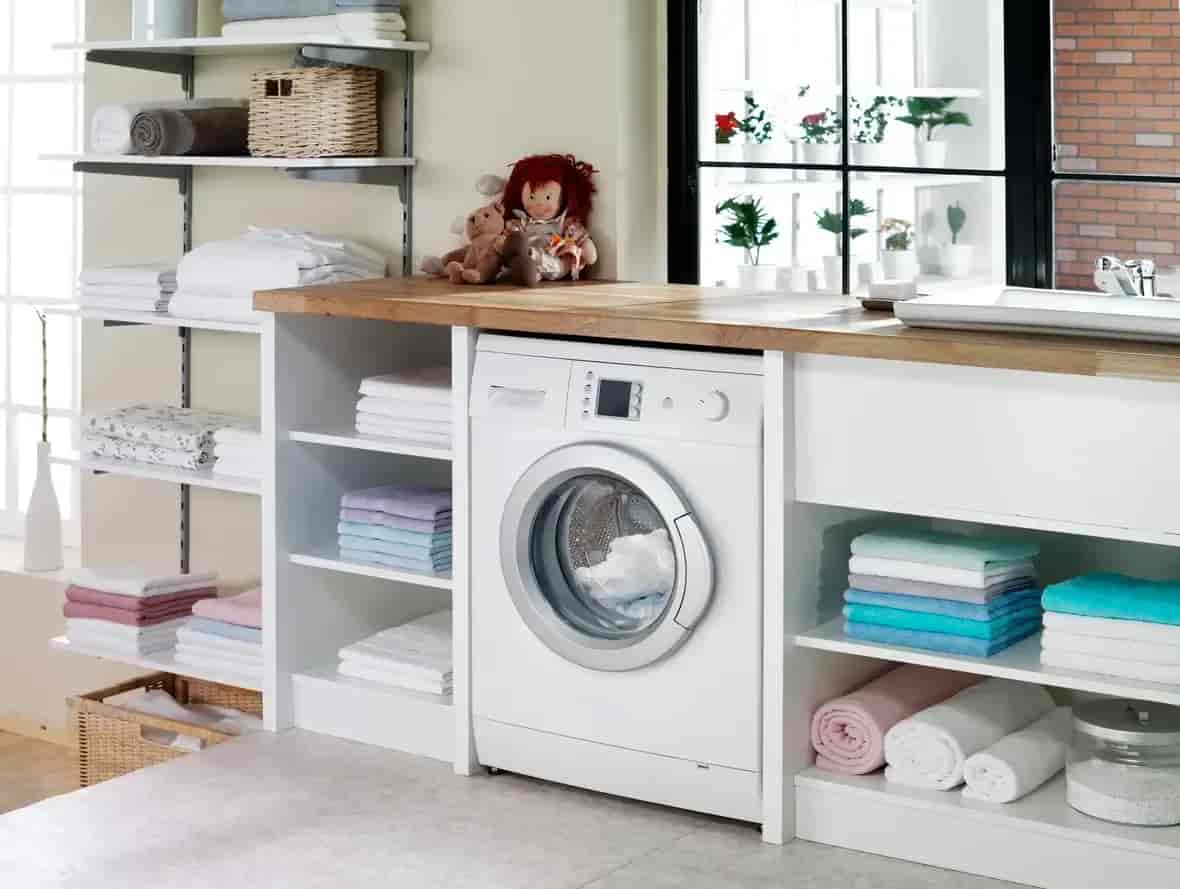
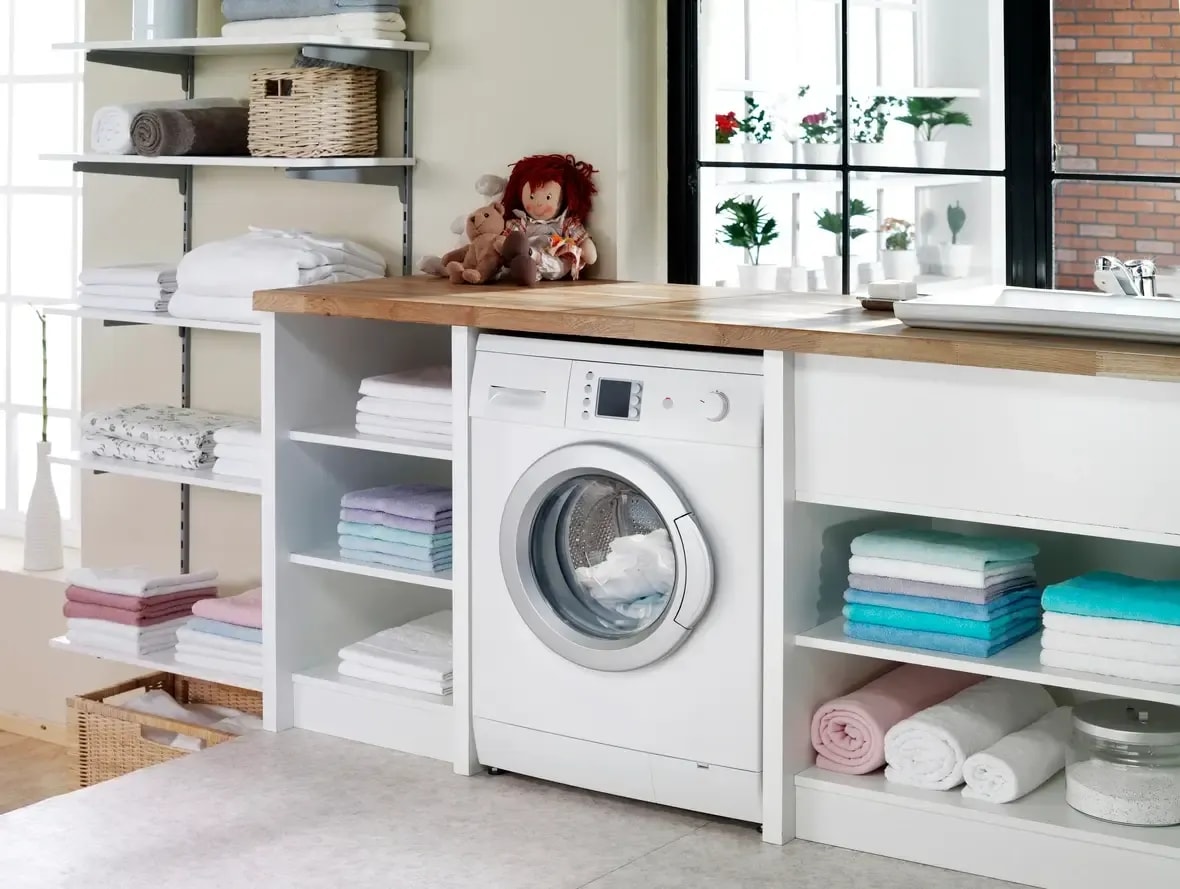
How to Organize Your Laundry Room and Mudroom: A Guide That Survives Daily Use
by 10 Federal Storage
Published on May 7, 2026
Laundry rooms and mudrooms are the hardest-working rooms in most houses, and they get the least design attention. Every member of the family passes through, often carrying something wet, dirty, muddy, or sweaty. The clothes that go in clean come out wrinkled. The shoes that came in clean go out tracking dirt. Pinterest-perfect baskets do not survive a soccer Saturday.
So most laundry and mudroom organization fails, not because the systems are bad, but because they were designed for a tidy magazine spread instead of a Tuesday afternoon when three kids, two dogs, and a parent carrying groceries all arrive home at once.
This guide is built for the Tuesday version. It walks through how to think about these rooms, what to keep in them, what doesn't belong, how to zone the space for actual traffic patterns, and how to keep the system from slowly disintegrating over six months.
First, Decide What These Rooms Are For
Laundry rooms and mudrooms get cluttered because they try to absorb every job nobody assigned to a different room. Cleaning supply storage. Pet feeding. Coat storage. Shoe storage. Sports gear staging. Pantry overflow. Recycling sorting. Charging station for the kids' tablets. Sometimes the cat box.
You cannot do all of that well in one room. Pick the two or three jobs you actually want this space to do. Common combinations:
- Laundry + family entry drop zone (coats, shoes, bags)
- Laundry + pet station (food, leashes, towels)
- Mudroom only, with laundry elsewhere, drop zone plus seasonal gear
- Combined room with everything compressed: laundry, entry, pets, cleaning supplies
Be honest about your household. A family of five with two dogs and a kid in club soccer needs a different mudroom than a couple with no pets. If you've been trying to make one room do six jobs, that's why nothing has stuck.
Step 1: Empty Everything Out
Pull every loose item out of the room, every basket, hook, shelf, cabinet, and drawer. Detergent jugs, dryer sheets, the bin of mismatched socks, the hamper, the iron, the lint roller graveyard, the random tools that ended up here for no clear reason. Out it all goes.
Then, while the room is empty:
- Pull the washer and dryer forward and vacuum the lint behind and underneath them. This is a real fire hazard, not a tidiness issue. Lint and dust accumulate against hot dryer vents and the heating element on the back of the dryer.
- Inspect the dryer vent hose for kinks, lint buildup, or disconnection. A clogged dryer vent is one of the most common house fire causes in the country.
- Check around the washer hookups for any signs of water damage, soft drywall, discoloration, mineral deposits. A slow leak behind the washer is one of the most expensive household repairs.
- Look at the floor: is there an actual floor drain? Is there a drip pan under the washer? If the answer is no to both and you have a second-floor laundry, that's worth fixing before you reorganize anything.
- Mark stud locations in pencil for any wall storage you're planning to install.
These checks take twenty minutes and prevent the kind of problem that ruins the room two months after you finish organizing it.
Step 2: The Four-Pile Sort
Standard decluttering uses three piles. For these rooms, you need four, because some items belong in your home long-term but the laundry room or mudroom is actively damaging them.
- Keep here, items used at least weekly that belong in this room's function. Detergent, dryer sheets, stain treatment, the iron, hampers, the everyday coats and shoes, the dog leash.
- Toss or recycle, empty detergent jugs, dried-out stain pens, mystery cleaning bottles you can't identify, single shoes whose mate vanished a year ago, the umbrellas with broken ribs. Cleaning chemicals you no longer use need household hazardous waste collection, not the regular trash.
- Donate or sell, coats no one wears, shoes that don't fit anyone, the iron you replaced two years ago and kept "just in case." If you haven't worn a coat through a full winter, you won't wear it next winter either.
- Store offsite, items you genuinely want to keep but don't need weekly, and especially items the laundry environment is slowly destroying. More on this in a moment, because this is where most households get it wrong.
Step 3: Zone the Space
Once you know what's staying, divide the room by traffic pattern and frequency of use.
Laundry zones, in workflow order:
- Sort, three hampers if you can fit them (lights, darks, delicates), or a triple-section sorting hamper. Dumping one massive hamper to sort on the floor is the single biggest reason laundry stalls.
- Treat, stain remover, OxiClean, a small countertop area or shelf within arm's reach of the washer.
- Wash and dry, the appliances themselves, with detergent and dryer products on shelves or in a cabinet directly above.
- Fold, a flat surface at counter height. If your washer and dryer are front-load, a counter installed across the top of both is the highest-value upgrade in the room.
- Hang, a rod or hanging bar for items that go straight from dryer to hanger. A retractable wall-mounted rod works in tight rooms.
Mudroom zones:
- Bench, a place to sit while putting on or taking off shoes. Non-negotiable if anyone in the family is over 50 or under 8.
- One cubby or hook column per person, this is the single most important rule in mudroom design. Shared hooks always become "whoever got there first." Personal columns end the daily fight.
- Shoe storage below the bench, ideally on a tray that catches snow, mud, and rain.
- Pet station, leashes near the door, food in a sealed container (never the original bag, never cardboard), towels for paws.
- Daily-grab landing, keys, sunglasses, dog treats, mail. A small tray or shallow drawer keeps this from sprawling.
Tape the zones onto the floor before you install anything. Walk through your morning routine. Walk through coming home with grocery bags. If the cubbies are positioned where the dog usually waits to be unleashed, you've got a collision built into the design.
Step 4: Build the Storage Systems
Now buy hardware. The big pieces:
Wall shelving above the appliances. Leave at least two inches of clearance above the washer and dryer for vibration and venting; mount the lowest shelf high enough that you can still load a tall detergent jug. Twelve-inch-deep shelves hold most laundry products without crowding into the appliance footprint.
Hooks at the right heights. This is where most mudrooms fail. Adult hooks belong at 5.5 to 6 feet off the floor. Kid hooks belong at 4 feet, low enough that a six-year-old can hang their own coat, which is the entire point of giving them a hook. If you only have one row of hooks, the kid coats end up on the floor every day. Two rows, two heights.
Personal cubbies sized about 12 to 14 inches wide per person, 14 to 16 inches deep, with a shelf above for hats and gloves and a hook or two inside for the daily backpack. Label each cubby with the person's name. This sounds excessive until you watch how fast it ends the morning chaos.
A bench with storage underneath. The lift-top kind hides shoes and seasonal gear but tends to become a black hole, once the lid is closed, things vanish. Open cubby-style benches with baskets work better for daily use. Use lift-top for off-season storage only.
Pull-out hampers built into a cabinet beat freestanding hampers in a tight room. They take up no extra floor space and they're easier to keep contained.
Bins, but smarter. Skip cardboard entirely in any room with washers or dryers, moisture, lint, and the occasional minor leak destroy it. Use clear, locking-lid bins for anything stored on a shelf, and standardize on a couple of sizes so they stack. Label both the lid and the long side. For open-shelf items like folded towels and seasonal gloves, fabric bins look cleaner but pick ones with sturdy frames; the cheap collapsible ones slump after a year.
One thing worth spending real money on: good lighting. Most laundry rooms have one weak overhead bulb, which is exactly wrong for a room where you need to spot stains, match socks, and see lint. Add an under-cabinet LED strip above the folding surface and replace the overhead with something brighter. The room will feel twice as functional for under fifty dollars.
What NOT to Store in Your Laundry Room or Mudroom
Most "organization" advice ignores this section, and it's where the most damage happens silently.
Laundry rooms run hot and humid. A running dryer pushes the temperature up and the humidity higher. Even with good ventilation, the room cycles through moisture surges every time a load runs. Mudrooms swing the other direction, every time the door opens in winter, cold and dry air rushes in; every time it opens in summer, hot and humid air rushes in. Both rooms also concentrate chemicals: detergent, bleach, fabric softener, dryer sheets, stain treatments. The fumes are mild but constant.
That combination is brutal on a long list of items people commonly try to store in these rooms:
- Photos, photo albums, and important documents, humidity makes pages stick, fade, and grow mold. A summer in a humid laundry room can ruin a wedding album.
- Leather goods, handbags, jackets, boots stored long-term. Leather mildews, dries, and cracks in fluctuating humidity.
- Wedding dresses, christening gowns, and heirloom textiles, these need acid-free boxes in climate-controlled storage. A laundry room is the worst place in the house for them.
- Books, they yellow, swell, and develop musty smell within months in damp conditions.
- Wood furniture and wooden keepsakes, humidity cycles loosen joints and warp surfaces.
- Electronics and lithium batteries, humidity corrodes contacts, heat shortens battery life. The "spare laptop" or extra phone in the laundry room cabinet is slowly being damaged.
- Off-season formal wear, the suit you wear twice a year, the cocktail dresses, the kids' interview blazers. Detergent fumes settle into fabric, and humidity invites mildew. These belong in a closet inside the conditioned house.
- Sentimental keepsakes and craft supplies, yarn, fabric, scrapbooking materials, a child's saved artwork. Humidity destroys all of it slowly.
- Pet food in original packaging, paper and cardboard absorb moisture and attract pests; transfer to airtight containers.
This is where the "store offsite" pile from earlier earns its place. If you've got family photo albums, a wedding dress, a collection of letters from grandparents, off-season formal clothing you genuinely want to preserve, or boxes of paperwork you legally need to keep, the laundry room and mudroom are not safe homes for any of it.
This is what 10 Federal Storage's climate-controlled units are built for. A 5x10 climate-controlled unit holds roughly the contents of a small bedroom, easily enough for the "preserve carefully" pile from a typical household, and the monthly cost is less than the damage one humid summer will do to a leather coat or a box of family photos.
Common Mistakes That Wreck Even Well-Organized Rooms
The patterns that show up in failed laundry and mudroom systems:
- One hamper for the whole house. Sorting at laundry time is the slowest part of doing laundry. Sorting at the source, three hampers, three categories, cuts the workflow in half.
- Hooks at adult height only. If a kid can't reach their own hook, the coat ends up on the floor every single day. This is a height problem, not a behavior problem.
- No personal cubby per family member. Shared space in a mudroom always becomes territorial chaos. Personal columns prevent the daily argument over whose backpack is whose.
- Decorative baskets that hide problems. Closed wicker baskets look beautiful and quietly accumulate single socks, dead batteries, broken crayons, and dryer sheet wrappers for two years until you finally dump them out. Use clear bins for anything you'll need to find again.
- Treating the mudroom as a permanent destination. The mudroom is a transition zone. Things should land there briefly and move on. If books, mail, or shopping bags live there for weeks, the room stops working.
- Ignoring the air. A laundry room without ventilation grows mildew on the walls behind the washer. Run the bathroom-style exhaust fan or crack the door during loads, and check the dryer vent annually.
- Forgetting the floor. Mudroom floors take an enormous amount of abuse, salt, mud, water, sand. A waterproof tray under the bench and a washable rug at the door catch most of it. Without those, the floor finish is destroyed within a year or two.
The Maintenance Rhythm
These rooms need more frequent attention than almost any other room in the house, because the volume of stuff cycling through is so high.
- Daily (60 seconds), clear the bench surface, hang any coats that drifted to the floor, return shoes to the tray. Empty the lint trap after every dryer load, every load, no exceptions.
- Weekly (10 minutes), wipe the appliance tops, sweep or vacuum the floor (especially behind the door where lint and dust collect), empty the lost-and-found basket and return items to their owners.
- Quarterly (45 minutes), pull the washer and dryer forward and vacuum behind them. Inspect the dryer vent hose. Wipe the inside of the washer's gasket if you have a front-loader (mildew accumulates there fast). Walk the cubbies and pull anything that hasn't moved in three months.
- Twice a year (half a day), seasonal swap. Heavy coats, snow boots, and winter accessories rotate forward in the fall and back to storage in the spring. Reassess: does anything in here need to move offsite? Is anything climate-damaged that should have been moved months ago?
Put the quarterly and seasonal tasks on your calendar. The daily and weekly rhythms become habit; the longer-cycle ones get skipped without a prompt, and the system slowly fails.
When You've Run Out of Room
After a real declutter and a real organization pass, most households find their laundry and mudroom finally function. Some don't, and it's almost always one of three reasons:
- The room is genuinely too small for the household. A two-cubby mudroom can't serve a family of six. A stacked apartment-sized washer and dryer can't keep up with that family's laundry. The room isn't broken, it's undersized for the job.
- You're between life stages. A new baby's gear, a teenager's growing wardrobe, a parent who recently moved in, a recent downsize. The volume is temporarily larger than the space.
- The climate problem is real. You have items that need to be kept long-term, heirlooms, off-season formal wear, photos, leather goods, a wedding dress, and there's no truly suitable space inside the conditioned house for them.
In all three cases, the answer is the same: move the right category of stuff offsite. 10 Federal Storage operates 130+ fully automated self-storage facilities across 16 states, and seasonal rotation and household overflow are two of the most common reasons people rent with us. Because every 10 Federal location is automated with 24/7 access and contactless rental, you can:
- Reserve a unit online in minutes
- Show up the next day with off-season coats, holiday gear, or the boxes of photos that don't belong in a humid laundry room
- Access your unit on any day of the week, at any hour, when it's time to swap seasons
- Choose climate-controlled if your stored items are heat- or humidity-sensitive, which most laundry-room overflow absolutely is
A climate-controlled 5x10 handles the heirlooms, photos, and off-season formal wear for most households. A standard 5x10 covers seasonal coat and gear rotation. The point isn't to get rid of things, it's to free the rooms in your house to do their actual jobs.
Quick-Start Checklist
If you're tackling this project this weekend, the short version:
- Decide what these rooms are for, name two or three primary functions, not six
- Pull everything out and clean behind the washer and dryer
- Sort into four piles: keep, toss, donate, store offsite
- Tape out the zones on the floor before installing anything
- Install hooks at two heights, one personal cubby per family member, and a bench with storage
- Add wall shelving above the appliances and good task lighting above the folding surface
- Use clear locking bins, never cardboard
- Standardize hampers, three categories, one per laundry sort type
- Move heat- and humidity-sensitive items to climate-controlled storage
- Schedule the quarterly and seasonal walkthroughs on your calendar before you forget
Done thoughtfully, this is a one-weekend project that holds up for years instead of a one-Saturday project that holds up for a month. Ready to move the photos, leather, and heirlooms out of harm's way? Find your nearest 10 Federal Storage facility and reserve a climate-controlled unit online in minutes, no office hours, no waiting.
About the Author
10 Federal Storage
Our team at 10 Federal Storage has been in the self storage industry for decades. With knowledge gained from multiple universities and in the field, we are well-prepared and excited to assist with your storage needs. When you rent a unit with us, you can feel confident that our seasoned customer service team’s help will make your transition as seamless as possible. Customer satisfaction is our number one priority, and we strive to make your experience exceptional with our automated leasing options, diverse unit sizes, and a strong commitment to sustainability.