
.svg)
How to Store a Car Long Term: Everything You Need to Do Before Putting It Away
by 10 Federal Storage
Published on March 27, 2026
Storing a car, whether for winter, an extended trip, a classic car off-season, or a vehicle you're not using right now, requires a bit more preparation than simply parking it and walking away. Without the right steps, a car left in storage can develop flat-spotted tires, a dead battery, gummed-up fuel, rust, and rodent damage. This guide covers how to properly store a car, truck, or other vehicle for any length of time.
Why Proper Storage Matters
A vehicle left sitting without preparation deteriorates faster than you might expect. Gasoline begins to degrade and gum up fuel systems in as little as 30 days. Batteries self-discharge and can be permanently damaged by prolonged discharge. Tires develop flat spots from sitting in one position too long. Moisture inside the car promotes rust and mold. Rodents seeking shelter can cause thousands of dollars in wiring damage.
Classic cars, which often have irreplaceable or expensive parts, are especially vulnerable. But even a daily driver deserves proper storage preparation to come back out of storage in good condition.
Storage Tips: Step-by-Step
- Fill the fuel tank completely and add a fuel stabilizer to prevent gasoline degradation and moisture accumulation in the tank.
- Change the oil and filter before storage, used oil contains combustion acids that can damage engine components over a long storage period.
- Clean the car thoroughly inside and out before storage, a clean car is less attractive to rodents and insects.
- Disconnect the battery or connect a smart battery maintainer (trickle charger) to prevent the battery from fully discharging.
- Inflate tires to the maximum recommended pressure to help prevent flat-spotting. For very long storage, consider placing the car on jack stands to remove weight from the tires.
- Do NOT set the parking brake for long-term storage, brake pads can fuse to rotors over time. Use wheel chocks instead.
- Place rodent repellent (peppermint sachets, dryer sheets, or commercial repellents) under the hood, in the trunk, and in the cabin.
- Cover the car with a breathable car cover, not plastic, which traps moisture.
Storing Your Car in a Storage Unit
Is a Storage Unit the Best Place to Store a Car?
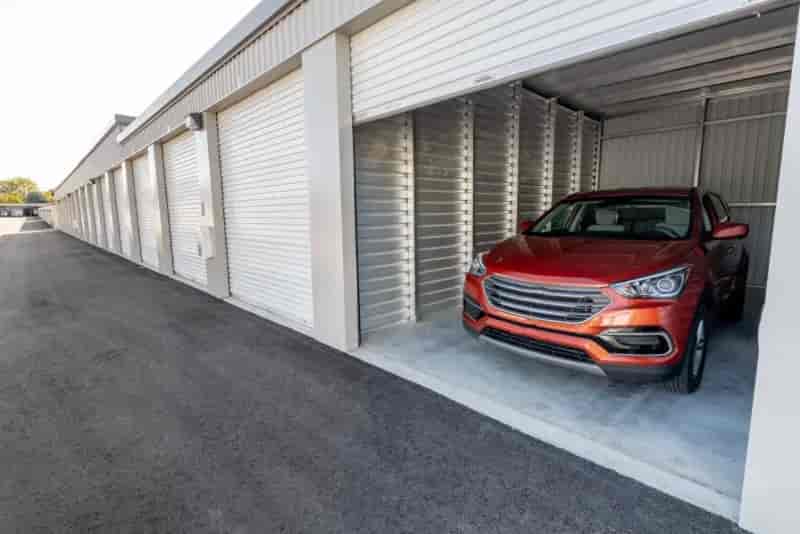
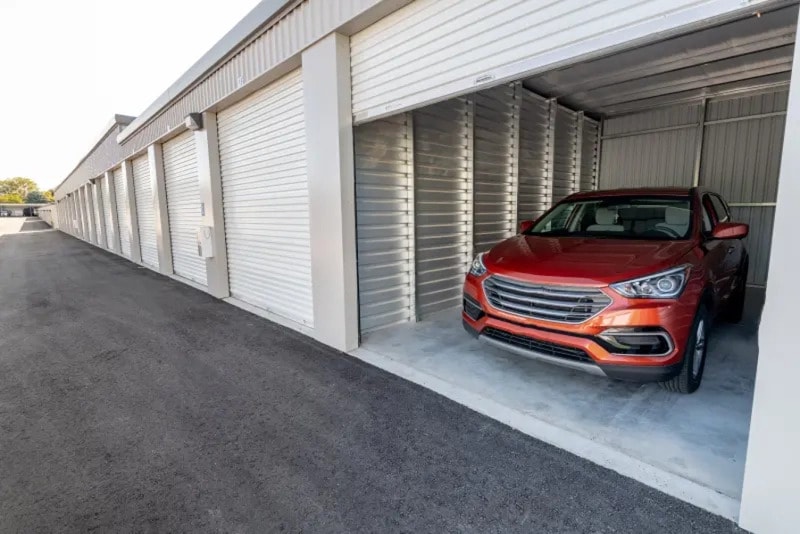
An enclosed storage unit is the gold standard for vehicle storage, significantly superior to outdoor storage. An enclosed unit protects your car from UV damage, rain, hail, extreme temperature swings, bird and animal damage, and vandalism. For classic cars, collector vehicles, and seasonal-use vehicles, the protection of an enclosed unit is well worth the investment.
Do You Need Climate Control for Car Storage?
Climate control is recommended for classic cars, exotic vehicles, and any vehicle stored for more than six months, particularly in regions with significant temperature swings. Extreme cold causes rubber seals, hoses, and belts to contract and potentially crack. Extreme heat accelerates interior deterioration and stresses fluids. A climate-controlled unit maintains stable conditions that minimize these risks. For a daily driver stored for a few months, a standard enclosed unit provides substantial protection over outdoor storage.
What Size Storage Unit Do You Need for a Car?
A standard passenger car (sedan, coupe, or small SUV) fits in a 10x20 unit with room to open doors and move around the vehicle. Trucks, large SUVs, and vans may require a 10x25 or 10x30 unit. If storing additional items alongside the car, motorcycle, tools, seasonal gear, size up accordingly.
A 10x15 unit can fit a compact car or small vehicle in a pinch, but doesn't leave room to access the vehicle comfortably. When in doubt, go with the larger size.
How to Set Up a Vehicle in a Storage Unit
Drive the vehicle in, center it in the unit, and chock the wheels before closing the door. Position any storage items (tools, equipment, seasonal gear) along one wall to keep them out of the driver's path. Set up a battery maintainer if the unit has electrical access.
Leave the windows cracked slightly (not open) to allow air circulation and prevent moisture buildup inside the cabin. A moisture absorber (DampRid or similar) placed inside the vehicle helps control interior humidity.
Quick-Reference: Car Storage Unit Checklist
- Enclosed unit is far superior to outdoor vehicle storage
- Climate-controlled recommended for classic cars and storage over 6 months
- 10x20 unit fits most standard passenger vehicles comfortably
- Add fuel stabilizer, change oil, and disconnect or maintain the battery
- Use wheel chocks, do not set the parking brake
- Use a breathable car cover inside the unit
Store with Confidence at 10 Federal Storage
From winter storage for a classic car to long-term storage during an extended deployment or travel, 10 Federal Storage has the right vehicle storage solution. Our enclosed units protect your vehicle from weather, UV exposure, theft, and the elements, giving you peace of mind while you're away.
Our team can help you find the right size unit for your vehicle and answer any questions about vehicle preparation for storage. Visit us today and let's find the perfect home for your car.
Ready to get started? Rent online with us or stop by your nearest 10 Federal Storage location today.
About 10 Federal Storage
10 Federal Storage provides premier self-storage solutions with state-of-the-art security, climate-controlled units, and flexible rental terms. Contact us today to find the perfect storage solution for your needs.
About the Author
10 Federal Storage
Our team at 10 Federal Storage has been in the self storage industry for decades. With knowledge gained from multiple universities and in the field, we are well-prepared and excited to assist with your storage needs. When you rent a unit with us, you can feel confident that our seasoned customer service team’s help will make your transition as seamless as possible. Customer satisfaction is our number one priority, and we strive to make your experience exceptional with our automated leasing options, diverse unit sizes, and a strong commitment to sustainability.