
.png)
How to Store Batteries Long Term: Safety Tips for All Battery Types
by 10 Federal Storage
Published on March 26, 2026
From AA batteries powering your remotes to lithium batteries in power tools and electronics, proper storage is essential to preserving charge, preventing leakage, and ensuring safety. This guide covers how to store all common battery types — including lithium, alkaline, and rechargeable — for both short-term and long-term storage.
Why Proper Storage Matters
Improperly stored batteries don't just lose charge — they can leak corrosive chemicals, swell, and in the case of lithium batteries, pose a fire or explosion risk. Battery leakage can permanently damage the devices they're stored in, and some battery chemistries are sensitive to temperature in ways that aren't immediately obvious.
On the practical side, batteries degrade faster when stored incorrectly. A properly stored alkaline battery can hold its charge for 10+ years; one stored in a hot car or humid basement may lose significant capacity in just a few months.
Storage Tips: Step-by-Step
- Store batteries at room temperature (around 68–77°F) — contrary to popular myth, the freezer is not recommended for most batteries and can actually damage them by creating condensation.
- Keep batteries in a cool, dry location away from moisture and direct sunlight.
- Store batteries in their original packaging or in a non-conductive plastic battery organizer — never loose in a drawer where terminals can touch and cause discharge or shorts.
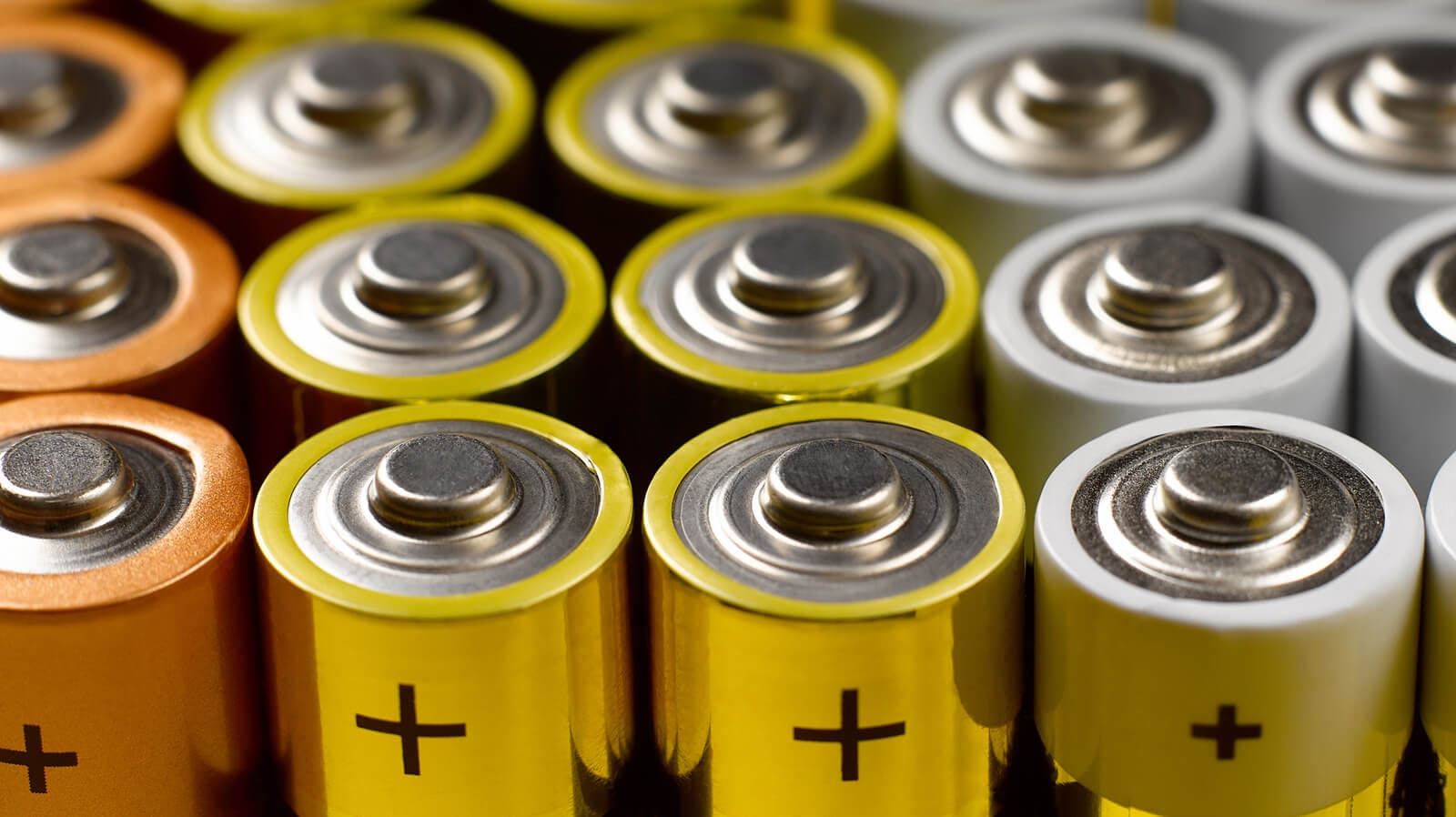
- Keep the positive and negative terminals covered or separated. Two AA batteries with touching terminals can discharge each other over time.
- For lithium batteries (in power tools, laptops, or devices), follow the manufacturer's specific storage guidance — many recommend storing at 40–60% charge for long-term storage.
- Remove batteries from devices that won't be used for extended periods — alkaline batteries left in devices can leak and corrode battery contacts.
- Sort batteries by type and date of purchase, and use older batteries first (FIFO — first in, first out).
- Never store damaged, leaking, or swollen batteries. Dispose of them properly at a battery recycling location.
Storing Batteries in a Storage Unit
Can You Store Batteries in a Self-Storage Unit?
Yes — batteries (alkaline, lithium primary, and rechargeable) can be stored in a self-storage unit. A storage unit is a practical location for emergency preparedness stockpiles, contractor battery supplies, or batteries stored alongside the tools and devices they power. The most important consideration is temperature: batteries degrade faster in heat, so a climate-controlled unit is the best choice for any meaningful stockpile.
Do Batteries Need a Climate-Controlled Storage Unit?
Climate control is recommended, especially for lithium batteries and larger stockpiles. Alkaline batteries tolerate moderate temperature ranges, but consistently high heat (above 80°F) accelerates self-discharge. Lithium batteries — including those in power tools and electronics — can be damaged by heat and may swell or become unsafe if stored in very hot conditions. A climate-controlled unit (55–80°F year-round) significantly extends battery shelf life.
How to Organize Batteries in a Storage Unit
Store batteries in labeled plastic bins organized by type (AA, AAA, C, D, 9V, lithium, etc.) and date of purchase. Keep bins on shelving at mid-height — off the floor to prevent moisture contact, and not at ceiling level where heat accumulates.
For power tool batteries, use the manufacturer's storage cases or a dedicated tool battery organizer. Keep batteries separated from metal tools and hardware to prevent accidental short circuits. A simple inventory checklist (laminated on the shelf or inside the unit door) makes it easy to rotate stock and track expiration dates.
Quick-Reference: Battery Storage Unit Checklist
- Climate-controlled unit recommended, especially for lithium batteries
- Store in labeled plastic bins organized by type and date
- Keep off the floor on shelving to avoid moisture
- Separate from metal objects that could cause short circuits
- Rotate stock using FIFO (first in, first out)
- Never store leaking, swollen, or damaged batteries
Store with Confidence at 10 Federal Storage
10 Federal Storage offers clean, climate-controlled storage units perfect for emergency preparedness supplies, tools, and equipment — including your battery stockpile. Our secure facilities and convenient access hours mean you can get to your supplies when you need them.
Stop by today and let our team help you find the right unit size for your needs. We're here to help you stay organized and prepared.
Ready to get started? Rent with 10 Federal Storage online today or stop by your nearest 10 Federal Storage location.
About the Author
10 Federal Storage
Our team at 10 Federal Storage has been in the self storage industry for decades. With knowledge gained from multiple universities and in the field, we are well-prepared and excited to assist with your storage needs. When you rent a unit with us, you can feel confident that our seasoned customer service team’s help will make your transition as seamless as possible. Customer satisfaction is our number one priority, and we strive to make your experience exceptional with our automated leasing options, diverse unit sizes, and a strong commitment to sustainability.