
.svg)
How to Store Cast Iron Pans and Skillets: Keep Them Clean and Rust-Free
by 10 Federal Storage
Published on March 27, 2026
Cast iron cookware is among the most durable kitchen equipment you can own, properly cared for, a cast iron pan can last generations. But even cast iron has its vulnerabilities: rust forms quickly when moisture meets bare metal, and improper storage can undo years of carefully built seasoning. This guide covers how to store cast iron pans, skillets, Dutch ovens, and griddles to keep them in perfect cooking condition.
Why Proper Storage Matters
Cast iron's greatest strength, its density and heat retention, is also what makes rust such a problem. The sheer mass of cast iron holds moisture against its surface, and without the protective layer of polymerized oil (the 'seasoning'), rust can form within hours in a humid environment. Restoring a rusted cast iron pan is time-consuming, and if deep pitting occurs, the pan may be permanently damaged.
Beyond rust, improper storage can chip enamel on enameled cast iron, cause cracks from impact, or cause the seasoning to go rancid if stored with excessive oil.
Storage Tips: Step-by-Step
- Ensure cast iron is completely dry before storing, any moisture will cause rust. After washing, dry immediately, then place on the stovetop over low heat for a few minutes to evaporate any remaining moisture.
- Apply a very thin coat of cooking oil to all surfaces, inside and outside, before storing. This maintains the seasoning and creates a moisture barrier.
- Less is more with the oil, an overly thick coat will become sticky and can go rancid. A thin, barely-visible sheen is all you need.
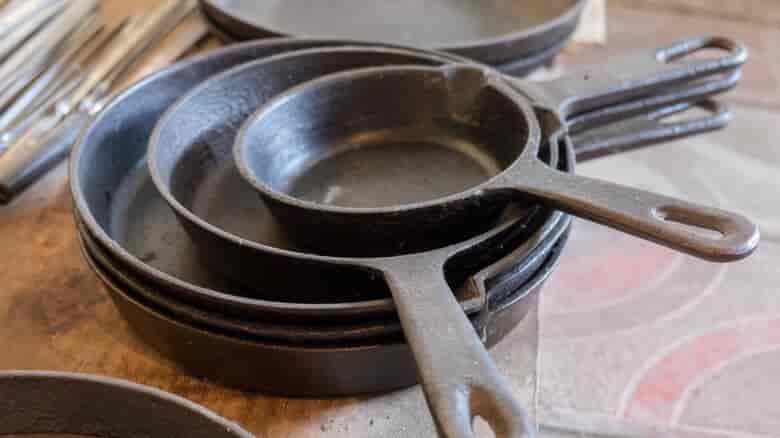
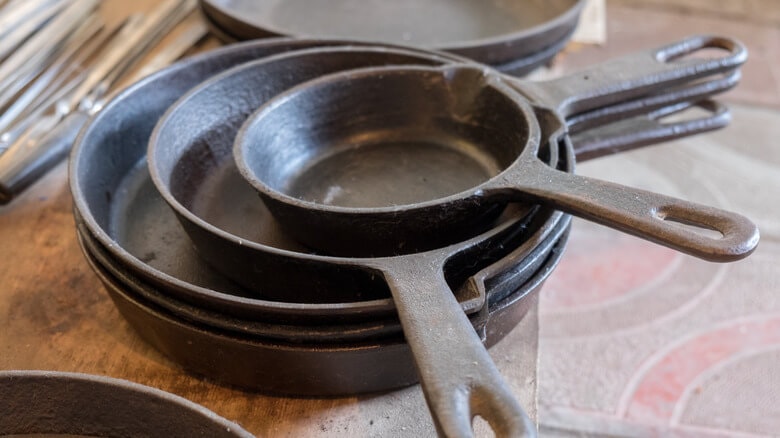
- If stacking cast iron pans, place a paper towel or cloth between them to protect the seasoning and absorb moisture.
- Store cast iron in a dry location, kitchen cabinets, open shelving, or hanging from a pot rack are all excellent options.
- Avoid storing cast iron in the oven if you frequently run self-cleaning cycles, the extreme heat can damage seasoning.
- For enameled cast iron, never stack without protective padding between pieces.
- If storing long-term (months), season the pan thoroughly before storage and consider wrapping loosely in butcher paper or a cotton cloth to allow airflow.
Storing Cast Iron Pans in a Storage Unit
Is a Storage Unit Suitable for Cast Iron Cookware?
Yes, cast iron stores well in a storage unit with a few important precautions. The primary concern is humidity: even a well-seasoned cast iron pan will rust if exposed to high moisture for extended periods. With proper preparation and a reasonably dry storage environment, cast iron can be stored in a unit for months without issue.
Do You Need a Climate-Controlled Unit for Cast Iron?
A climate-controlled unit is recommended for cast iron stored more than 30 days, particularly in humid regions. Humidity is cast iron's primary enemy in storage. A climate-controlled unit maintains stable, moderate humidity year-round, preventing the moisture buildup that causes rust. In drier climates or for shorter storage periods, a standard unit can work if the cookware is well-seasoned and properly wrapped.
How to Prepare Cast Iron for Storage in a Unit
Before boxing up cast iron for storage, apply a full seasoning, clean the pan, apply a thin coat of oil, and bake upside-down at 450–500°F for an hour, then let cool. This builds the strongest possible protective layer before storage.
Wrap each piece individually in butcher paper or a clean cotton cloth, this allows airflow while keeping moisture away from the surface. Do not use plastic wrap or sealed plastic bags, which trap moisture against the metal. Place wrapped pieces in a box with adequate cushioning to prevent impact damage during transport.
What Size Unit Do You Need for Cast Iron Storage?
Cast iron is heavy but compact. A small collection of 4–8 pieces fits comfortably in a single box, which easily fits in a 5x5 unit alongside other kitchen items. For a full kitchen being stored during a move, cast iron fits within any unit size being used for the household move, just keep it on a dedicated, labeled shelf where it won't be buried under lighter items.
Quick-Reference: Cast Iron Storage Unit Checklist
- Season thoroughly before long-term storage
- Dry completely, any moisture leads to rust
- Wrap in butcher paper or cotton cloth, not plastic
- Climate-controlled unit recommended for humid climates or storage over 30 days
- Store on shelving off the floor, not buried under other items
- Check for rust when retrieving, re-season if any rust has developed
Store with Confidence at 10 Federal Storage
At 10 Federal Storage, we help families and home chefs find the right storage solution during moves, renovations, and life transitions. Our clean, secure units provide a great temporary home for your kitchen items, including your treasured cast iron collection.
Whether you need a small unit for a few boxes of kitchen items or a larger space for your entire household during a move, we have the right option. Come visit us today and let us help you make your transition as smooth as possible.
Ready to get started? Rent with us online or stop by your nearest 10 Federal Storage location today.
About 10 Federal Storage
10 Federal Storage provides premier self-storage solutions with state-of-the-art security, climate-controlled units, and flexible rental terms. Contact us today to find the perfect storage solution for your needs.
About the Author
10 Federal Storage
Our team at 10 Federal Storage has been in the self storage industry for decades. With knowledge gained from multiple universities and in the field, we are well-prepared and excited to assist with your storage needs. When you rent a unit with us, you can feel confident that our seasoned customer service team’s help will make your transition as seamless as possible. Customer satisfaction is our number one priority, and we strive to make your experience exceptional with our automated leasing options, diverse unit sizes, and a strong commitment to sustainability.