

How to Store Extension Cords and Electrical Cords
by 10 Federal Storage
Published on March 26, 2026
Extension cords and electrical cords have a talent for becoming a tangled disaster the moment you look away. Worse, improperly stored cords develop kinks, cracks, and internal wire damage that can create real electrical hazards. This guide covers how to store extension cords, power strips, and other electrical cords safely and organized.
Why Proper Storage Matters
A kinked or coiled-too-tightly extension cord isn't just annoying, it can be dangerous. Internal wire damage from improper storage can cause overheating, tripped breakers, or in serious cases, electrical fires. Cords stored in damp environments can suffer insulation damage, and UV exposure causes the outer sheath to crack and become brittle.
Electricians and contractors lose significant time detangling cords on job sites. At home, a drawer full of tangled cords is a frustrating waste of time. A few minutes of proper storage saves hours of untangling.
Storage Tips: Step-by-Step
- Use the 'over-under' coiling method for professional-grade cord management: alternate the direction of each loop so the cord coils without twisting. This is how stage technicians and electricians coil cords to prevent memory and kinking.
- Secure coiled cords with a velcro strap, a bungee cord, or twist ties, not rubber bands, which deteriorate over time and can leave residue on the cord.
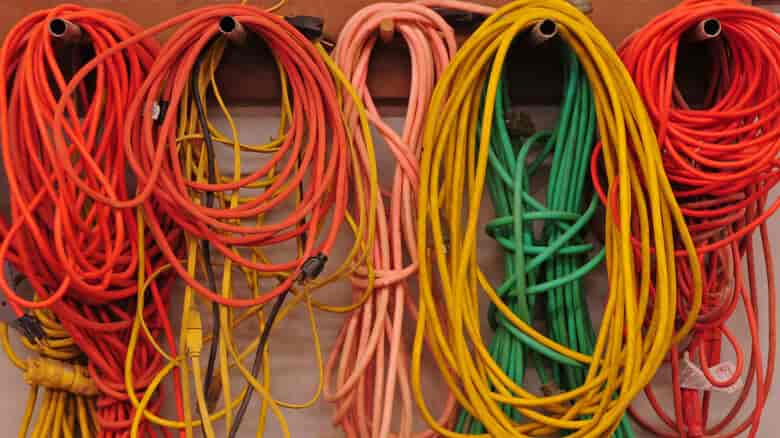
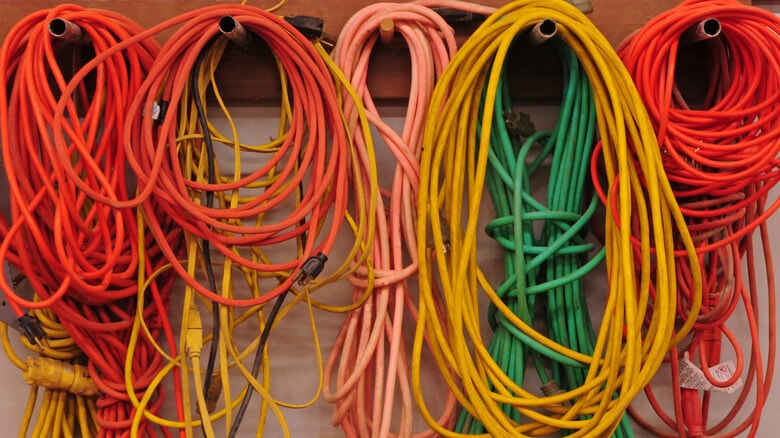
- Hang coiled cords on pegboard hooks or a cord organizer rather than throwing them loose in a bin.
- Label cords by length and amperage rating, a label or piece of tape around the cord makes it easy to grab the right one without uncoiling them all.
- Never coil cords too tightly, a cord that forms a coil smaller than about 6 inches in diameter is at risk of developing internal damage over time.
- Inspect cords before storing, any fraying, cracked insulation, bent prongs, or damaged outlets are cause to replace the cord, not store it.
- Keep cords in a cool, dry location away from UV light, which cracks the outer insulation.
- Store outdoor-rated extension cords separately from indoor cords, mixing them causes confusion when you need the right type quickly.
Storing in a Storage Unit
Is a Storage Unit a Good Place for Extension Cords?
Yes, a storage unit is an excellent location for extension cords, especially for contractors, tradespeople, or homeowners who store tools and seasonal equipment in a unit. Keeping cords organized in the same place as the equipment they power eliminates the hunt through multiple locations when you need to get to work.
Do Extension Cords Need Climate-Controlled Storage?
A standard, non-climate-controlled unit is generally acceptable for extension cord storage. Polyvinyl chloride (PVC) and rubber cord insulation handle moderate temperature variation reasonably well. The key conditions to avoid are excessive moisture (which can compromise insulation and cause metal contacts to corrode) and persistent UV exposure. If your unit stays dry and doesn't receive direct sunlight, a standard unit is fine.
How to Organize Extension Cords in a Storage Unit
A pegboard panel mounted on one wall is the most efficient solution for cord organization in a storage unit. Install hooks sized for your coil diameter and hang each coiled cord individually. Label each hook with cord type, length, and amperage rating.
If pegboard isn't practical, a freestanding metal shelving unit with labeled bins works well. Dedicate one bin per cord type or length, and store coiled cords upright in the bins rather than stacked flat. Keep all cord storage above floor level to avoid moisture contact.
What Size Unit Do You Need?
For cords alone, a 5x5 unit is more than sufficient. Most users storing extension cords are also storing the tools, seasonal equipment, or contractor gear the cords are used with, in that case, size the unit based on the largest items (tools, ladders, equipment) and organize cords on wall-mounted hooks to keep floor space free.
Quick-Reference: Extension Cord Storage Unit Checklist
- Standard unit is generally fine, keep dry and away from UV
- Use pegboard hooks or labeled bins, never loose in a pile
- Coil using the over-under method to prevent kinking
- Label each cord by type, length, and amperage
- Inspect before storing, replace any damaged cords
- Keep storage above floor level to avoid moisture
Store with Confidence at 10 Federal Storage
Whether you're storing tools, workshop equipment, or contractor gear, 10 Federal Storage has the right storage unit for you. Our secure, accessible units with drive-up availability make loading and unloading equipment easy, and our team can help you find the right size to keep everything organized.
Stop by today, we'd love to show you what we have available.
Ready to get started? Rent online with us or stop by your nearest 10 Federal Storage location today.
About 10 Federal Storage
10 Federal Storage provides premier self-storage solutions with state-of-the-art security, climate-controlled units, and flexible rental terms. Contact us today to find the perfect storage solution for your needs.
About the Author
10 Federal Storage
Our team at 10 Federal Storage has been in the self storage industry for decades. With knowledge gained from multiple universities and in the field, we are well-prepared and excited to assist with your storage needs. When you rent a unit with us, you can feel confident that our seasoned customer service team’s help will make your transition as seamless as possible. Customer satisfaction is our number one priority, and we strive to make your experience exceptional with our automated leasing options, diverse unit sizes, and a strong commitment to sustainability.