
.png)
How to Store Ratchet Straps and Tie Downs: Keep Them Tangle-Free and Ready to Use
by 10 Federal Storage
Published on March 26, 2026
Ratchet straps, tie-down straps, and cargo straps are essential tools for hauling loads safely — but they're notorious for becoming a tangled, knotted mess when stored improperly. Whether you use them for moving, hauling equipment, or securing cargo on a trailer, storing them correctly extends their life and means they're ready when you need them.
Why Proper Storage Matters
Ratchet straps and tie-down straps are safety equipment. A strap that's been kinked, UV-damaged, frayed, or stored improperly is a strap that can fail under load — a potentially dangerous situation when securing cargo on a highway. Proper storage prevents premature wear, UV degradation, and tangling that wastes time and patience.
Most straps are made from polyester webbing, which is resilient but vulnerable to prolonged UV exposure, abrasive surfaces, and moisture. Storing them correctly preserves their load rating and extends their useful life significantly.
Storage Tips: Step-by-Step
- Always clean straps before storing — wipe off dirt, mud, grease, or chemicals that can degrade the webbing over time.
- Inspect straps for fraying, cuts, or worn areas before putting them away. Damaged straps should be replaced, not stored.
- Fold or roll straps neatly and secure with a velcro strap, zip tie, or the strap's own hook to keep them from unraveling.
- For ratchet straps specifically, retract the strap fully into the ratchet mechanism and hook the loose end to keep it compact.
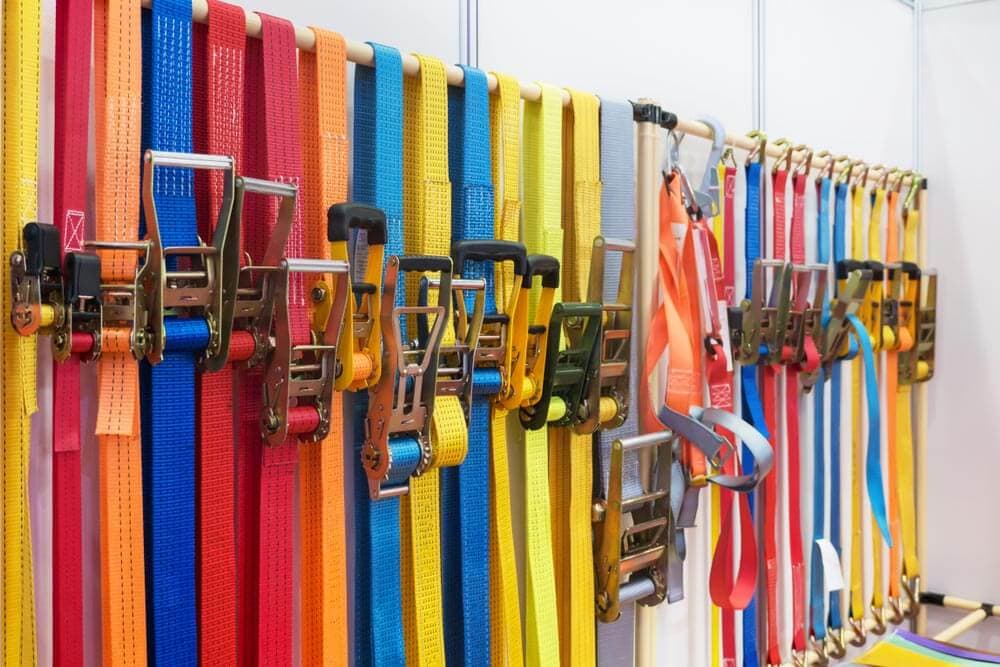
- Hang straps on hooks, pegboards, or a dedicated strap organizer rather than coiling them in a bin where they tangle.
- Store away from direct sunlight — UV exposure causes webbing to become brittle and reduces the rated load capacity over time.
- Keep in a cool, dry location. Moisture causes mold and mildew on webbing and can cause metal hardware to rust.
- Label or color-code straps by length or load rating for quick identification when you need a specific strap.
Storing in a Storage Unit
Is a Storage Unit a Good Place for Ratchet Straps and Tie Downs?
Yes — especially for contractors, tradespeople, or anyone who stores equipment, trailers, or work vehicles in a unit. A storage unit keeps your cargo straps organized alongside the equipment they're used with, making it easy to grab exactly what you need without digging through a truck bed or cluttered garage.
Do You Need Climate Control for Strap Storage?
A standard, non-climate-controlled unit is generally sufficient for ratchet straps and tie downs. Polyester webbing handles temperature variation reasonably well. The key is keeping straps dry and out of direct sunlight. If your unit receives direct sun through gaps or has extreme heat buildup, a climate-controlled unit is worth considering — particularly for high-rated load straps used in commercial applications.
How to Organize Straps in a Storage Unit
Wall-mounted pegboards or hook rails are the most effective solution for strap organization in a storage unit. Install a pegboard panel on one wall of the unit and hang coiled straps on individual hooks, labeled by strap type, length, or working load limit. This keeps every strap visible, tangle-free, and accessible without sorting through a pile.
If pegboard isn't an option, a freestanding tool rack or shelving unit with labeled bins works well. Keep the ratchet mechanism hardware up off the floor on a shelf to prevent rust from ground-level moisture accumulation.
What Size Unit Do You Need?
For straps alone, a 5x5 unit is more than enough. Most users storing ratchet straps are also storing the trailer, truck accessories, or equipment the straps are used with — in which case a 10x15 or 10x20 drive-up unit is the right choice, giving you vehicle access and room to organize all your hauling gear together.
Quick-Reference: Strap Storage Unit Checklist
- Clean and inspect all straps before storing
- Hang on pegboard hooks — avoid loose bins where tangling occurs
- Keep hardware off the floor to prevent rust
- Label by strap type, length, or load rating
- Standard (non-climate) unit is generally fine for polyester webbing
Store with Confidence at 10 Federal Storage
10 Federal Storage offers a range of unit sizes perfect for storing work equipment, trailers, tools, and cargo gear. Our drive-up accessible units make it easy to load and unload heavy equipment, and our secure facilities give you confidence that your gear will be there when you need it.
Whether you're a contractor, a weekend hauler, or someone who just needs a clean place to store their truck gear, we have a solution. Come see us today.
Ready to get started? Rent with 10 Federal Storage online today or stop by your nearest 10 Federal Storage location.
About the Author
10 Federal Storage
Our team at 10 Federal Storage has been in the self storage industry for decades. With knowledge gained from multiple universities and in the field, we are well-prepared and excited to assist with your storage needs. When you rent a unit with us, you can feel confident that our seasoned customer service team’s help will make your transition as seamless as possible. Customer satisfaction is our number one priority, and we strive to make your experience exceptional with our automated leasing options, diverse unit sizes, and a strong commitment to sustainability.