

Laundry Room and Mudroom Ideas and What They Cost
by 10 Federal Storage
Published on April 23, 2026
Laundry rooms and mudrooms are the two hardest-working rooms in the house that nobody actually shows off. They absorb the mess before it reaches the rest of the home, wet boots, muddy jackets, sports gear, gym clothes, bags of softener pods, the pile of mismatched socks that has become its own long-term resident. When they work, the rest of the house feels calmer. When they don't, clutter spreads everywhere.
The good news: these projects cover a huge cost range, from a couple hundred bucks on a Saturday to a five-figure custom build. The trick is matching the scope to the actual problem. A refresh won't fix a layout that's wrong for your household, and a full bump-out is overkill if what you really need is better storage on the wall you already have.
Below are eight common project tiers with realistic budgets, timelines, and what's actually in the scope. After that, a component-by-component breakdown for readers making specific decisions, a small-laundry-room section, and an honest DIY-versus-hire-it-out list.
Eight Laundry Room and Mudroom Ideas, from Light Refresh to Full Build
1. The Cosmetic Refresh
Budget: $300 to $1,500
Timeline: A weekend to a week
Best for: A room that functions fine but looks tired
You're keeping the layout, the appliances, and the cabinetry. You're changing how the room feels. This is the highest-satisfaction project relative to cost, and it's almost entirely DIY-able.
- Fresh paint (moisture-resistant finish): $150 to $300
- New cabinet hardware and faucet: $100 to $300
- Wallpaper on one wall or ceiling: $100 to $400
- Upgraded light fixture: $80 to $300
- New pulls, hooks, baskets, labeled bins: $100 to $200
2. The Small Laundry Closet Upgrade
Budget: $1,500 to $5,000
Timeline: One to two weeks
Best for: Apartment-style or hallway laundry closets where the machines are already there
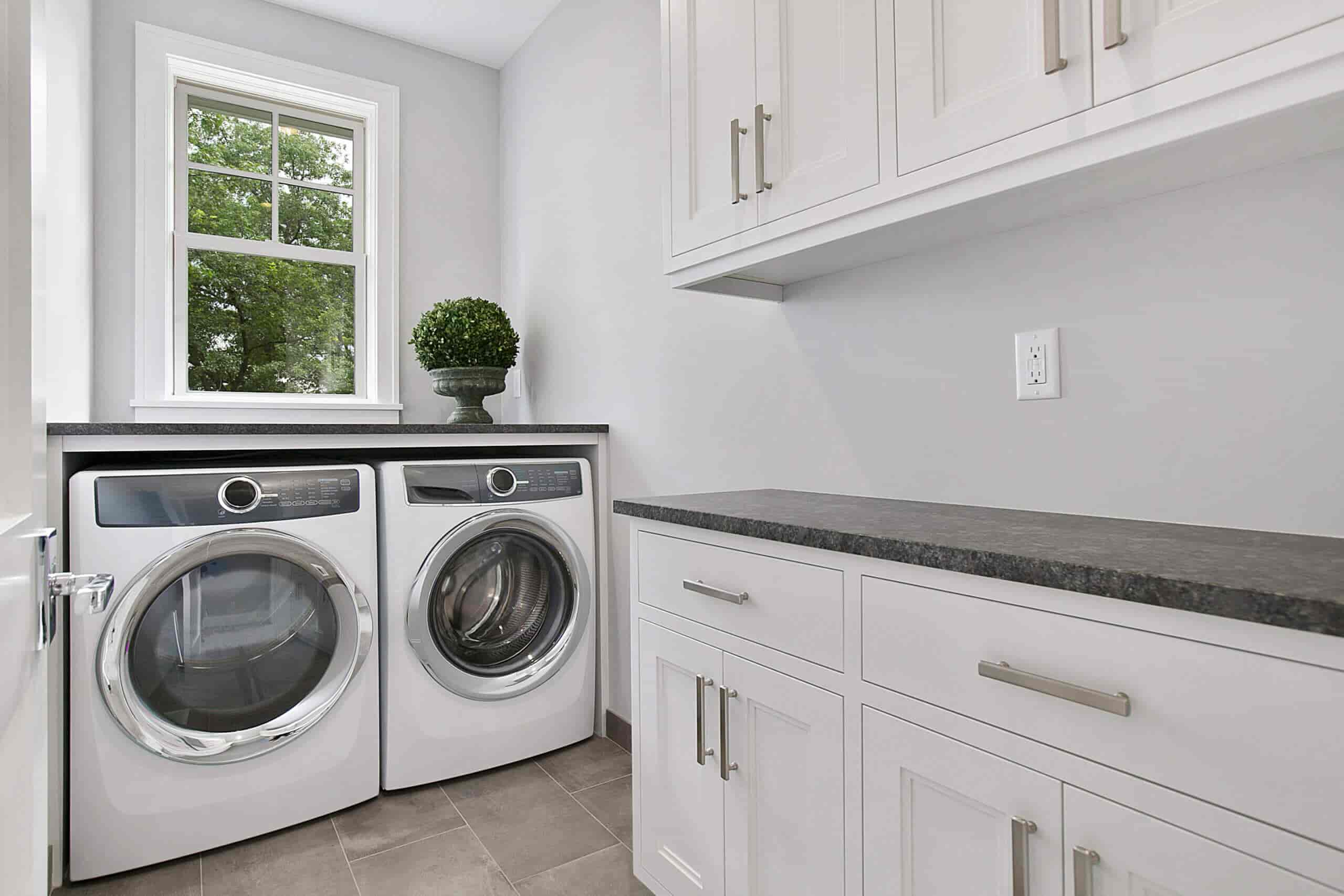
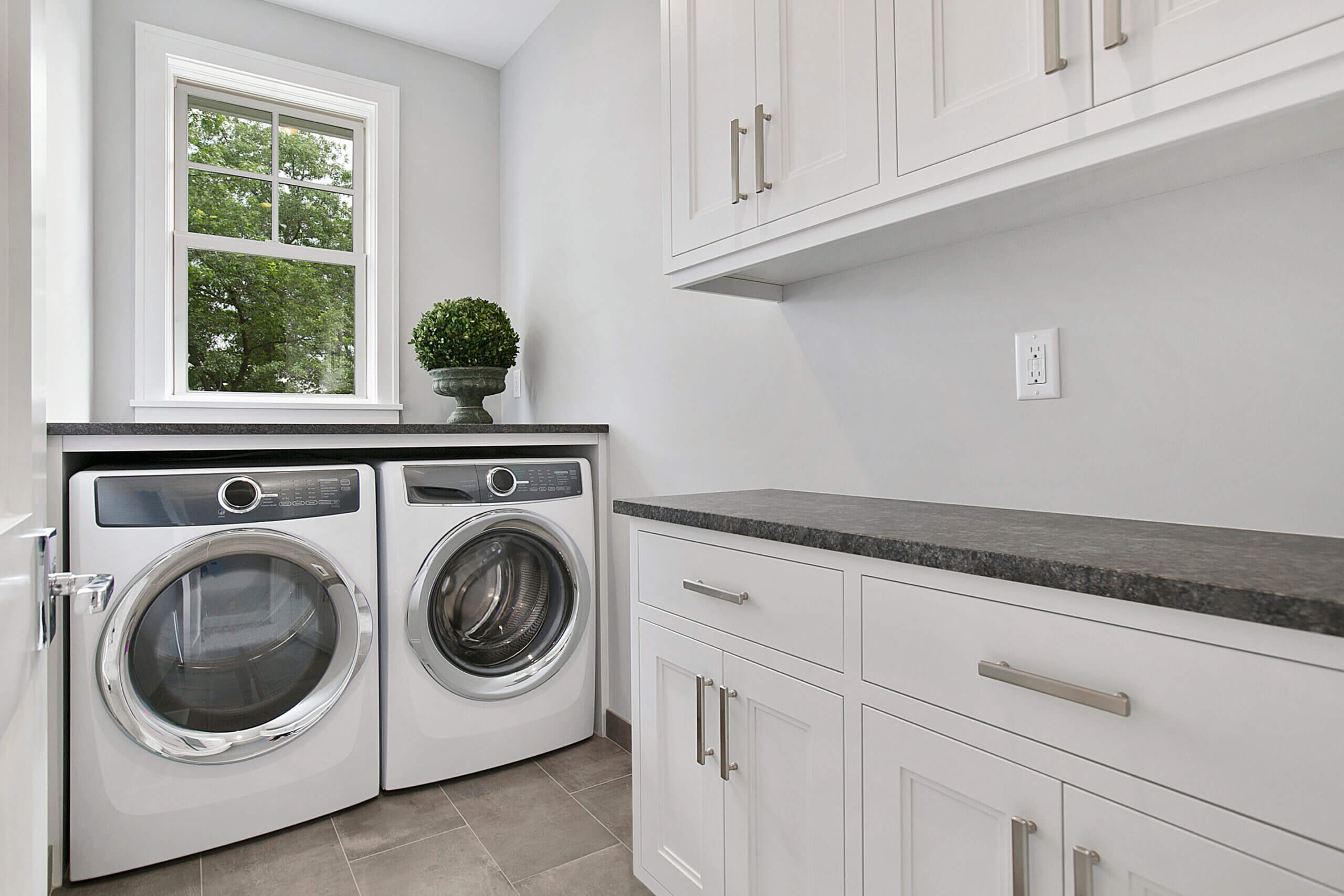
A laundry closet holds a stacked or side-by-side washer and dryer and not much else, so every inch has to earn its keep. This scope usually means new flooring, custom shelving or a slim cabinet bank above the machines, a countertop across the top (if side-by-side), better lighting, and a retractable drying rack or rod.
- Stacking kit or new stackable set: $75 for a kit on existing machines, $1,500 to $2,500 for new compact appliances
- Shelving or slim cabinets above: $200 to $1,200
- Countertop over side-by-side machines: $200 to $600
- Pull-out hamper or laundry sorter: $150 to $400
- Bifold or barn door replacement: $150 to $800
3. The Full Laundry Room Remodel (Same Footprint)
Budget: $6,000 to $17,000, with most projects landing around $11,000
Timeline: Two to four weeks
Best for: A dedicated laundry room you plan to stay in for years
This is the category most cost articles describe when they quote a "laundry room remodel" number. You're keeping the plumbing and walls where they are but replacing most of the room, cabinets, countertop, flooring, sink, lighting, paint, and often the appliances.
- Cabinets: $100 to $300 per linear foot installed
- Countertop (laminate to quartz): $20 to $120 per square foot
- Tile or LVP flooring: $3 to $25 per square foot installed
- Utility sink plus faucet: $350 to $1,000
- New washer and dryer pair: $1,000 to $2,300 for mid-range; $2,500 to $5,000+ for high-end
- Lighting, paint, hardware, finishing: $800 to $2,000
Realistic tiers inside this range:
- Modest ($6,000 to $8,500): Stock cabinets, laminate counters, LVP floor, keep existing appliances or buy a basic new pair
- Mid-range ($8,500 to $13,000): Semi-custom cabinets, quartz or butcher block counter, tile floor, utility sink, new energy-efficient appliances
- High-end ($13,000 to $17,000+): Custom cabinetry, specialty tile, recessed lighting, designer fixtures, premium appliance pair
4. The Closet-to-Mudroom Conversion
Budget: $1,500 to $4,500
Timeline: A long weekend to two weeks
Best for: Homes with a front or side entry closet that's currently a coat graveyard
This is the cheapest way to get a real mudroom. You pull the closet doors off (or replace them with an open-front frame), remove the old shelf and rod, and build in a bench with hooks above and cubbies or shoe storage below. Durable flooring comes in if the existing surface won't stand up to wet boots.
- Demo and prep: $100 to $300 if DIY, $400 to $800 with a carpenter
- Built-in bench with cubbies: $500 to $2,000 depending on custom vs. off-the-shelf
- Hooks, shelving above bench: $50 to $300
- Flooring swap (if needed): $200 to $800 for a small footprint
- Paint, trim, beadboard or shiplap accent: $150 to $500
5. The Garage-Entry Mudroom Build-Out
Budget: $8,000 to $16,000
Timeline: Three to six weeks
Best for: Homes where the garage is the main family entrance (which, for most households, it is)
You're taking the zone between the garage door and the house, often a short hallway or a dead-end pass-through, and turning it into a proper mudroom with built-in lockers or cubbies, a bench, hooks, and durable flooring. If the space is currently part of the garage itself, you'll likely need to add a wall or two, insulation, and sometimes an additional door.
- New wall (if enclosing garage space): around $1,800 per wall
- Insulation and drywall: $1.50 to $3 per square foot
- Tile or sealed-concrete flooring: $500 to $2,500 depending on size
- Built-in lockers or cubbies (2 to 4 units): $1,250 to $4,000
- Bench, hooks, shelving: $300 to $1,200
- Lighting and outlet work: $400 to $1,200
6. The Laundry-Plus-Mudroom Combo
Budget: $12,000 to $25,000
Timeline: Four to eight weeks
Best for: Families who want both rooms but only have space for one
The combo room is the most-requested layout in this category for a reason: it puts the washer and dryer next to the spot where dirty clothes naturally come off. You get a washer, dryer, folding counter, utility sink, bench, cubbies or lockers, hooks, and durable flooring, all in one 60-to-100-square-foot room.
Expect to spend roughly 60% of the budget on built-ins and cabinetry and the rest on appliances, flooring, plumbing, and electrical. If the room isn't already plumbed, add $1,500 to $4,000 for a plumber to run water and drain lines.
7. The Mudroom Bump-Out Addition
Budget: $17,000 to $30,000, sometimes higher
Timeline: Two to four months
Best for: Homes with no interior space to spare and an exterior wall that can extend
This is a true addition, new foundation, new framing, new roofline tied into the existing one, new siding, and new interior finishes. Pricing runs $100 to $300 per square foot, with 60 to 100 square feet being the common range. The bump-out approach (extending an exterior wall a few feet rather than building a full room) can keep costs toward the lower end if the project doesn't need a full foundation.
- Foundation: $5 to $12 per square foot
- Framing: $7 to $16 per square foot
- Roofing and tie-in: $2,000 to $7,000
- Siding to match existing: $3 to $12 per square foot
- Interior finishes (drywall, flooring, built-ins, paint): $5,000 to $12,000
- Permits: $400 to $1,500
- General contractor fee: 10% to 20% of project total
8. The High-End Custom Combo
Budget: $25,000 to $60,000+
Timeline: Three to six months
Best for: Whole-home renovations, custom builds, or homes where this space is a daily dealbreaker
At this tier, you're getting a 120-to-200-square-foot multi-purpose room with custom millwork, designer finishes, and at least one showcase feature, a built-in dog wash station ($2,000 to $3,000 plus tile and glass), a drop-zone desk with charging outlets, a steam closet for wrinkle release, or an island with a second sink. Appliances trend high-end (think $3,000-plus washer-dryer pairs with smart features). This is where the room stops being utilitarian and starts being something you might actually enjoy walking into.
Small Laundry Room Ideas That Actually Work
If you've got 20 to 35 square feet and no plan to expand, the problem isn't usually the size, it's that the existing space wasn't designed, it just happened. A few moves consistently get small laundry rooms to punch above their weight:
- Stack the appliances. Converting a side-by-side setup to stacked front-loaders frees up 30 inches of floor space for a cabinet, hamper sorter, or drying area. A stacking kit runs about $75 if your current machines are compatible.
- Add a counter over side-by-side machines. A single piece of butcher block or laminate across the tops of the washer and dryer becomes your folding station. It also solves the problem of socks falling behind the machines. Budget: $200 to $600.
- Go vertical. Floor-to-ceiling shelving or a tall cabinet bank on one wall is almost always better than a single mid-height shelf. Use the upper shelves for things you touch twice a year (iron, stain kit, seasonal cleaning).
- Install a wall-mounted drying rack. A $40 accordion-style rack that folds flat against the wall handles delicates and line-dries without eating floor space.
- Put a rod between cabinets or above the machines. A simple closet rod between two upper cabinets holds hangers for clothes that go straight from dryer to closet without folding.
- Use an over-the-door organizer. The back of the laundry room door is the single most under-used surface in the house. Shoe pockets work for spray bottles, lint rollers, and dryer sheets; a slim wire rack handles the iron and ironing board.
- Swap the bifold for a barn door or pocket door. Bifold doors eat several inches of wall space when open. Replacing them recovers usable cabinet or shelf room.
None of these individually is a renovation. Stacked, they can turn a cramped laundry closet into something that feels deliberate without touching the plumbing.
Where the Money Actually Goes
If you're picking through these projects component by component, trying to decide, for instance, whether to spring for quartz or stick with laminate, here's how the numbers shake out across the major line items. These are national averages and will drift up or down depending on your market and how much labor is involved.
Cabinets and Built-Ins
Cabinetry is the single biggest line item in most laundry or mudroom projects. Installed costs run roughly $100 per linear foot for stock cabinets, $200 to $300 for semi-custom, and north of $500 for fully custom. Lockers and built-in bench units run $1,250 to $4,000 for a four-bay setup. Stained wood holds up better than painted finishes in high-traffic mudrooms because paint touch-ups rarely match.
Countertops
Laminate is $10 to $40 per square foot installed and looks fine in a utility space. Butcher block is $30 to $90 and works well over laundry machines because it's warm and easy to replace. Quartz, which is the mid-to-high-end default, runs $60 to $120. Natural stone can push past $200. For a small room, the actual dollar difference between tiers is often under $500, worth factoring in.
Flooring
Expect $3 to $25 per square foot installed. Luxury vinyl plank ($3 to $7) is the value winner for both rooms because it handles water, is easy to replace in sections, and forgives dropped bottles of detergent. Porcelain or ceramic tile ($10 to $20) lasts longer but costs more to install and is cold underfoot. Sealed concrete is a strong choice for garage-entry mudrooms.
Appliances
A basic washer-dryer pair runs $1,000 to $2,300. Mid-range, efficient pairs (front-loaders, heat-pump dryers) run $2,000 to $3,500. High-end with smart features, steam cycles, and large capacity runs $3,500 to $6,000-plus. Heat-pump dryers cost more up front but cut energy use significantly and don't require a vent, which opens up placement options.
Plumbing and Electrical
Moving a washer hookup runs $500 to $2,000. A new dedicated 240-volt circuit for a dryer is $250 to $800. Rerouting drain lines is $300 to $800. A new utility sink with faucet is $350 to $1,000 installed. Plumbers charge $75 to $150 per hour; electricians $50 to $130 per hour. These are the line items where the "keep the layout" rule saves the most money, moving plumbing or adding a new circuit can add $2,000 to $5,000 fast.
Lighting
Recessed lighting runs about $800 for a small room's worth of cans installed. A single statement fixture (flush mount, pendant, or small chandelier) is $100 to $700. These spaces benefit from more light than people usually plan for, you're reading care labels and spot-treating stains.
Permits
$400 to $1,500 depending on scope and local requirements. Any project that moves plumbing, adds a 240-volt circuit, or involves structural work almost always requires one. Cosmetic refreshes don't.
Return on Investment
Neither a laundry room nor a mudroom is among the highest-ROI projects homeowners tackle. The Cost vs. Value Report has consistently ranked exterior projects (garage door, steel entry door, stone veneer) at the top for cost recouped at resale, with interior projects trailing. That said, industry sources peg laundry room remodel ROI at roughly 40% to 70% and mudroom additions at 50% to 80%, with the variance driven by local market expectations. In most regions, a first-floor laundry room and some form of mudroom near a secondary entry are now table stakes, their absence hurts resale more than their presence helps it.
DIY: What's Fair Game and What's Worth Hiring Out
There's a lot of DIY headroom in these projects, especially if you're doing a refresh or a closet conversion. But some line items are "pay someone who does this every day" territory, full stop. An honest split:
Fair Game for DIY
- Paint, including walls, ceiling, and trim
- Hardware swaps (pulls, knobs, faucet handles if the valve stays)
- Hanging hooks, racks, pegboards, and over-door organizers
- Open shelving installation into studs or with heavy-duty anchors
- Assembling and installing ready-to-assemble cabinets or lockers
- Luxury vinyl plank flooring (click-lock, floating installations)
- Peel-and-stick or standard wallpaper
- Bench builds from 2x4s and plywood, with cushion on top
- Demo of old cabinets, shelving, and non-load-bearing features
- Replacing a faucet if you're comfortable with shutoffs and basic connections
Worth Hiring Out
- Moving water supply or drain lines
- Installing a new 240-volt circuit or upgrading a panel
- Gas line work for a gas dryer (this is a licensed-only job in most jurisdictions)
- Tile work beyond a small backsplash, bad tile is obvious and expensive to redo
- Structural work, including removing walls or building a bump-out addition
- Roofing tie-ins
- Custom cabinetry fabrication and installation
- Anything that requires a permit, unless you have a clean understanding of your local code
- Dryer vent rerouting through walls or ceilings
A reasonable hybrid approach: hire the plumber, electrician, and any tile setter you need, then handle demo, painting, flooring, and finish carpentry yourself. You'll still spend, but you'll save the 20% to 30% general-contractor markup on the portions you manage directly.
Where to Put Everything While the Work Happens
Here's something that blindsides most people: the laundry room and mudroom are where a shocking amount of household stuff lives. Coats, boots, sports gear, backpacks, cleaning supplies, vacuums, pet gear, luggage, gift wrap, the dogs' food bin, the off-season bin of snow pants. When the room goes offline for three weeks, or three months, for an addition, that stuff has to go somewhere. The alternative is stacking it in the dining room and living with it.
A small offsite unit for the duration of the project is often the cleanest answer, especially for anyone doing a combo build or a bump-out addition. 10 Federal Storage runs 130+ fully automated facilities across 14 states, with 24/7 access, contactless online rental, and no long-term commitment, so you can rent for exactly as long as your project takes and close it out when the room is done. The automation matters here because you're not scheduling your trips around someone else's office hours; if your contractor calls on a Sunday night saying they need you to clear out the garage by Monday morning, you can pull up, unload, and be out without dealing with anyone.
The same logic applies to the other end of the project, too. A well-designed mudroom and laundry combo often replaces the closets and shelves where seasonal stuff used to live. If the new room is more functional but has less raw storage volume than the mess it replaced, keeping holiday decorations, camping gear, and seasonal wardrobes offsite is how you keep the new space from backsliding into the old chaos.
Start Smart: Your Next Steps
Laundry and mudroom projects reward homeowners who are specific. The difference between a $2,000 refresh and a $25,000 combo build isn't taste, it's whether you've correctly diagnosed what's broken. If the room looks tired but functions, don't build an addition. If your family can't get out the door in the morning because there's no bench and no lockers, don't repaint and call it done.
- Spend a week paying attention to the actual problem. Is it storage? Layout? Appliances? Aesthetics? A combination? Write it down before you start pricing anything.
- Measure the space and map the fixed constraints. Plumbing locations, the 240-volt outlet, door swings, window placement, and load-bearing walls all shape what's actually possible.
- Pick a tier from the eight above, and set a budget 15% above the top of that range. Renovation overruns are not a personal failing, they're the base rate.
- Get three bids for anything past the refresh tier. Prices vary more than most homeowners expect, and the middle bid is usually the right one.
- Line up offsite storage if the project will take more than a week or two. Booking a unit at 10 Federal Storage before demo starts means you can move belongings out in one trip instead of shuffling them around the house for a month.
- Pull permits for anything that needs them. Unpermitted work becomes a problem when you sell, and it's not worth the couple hundred dollars saved up front.
- Hold back 10% of your budget for the last 10% of the project. Finishing work, trim, hardware, paint touch-ups, the right baskets, is what makes the room feel done. Running out of money at the finish line is how rooms end up looking almost-but-not-quite right for years.
About the Author
10 Federal Storage
Our team at 10 Federal Storage has been in the self storage industry for decades. With knowledge gained from multiple universities and in the field, we are well-prepared and excited to assist with your storage needs. When you rent a unit with us, you can feel confident that our seasoned customer service team’s help will make your transition as seamless as possible. Customer satisfaction is our number one priority, and we strive to make your experience exceptional with our automated leasing options, diverse unit sizes, and a strong commitment to sustainability.