

Apartment Amenities to Look For: What Each One Costs, What the Law Already Covers, and How to Check It on a Tour
by 10 Federal Storage
Published on November 6, 2026
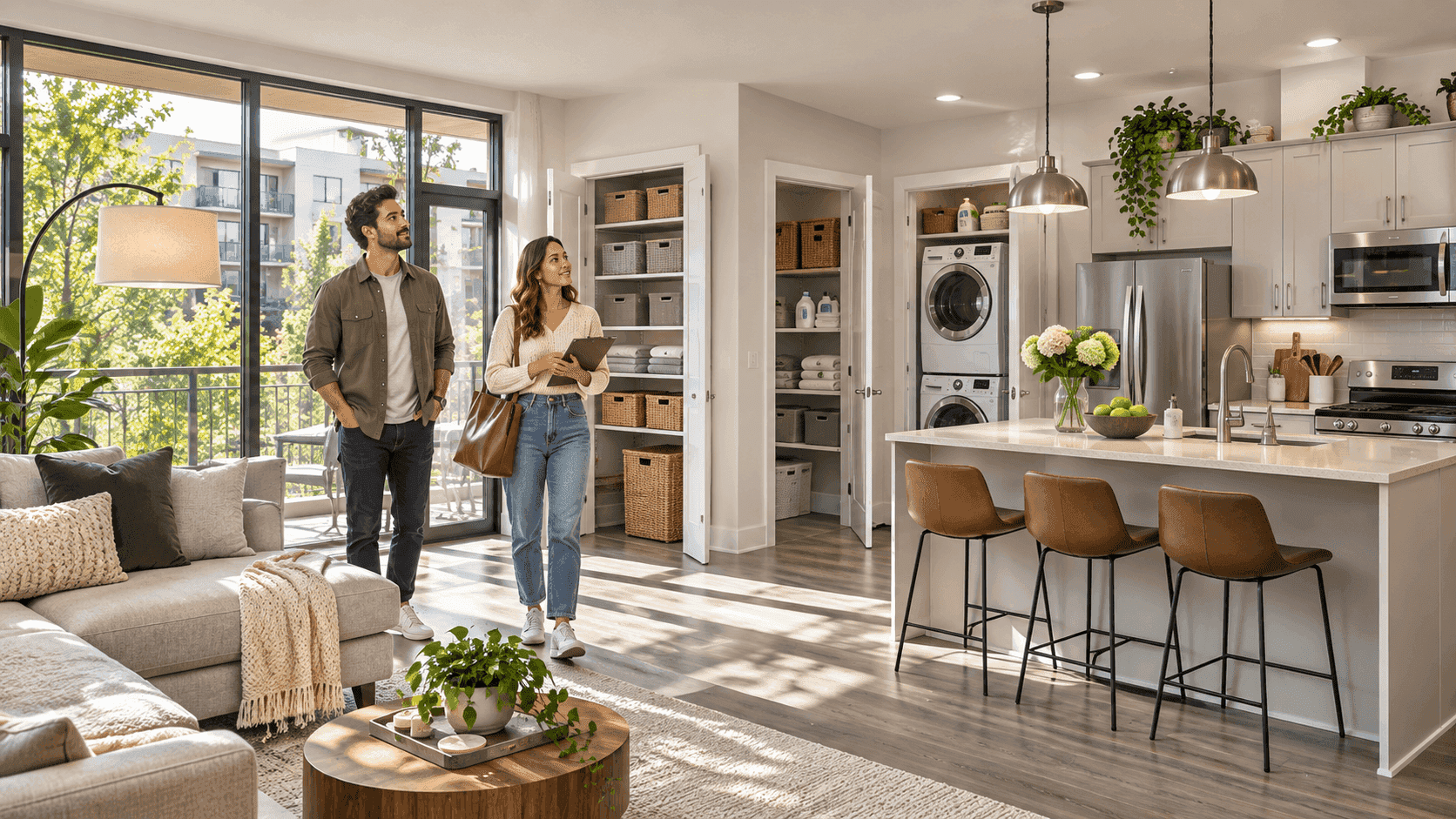
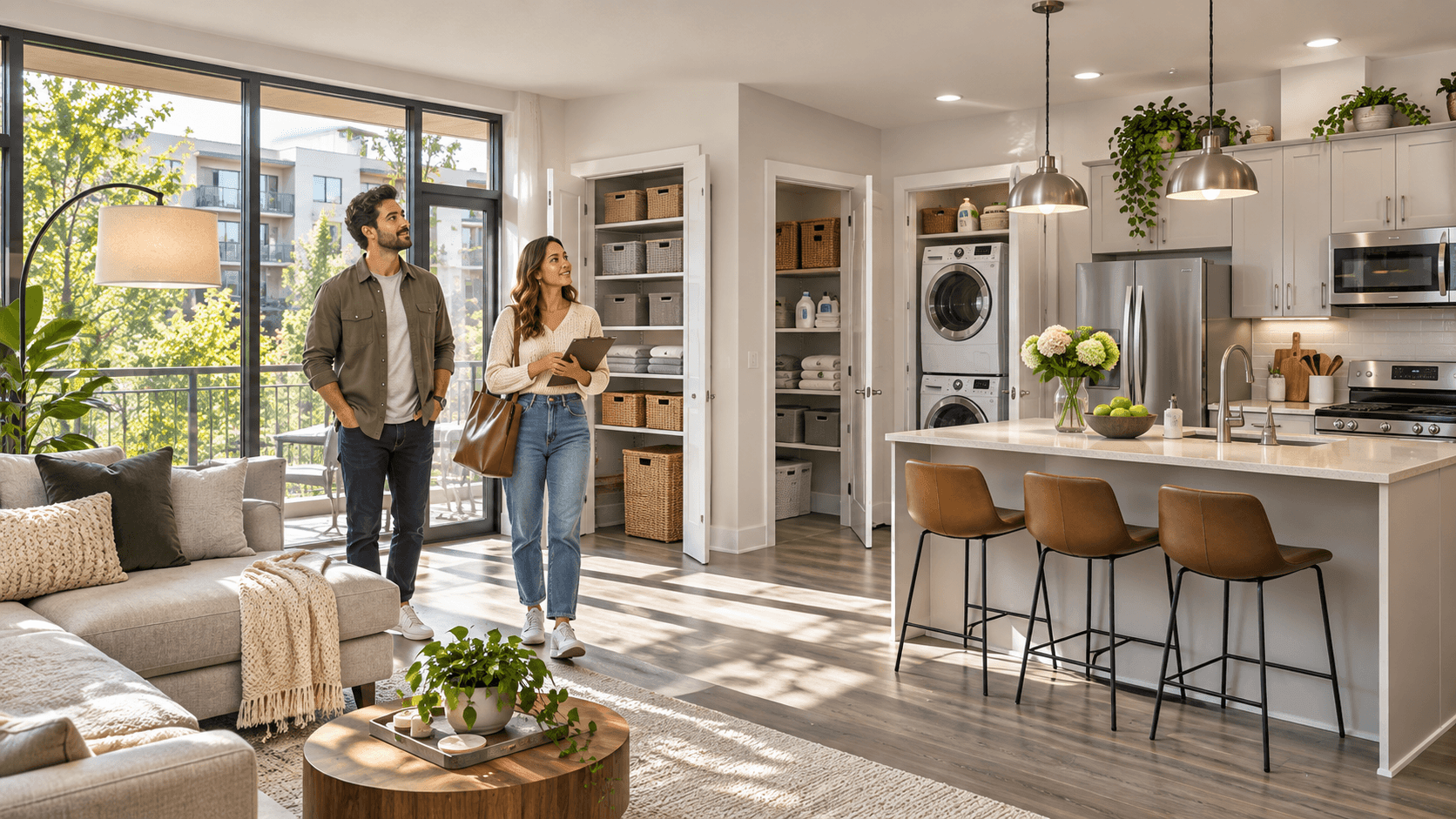
Most apartment listings put the amenities in a bulleted block under the photos: pool, fitness center, package lockers, dog park, in-unit laundry. That block tells you what exists. It does not tell you what each item costs every month, which ones the lease bills separately, which ones a city or state already requires the landlord to provide, or whether the feature actually works when you are standing in the unit with your phone out.
This guide is built around those four questions. For each amenity renters say matters most, it covers what the feature is worth, how to check it during a tour, and where the law sets a floor, so you do not pay a premium for something you were owed anyway. It draws on the National Multifamily Housing Council’s renter survey, Census Bureau construction data, federal fair housing rules, state property codes, and published research on parking and fees.
Two parts of this guide get more attention than a typical amenity list gives them. The first is mandatory fees, because a monthly amenity fee, trash fee, or internet package changes what an apartment really costs. The second is storage space, the amenity renters most often skip on a tour and most often regret after move-in. A closet you never measured is how a new lease turns into a corner full of boxes.
We run self storage facilities, so you might expect this to end in a sales pitch. It does end with a section on storage, but that section starts with the situations where you should not rent a storage unit at all.
Table of Contents
- What Renters Rank Highest, and What New Apartments Already Include
- The Amenities You Pay For Whether You Use Them or Not
- Laundry: In-Unit, Hookups, a Shared Room, or the Laundromat
- Air Conditioning and Heat: Where the Law Sets a Floor
- Kitchens, Floors, and Bathrooms: What to Test in Ten Minutes
- Locks, Smoke Alarms, and Building Access
- Internet and Cell Service: How to Verify Before You Sign
- Parking, Bike Storage, and Getting Around
- Pet Policies, Pet Fees, and Assistance Animals
- Accessibility Features and What the Fair Housing Act Requires
- Gyms, Pools, Lounges, and Management: Judging the Shared Amenities
- Storage Space: How to Measure What an Apartment Can Actually Hold
- When a Storage Unit Makes Sense, and When It Does Not
- Frequently Asked Questions
- Putting It Together on Tour Day
What Renters Rank Highest, and What New Apartments Already Include
The largest recurring survey of apartment residents is the Renter Preferences Survey from the National Multifamily Housing Council (NMHC) and Grace Hill. The 2024 edition collected 172,703 responses from renters in 4,220 communities. Ranked by the share of renters who said they were interested in a feature or would not rent without it, the top in-unit features were:
- Air conditioning: 93%
- In-unit washer and dryer: 93%
- High-speed internet access: 90%
- Soundproof walls: 88%
- Walk-in closet, garbage disposal, and dishwasher: 87% each
Notice what is not at the top: rooftop decks, pools, and lounges. Renters rank the features that shape daily routines ahead of the ones that photograph well. The 2022 edition of the same survey also asked what renters would pay, and in-unit laundry and air conditioning each came in around $55 a month in stated willingness to pay.
New construction has mostly caught up on the basics. The Census Bureau’s Characteristics of New Housing reports that 96% of the multifamily buildings completed in 2024 have air conditioning, although 8% of new multifamily units in the West do not. The median new apartment built for rent was 1,001 square feet. Older buildings carry none of those guarantees, which is why the rest of this guide is about checking rather than assuming.
The Amenities You Pay For Whether You Use Them or Not
The most expensive amenity in a building is sometimes the one you never use. Many larger communities charge mandatory monthly fees on top of base rent for amenity access, trash pickup, pest control, package handling, and internet. These charges are disclosed somewhere, usually in a fee schedule or a lease addendum, but they do not always appear in the rent shown on a listing.
Extra fees are common. A 2024 Zillow survey found that 58% of renters pay at least one fee outside of rent. When the Post and Courier reviewed fee lists from apartment communities around Charleston, South Carolina, it found monthly amenity fees of $20–$100, trash and recycling fees of $5–$30, cable and internet packages of about $65–$70, and parking of $50–$100, plus smaller charges for pest control and utility billing. Some national property managers now publish a total monthly price that adds mandatory fees to base rent. That total is the number worth comparing.
How to find your real monthly cost
- Ask for the full fee schedule in writing before you pay an application fee, not after you sign.
- Sort every charge into three groups: mandatory monthly fees, optional monthly fees (a reserved parking space or a storage locker, for example), and one-time fees such as application, administrative, and move-in charges.
- Add the mandatory monthly fees to base rent. That sum, plus your estimated utilities, is the figure to compare from building to building.
- Price each amenity you will actually use against what it would cost elsewhere, such as a gym membership or a weekly laundromat habit.
The rules on how rental fees are advertised are changing state by state. Colorado’s HB25-1090, effective January 1, 2026, requires landlords to advertise a single total price that includes mandatory charges, and states including Massachusetts and Minnesota have adopted their own all-in pricing rules for rentals. The Federal Trade Commission’s fee rule that took effect in 2025 covers short-term lodging and live-event tickets, not long-term apartment leases. Because these requirements differ by state and are still being revised, contact your state attorney general’s consumer protection office or a local tenant organization if a fee looks improper.
Laundry: In-Unit, Hookups, a Shared Room, or the Laundromat
Listings use the word laundry for four different setups, and they are not interchangeable.
- In-unit washer and dryer: the machines come with the apartment and the landlord maintains them. Ask who handles repairs and how quickly.
- Washer and dryer hookups: the water lines, drain, and power are in place, but you supply the machines. Ask whether the dryer connection is electric or gas and whether it vents outdoors, then measure the closet’s width, depth, and height before buying anything. Many laundry closets only fit stackable units.
- Shared laundry room: compare the number of machines to the number of units that use them, check how payment works (coins, a card, or an app), and if you can, look in at a busy time such as a weekend.
- No laundry on site: find the nearest laundromat and time the round trip.
The cost difference is easy to estimate. Count the loads your household runs each week, multiply by the local price of one wash and one dry (it is posted on the machines), and multiply by about 4.3 weeks per month. At an illustrative $4 per wash and dry and three loads a week, the laundromat route costs about $52 a month before detergent and travel time. That is close to the roughly $55 a month renters told NMHC they would pay for in-unit laundry, which suggests renters price this amenity about right.
Two quieter checks matter as much as the machines themselves. Look under and behind the washer for a drain pan or for stains from past leaks, and check whether the dryer vent takes a short, direct path outside. Long or crushed vent runs collect lint and slow drying.
Air Conditioning and Heat: Where the Law Sets a Floor
Several popular amenity lists treat heating and air conditioning as perks. In many places at least one of them is a legal requirement, and knowing which one changes how you evaluate a unit.
Heat is the more commonly required of the two. The International Property Maintenance Code, a model code that many cities adopt for rental housing, calls for heating facilities capable of keeping habitable rooms, bathrooms, and toilet rooms at 68 degrees Fahrenheit. Cooling rules are rarer and vary city by city. Texas has no statewide requirement that rental units provide air conditioning, according to the tenant advocacy group Texas Housers. Dallas is an exception: its housing code requires refrigerated air capable of keeping each habitable room at least 15 degrees cooler than the outdoor temperature and no warmer than 85 degrees Fahrenheit.
Where cooling is not required, renters still treat it as essential; it tied for first place in NMHC’s 2024 survey. On a tour, check four things:
- System type: central air, a heat pump, a through-wall unit, or window units you supply. Ask who owns and services each piece of equipment.
- Thermostat location: a thermostat in a central hallway can leave far bedrooms warmer or cooler than the setting.
- Filter changes: ask how often filters are replaced and whether maintenance or the resident does it.
- Utility history: ask the leasing office for typical summer and winter electric bills for that floor plan.
In a city with a cooling standard, a broken system is usually a repair obligation rather than an upgrade you negotiate. Wherever you rent, ask how after-hours heating and cooling calls are handled before you sign.
Kitchens, Floors, and Bathrooms: What to Test in Ten Minutes
Dishwashers and garbage disposals ranked alongside walk-in closets in the NMHC survey, so confirm them rather than assume them, especially in older buildings. This sequence covers most of the kitchen and bath in about ten minutes:
- Run the hot water in the kitchen and the shower and time how long it takes to warm up. Check water pressure with two fixtures running at once.
- Open the cabinet under every sink and look for stains, warped particle board, or a musty smell.
- Turn on each range burner, the oven, the vent hood, and the disposal. If you care whether the range is gas or electric, confirm it now.
- Open the refrigerator and freezer and check the door seals for cracks or gaps.
- Turn on the bathroom exhaust fan and hold a square of toilet paper near the grille. If the paper does not pull toward it, the fan is moving very little air, and shower steam will have nowhere to go.
Flooring deserves a closer look than listings give it. Wood and standing water are a poor match, so in kitchens, bathrooms, and entryways, tile or sealed vinyl plank generally holds up better than solid hardwood. Look at the floor in front of the dishwasher and around the base of the toilet for lifting, cupping, or dark stains.
Fresh carpet is not automatically a plus. The Environmental Protection Agency notes that new carpet systems, including the cushion and installation adhesives, release volatile organic compounds for a period after installation, and that proper ventilation during the first 72 hours significantly reduces those emissions. If carpet went in days before your move-in, ask when it was installed and plan to open windows and run fans. Older carpet, for its part, holds dust and allergens, so ask what cleaning was done at turnover.
Locks, Smoke Alarms, and Building Access
Security amenities range from gated entry and key fobs to cameras and on-site staff, but the most important security features are at your own door, and in some states they are required by law.
Texas is a clear example. Chapter 92 of the Texas Property Code requires landlords, without the tenant having to ask, to equip a dwelling with a window latch on each exterior window, a keyed deadbolt or doorknob lock on exterior doors, a keyless bolting device and a door viewer on each exterior door, and security devices on exterior sliding glass doors. Tenant guidance from the Austin Tenants Council adds that the landlord must rekey the locks within seven days after a new tenant moves in. Other states set their own rules, so look up your state’s landlord-tenant statute or ask a local tenant organization.
In any state, check these on the tour:
- The entry door: a deadbolt, a viewer or camera, and a door that closes and latches without being pushed.
- Smoke alarms: the National Fire Protection Association recommends alarms inside each bedroom, outside each sleeping area, and on every level, tested monthly and replaced 10 years after their manufacture date. The date is usually printed on the back.
- Carbon monoxide alarms: ask about them if the unit has gas appliances, a fuel-burning furnace, or an attached garage.
- The route home after dark: if you can, walk from the parking area to the unit in the evening. Lighting, sightlines, and whether exterior doors lock behind you tell you more than a count of cameras.
- Package handling: a locked package room or locker system protects deliveries. Ask whether it carries a monthly fee.
Internet and Cell Service: How to Verify Before You Sign
High-speed internet ranked third in NMHC’s 2024 survey, and it is one of the most loosely described amenities on a listing. “Fiber available” can mean fiber to the unit, fiber to the building, or a provider’s marketing area. Three checks narrow it down:
- Look up the exact address on the Federal Communications Commission’s National Broadband Map, which lists the providers and maximum speeds reported for that location. Then confirm with the provider, because reported coverage and installable service can differ.
- Test your cell signal in every room during the tour, including the bedroom and anywhere you would work. Concrete and steel construction and below-grade units can weaken signal.
- Ask whether the building has a bulk internet agreement, in which the property contracts with one provider and bills every unit for service.
Bulk billing is a real trade-off, and the two sides disagree about who comes out ahead. Apartment industry groups say these agreements can deliver internet at rates up to 50% below standard retail pricing. Consumer advocates counter that tenants cannot opt out and that landlords do not always pass the negotiated savings along. In January 2025 the FCC dropped a proposal that would have let tenants opt out of these arrangements, so in most buildings the lease terms decide. If a property bills for internet, ask for the plan’s speed and provider, whether you can add your own service, and whether you would still owe the bulk fee if you did.
Parking, Bike Storage, and Getting Around
Parking can be the most useful amenity in a car-dependent suburb and one of the most expensive in a dense neighborhood, and its cost is often hidden. Researchers C.J. Gabbe and Gregory Pierce, working from Census Bureau American Housing Survey data, estimated that garage parking bundled into rent costs renter households about $1,700 a year, or roughly 17% of a unit’s rent. They also found that renters without cars who live in units with bundled garage parking pay an average of about $621 a year for it.
Questions that clarify what you are actually getting:
- Assigned or open? Assigned spaces, covered spaces, and garages often carry separate monthly charges. Open lots can fill up at night.
- Spaces per unit: ask what a second vehicle costs and whether a second space is available at all.
- Guests and towing: ask where guests park and read the towing policy, since rules and warning periods vary widely.
- Trailers, boats, and RVs: many communities restrict or prohibit them in resident lots. If you own one, find out before you sign.
- EV charging: ask whether chargers are shared, assigned, or billed separately, and whether residents may install their own.
- Bike storage: look for a locked room or cage rather than an open rack, and ask whether bikes are allowed inside units.
Location shapes almost every answer in this section. If you are weighing an apartment near downtown against one farther out, our guide to urban, suburban, and exurban living compares commute times and vehicle costs using federal data.
Pet Policies, Pet Fees, and Assistance Animals
A pet-friendly label covers a wide range of policies. Before a dog park sells you on a building, get these answers in writing:
- Every pet charge: a one-time pet fee, a refundable pet deposit, and monthly pet rent are three different things, and some buildings charge all three.
- Limits: the number of animals allowed, weight limits, and any breed restrictions.
- Common-area rules: leash requirements, waste stations, and where dogs may be walked.
- Pet amenities you would use: a fenced run or a wash station matters most when there is no park nearby.
Assistance animals, which include service animals and emotional support animals, are handled under different rules than pets, and those rules have shifted recently. The Fair Housing Act’s reasonable accommodation requirement still applies. However, the Department of Housing and Urban Development withdrew its detailed assistance-animal guidance effective September 17, 2025, and in May 2026 its fair housing office issued new enforcement guidance focused on animals trained to perform disability-related tasks. Many states also have their own laws on assistance animals and pet fees. Because this area changed recently and differs by state, confirm current rules with your state fair housing agency or a housing attorney before relying on any general summary, including this one.
Accessibility Features and What the Fair Housing Act Requires
Accessibility often shows up on amenity lists as an extra. In many newer buildings it is a federal requirement. The Fair Housing Act’s design and construction rules apply to covered multifamily housing built for first occupancy after March 13, 1991: every unit in a building of four or more units with an elevator, and the ground-floor units in buildings of four or more units without one.
Covered housing must meet seven basic requirements, which HUD summarizes as:
- An accessible building entrance on an accessible route
- Accessible public and common-use areas
- Doors wide enough for a wheelchair to pass through
- An accessible route into and through the unit
- Light switches, outlets, thermostats, and other controls in accessible locations
- Reinforced bathroom walls so grab bars can be added later
- Kitchens and bathrooms with enough room to maneuver
Buildings that predate the rule, and upper floors in walk-up buildings, are not covered by those design requirements, so check them in person. Ask about elevator access to parking and shared spaces, step-free routes to the mailroom and trash area, and the process for requesting a reasonable modification such as a grab bar or a ramp. Who pays for a modification can depend on the building’s age and funding, so get the property’s answer in writing and contact a fair housing agency if it is unclear.
Gyms, Pools, Lounges, and Management: Judging the Shared Amenities
Shared amenities are where listing photos do the most work, so judge them by how you would use them rather than by how they look.
- Fitness center: count the equipment, check the hours, and compare the cost with a gym membership you would actually keep. If an amenity fee covers the gym, that fee is your membership price. Renter interest in on-site fitness centers cooled in NMHC’s 2024 survey, so it is reasonable to treat one as optional.
- Pool: ask about the season, hours, and guest rules. An outdoor pool open only a few months a year is worth less in a cold climate.
- Clubhouse, lounge, and coworking space: ask whether rooms must be reserved and whether reservations carry a fee.
- Online portal: confirm you can pay rent and submit maintenance requests online, and ask whether online payments carry a processing fee.
Management is the amenity that decides how every other one performs. A building with a pool and a slow maintenance team is a worse place to live than a building with neither. Ask how maintenance requests are submitted, what counts as an emergency, whether there is after-hours coverage, and how long a typical non-emergency repair takes. Then read recent reviews for patterns rather than single complaints, and if you get the chance, ask a current resident how repairs actually go.
Renters weigh this heavily. In NMHC’s 2024 survey, about one in five respondents named a better management company as a reason for their most recent move, roughly the same share that named better features or amenities.
Storage Space: How to Measure What an Apartment Can Actually Hold
Storage is the amenity renters most often skip on a tour and most often regret. It rarely appears in listing photos beyond a walk-in closet shot, and it is easy to misjudge in an empty unit, where every closet looks generous.
The gap is widest for people moving out of a house. The Census Bureau reports that the median single-family home completed in 2024 was 2,146 square feet, while the median new apartment built for rent was 1,001 square feet. A household moving between those two sizes gives up more than half its floor area, and usually a garage, attic, or basement along with it.
Measure the closets, not the listing
- Measure your current hanging space. Push the clothes on each rod together and measure the length they take up in inches. Add up every rod you use now.
- Measure the new rods. Bring a tape measure and record the length and depth of every closet rod in the apartment. A standard adult hanger is roughly 17 inches across, which is why a common closet design guideline calls for about 24 inches of depth. Shallower closets force hangers to sit at an angle and hold less.
- Measure the shelves. Record the width and depth of every shelf in the closets, pantry, and linen cabinet.
- List what lived on a floor. Anything that sat on a garage floor, in an attic, or under a basement stair needs a new place.
If the total from step one is longer than the total from step two, the shortfall is real, and you will feel it the first week.
Here is how that plays out. Say your clothes now fill 96 inches of rod across two closets, and the apartment has a 72-inch bedroom closet and a 30-inch coat closet. On paper that is 102 inches, which looks like enough. But coats, a vacuum, and an ironing board claim the coat closet, so the usable total is about 72 inches, and roughly a quarter of your hanging clothes have nowhere to go.
Ask about building storage
Some communities rent storage lockers or cages on site. Ask for the dimensions and the monthly fee, whether the space is fully enclosed or open to neighboring cages, how you reach it, and what the lease prohibits keeping there. Then compare the price per square foot with a self storage unit nearby.
Size the overflow honestly
Once you know what will not fit, match it to a space. As a rough guide, a 5x5 unit holds boxes, seasonal clothing, and small furniture; a 5x10 handles typical one-bedroom overflow such as a bike, sporting gear, and moving boxes; and a 10x10 takes two-bedroom extras such as a full bedroom set. If you are still choosing between floor plans, our Apartment Size Guide shows typical square footage by apartment type, which helps you judge what a step up in size would add.
When a Storage Unit Makes Sense, and When It Does Not
Renting a storage unit to cover an apartment’s shortfall is a good decision in some situations and a poor one in others.
Skip the unit if:
- The overflow is stuff you would not buy again. If you would not pay to replace an item, paying every month to keep it rarely makes sense. Sell it, donate it, or pass it to someone who will use it.
- The building’s own storage is cheaper and big enough. An on-site locker you can reach by elevator beats a drive across town.
- A slightly larger floor plan costs about the same. If the next floor plan up costs little more per month than a storage unit and you would use that room every day, the bigger apartment is the better buy.
- Better organization would solve it. Shelving, under-bed bins, and over-door racks fix many small shortfalls for a one-time cost.
- There is no facility close to the new apartment. 10 Federal Storage operates in a specific set of states, and a unit you have to drive an hour to reach will not get used. A closer facility from any operator will serve you better.
A unit makes sense if:
- You are between homes, with a new lease that starts after the old one ends, or you are downsizing from a house and want time to decide what to keep.
- You own seasonal or bulky gear you use regularly, such as bikes, camping equipment, holiday decor, or patio furniture, that no apartment closet holds well.
- You are keeping furniture for a future home and the apartment is a one- or two-year stop.
- The community restricts a vehicle or trailer you need to keep, such as a motorcycle, boat, or utility trailer.
For belongings that do not tolerate extreme heat or cold, such as electronics or wood furniture, a climate-controlled unit keeps them in temperature-regulated space. Month-to-month leases let you size down or move out once the apartment settles. When you know what will not fit, the Storage Size Calculator turns a list of belongings into a unit recommendation, and the storage unit size guide compares the common sizes side by side.
Frequently Asked Questions About Apartment Amenities
What amenities should I look for in an apartment?
Start with the features that affect daily life: air conditioning, laundry, reliable internet, closet and storage space, parking, and responsive maintenance. Those features top national renter surveys. Then add the amenities you would actually use, and price each against its fee or the cost of getting it elsewhere.
Are apartment amenities included in rent?
Sometimes, but not always. Many communities charge separate mandatory monthly fees for amenities, trash, pest control, or internet, and those fees may not appear in the advertised rent. Ask for the full fee schedule in writing and add mandatory fees to base rent before comparing apartments.
What is an apartment amenity fee?
An amenity fee is a charge, usually monthly and sometimes one-time, that a property collects for access to shared spaces such as a gym, pool, or lounge. It is often mandatory for every resident whether or not they use those spaces. Some states now require mandatory fees to be included in advertised rent.
Is air conditioning required in apartments?
It depends on the city and state. Heating requirements are common in housing codes, while cooling requirements are less common. Texas, for example, has no statewide requirement, but the city of Dallas requires rental units to have cooling equipment capable of keeping rooms no warmer than 85 degrees Fahrenheit. Check your local housing code.
Do pet fees apply to service animals and emotional support animals?
Assistance animals are generally handled under fair housing rules rather than pet policies, but federal guidance on them changed in 2025 and 2026, and state laws differ. Ask the property for its policy in writing, and confirm current rules with your state fair housing agency or a housing attorney.
How can I check internet service before renting an apartment?
Look up the exact address on the FCC’s National Broadband Map, confirm availability with the provider, test your phone’s signal in each room during the tour, and ask whether the building bills every unit for a bulk internet package.
How much closet space do I need in an apartment?
Measure the hanging rods you use now, in inches, and compare that total with the new apartment’s rods. If the new total is shorter, plan for the difference before you move through decluttering, added shelving, or off-site storage.
Is a storage unit cheaper than renting a bigger apartment?
It can be, but not always. Compare the monthly price difference between floor plans with the monthly rate for a unit sized to your overflow. If you would use the extra room every day, the larger apartment may be the better value.
Putting It Together on Tour Day
Bring a tape measure, your phone, and a short list. Before you go, write down your three non-negotiable amenities and the highest total monthly cost you will accept, including mandatory fees. On the tour, test what you can: the hot water, the cell signal, the exhaust fan, the locks, and the closets. Afterward, get the fee schedule, the pet policy, and any parking or storage charges in writing, and compare apartments on total cost rather than base rent.
The amenities that matter most are usually the plain ones. A building that gets cooling, laundry, internet, security, storage, and maintenance right will serve you better than one with a rooftop pool and a closet you cannot use.
About the Author
10 Federal Storage
Our team at 10 Federal Storage has been in the self storage industry for decades. With knowledge gained from multiple universities and in the field, we are well-prepared and excited to assist with your storage needs. When you rent a unit with us, you can feel confident that our seasoned customer service team’s help will make your transition as seamless as possible. Customer satisfaction is our number one priority, and we strive to make your experience exceptional with our automated leasing options, diverse unit sizes, and a strong commitment to sustainability.