

Baby Room Ideas: Nursery Setup, Decor, and the Storage Strategy Behind It
by 10 Federal Storage
Published on May 19, 2026
Setting up a baby’s room is one of the most exciting parts of preparing for a new arrival. It’s the first space that’s entirely theirs, the room you’ll spend hundreds of hours in over the next few years, and a place that needs to be beautiful, functional, and safe all at once.
This guide covers baby room ideas that actually work in real life: themes and color palettes that grow with your child, furniture choices you won’t regret, layout principles for a small room, decor that’s both pretty and practical, and the logistical question every new parent eventually faces, where does all the rest of the stuff go?
Table of Contents
- Nursery Theme and Color Ideas
- Furniture Essentials (and What You Can Skip)
- Nursery Layout Ideas for Any Room Size
- Decor Ideas That Grow With Your Baby
- In-Room Organization Ideas
- The Reality: Where Does Everything Else Go?
- A Storage Strategy for Growing Families
- Storage Size Guide for Families
- Frequently Asked Questions
Nursery Theme and Color Ideas
The most common nursery regret is going too specific too early. A jungle theme is adorable for a six-month-old; less so when she’s six and wants horses. The themes that age well share one quality: they’re grounded in palette and texture, not characters.
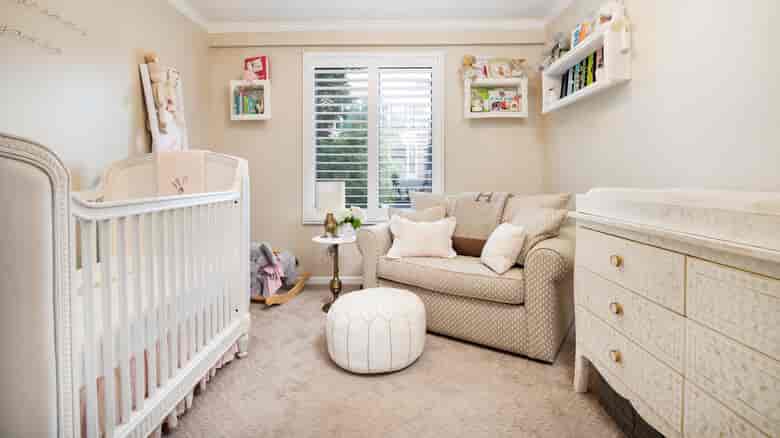
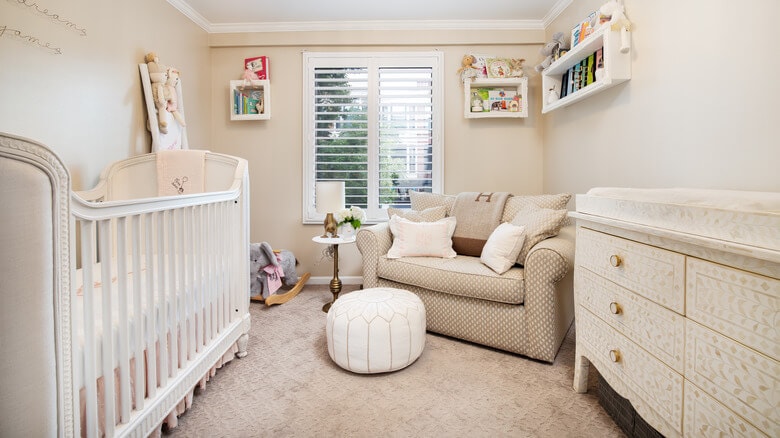
- Modern neutral. Soft whites, warm beiges, oat, sage. Easy to live with for years, easy to add personality through textiles and art.
- Soft pastels. Dusty pink, muted lavender, pale blue, butter yellow. Calming without being sugary, and they work for any gender.
- Nature and woodland. Forest greens, mushroom browns, soft creams. Tree silhouettes on one wall, a few animal prints. Grows into a kid’s room without rework.
- Boho minimalist. Natural wood, rattan, cream linens, a few macramé pieces. Calm, photogenic, and forgiving of inevitable clutter.
- Bright and bold. Primary colors used sparingly, a yellow chair, a red rug, a blue mobile. High contrast actually helps newborn vision development.
- Celestial. Moons, stars, deep midnight blues. A perpetual favorite that translates from infant to toddler to big kid.
Whatever you pick, build the palette around three colors max. Anything more reads as chaotic in a small room.
Furniture Essentials (and What You Can Skip)
It’s easy to fill a registry with furniture you’ll only use for a few months. Here’s what genuinely earns its place in the room.
Essential:
- A safe crib. JPMA-certified, with a firm mattress and tight-fitting sheets. Convertible cribs that transition to a toddler bed buy you 3–5 years of use.
- A glider or rocker. You’ll spend more hours in this chair than anywhere else in the house for the first year. Comfort matters more than aesthetic.
- A dresser with a changing pad on top. A dedicated changing table is a one-year piece of furniture. A dresser becomes a lifetime piece. Buy one good dresser and add a changing pad with a strap.
- A small bookshelf or basket. Books from day one. Even before they can read, the routine of stories at bedtime starts early.
Skippable:
- Dedicated changing tables (use the dresser approach)
- Wipe warmers, bottle warmers (room temp works fine)
- Diaper Genies (most parents end up using a regular trash can)
- Full nursery furniture sets (the “matching” second piece is usually a regret)
- Cribs with attached bassinets (limited use window)
Nursery Layout Ideas for Any Room Size
Most nurseries are built into the smallest spare room in the house. Good layouts respect that and work with it.
- Crib on the wall opposite the door. So you can see baby from the doorway during night checks.
- Glider near a window, but not under it. Window light is great for daytime feedings; window drafts and direct sun are not.
- Dresser near the door. Diapers and outfits are what you reach for most often. Putting them near the entrance saves dozens of steps a day.
- Leave the center of the room open. You’ll need floor space for tummy time, playmats, and eventually crawling. A small rug anchors the open space without filling it.
- Plan for the floor lamp. Overhead lights are too bright for night feedings. A dimmable floor lamp by the glider creates a soft pool of light without waking baby fully.
- Mount what you can. Floating shelves, wall-mounted bookshelves, and shelf nooks add storage without eating floor space.
Decor Ideas That Grow With Your Baby
The decor that survives the longest is the decor that doesn’t lock you into a specific age.
- A statement wall. Wallpaper, paint, or a wall mural on one wall, the rest stay neutral. Easy to update as taste changes.
- Framed prints over character decals. Botanical prints, simple line drawings, alphabet posters. They look intentional, and they’re easy to swap.
- A simple mobile. Hung above the changing area, not the crib (a crib mobile only works for the first few months). High-contrast for newborns, swappable as baby grows.
- Layered textiles. A rug, a throw on the glider, a few floor cushions. Soft surfaces matter both visually and acoustically, they absorb sound.
- A growth chart. Wood, fabric, or wall-applied. Marks the years without taking up space.
- Plants. Real where light allows, faux elsewhere. Snake plants and pothos are baby-safe and nearly impossible to kill.
- Soft, dimmable lighting. A salt lamp, a small night light, or string lights on a timer. Multiple light sources at different levels let you control mood and brightness.
In-Room Organization Ideas
Babies come with an enormous amount of stuff. Organization keeps the room from becoming a warehouse.
- Drawer dividers. Onesies, socks, and pajamas multiply fast. Dividers turn one drawer into three usable sections.
- Hanging closet organizers. A six-shelf hanging unit holds everything from swaddles to size-up clothes, with each shelf labeled by size.
- Baskets for everything. Burp cloths in a basket near the glider. Toys in a basket by the play area. Books in a basket by the rocker. Baskets contain visual chaos and make cleanup fast.
- Diaper caddy. Portable, refilled from bulk storage, kept near the changing area. Saves you from running out of diapers mid-change.
- Closet rod height. Lower it so small clothes hang at the right level. Use the upper space for bins of size-up clothes.
- Out-of-sight storage for the rest. Anything you don’t need in the next 1–3 months doesn’t belong in the nursery. More on that next.
The Reality: Where Does Everything Else Go?
Here’s the part nobody mentions in the Pinterest boards. Setting up a nursery is at least as much a logistics problem as it is a decorating project.
The home office becomes a nursery. The guest room becomes a nursery. The combo craft-and-yoga-and-everything-else room becomes a nursery. And the contents of that room, the desk, the bed, the bins of fabric, the Peloton, the bookshelf, have to go somewhere.
Then the baby arrives, and the storage problem gets bigger, not smaller. Hand-me-downs arrive in waves. Seasonal clothes need rotation. Gear gets outgrown every few months. And if you’re planning on a second child, you can’t really donate any of it.
For most families, none of this needs to leave permanently. The home office will come back when the kid moves to a real bedroom. The Peloton isn’t getting donated. The guest bed will host grandparents again someday. It just needs to live elsewhere for a few years.
A Storage Strategy for Growing Families
The families who handle baby storage well treat it as a flow, not a dump. There are four real categories:
- Furniture from the converted room. Office desk, guest bed, bookshelves, exercise equipment. Wrap it, label it, and put it somewhere safe for the next few years.
- Clothes by size and season. Babies cycle through clothing sizes in weeks, not months. Clear bins labeled by size and season (0–3 month winter, 12-month summer, etc.) make rotation simple.
- Gear ahead of the current stage. Walker, stage-two car seat, the bigger high chair, the toddler bed. None of it needs to be in your house yet. Store it, rotate one or two items in as you approach needing them.
- Gear behind the current stage. Bottles, swaddles, newborn clothes, the bassinet. Don’t donate yet if you’re planning more kids. Pack carefully and store.
A few rules that make this work over time:
- Wash everything before storing. Spit-up that wasn’t fully washed out turns yellow over months.
- Use clear plastic bins with snap lids, not cardboard. Label both ends.
- Group by size, not type. “9–12 months” is more useful than “onesies” because you’ll pull a whole size at once when the time comes.
- Skip vacuum bags for multi-year storage. They’re great short-term but can crease and weaken fabric over years.
- Add silica gel packets to absorb moisture.
- Keep an inventory list. A simple Google Doc with what’s in each bin, updated every visit. Future-you in a sleep-deprived haze will thank you.
- Climate control matters. Fabric goes musty, wood warps, photos fade in extreme heat and humidity. For anything you want to use again, climate control is worth the small upcharge.
Storage Size Guide for Families
The size you need depends on whether you’re storing just baby items, just displaced room contents, or both.
- 5x5, Holds 10–15 bins of clothes, baby gear, and keepsakes. Best for storing baby items only, with no displaced furniture.
- 5x10, Everything above plus a crib, glider, or small dresser. Best for baby items plus light displaced contents.
- 10x10, Fits a full guest bedroom set plus baby gear and bins. Best for most nursery conversions, the sweet spot.
- 10x15, Holds a guest room plus office plus exercise equipment plus baby gear. Best for larger conversions or multiple displaced rooms.
Plan for growth. Baby gear accumulates, the next size of clothes, the next stage of toys, the gear for kid #2. A slightly larger unit now means you don’t have to move and resize in 18 months.
Build a Nursery You Love, Without Sacrificing Storage
The nursery is the first of many storage moments in family life. A clean, climate-controlled unit gives you space to keep what matters, the displaced furniture, the hand-me-downs, the gear, without filling your home with bins you can’t use yet.
Frequently Asked Questions
Themes built on palette and texture, modern neutral, soft pastels, woodland, boho, celestial, age better than themes built on specific characters or trends. Pick three colors max and use textiles, art, and lighting to add personality.
A safe certified crib, a comfortable glider, a dresser with a changing pad on top, and a small bookshelf or basket. Most other “essential” furniture (dedicated changing tables, full nursery sets) gets used briefly and stored or sold.
Crib on the wall opposite the door for nighttime visibility, glider near a window but not under it, dresser near the door for daily access, and the center of the room kept open for floor time. Mount what you can on walls to preserve floor space.
For most families, the right answer is storage. The home office, guest bed, or exercise equipment will come back when your child moves to a real bedroom in a few years. Donating or selling means buying it all again later.
If you’re planning more kids, keep them. Clothes store well for 5+ years with the right conditions: clean, in clear plastic bins, climate-controlled, with silica gel packets to absorb moisture. If you’re sure you’re done, donate at the 12-month mark.
Most families do well with a 10x10. That fits a full guest bedroom’s worth of displaced furniture plus 15–20 bins of baby gear and seasonal items. If you’re only storing baby items and no furniture, a 5x5 or 5x10 works.
Yes, for most baby storage. Fabric goes musty, wood furniture warps, photos and paper keepsakes degrade, and stuffed animals deteriorate in temperature and humidity swings. Climate control is the difference between things that come out of storage looking like they went in, and things that come out smelling like a basement.
About every three months. Pull out the next size up and the next season, return what your child just outgrew, and keep the inventory list updated. Quarterly rotation keeps the system functional.
About the Author
10 Federal Storage
Our team at 10 Federal Storage has been in the self storage industry for decades. With knowledge gained from multiple universities and in the field, we are well-prepared and excited to assist with your storage needs. When you rent a unit with us, you can feel confident that our seasoned customer service team’s help will make your transition as seamless as possible. Customer satisfaction is our number one priority, and we strive to make your experience exceptional with our automated leasing options, diverse unit sizes, and a strong commitment to sustainability.