

Best Neighborhoods in Aurora, IL
by 10 Federal Storage
Published on April 8, 2026
Aurora wears the label of Illinois' second-largest city quietly, without much fanfare, which is part of what makes it genuinely interesting to understand as a place to live. With nearly 180,000 residents spread across Kane, DuPage, and Kendall counties, Aurora is large enough to have genuine neighborhood diversity and small enough that most of it is still accessible on a reasonable budget. It sits approximately 40 miles west of downtown Chicago along the Fox River, which means the city benefits from proximity to one of the country's great metropolitan economies while maintaining housing prices that, in most neighborhoods, remain meaningfully below what you'd pay for equivalent space closer to the city.
Aurora's identity is more layered than most people outside the western suburbs realize. The downtown along the Fox River, anchored by the Paramount Theatre, one of the most beautiful historic performing arts venues in the Chicago area, has become a genuine destination, with breweries, restaurants, RiverEdge Park concerts, and a walkable riverfront that functions as the social core for the city's growing urban population. The Stonebridge neighborhood is a golf course community with custom homes that would list for twice the price in the Naperville or Wheaton market. Oakhurst is one of the most thoughtfully planned residential communities in the western suburbs, with a pool, tennis courts, an active swim team, and Indian Prairie School District 204, one of the top-ranked school districts in Illinois, serving its nearly 2,000 homes. And the Fox Valley corridor along the city's east side offers the newest construction, strongest school access, and most direct connection to the Route 59 Metra station for commuters who need to reach Chicago regularly.
This guide covers six neighborhoods that best represent Aurora's range, from its most historic and walkable to its most upscale and family-forward, with detailed data on housing costs, safety, commute options, school access, and daily amenities. We've also included information on 10 Federal Storage's Aurora location on North Farnsworth Avenue, positioned to serve the city's north side and I-88 corridor residents.
Quick Facts: Aurora at a Glance
- Population: ~180,000 (city proper), Illinois' 2nd largest city
- Nickname: The City of Lights
- Counties: Kane, DuPage, and Kendall
- Distance to Chicago: ~40 miles west of downtown; 45–55 minutes by Metra BNSF Line (express)
- Climate: Humid continental; hot, humid summers and cold winters with significant snowfall
- Primary employers: Rush Copley Medical Center, Aurora University, Waubonsee Community College, Hollywood Casino Aurora, I-88 corridor tech and corporate employers (Caterpillar, Navistar, and others), Chicago Premium Outlets (adjacent), Amazon and major distribution centers
- Median home price: ~$295,000–$320,000 citywide (significantly below comparable Chicago north and northwest suburbs; ranges from ~$255,000 in downtown to $700,000+ in Stonebridge)
- Cost of living: Approximately 5–8% below the national average; meaningful discount to inner Chicago suburbs
- Safest/most desirable neighborhoods: Stonebridge, Oakhurst, Fox Valley / Far East (District 204 corridor), Eola Yards, Big Woods Marmion
- Most walkable neighborhood: Downtown Aurora / Stolp Island
- Metra access: Aurora Transportation Center (BNSF Line, downtown) and Route 59 station (BNSF Line, Aurora/Naperville border), two Metra connections to Chicago Union Station
Quick Facts: Renting in Aurora
- Average studio rent: ~$1,168/month
- Average 1BR rent: ~$1,605/month (citywide); $1,895–$1,940/month in Fox Valley / Far East
- Average 2BR rent: ~$1,992/month
- Average 3BR rent: ~$2,214/month
- Rent vs. national average: Approximately 1–3% below the national average, Aurora rents are in line with the national median while being significantly below the Chicago metro average, making it one of the best value-per-dollar rental markets in the region
- Most affordable rental neighborhoods: Downtown Aurora, Fordon Park, Eola Yards
- Most expensive rental neighborhoods: Fox Valley, Far East, Arrow Wood, Edgelawn Randall (District 204 school corridor commands the rental premium)
- Year-over-year rent change: Up approximately 3.3%, modest growth consistent with broader Chicago suburban market
- Commuter note: Aurora's two Metra BNSF Line stations give the city a meaningful advantage over many western suburbs, the ability to reach Chicago Union Station in roughly 45–55 minutes without a car makes Aurora-based rentals and purchases competitive with far more expensive communities closer to the city
Table of Contents
- Aurora Housing & Rental Market Overview
- Downtown Aurora / Stolp Island, Most Walkable, Most Historic
- Stonebridge, Most Prestigious, Best Golf Course Community
- Oakhurst, Best Planned Family Community
- Fox Valley / Far East, Best for Commuters & New Construction
- Aurora University Area / Near Westside, Best for Young Professionals & Campus Community
- McCarty Burlington / Near Eastside Historic District, Most Affordable & Most Historic Character
- How to Choose Your Aurora Neighborhood
- Self Storage in Aurora, 10 Federal Storage Location
- Frequently Asked Questions
AURORA HOUSING & RENTAL MARKET OVERVIEW
Aurora's housing market occupies a compelling position in the Chicago suburban landscape: large enough to have genuine neighborhood variety, affordable enough to offer meaningful value compared to the inner-ring suburbs, and well-connected enough via Metra's BNSF Line to function as a legitimate Chicago commuter city for households that prioritize space and value over proximity. The citywide median home price of approximately $295,000–$320,000 sits below the Illinois state average and significantly below what comparable homes cost in neighboring Naperville, Lisle, or Wheaton, cities that share Aurora's school district access in some corridors but carry considerably steeper price tags. At the high end, the Stonebridge golf course community lists custom homes from $500,000 to well over $1 million. At the entry level, the Near Eastside historic district and parts of the west side offer single-family homes under $200,000 with genuine architectural character.
The rental market is similarly positioned, approximately in line with the national average at roughly $1,605 per month for a one-bedroom, with meaningful variation by neighborhood. The District 204 school corridor on the city's east and southeast side, encompassing Fox Valley, Far East, Eola Yards, and the Oakhurst/Stonebridge communities, commands the highest rental premiums, with one-bedrooms in the Fox Valley area averaging $1,895 to $1,940 per month and two-bedrooms approaching $2,400. Downtown Aurora and the near-west side offer the most affordable rents in the city, with some well-located apartments available under $1,200 per month. The downtown market has been gradually appreciating as the Paramount Theatre arts scene, RiverEdge Park, and the Fox River Riverwalk have made the area more desirable among renters who want walkability and entertainment access without paying for a Chicago address.
Aurora's most important structural advantage for both buyers and renters relative to the broader Chicago suburban market is its two Metra BNSF Line stations. The Aurora Transportation Center downtown and the Route 59 station on the city's eastern edge (shared with Naperville) both offer express service to Chicago Union Station in roughly 45–55 minutes. This transit access allows Aurora residents to participate in Chicago's employment market while paying housing costs that are dramatically below what equivalent positions in the city or north shore suburbs would require. The city's I-88 tollway positioning also makes it a natural hub for the western suburban employment corridor that extends from Oak Brook through Downers Grove to Warrenville and beyond, where significant tech, healthcare, and corporate employers have concentrated over the past three decades.
1. DOWNTOWN AURORA / STOLP ISLAND, MOST WALKABLE, MOST HISTORIC
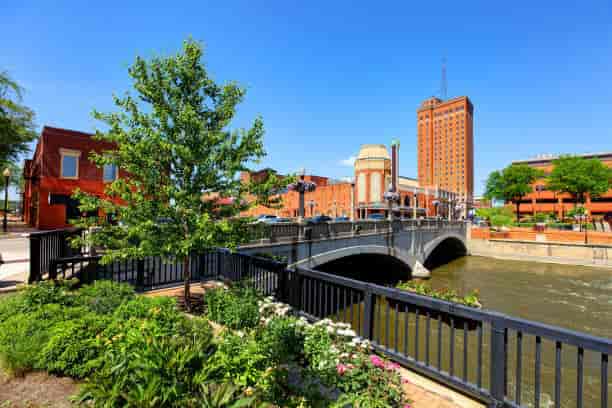
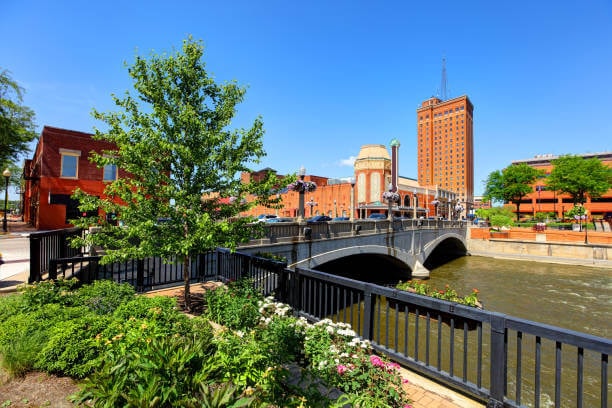
Downtown Aurora is built around one of the most architecturally dramatic urban settings in the Chicago suburbs, Stolp Island, a narrow strip of land in the middle of the Fox River around which the city's historic commercial and civic core was established in the 19th century. The Fox River's presence on both sides of the island creates a unique visual environment that sets downtown Aurora apart from most western suburban downtowns: the sound and movement of water, bridges crossing from island to mainland in both directions, and riverside promenades that frame the entire neighborhood in natural beauty. It is, simply, one of the most appealing urban environments in the Chicago metropolitan area outside the city itself, and most people who haven't spent time here have never heard that said about Aurora.
The Paramount Theatre is downtown's anchor institution and arguably its most important asset. Built in 1931 as an atmospheric movie palace in Moorish and Art Deco style, the 1,888-seat Paramount is today one of the premier Broadway touring production venues in the Midwest, regularly hosting full-scale productions of Hamilton, Wicked, Les Misérables, and similar major shows at ticket prices that are genuinely affordable compared to Chicago venues. The theater's success over the past two decades has been central to downtown Aurora's revival: the audience it draws, the foot traffic it generates, and the reputation it creates have directly supported the growth of the restaurant, brewery, and coffee shop scene that now lines Water Street, Stolp Avenue, and the riverfront corridor. RiverEdge Park, an outdoor amphitheater on the river's edge, runs a summer concert series that draws tens of thousands of attendees annually and has become one of the most popular outdoor music venues in the western suburbs.
For residents, downtown Aurora offers the Chicago suburb's most genuine urban lifestyle. The Aurora Transportation Center Metra station, the western terminus of the BNSF Line, sits within walking distance of most downtown addresses, making Chicago commutes practical without a car. Hollywood Casino Aurora, the Two Brothers Roundhouse brewpub in a restored 19th century railroad roundhouse, and a growing concentration of independent restaurants and bars provide the kind of evening and weekend entertainment infrastructure that most western suburbs require a drive to access. Housing consists primarily of riverfront condos, loft-style apartments in historic commercial conversions, and a small number of Victorian-era single-family homes. The most desirable condo development, River Street Plaza, overlooks the Fox River directly and offers one-bedroom units from approximately $165,000 to penthouse units exceeding $500,000. The median sale price across downtown is approximately $255,000–$287,500.
Median Home Price: ~$255,000–$290,000 (condos and lofts primary; historic single-family homes $200,000–$300,000) | Average Rent: 1BR: $1,100–$1,500/mo | 2BR: $1,400–$2,000/mo
Safety: Downtown Aurora's safety profile is mixed, typical of a working urban core with entertainment venues and the commercial activity that accompanies them. Property crime rates are higher than in the District 204 suburban corridors. The blocks closest to the Paramount, the riverfront, and the Metra station are well-trafficked and reasonably safe during day and evening hours. Prospective residents should research specific blocks, as safety quality varies within the downtown footprint. The neighborhood's overall safety trajectory has improved alongside its commercial revitalization.
Walkability / Transit: Aurora's most walkable neighborhood by a wide margin. The Paramount Theatre, RiverEdge Park, the Fox River Riverwalk, restaurants, breweries, coffee shops, the Hollywood Casino, and the Aurora Transportation Center Metra station are all accessible on foot from downtown addresses. BNSF Metra service provides direct rail access to Chicago Union Station in approximately 50 minutes. Biking is viable and the Fox River Trail connects downtown to the broader regional trail network.
Top Amenities:
- Paramount Theatre, Historic 1,888-seat Art Deco performing arts venue presenting Broadway touring productions, concerts, and special events year-round; one of the most acclaimed regional theater venues in the Midwest
- RiverEdge Park, Outdoor amphitheater on the Fox River hosting a major summer concert series; one of the most popular outdoor music venues in the western Chicago suburbs
- Fox River Riverwalk, Scenic walking and biking path along the river, connecting downtown Aurora to the broader Fox River Trail that runs from Algonquin south through Oswego
- Two Brothers Roundhouse, Beloved brewpub and event venue in an authentically restored 19th century railroad roundhouse; one of downtown Aurora's most distinctive dining and entertainment destinations
- Hollywood Casino Aurora, Riverboat casino and entertainment complex on the Fox River; a significant source of the downtown foot traffic that supports the broader neighborhood economy
- Aurora Transportation Center, Metra BNSF Line western terminus with frequent service to Chicago Union Station; Aurora's most significant commuter infrastructure asset
- Waubonsee Community College, Downtown Campus, Higher education access directly in the downtown neighborhood; contributes student population and community programming
Best For: Chicago commuters who want Metra walkability without Chicago prices, arts and culture enthusiasts drawn to the Paramount and RiverEdge, young professionals who prioritize an urban lifestyle in a suburban setting, renters who want maximum walkability at below-Chicago-average costs, empty nesters who want to downsize into a walkable riverfront condo community
Nearest 10 Federal Storage Location:
- 2710 N Farnsworth Ave, Aurora, IL 60502, Located north of I-88 on the Farnsworth corridor, accessible from downtown via a short drive north along Farnsworth or the Illinois Route 31 corridor; well-suited for downtown residents moving into or out of smaller loft and condo units, staging renovation projects, or managing the limited storage that typically comes with historic building conversions
2. STONEBRIDGE, MOST PRESTIGIOUS, BEST GOLF COURSE COMMUNITY
Stonebridge is Aurora's prestige address, a 1,300-acre master-planned golf course community on the city's southeast side that has been under development since 1989 and has continued expanding through the early 2000s. The Stonebridge Country Club anchors the community with its championship golf course, clubhouse, pool, and member amenities, and the homes throughout the development are designed to reflect that premium positioning: custom-built single-family homes ranging from approximately 1,700 to 6,400 square feet on generous lots, many backing to golf course fairways, ponds, or wooded natural areas. The stone bridge that gives the community its name, an actual masonry bridge over one of the community's central water features, anchors the visual identity of a neighborhood where architectural craftsmanship and attention to detail were built in from the beginning.
The case for Stonebridge as an extraordinary value in the Chicago metropolitan context comes down to school district access and price positioning relative to comparable communities. Stonebridge falls within Indian Prairie Community Unit School District 204, consistently ranked among the top five school districts in Illinois and one of the top suburban districts nationally, which means Stonebridge buyers receive access to highly rated elementary, middle, and high school programs (including Waubonsie Valley High School and Metea Valley High School) alongside a home in a golf course community at prices that would purchase a substantially more modest property in comparable Naperville or Wheaton communities. Homes in Stonebridge currently list from approximately $450,000 for townhomes and entry-level single-family homes to well over $1 million for the largest custom estates, with an average listing price across current for-sale inventory near $760,000 for single-family homes.
Beyond the golf course and school access, Stonebridge benefits from outstanding I-88 connectivity, the interchange is minutes away, making the community as practical for I-88 corridor commuters (Oak Brook, Downers Grove, Warrenville, Lisle) as it is for those using the nearby Route 59 Metra station for Chicago service. The Route 59 station, located at the Naperville/Aurora border, is one of the BNSF Line's busiest suburban stations and provides frequent express service to Chicago Union Station in approximately 45 minutes. The Fox Valley Mall retail corridor along Route 59 provides the full range of shopping, dining, and services within a short drive of most Stonebridge addresses.
Median Home Price: ~$700,000–$800,000 (single-family homes); $400,000–$500,000 (townhomes) | Average Rent: 1BR: $1,800–$2,200/mo | 2BR: $2,200–$3,000/mo (very limited rental inventory; primarily ownership community)
Safety: Stonebridge consistently earns top safety ratings, among the lowest crime rates in Aurora, driven by the combination of a gated golf course community character, higher household incomes, and the strong homeownership culture of the neighborhood. The southeast Aurora corridor, including Stonebridge, is where the city's best safety metrics concentrate.
Walkability / Transit: Car-dependent for daily life. Stonebridge is a golf course community designed around the automobile, and all shopping, dining, and daily errands require a vehicle. The Route 59 Metra station provides rail access to Chicago, though driving to the station is required from most Stonebridge addresses. I-88 is minutes away for highway commuting.
Top Amenities:
- Stonebridge Country Club, Championship golf course, clubhouse, pool, and member amenities; the community's defining social and recreational institution
- Indian Prairie School District 204, One of the top-ranked school districts in Illinois; Waubonsie Valley High School and Metea Valley High School serve Stonebridge students
- Route 59 Metra Station, BNSF Line station minutes from Stonebridge providing express Chicago service in approximately 45 minutes
- I-88 access, Direct tollway access for I-88 corridor commuters reaching Oak Brook, Downers Grove, Warrenville, and the broader western suburban employment base
- Fox Valley Mall & Route 59 corridor, Regional shopping, dining, and entertainment complex within a short drive; one of the most complete commercial corridors in the western suburbs
- Springbrook Prairie Forest Preserve, Significant natural preserve with trails accessible from the broader southeast Aurora corridor
Best For: Buyers seeking the most prestigious residential address in Aurora, families for whom District 204 school access is the primary driver, I-88 corridor executives and professionals, Chicago commuters who want a golf course lifestyle with rail access to the city, buyers who want Naperville-quality amenities at a meaningful price discount to the Naperville market
Nearest 10 Federal Storage Location:
- 2710 N Farnsworth Ave, Aurora, IL 60502, Aurora's north Farnsworth location, accessible via I-88 from the Stonebridge area for residents who need secure, climate-controlled storage during move-in transitions, renovation projects, or seasonal storage of golf equipment and outdoor furnishings
3. OAKHURST, BEST PLANNED FAMILY COMMUNITY
Oakhurst occupies a very specific and very well-executed position in the Aurora residential market: the planned community that got everything right. Developed between 1989 and 2000 by Kimball Hill Homes, Oakhurst spread over roughly 700 acres on Aurora's east side, with nearly a quarter of that acreage intentionally dedicated to green space, trails, parks, and the natural features that make the community genuinely livable rather than just densely built. The result is a neighborhood of approximately 1,916 homes, a mix of single-family houses and townhomes across 17 distinct sub-neighborhoods, that functions more like a self-contained town than a subdivision. The Oakhurst Community Association, the Oaks Recreational Club (a members-only pool and recreation complex), the Oakhurst Orcas swim team, youth baseball and soccer leagues, community garage sales, and a busy calendar of neighborhood events create the kind of genuine community identity that most suburban developments aspire to and few actually achieve.
The school district is the single most important driver of Oakhurst's desirability. Steck Elementary School sits within Oakhurst's boundaries, and the community feeds into Indian Prairie School District 204's Waubonsie Valley High School, consistently ranked among the top high schools in Illinois. District 204 has earned six National Blue Ribbon School Awards from the U.S. Department of Education, multiple schools are rated in the top 10% nationally, and the district consistently ranks among the top ten in Illinois by most educational assessment metrics. For families who are making their housing decision primarily on school quality, which describes a substantial portion of Oakhurst's buyer population, this access is the central value proposition.
Oakhurst's outdoor infrastructure is a meaningful differentiator even within the District 204 corridor. The Oakhurst Forest Preserve on the community's west side provides significant natural space for hiking, wildlife observation, and the kind of unstructured outdoor experience that increasingly rare in densely developed suburbs. The Waubonsie Creek Trail runs along the community's southern boundary and connects to the broader Illinois Prairie Path network, one of the most extensive off-road trail systems in the Chicago metro. The Eola Community Center, adjacent to Oakhurst, provides a full-size gymnasium, fitness center, and a branch of the Aurora Public Library in a single facility that is walkable from most of the neighborhood's addresses. Home prices in Oakhurst range from approximately $319,900 for townhomes to $568,000 and above for larger single-family homes, with an average listing price across current for-sale inventory in the mid-$500,000s.
Median Home Price: ~$450,000–$550,000 (single-family homes); ~$300,000–$375,000 (townhomes) | Average Rent: 1BR: $1,600–$2,000/mo | 2BR: $2,000–$2,600/mo (limited rental inventory)
Safety: Oakhurst earns consistently strong safety ratings within the Aurora market. The community's homeownership culture, engaged neighborhood association, higher household incomes, and location in the safer southeast Aurora corridor all contribute to a crime profile well below the city average. Residents consistently describe the community as safe and family-oriented in reviews and community forums.
Walkability / Transit: Walkable within the community for recreation, the trail network, parks, and the Eola Community Center are accessible on foot from most addresses. A car is needed for shopping, dining, and most daily errands. The Route 59 Metra station provides Chicago rail access, requiring a short drive. Pace bus service runs through the community connecting to the Route 59 station.
Top Amenities:
- Oaks Recreational Club, Members-only pool and recreation complex available exclusively to Oakhurst and nearby subdivision residents; large swimming pool, water slide, kiddie pool, tennis and basketball courts; home to the Oakhurst Orcas youth swim team
- Indian Prairie School District 204, Steck Elementary within Oakhurst's boundaries; Waubonsie Valley High School; one of the top-ranked school districts in the state with multiple National Blue Ribbon Award schools
- Oakhurst Forest Preserve, Natural woodland preserve on the community's west side with hiking trails, wildlife habitat, and significant natural green space
- Waubonsie Creek Trail, Off-road trail connecting Oakhurst to the Illinois Prairie Path network; ideal for running, cycling, and walking
- Eola Community Center, Full-size gymnasium, fitness center, and Aurora Public Library branch; walkable from most Oakhurst addresses
- Fox Valley Mall proximity, The Region's largest mall and the Route 59 retail corridor are minutes from Oakhurst for shopping, dining, and daily services
- Pace Bus Route 59 Connection, Bus service through the community connecting to the Route 59 Metra station for Chicago commuters who prefer not to drive to the station
Best For: Families with school-age children for whom District 204 access is essential, buyers who want a genuine community identity in a planned development rather than an anonymous subdivision, active families who prioritize trail access, outdoor recreation, and organized community sports and programming, households that want suburban infrastructure at a price point below Naperville equivalents
Nearest 10 Federal Storage Location:
- 2710 N Farnsworth Ave, Aurora, IL 60502, North Farnsworth location accessible from Oakhurst via I-88 or Eola Road; particularly useful for Oakhurst residents managing seasonal storage for outdoor recreational equipment, bikes, sports gear, and seasonal items that accumulate in active family households
4. FOX VALLEY / FAR EAST, BEST FOR COMMUTERS & NEW CONSTRUCTION
The Fox Valley and Far East neighborhoods occupy the eastern fringe of Aurora, the corridor where Aurora, Naperville, and the Route 59 commercial axis converge in ways that blur the municipal boundaries and create one of the most functional suburban environments in the Chicago metropolitan area. This is where you find the most consistent access to District 204 schools, the newest residential construction, the Route 59 Metra station for Chicago commuting, Fox Valley Mall for daily shopping needs, and the Naperville dining and entertainment scene all within a compact geography that most residents can navigate entirely within a 5–10 minute drive radius.
Fox Valley the neighborhood, not to be confused with the Fox Valley Park District that covers a much broader area, is a predominantly residential community anchored by the Fox Valley Mall and the Yorkshire Shopping Center on Ogden Avenue, with Spring Lake Park and Wildflower Park providing green-space amenities for residents. The area's apartment rental market is among the most active in Aurora, with one-bedroom units averaging $1,909–$1,940 per month and two-bedrooms approaching $2,400, reflecting the premium the District 204 school access and Metra proximity command. For buyers, the Far East corridor features newer construction from the 1990s through the 2010s in a range of configurations from townhomes to larger single-family homes, all with District 204 school access and the commercial infrastructure of the Route 59 corridor at their doorstep.
The Route 59 Metra station is the neighborhood's most significant practical asset for commuter households. The station is one of the BNSF Line's busiest suburban stops, with frequent service throughout the day and express trains reaching Chicago Union Station in approximately 45 minutes. The station's parking capacity and bus connections make it accessible from throughout the east Aurora corridor, and its position at the Aurora/Naperville border means residents of both cities use it as their primary Chicago connection. For households where one or more adults commute to Chicago regularly, proximity to Route 59 Metra meaningfully reduces the true cost of living in the area, the ability to eliminate a car for the Chicago commute provides real financial benefit that partially offsets the higher rent and purchase prices of the corridor.
Median Home Price: ~$350,000–$500,000 (newer construction; varies by size and proximity to Naperville border) | Average Rent: 1BR: $1,895–$1,940/mo | 2BR: $2,300–$2,600/mo
Safety: The Fox Valley and Far East corridors rank among Aurora's safest neighborhoods, driven by higher household incomes, strong homeownership rates, newer construction, and the generally safe character of the southeast Aurora quadrant. Crime rates here are substantially below the Aurora city average and are more comparable to Naperville's southeast side than to Aurora's urban core neighborhoods.
Walkability / Transit: Car-dependent for most daily needs, with the major exception of the Route 59 Metra station for Chicago commuters. The Fox Valley Mall and Route 59 retail corridor are accessible by car in minutes. Walking within the residential neighborhoods is pleasant for recreation but not practical for errands. Pace bus service connects to the Route 59 station for residents who prefer not to drive.
Top Amenities:
- Route 59 Metra Station, BNSF Line express service to Chicago Union Station in approximately 45 minutes; one of the busiest and most convenient Metra stations in the western suburbs
- Fox Valley Mall, Regional enclosed mall with major anchor retailers, dining, and entertainment; the primary daily shopping destination for east Aurora residents
- Indian Prairie School District 204, All Far East and Fox Valley neighborhoods are served by District 204; multiple elementary schools feed into Fischer or Granger Middle and Waubonsie Valley or Metea Valley High
- Spring Lake Park & Wildflower Park, Neighborhood green spaces providing recreation within the Fox Valley residential area
- Route 59 dining corridor, One of the most extensive concentrations of restaurants in the western suburbs, spanning casual to upscale and representing strong culinary diversity
- Naperville dining and entertainment access, The Naperville downtown's nationally recognized restaurant and entertainment scene is a short drive from most Far East Aurora addresses
- I-88 access, Direct tollway access via the Eola Road interchange for I-88 corridor commuters
Best For: Chicago commuters who want Metra access without Chicago pricing, families seeking District 204 school quality with the most abundant rental inventory in that school corridor, buyers who want newer construction in the most commercially convenient position in Aurora, dual-income households that prioritize access to both Chicago employment and the western suburban I-88 corridor
Nearest 10 Federal Storage Location:
- 2710 N Farnsworth Ave, Aurora, IL 60502, North Farnsworth location accessible from the Fox Valley/Far East corridor via I-88 or Ogden Avenue; useful for east side residents managing household overflow, business storage for I-88 corridor businesses, or the seasonal gear that accumulates in active families living near the Fox Valley Park District's 164 parks and 45 miles of trails
5. AURORA UNIVERSITY AREA / NEAR WESTSIDE, BEST FOR YOUNG PROFESSIONALS & CAMPUS COMMUNITY
The Aurora University area on the city's near west side, encompassing the University Neighbors, Riddle Highlands, and nearby residential streets around the campus, is the neighborhood that surprises people most when they first spend time in Aurora. Where most of the city's sought-after addresses sit on the east side near Naperville and the District 204 school corridor, the AU area on the west side occupies a different and equally compelling position: it is where Aurora's architectural heritage is most intact, where the Fox River and a wooded park landscape create a genuinely beautiful setting, and where Aurora University's campus provides the kind of consistent community energy, events, arts programming, athletic competitions, community engagement, that gives the neighborhood a character unlike any other part of the city.
Aurora University, founded in 1893, has grown into a respected four-year institution with strong programs in education, nursing, business, and social sciences, enrolling approximately 6,000 students. The university's campus on Calder Drive occupies a beautifully maintained historic setting adjacent to Abraham Lincoln Park, which provides green space, a park pond, and recreational access that effectively extends the university's campus character into the surrounding neighborhood. The Aurora Country Club sits adjacent to the area as well, adding a golf and social club amenity that contributes to the near west side's quality-of-life profile in ways that are visible but understated.
Housing in the Aurora University area includes some of the most architecturally interesting older homes in the city, classic Chicago-style bungalows, American Foursquares, craftsman homes, and Victorian-era properties that reflect Aurora's 19th and early 20th century prosperity on the west side of the river. These homes are available at prices meaningfully below what comparable vintage properties in Oak Park or Evanston would command, making the AU area an appealing option for buyers who value architectural character and are willing to invest in maintaining or updating older homes. West Aurora High School, which serves the near west side, offers career academies in automotive technology, computer science, and nursing, providing specialized academic tracks that are less common in typical suburban high schools. The West Aurora district is rated somewhat below District 204 but represents a genuine public school option with growing programming.
Median Home Price: ~$240,000–$360,000 (wide range; renovated historic homes at premium; larger homes near campus on higher end) | Average Rent: 1BR: $1,200–$1,600/mo | 2BR: $1,500–$2,000/mo
Safety: The Aurora University area is generally considered among the safer neighborhoods on the city's west side, with the campus presence and engaged community contributing to a more positive safety environment than some west side neighborhoods further from the campus core. Residents should note that the west side of Aurora overall has a more mixed safety profile than the southeast District 204 corridor, and researching specific blocks is advisable for anyone considering purchase or rental.
Walkability / Transit: The most walkable area on Aurora's west side. Abraham Lincoln Park, the Aurora University campus, the Aurora Country Club, and several coffee shops and restaurants are accessible on foot from addresses closest to campus. The Aurora Transportation Center Metra station is accessible by a short drive or a longer bike ride, providing Chicago commuter rail access. PACE bus routes serve the area with connections to the broader Aurora transit network.
Top Amenities:
- Aurora University, Four-year university with approximately 6,000 students; source of consistent community energy, arts and athletic programming, and educational resources accessible to neighborhood residents
- Abraham Lincoln Park, Significant urban park adjacent to the university with pond, walking paths, recreational space, and the natural setting that anchors the neighborhood's green-space character
- Aurora Country Club, Private golf and social club adjacent to the AU area; adds a recreational amenity to the near west side that complements the university and park setting
- Historic architecture, The AU neighborhood contains some of Aurora's finest intact pre-WWII residential architecture, bungalows, Foursquares, craftsman homes, at prices well below comparable vintage properties in Chicago's inner suburbs
- Fox River Trail access, The regional Fox River Trail is accessible from the near west side, connecting to the broader trail network that runs through downtown Aurora and beyond
- Downtown Aurora proximity, The Paramount Theatre, RiverEdge Park, and the Fox River restaurant and entertainment scene are a short drive from most AU area addresses
Best For: Aurora University faculty, staff, and graduate students, young professionals who want historic architectural character without paying inner-suburb prices, buyers who want a walkable campus-adjacent community on the city's less expensive west side, arts and community-oriented households who value the programming and energy that a university campus provides
Nearest 10 Federal Storage Location:
- 2710 N Farnsworth Ave, Aurora, IL 60502, North Farnsworth location accessible from the AU area via a short drive north; a practical option for university staff managing moves or seasonal storage, and for near west side residents whose older homes typically have less built-in storage than newer construction communities
6. McCARTY BURLINGTON / NEAR EASTSIDE HISTORIC DISTRICT, MOST AFFORDABLE & MOST HISTORIC CHARACTER
The McCarty Burlington neighborhood and the broader Near Eastside Historic District represent the oldest residential fabric of Aurora, a dense grid of historic homes from the late 19th and early 20th centuries on the east side of the Fox River, just across from downtown Stolp Island. This is where Aurora's original merchant and professional class built their homes during the city's industrial prosperity, and the architectural inventory that remains, Victorian-era homes, classic Chicago bungalows, Craftsman foursquares, and early 20th century colonials, constitutes one of the most substantial concentrations of pre-WWII residential architecture in the western suburbs. The neighborhood is designated as part of Aurora's Near Eastside Historical District, which provides some formal recognition of its significance and supports ongoing preservation efforts.
The practical appeal of the Near Eastside for buyers in 2026 is uncomplicated: it is where Aurora's most affordable single-family home inventory concentrates, it is within walking distance of the Aurora Transportation Center Metra station and the downtown Paramount Theatre district, it has direct access to the Fox River Trail via Veterans Memorial Island Park and Gregory Island Dog Park, and it is one of the most culturally diverse neighborhoods in the city, with East New York Street's corridor of taquerias, international markets, and community businesses providing a culinary and cultural richness that is uncommon in predominantly homogeneous suburban settings.
The Near Eastside is also the neighborhood that most clearly reflects Aurora's status as a genuinely diverse city, not the demographically uniform suburb that the word "Aurora" might suggest to those who only know the city's southeast-side reputation. The neighborhood's Latino community, in particular, has deep roots here, and the food scene along East New York Street is one of Aurora's most authentic and most frequently celebrated local assets. East Aurora High School serves the district, and while school ratings here are lower than in the District 204 corridor, there are investment efforts underway and the school's biliteracy programs reflect the neighborhood's genuine multilingual character.
Median Home Price: ~$175,000–$270,000 (historic homes; well below Aurora citywide median; renovation-ready properties at the lower end) | Average Rent: 1BR: $1,000–$1,400/mo | 2BR: $1,300–$1,800/mo
Safety: The Near Eastside's safety profile is mixed and block-dependent, typical of a historic urban neighborhood in transition. Some blocks closest to the Fox River Trail and Veterans Memorial Island Park are well-used and generally safe; areas further from the riverfront and closer to some of the commercial corridors require more situational awareness. Crime rates are higher here than in the southeast District 204 neighborhoods. Buyers and renters should research specific addresses rather than treating the neighborhood as uniform.
Walkability / Transit: One of Aurora's more walkable neighborhoods outside of downtown proper. The Aurora Transportation Center Metra station is accessible on foot or by bike from much of the Near Eastside, providing direct Chicago rail access. East New York Street provides walkable access to restaurants, markets, and local businesses. The Fox River Trail connects directly from Veterans Memorial Island Park. PACE bus service covers the main corridors.
Top Amenities:
- Near Eastside Historical District designation, Formal recognition of the neighborhood's architectural significance; supports preservation efforts and community investment
- Historic architecture, The most substantial inventory of pre-1940 residential architecture in Aurora, from Victorian-era homes to classic Chicago bungalows, at the city's most affordable price points
- Veterans Memorial Island Park & Gregory Island Dog Park, Riverfront parks directly connecting the Near Eastside to the Fox River Trail and the natural amenities of the Fox River corridor
- East New York Street culinary corridor, One of the most authentic and diverse dining streets in the western Chicago suburbs; taquerias, international markets, bakeries, and community businesses reflect the neighborhood's cultural richness
- Aurora Transportation Center walkability, Metra BNSF Line access within walking distance for many Near Eastside addresses, one of the few Aurora neighborhoods where Chicago commuting by rail without a car is genuinely practical
- Downtown Aurora and Paramount Theatre proximity, Walking distance to the city's cultural and entertainment core; near east side residents have the most direct access to downtown of any residential neighborhood
Best For: First-time homebuyers who want historic character at Aurora's most accessible price points, buyers interested in architectural renovation in a historically significant neighborhood, renters who want Metra walkability and downtown access at below-average Aurora rents, households who value cultural and culinary diversity in their daily neighborhood experience, investors with renovation experience who are oriented toward long-term neighborhood appreciation
Nearest 10 Federal Storage Location:
- 2710 N Farnsworth Ave, Aurora, IL 60502, Accessible from the Near Eastside via a short drive north through downtown and across the river; useful for first-time buyers managing moves into historic homes that often have limited built-in storage, and for renovation-oriented buyers who need staging space while updating an older property
HOW TO CHOOSE YOUR AURORA NEIGHBORHOOD
Aurora's neighborhood range, from a historic riverfront downtown with Metra walkability to a championship golf course community with custom homes to the oldest residential architecture in the western suburbs, is broad enough that the right choice depends almost entirely on which combination of priorities matters most to you. Here is a practical framework.
If Chicago commuting by rail is non-negotiable: Downtown's Aurora Transportation Center and the Near Eastside are the only Aurora neighborhoods where you can walk to Metra. The Far East / Fox Valley corridor and Oakhurst offer a short drive to the Route 59 station. All of these positions allow Chicago access without traffic, but only downtown and the Near Eastside offer the fully car-free commuter option.
If school district quality is the primary driver: Any neighborhood in the District 204 Indian Prairie corridor, Stonebridge, Oakhurst, Fox Valley, Eola Yards, Big Woods Marmion, Far East, delivers Illinois's top-tier school access. Within that corridor, Stonebridge and Oakhurst offer the most distinctive neighborhood character alongside the school access. Fox Valley and Far East offer the most abundant rental inventory for families who are renting rather than buying.
If you want Aurora's most prestigious address at the highest price point: Stonebridge is the clearest answer. The golf course setting, custom-built homes, gated character, and the price premium it commands relative to the broader Aurora market make it the city's equivalent of a prestige suburb-within-a-suburb.
If an active planned community with family infrastructure is the priority: Oakhurst delivers the best combination of organized community programming (swim team, youth leagues, community events), outdoor infrastructure (forest preserve, trail connections, neighborhood parks), and school access in the Aurora market.
If you want walkability, arts, and urban character: Downtown Aurora is the only choice. The Paramount Theatre, RiverEdge Park, the Fox River, Two Brothers Roundhouse, Hollywood Casino, and the Aurora Transportation Center Metra all within walking distance of a riverfront condo or historic loft, this is the urban lifestyle in the western suburbs.
If architectural character and affordability are what you're after: The McCarty Burlington Near Eastside Historic District offers the most interesting pre-WWII residential architecture in Aurora at the city's most accessible prices. The trade-off is a more mixed safety profile and lower school ratings than the southeast corridors. Buyers who are motivated by the combination of historic character, affordability, and Downtown Aurora walkability will find the Near Eastside the strongest value in the market.
SELF STORAGE IN AURORA, 10 FEDERAL STORAGE LOCATION
Aurora's position as Illinois' second-largest city, with a diverse population that includes Chicago commuters cycling through rental housing, corporate relocations driven by the I-88 corridor employment base, families upsizing as they move into the District 204 school corridor, and first-time buyers taking on historic homes that require renovation staging, creates consistent, year-round demand for self storage across every part of the city. 10 Federal Storage's Aurora location on North Farnsworth Avenue is positioned directly off the I-88 tollway at the Farnsworth exit, making it one of the most convenient storage facilities in the metro for Aurora residents and the broader Fox Valley community.
The North Farnsworth Avenue location serves the full range of Aurora storage needs: residential moves, Metra commuter households that need overflow space for bikes and seasonal gear, I-88 corridor businesses using storage as a flexible alternative to commercial warehouse space, and families managing the outdoor recreational equipment that accumulates with 164 Fox Valley Park District parks, 45 miles of connected trails, and the outdoor-oriented lifestyle that the Fox River and regional forest preserves make possible in this part of Illinois.
As with all 10 Federal locations, the Aurora facility offers fully online rental: reserve your unit, sign your lease, and receive your gate access code entirely from your phone or computer, no office visit, no waiting, no paperwork. All leases are month-to-month, with no long-term commitment required. New customers qualify for up to 2 months free with no admin fees. Climate-controlled units are available and strongly recommended for Aurora's demanding climate, summers pushing into the 90s with high humidity and winters delivering sub-zero temperatures and heavy snowfall create conditions that can damage electronics, wooden furniture, instruments, and similar items stored in standard non-climate-controlled units over an Illinois winter or summer.
10 Federal Storage Location in Aurora, IL
- 2710 N Farnsworth Ave, Aurora, IL 60502, Located just north of I-88 at the Farnsworth Avenue interchange, adjacent to the Chicago Premium Outlets area; serves north, east, and central Aurora residents and the broader Fox Valley market. Ideal for residential moves, I-88 corridor business storage, seasonal outdoor and recreational gear, Caterpillar and corporate relocation transitions, and household overflow for families in the District 204 corridor. Units from compact 5x5 for boxes and small items up to large 10x25 units holding full household contents. Climate-controlled options available year-round. 24/7 gate access.
View the Aurora location and available units here.
WELCOME TO AURORA
Aurora is the Chicago suburb that rewards the people who look past the surface label. As Illinois' second-largest city, it has the scale to support genuine neighborhood diversity, the kind of variety that lets a family with young children choose a master-planned community with Indian Prairie District 204 schools, a downtown loft dweller walk to Paramount Theatre shows and Metra trains in the same evening, and a first-time buyer acquire a Victorian-era home in a designated historic district for a price that would purchase a one-bedroom condo in many other Illinois cities. The Fox River running through the center of it all, the Paramount Theatre producing world-class Broadway on a historic stage, RiverEdge Park drawing regional concertgoers to the waterfront, and Chicago's full employment market accessible in under an hour by rail, Aurora delivers more of the things that make a city genuinely livable than most people who have never spent time here expect to find.
And wherever you land in Aurora, whether you're moving into a Stonebridge custom home, settling into a downtown loft near the Paramount, buying your first house in the Near Eastside Historic District, or joining the Oakhurst swim team community, 10 Federal Storage's North Farnsworth Avenue location is positioned to handle your storage needs with fully online rental, 24/7 access, climate-controlled options, month-to-month leases, and up to 2 months free for new customers.
Find the Aurora location and reserve a unit online today.
About 10 Federal Storage, Aurora
10 Federal Storage operates a self-storage facility in Aurora, IL at 2710 N Farnsworth Ave, Aurora, IL 60502, located just north of I-88 at the Farnsworth interchange, serving Aurora's north side, the Fox Valley corridor, and the broader Kane/DuPage County market. Fully online rental, 24/7 access, climate-controlled options, and up to 2 months free for new customers. View the Aurora location here.
FREQUENTLY ASKED QUESTIONS ABOUT AURORA NEIGHBORHOODS
The McCarty Burlington Near Eastside Historic District and parts of the near west side offer Aurora's most accessible home prices, with single-family historic homes available from approximately $175,000 to $270,000, well below the Aurora citywide median. For renters, Downtown Aurora, Fordon Park, and Eola Yards are the most affordable neighborhoods in the city, with some well-located one-bedroom apartments available under $1,200 per month. The near west side around Aurora University also offers more affordable rents than the District 204 east-side corridor, while providing campus amenity access.
The southeast side of Aurora, encompassing Stonebridge, Oakhurst, Fox Valley, Far East, Eola Yards, and the broader Indian Prairie District 204 corridor, consistently earns the city's best safety ratings. Aurora's crime, like that of most large cities, is not uniform: the southeast and east sides are dramatically safer than the overall city crime statistics suggest, while portions of the west and north sides carry higher risk. Buyers and renters specifically prioritizing safety should focus their search on the District 204 corridor neighborhoods, which compare favorably to neighboring Naperville by most crime metrics.
Aurora and Naperville share geography, school district access (in the District 204 corridor), and many daily amenities, but they carry significantly different price tags. Aurora's median home prices run approximately 25–35% below comparable Naperville properties, and rental prices in shared district corridors like Fox Valley and Eola Yards are meaningfully lower than what equivalent apartments cost on the Naperville side of the Route 59 corridor. Aurora offers something Naperville doesn't, a genuinely historic downtown with a world-class performing arts venue in the Paramount Theatre and a vibrant riverfront entertainment district. For households where every dollar of housing cost matters, Aurora's District 204 corridor neighborhoods provide essentially equivalent school access to Naperville's west side at a substantial discount.
Oakhurst and Stonebridge for families who want the complete planned community experience with District 204 school access and strong safety profiles. The Fox Valley and Far East corridors for families who are renting in the District 204 corridor and need the most abundant inventory. The Aurora University area for families who prioritize community character, outdoor access, and the energy of a campus neighborhood and can work within the West Aurora school district. In all cases, District 204 school access is the primary driver of family demand in Aurora, and neighborhoods within that district command corresponding premiums.
Aurora is served by two BNSF Metra Line stations, both offering express service to Chicago Union Station in approximately 45–55 minutes. The Aurora Transportation Center (ATC) in downtown Aurora is the western terminus of the BNSF Line and is walkable from downtown neighborhoods and accessible by a short drive from the near west and east sides. The Route 59 station at the Aurora/Naperville border serves the Fox Valley, Oakhurst, Stonebridge, and Far East neighborhoods with a short drive. Both stations provide all-day service with express trains during peak commuter hours. The BNSF Line is one of the most heavily used Metra lines in the system, reflecting the significant commuter base that lives in Aurora and the Fox Valley corridor and works in Chicago or the I-88 technology and corporate corridor.
Aurora experiences a full four-season Midwest climate, winters are genuine, with average January temperatures in the mid-teens Fahrenheit overnight, typical annual snowfall of 35–40 inches, and periodic sub-zero events in the coldest months. Ice storms and lake-effect snow from Lake Michigan's influence can make driving challenging for days at a time in the worst winters. For storage needs specifically, Aurora's climate range, from near-zero Fahrenheit winters to 90°F+ summers with significant humidity, makes climate-controlled storage a meaningful consideration for electronics, wooden furniture, musical instruments, photographs, and similar items. Standard drive-up storage works well for tools, outdoor equipment, and durable goods that are not temperature-sensitive.
About the Author
10 Federal Storage
Our team at 10 Federal Storage has been in the self storage industry for decades. With knowledge gained from multiple universities and in the field, we are well-prepared and excited to assist with your storage needs. When you rent a unit with us, you can feel confident that our seasoned customer service team’s help will make your transition as seamless as possible. Customer satisfaction is our number one priority, and we strive to make your experience exceptional with our automated leasing options, diverse unit sizes, and a strong commitment to sustainability.