

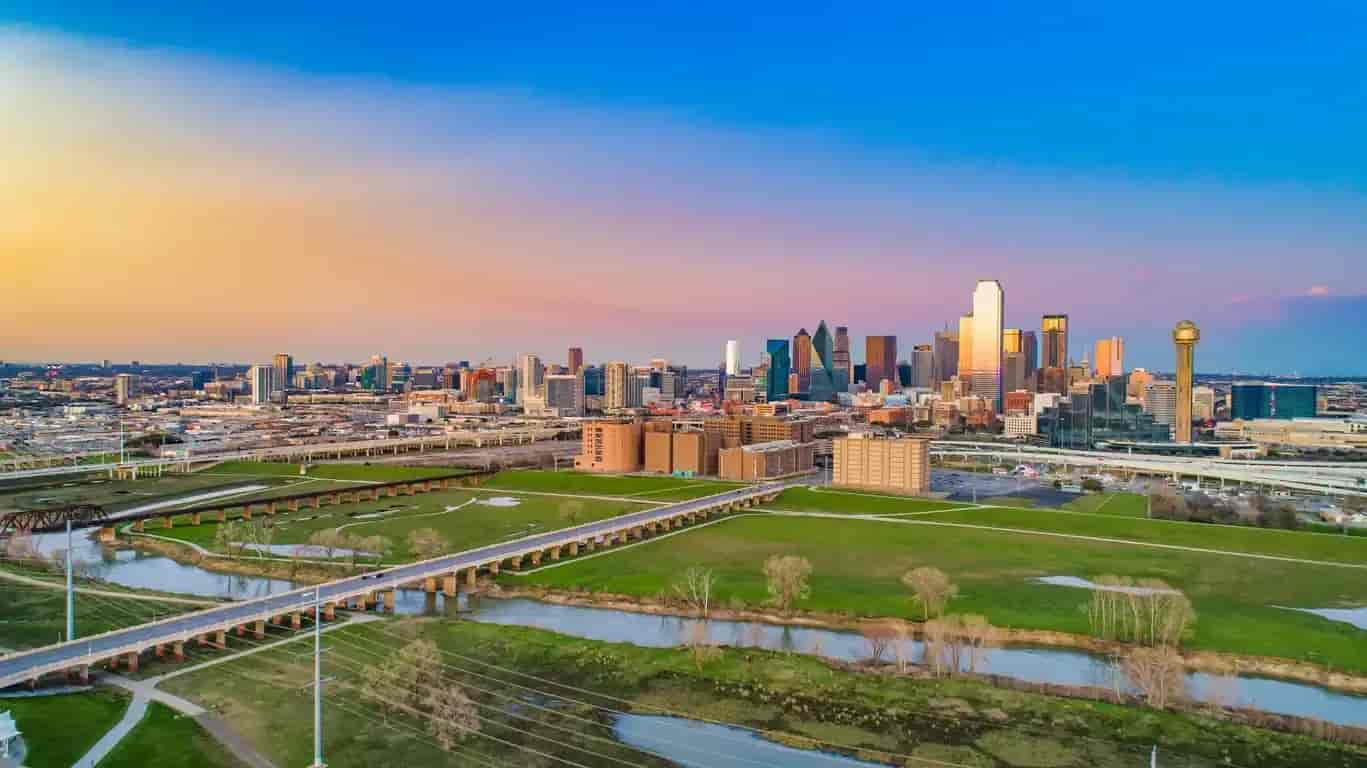
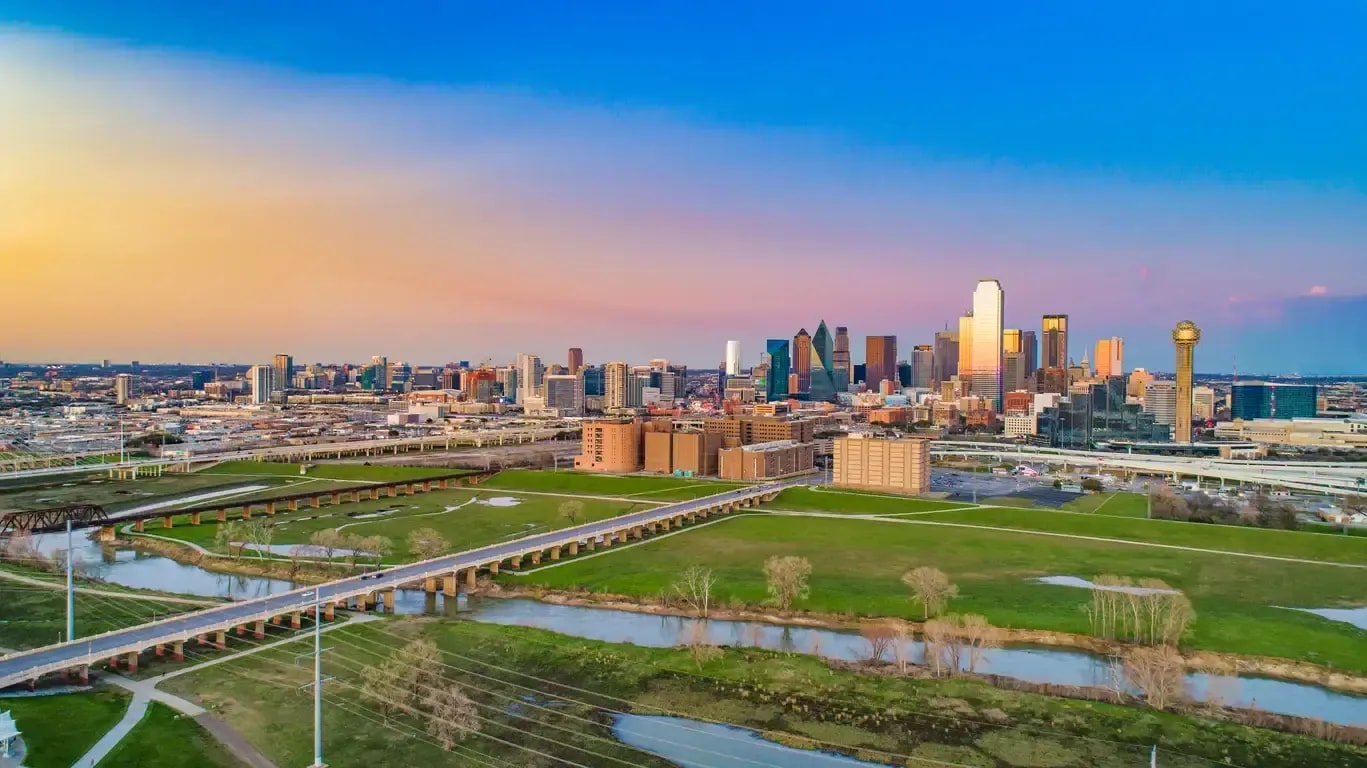
Best Neighborhoods in Dallas, TX
by 10 Federal Storage
Published on April 16, 2026
Dallas is one of the most dynamic relocation destinations in the United States, and for good reason. The city has absorbed hundreds of thousands of new residents over the past decade, driven by Texas's lack of a state income tax, a corporate landscape that reads like a Fortune 500 directory, and a cost of living that still undercuts most peer metros on the coasts. Toyota, AT&T, Goldman Sachs, McKesson, and a growing wave of financial services, tech, and healthcare companies have all planted significant roots here, bringing with them a professional workforce that has reshaped neighborhoods across the entire Dallas–Fort Worth Metroplex.
But calling Dallas one place is a little like calling Texas one climate. The walkable lofts of Uptown bear almost no resemblance to the winding tree-lined streets of Lakewood. The craftsman bungalows of Bishop Arts District feel like a different universe from the gleaming master-planned communities of McKinney or the corporate corridors of Las Colinas. Dallas's scale, the city proper covers over 340 square miles, and the metro area is home to more than 7.7 million people, means that finding the right neighborhood requires understanding which version of Dallas actually fits your life.
This guide profiles six of the best neighborhoods in the Dallas metro area for renters and buyers in 2026, covering everything from rent and home prices to safety, walkability, schools, and what day-to-day life actually looks like in each area. We've also included information on 10 Federal Storage's Dallas-area locations, because whether you're moving into the city, relocating within the metroplex, or staging a home for sale, storage is one of the most practical tools in a Dallas move.
Quick Facts: Dallas at a Glance
- Population: ~1.3 million (city proper); ~7.7 million (DFW metro)
- Nickname: Big D; The City of Hate (historically, now rebranded as a welcoming, cosmopolitan city)
- Climate: Hot, humid summers (100°F+ common July–August); mild winters; occasional ice storms in January–February
- Major employers: AT&T, Toyota North America, Goldman Sachs, JPMorgan Chase, American Airlines, Southwest Airlines, Lockheed Martin, Raytheon, UTSW Medical Center, Baylor Scott & White Health, Texas Instruments, McKesson
- Median home price (Dallas city proper): ~$319,000–$414,000 (varies by source and neighborhood); DFW metro median ~$370,000 (2026)
- Cost of living: Approximately 2–3% above national average, significantly below peer metros like Austin, Denver, and most coastal cities
- No state income tax: Texas has no personal income tax, which effectively boosts purchasing power for residents compared to high-tax states
- Safest neighborhoods: Lakewood, Keller, McKinney, Frisco, University Park, Highland Park
- Most walkable neighborhood: Uptown / Oak Lawn
Quick Facts: Renting in Dallas
- Average 1BR rent (citywide): $1,475/month (Rent.com, 2026)
- Average 2BR rent (citywide): $1,957/month
- Rent vs. national average: Roughly in line with or slightly below national median for comparable metros
- Most affordable renter neighborhoods: Vickery Meadows ($951 avg 1BR), Casa View ($957 avg 1BR), Northeast Dallas (~$995 avg 1BR), Oak Cliff (~$1,025 avg 1BR)
- Most expensive renter neighborhoods: Preston Hollow ($3,436 avg 1BR), Uptown ($2,785/mo per RentCafe), Downtown ($1,800–$2,100 range)
- Year-over-year rent trend: Relatively stable to modestly softening in 2025–2026 as new apartment inventory has been delivered across the metro
- Vacancy rate: Approximately 5%, tight by historical standards, but loosening slightly from 2022–2023 peaks
Table of Contents
- Dallas Housing & Rental Market Overview
- Uptown / Oak Lawn, Best for Young Professionals & Walkable Urban Life
- Lakewood, Best Established Neighborhood for Families Near the Water
- Bishop Arts District / North Oak Cliff, Best for Character, Culture & Value
- Las Colinas (Irving), Best for Corporate Professionals & DFW Airport Access
- Keller, Best for Families in North Tarrant County
- McKinney, Best Master-Planned Suburb in the North Metroplex
- How to Choose Your Dallas Neighborhood
- Self Storage in Dallas, 10 Federal Storage Locations
- Frequently Asked Questions
DALLAS HOUSING & RENTAL MARKET OVERVIEW
Dallas's housing market in 2026 is defined by a tension between strong underlying demand and a significant wave of new apartment supply delivered over the past two years. The median home price in the city proper sits around $319,000–$414,000 depending on the data source and neighborhood mix measured, still meaningfully below what comparable metros like Austin, Denver, or Chicago command, and light-years behind coastal markets. DFW metro-wide, the median sale price is roughly $370,000. The luxury tier, Preston Hollow, Highland Park, University Park, operates in an entirely different market, with median values often exceeding $2 million and marquee estates in the $5M–$15M+ range.
For buyers, the 2025–2026 window has produced improved affordability relative to the 2021–2022 frenzy. Homes are sitting on the market longer, sellers are more negotiable, and the frantic multiple-offer environment that characterized the post-pandemic years has cooled. The sub-$400,000 segment remains competitive, particularly in desirable neighborhoods with good schools, Lake Highlands, Lakewood, parts of North Oak Cliff, where inventory stays tight relative to demand. The north suburbs (Frisco, McKinney, Plano, Allen) continue to attract families with strong school districts and newer housing stock, while inner-loop neighborhoods like Uptown and Oak Lawn attract buyers who prioritize walkability and urban amenities over square footage.
The rental market tells a slightly different story. Dallas has seen substantial apartment construction over the past three years, which has added inventory and given renters more negotiating power than they had in 2021–2022. Average citywide rents for a one-bedroom sit around $1,475/month and two-bedrooms around $1,957/month. Premium neighborhoods like Uptown and Downtown push well above those numbers, Uptown averages closer to $2,075–$2,785 for a one-bedroom depending on the building, while more affordable pockets like Vickery Meadows, Casa View, and Northeast Dallas remain under $1,000/month for a one-bedroom. New renters to the city should understand that Dallas is car-dependent in most neighborhoods outside of Uptown and parts of the Design District, and transportation costs should be factored into any neighborhood budget calculation alongside rent.
One structural advantage for Dallas residents that out-of-state movers often underestimate: Texas has no state income tax. For someone relocating from California (13.3% top rate), New York (10.9%), or Illinois (4.95%), the effective take-home pay improvement can offset a meaningful portion of housing costs, sometimes representing $5,000 to $20,000+ in annual savings depending on income level. That math is part of why Dallas continues to attract corporate relocations and individual movers at a pace that has outpaced housing supply.
1. UPTOWN / OAK LAWN, BEST FOR YOUNG PROFESSIONALS & WALKABLE URBAN LIFE
No neighborhood in Dallas better captures the city's professional ambitions and urban energy than Uptown and its adjacent Oak Lawn district. Stretching north from downtown along McKinney Avenue and Cedar Springs Road, Uptown is the closest thing Dallas has to a true walkable urban neighborhood, a dense, amenity-rich enclave where you can leave the car parked for dinner, weekend brunch, a workout class, and a nightcap without regretting it. The McKinney Avenue Trolley, a beloved, free, historic streetcar, connects Uptown to the Cityplace area and helps stitch the neighborhood together in a way few Dallas corridors can claim.
Uptown's residential landscape is dominated by high-rise luxury apartment towers and mid-rise condominiums, with a sprinkling of renovated townhomes and historic properties on the quieter residential streets. The architecture ranges from sleek glass-and-steel modern builds to restored Tudor and craftsman-style homes tucked behind the main commercial corridors. Klyde Warren Park, a 5.2-acre park built over the Woodall Rodgers Freeway, serves as Uptown's front yard, hosting weekly food trucks, free yoga classes, concerts, and community events that draw residents from across the city. The proximity to downtown, the Arts District, and major corporate employers along the Central Expressway corridor makes Uptown a natural landing spot for newly relocated professionals.
Oak Lawn, Uptown's neighbor to the west, has its own distinct character. It's been Dallas's LGBTQ+ cultural center for decades, with Cedar Springs Road hosting a concentration of inclusive bars, restaurants, and community spaces. The neighborhood has a walkable, relaxed energy and a housing mix that includes more rental apartments, duplexes, and townhomes at a slightly more accessible price point than core Uptown. Oak Lawn is also home to Turtle Creek Park and the surrounding Turtle Creek Boulevard, one of the city's most scenic residential corridors, lined with mature trees and luxury high-rises overlooking the creek.
Both neighborhoods sit squarely in the North Dallas Tollway / Central Expressway commuting corridor, making them natural bases for professionals who work downtown or in the Legacy West / Frisco corridor to the north. The DART light rail network is accessible from nearby Cityplace/Uptown Station and Cole Avenue, providing car-free transit options to downtown, the Mockingbird area, and points north.
Median Home Price: Condos from $299,000–$532,400 (1BR–2BR); luxury units exceed $1M | Average Rent: 1BR: $1,700–$2,785/mo | 2BR: $2,400–$3,500/mo (wide range by building age and amenities)
Safety: Uptown and Oak Lawn carry higher aggregate crime statistics than some suburban alternatives, driven largely by theft and property crime typical of high-density entertainment and commercial districts. The residential blocks away from the main corridors are significantly calmer. The neighborhood's active street life, high foot traffic, and substantial luxury high-rise security infrastructure contribute to a generally safe residential experience. Most residents describe feeling comfortable walking at night in the core Uptown and Cedar Springs areas.
Walkability / Transit: Dallas's most walkable neighborhood. Walk Score consistently ranks Uptown among the top neighborhoods in the city. The free McKinney Avenue Trolley, DART bus service, and Cityplace/Uptown light rail station connect to the broader transit network. Most daily needs, groceries, dining, fitness, nightlife, can be met on foot or by trolley.
Top Amenities:
- Klyde Warren Park, 5.2-acre green space with free programming, food trucks, yoga, concerts, and a children's park; the social hub of Uptown
- McKinney Avenue Trolley, Free, historic streetcar running the length of McKinney Avenue through Uptown to Cityplace
- Dallas Arts District, World-class museums (DMA, Nasher Sculpture Center, Crow Museum), the AT&T Performing Arts Center, and the Meyerson Symphony Center, all within a short drive or walk from Uptown
- Whole Foods, Central Market, Tom Thumb, Walkable grocery access within the neighborhood
- Turtle Creek Park, Scenic, shaded creek trail running through Oak Lawn; ideal for running, walking, and dog exercise
- Cedar Springs corridor, Vibrant dining, entertainment, and nightlife strip anchoring the Oak Lawn community
- DART rail access, Cityplace/Uptown station on the Red and Blue lines provides car-free downtown and citywide connectivity
Best For: Young professionals recently relocated to Dallas, anyone prioritizing walkability and urban amenity density above all else, renters who want to delay or avoid car ownership, LGBTQ+ community members seeking an established and welcoming neighborhood, corporate employees whose offices are in downtown or along the Central Expressway corridor
Nearest 10 Federal Storage Location:
- 10 Federal Storage, Dallas, TX, Serving Uptown, Oak Lawn, Downtown, and the surrounding urban core. Ideal for residents of high-rise apartments with limited storage, those staging moves into or out of compact urban units, or anyone managing a downtown business inventory. Fully online rental, month-to-month leases, and secure access.
2. LAKEWOOD, BEST ESTABLISHED NEIGHBORHOOD FOR FAMILIES NEAR THE WATER
Lakewood sits on the western banks of White Rock Lake in East Dallas, roughly five miles from downtown, and it has long been considered one of the most desirable neighborhoods in the city for families and longtime Dallasites who want a residential feel without sacrificing urban access. The neighborhood's defining feature is its relationship with White Rock Lake, a 1,254-acre urban reservoir surrounded by 9.3 miles of paved trails that attract cyclists, runners, kayakers, fishermen, and picnickers year-round. The lake's Bath House Cultural Center, the Dallas Arboretum's 66-acre botanical gardens, and the regular food and wine festivals held on the grounds make Lakewood's backyard genuinely hard to match anywhere else in the city.
The housing stock is one of Lakewood's great distinctions. The neighborhood is filled with 1920s and 1930s Craftsman bungalows, Tudor-style cottages, and Colonial Revival homes on tree-canopied streets, the kind of architectural character that new construction simply cannot replicate. Homes here are well-maintained and well-loved, with mature landscaping, large front porches, and the kind of established-neighborhood energy that draws buyers who are done with cookie-cutter subdivisions. Prices reflect the demand: Lakewood's median home value sits around $1.6 million, though the market spans widely depending on size and proximity to the lake. Entry-level properties in the $700,000–$900,000 range do exist but require moving quickly. For context, that same budget in nearby Highland Park, Lakewood's even more exclusive cousin to the north, buys significantly less.
Lakewood's school access is a significant part of its appeal. The neighborhood feeds into Mockingbird Elementary School, consistently among Dallas ISD's most sought-after schools, and Lakehill Preparatory School provides a private alternative with a strong academic reputation. Families who choose Lakewood are often specifically doing so for the combination of school access, neighborhood character, and outdoor recreation, a combination that's genuinely rare within Dallas city limits.
Renters will find Lakewood's inventory limited, it's primarily an ownership-oriented neighborhood, but charming apartment buildings, duplexes, and smaller rental homes do exist on the interior streets, with one-bedrooms typically ranging from $1,200–$1,600/month and two-bedrooms from $1,800–$2,200. The Lakewood Shopping Center and the restaurants and boutiques along Gaston Avenue provide convenient retail and dining without requiring a highway commute.
Median Home Price: ~$1.6 million (neighborhood median); entry-level from $700,000–$900,000 | Average Rent: 1BR: $1,200–$1,600/mo | 2BR: $1,800–$2,200/mo (limited rental inventory)
Safety: Lakewood is one of Dallas's safest neighborhoods, consistently cited as 56% safer than other Dallas neighborhoods and 40% safer than other Texas cities. Its residential character, engaged community, and active neighborhood association contribute to low crime rates. The lake trail and park areas are heavily used and well-lit.
Walkability / Transit: Partially walkable, the Lakewood Shopping Center, lake trail access, and surrounding restaurants are reachable on foot from most residential streets. DART bus service is available but limited; most residents rely on a car for grocery runs, school commutes, and longer trips. The neighborhood is extremely bike-friendly, with dedicated lake trail access and relatively low-traffic residential streets.
Top Amenities:
- White Rock Lake Park, 9.3 miles of paved lakeside trails, kayak/canoe rentals, fishing piers, dog parks, and picnic areas, the neighborhood's defining outdoor feature
- Dallas Arboretum & Botanical Garden, 66-acre botanical garden on the lake's eastern shore; hosts Dallas Blooms, Cool Thursday Concert Series, and the Rory Meyers Children's Adventure Garden
- Bath House Cultural Center, Historic WPA-era building now operating as a public arts and performance venue on the lakefront
- Lakewood Shopping Center, Walkable retail strip with restaurants, boutiques, coffee shops, and daily-needs services
- Mockingbird Elementary School, One of Dallas ISD's most sought-after elementary schools, serving the heart of Lakewood
- Lakehill Preparatory School, Well-regarded K–12 private school with a tight-knit community culture
- White Rock Coffee, Lakewood Landing, Cosmo's, Local dining and bar institutions that define Lakewood's unpretentious, community-driven culture
Best For: Families with children who want a walkable, architecturally distinctive neighborhood with top school access; buyers who prioritize established neighborhood character and outdoor recreation over square footage per dollar; empty nesters wanting a quieter, community-oriented East Dallas address; anyone for whom the White Rock Lake lifestyle is non-negotiable
Nearest 10 Federal Storage Location:
- 10 Federal Storage, Dallas, TX, Serving Lakewood and the broader East Dallas corridor. Convenient for Lakewood residents managing estate contents, staging a renovation on a historic property, or bridging the gap between homes during the area's competitive buying process.
3. BISHOP ARTS DISTRICT / NORTH OAK CLIFF, BEST FOR CHARACTER, CULTURE & VALUE
If Uptown represents Dallas at its most polished and Lakewood at its most established, the Bishop Arts District and the broader North Oak Cliff neighborhood represent the city at its most genuinely interesting. Located just southwest of downtown across the Trinity River, Oak Cliff has spent the past decade-plus transforming from an overlooked, working-class neighborhood into one of the most creative and culturally vibrant communities in the entire Dallas metro, without fully losing the grit and authenticity that made it worth discovering in the first place.
The Bishop Arts District is the commercial heart of the transformation: two full blocks on West Davis Street and Bishop Avenue lined with independent restaurants, wine bars, art galleries, bookshops, boutiques, and coffee shops occupying repurposed historic storefronts. There are no chain restaurants. No big-box stores. The aesthetic is curated but not self-conscious, mismatched vintage furniture on the sidewalk outside an espresso bar sitting next to a Michelin-recognized taco counter. The neighborhood hosts the annual Oak Cliff Film Festival, the Oaktoberfest street festival, and the Bastille on Bishop celebration of the neighborhood's French-influenced history, which reflects the layers of history and culture that make this area feel earned rather than manufactured.
The residential streets surrounding Bishop Arts, particularly the Winnetka Heights, Elmwood, and Kessler Park areas, are filled with craftsman bungalows, Spanish Revival cottages, and Prairie-style homes that would cost three to four times as much in Lakewood or the Park Cities. Median single-family prices in Bishop Arts and the surrounding North Oak Cliff corridor range from roughly $350,000 to $500,000 for well-maintained historic homes, with upside in some blocks as the neighborhood continues to appreciate. Winnetka Heights, a nationally registered historic district, offers some of the most architecturally rich and affordable character housing within the city limits, and it's the kind of neighborhood where buyers who move in early tend to feel very smart a decade later.
Rental inventory is more accessible here than in Lakewood or Uptown, with one-bedrooms typically running $1,300–$1,500/month and two-bedrooms $1,700–$2,100/month, some of the best value for an inner-loop Dallas address. The DART Red and Blue lines serve the area via the 8th & Corinth station, offering train access to downtown in under 10 minutes and connecting to the broader transit network. The Dallas Zoo, one of the best in the South, is a 10-minute walk from many North Oak Cliff streets.
Median Home Price: ~$350,000 (Bishop Arts); ~$139,000–$500,000+ depending on street and condition (Winnetka Heights / North Oak Cliff broader area) | Average Rent: 1BR: $1,025–$1,500/mo | 2BR: $1,500–$2,100/mo
Safety: North Oak Cliff has improved substantially over the past decade, and the Bishop Arts District itself and the blocks immediately surrounding it are considered safe and active with strong foot traffic. Crime varies by specific street and block, the neighborhood is still gentrifying in parts, and some adjacent areas carry higher crime statistics. Prospective residents should research specific addresses on crime mapping tools and talk to neighbors. The neighborhood's active community associations and rising property values are supporting a positive safety trajectory.
Walkability / Transit: Bishop Arts District is highly walkable within the core commercial area, restaurants, bars, galleries, and boutiques are all on foot. DART Red and Blue lines serve nearby 8th & Corinth station for downtown and citywide connectivity. The broader Oak Cliff residential neighborhoods are more car-dependent for daily errands, though the neighborhood's internal walkability is improving as new retail fills in.
Top Amenities:
- Bishop Arts District, Two-block commercial district with nationally recognized independent restaurants, bars, galleries, and boutiques; no chains, all local
- The Kessler Theater, Beloved neighborhood music and performance venue in a restored Art Deco building on West Davis
- The Texas Theatre, Historic Art Deco movie palace (site of Lee Harvey Oswald's 1963 arrest); now an independent cinema and concert venue
- Dallas Zoo, One of the country's top-rated zoos, located at the northern edge of Oak Cliff; 100+ acres and 2,000+ animals
- Winnetka Heights Historic District, One of Dallas's most architecturally significant neighborhoods, with craftsman and prairie-style homes dating to the early 1900s
- Kiest Park, Large city park with athletic fields, trails, and a community center in South Oak Cliff
- DART rail access, 8th & Corinth station on the Red and Blue lines; downtown Dallas reachable in under 10 minutes
- For Oak Cliff Farmers Market, Weekly farmers market celebrating local agriculture and community
Best For: Buyers and renters who prioritize neighborhood character and local culture over prestige addresses; creative professionals, artists, and entrepreneurs; buyers who want the most architectural value per dollar within the Dallas city limits; residents who want DART rail access to downtown; anyone who finds chain-dominated suburban streetscapes genuinely unappealing
Nearest 10 Federal Storage Location:
- 10 Federal Storage, Dallas, TX, Serving the Oak Cliff and South Dallas corridor with convenient access for Bishop Arts and Winnetka Heights residents managing renovation projects on historic homes, downsizing from larger spaces, or bridging moves in this fast-appreciating neighborhood.
4. LAS COLINAS (IRVING), BEST FOR CORPORATE PROFESSIONALS & DFW AIRPORT ACCESS
Las Colinas is one of the most ambitious, and successful, corporate master-planned communities ever built in the United States. Developed beginning in the 1970s on 12,000 acres of former ranch land in Irving, between Dallas and Fort Worth, Las Colinas has grown into a self-contained urban district with its own canal system, an award-winning urban center, a major convention and sports complex, and the offices of some of the world's most recognizable companies. Kimberly-Clark, Celanese, Microsoft, Fluor, and dozens of other Fortune 500 and Global 500 firms have significant operations here. For professionals whose employers are based in Las Colinas or the broader DFW Airport corridor, living in Irving is not just convenient, it's often the most rational decision in the entire metro.
The Las Colinas Urban Center is unlike anything else in the DFW Metroplex: a walkable canal district with gondola rides on the Mandalay Canal, outdoor dining along the waterfront, the Music Factory entertainment venue, and the Toyota Music Factory (a major live music amphitheater and venue complex). The Mustangs at Las Colinas, nine massive bronze mustang sculptures frozen mid-gallop in the plaza fountain, have become one of the most photographed landmarks in all of Texas. The area functions almost like a small downtown embedded in the middle of a sprawling office campus, and it gives Las Colinas a sense of place that most purely suburban communities lack entirely.
Residential options in Las Colinas run from high-rise condos and luxury apartment towers in the Urban Center to single-family communities in the surrounding Lake Carolyn, Valley Ranch, and Hackberry Creek areas. One-bedroom apartments in the Urban Center area typically run $1,400–$1,800/month, and two-bedrooms from $1,900–$2,500/month, with the premium end reserved for the newest buildings with lake or canal views. Single-family homes in Las Colinas's surrounding gated communities like Hackberry Creek start around $500,000 and climb into the $1M+ range for lakefront positions. Irving city proper has more affordable options, the city's median home price is lower than Dallas city's, making it a value-oriented alternative for buyers who don't need to live in the core Urban Center.
DFW International Airport sits just 10 minutes from Las Colinas by car, a meaningful practical advantage for professionals who travel frequently for work. The TEXRail commuter line connects Irving to downtown Fort Worth, and the DART Orange line connects to downtown Dallas, making Las Colinas one of the best-positioned neighborhoods in the metro for transit access to both city cores.
Median Home Price: Irving overall ~$310,000; Las Colinas Urban Center condos $400,000–$700,000+; Hackberry Creek and gated communities $500,000–$1M+ | Average Rent: 1BR: $1,400–$1,800/mo | 2BR: $1,900–$2,500/mo
Safety: Las Colinas and the corporate areas of Irving earn consistently strong safety ratings. The Urban Center's canal district and the gated residential communities surrounding it are well-patrolled and well-lit. Irving city overall has a mixed safety profile, the Las Colinas and Valley Ranch areas are among its safest, while some surrounding commercial corridors carry higher statistics. Residents should use crime mapping tools for street-level research.
Walkability / Transit: The Las Colinas Urban Center is walkable within its core canal district, with restaurants, hotels, entertainment, and some daily needs accessible on foot. DART Orange line stations at Las Colinas Urban Center and Irving Convention Center provide rail access to downtown Dallas. TEXRail connects to downtown Fort Worth. The surrounding residential communities are car-dependent for most daily errands.
Top Amenities:
- Lake Carolyn / Mandalay Canal, Scenic waterfront canal system with gondola rides, outdoor dining, and waterside walking paths through the Urban Center
- Toyota Music Factory, Major live music amphitheater and entertainment complex hosting national touring acts, restaurants, and bars
- Mustangs at Las Colinas, Iconic nine-sculpture bronze mustang installation in Williams Square; one of Texas's most recognized public artworks
- The Pavilion at Toyota Music Factory, Indoor/outdoor live music venue hosting concerts, events, and festivals throughout the year
- DART Orange Line, Light rail to downtown Dallas; multiple Las Colinas stations serving the Urban Center and surrounding business district
- DFW International Airport, 10-minute drive; significant practical advantage for frequent travelers
- Irving Convention Center at Las Colinas, Major convention and events venue in the heart of the Urban Center
- Hackberry Creek Country Club & Las Colinas Country Club, Golf and club amenities for residents seeking resort-style suburban living
Best For: Corporate professionals whose employers are in Las Colinas, Irving, or along the DFW Airport corridor; frequent flyers who value proximity to the airport above all; couples or individuals who want an urban-feeling environment without full Dallas city density; buyers seeking newer construction at more accessible price points than comparable Dallas city locations
Nearest 10 Federal Storage Location:
- 10 Federal Storage, Irving, TX, Conveniently serving Las Colinas, the Urban Center, Valley Ranch, and the broader Irving corridor. Ideal for professionals relocating to the DFW Airport area, condo residents with limited in-unit storage, or businesses needing inventory and equipment space near the major corporate office campuses.
5. KELLER, BEST FOR FAMILIES IN NORTH TARRANT COUNTY
Keller sits in the suburban sweet spot of the DFW Metroplex: far enough north of Fort Worth to feel genuinely removed from city congestion, close enough to both Fort Worth and the Alliance Corridor employment hub to make commutes manageable, and served by one of the most consistently respected school districts in Tarrant County. Keller ISD feeds a significant portion of the city and its surrounding communities, and the district's academic reputation, built over decades of above-average performance, is a primary driver of the family migration that continues to flow into this part of North Texas.
Keller's neighborhoods are predominantly single-family, with homes that range from modest three-bedroom ranch-styles on smaller lots to large custom builds on acreage in the rural-residential communities east of U.S. 377. The housing stock is generally newer than Dallas city neighborhoods, much of Keller's residential development occurred from the 1980s through the 2000s, with the architectural variety characteristic of Texas suburban growth: brick-and-stone combinations, open floor plans, covered backyard patios, and neighborhoods with tree-lined streets and community amenities like pools, parks, and walking trails. Bear Creek Parkway, Indian Knoll Road, and the corridors around the main Town Center are the most established and sought-after residential addresses. Median home prices in Keller typically run from $450,000 to $650,000 for a quality single-family home, with significant variation depending on lot size, age, and specific neighborhood.
Old Town Keller, the historic commercial core along Main Street, has seen thoughtful revitalization, with local restaurants, boutiques, and a farmers market providing a genuine small-town energy that distinguishes Keller from the more generic suburban growth to its north and west. Bear Creek Park, a 290-acre city park with extensive trail systems, sports fields, playgrounds, and a fishing pond, serves as the community's outdoor hub. For families moving from a more urban environment, Keller tends to feel like a natural landing point, suburban in character, but with enough local identity and quality infrastructure to avoid the emptiness that some sprawling Texas suburbs project.
The Alliance Corridor, one of the largest master-planned industrial and logistics districts in the country, home to Amazon, FedEx, American Airlines maintenance facilities, and a growing medical district, sits just west of Keller in Fort Worth, providing a major employment anchor for residents who don't want to commute into downtown. U.S. 377, Texas 170, and I-35W provide reasonable freeway access for those who do.
Median Home Price: $450,000–$650,000 (typical single-family range); custom builds and acreage properties exceed $1M | Average Rent: 1BR: $1,400–$1,800/mo | 2BR: $1,700–$2,200/mo (limited multifamily inventory; most rentals are single-family homes)
Safety: Keller is one of the safest communities in the DFW Metroplex. The city consistently earns high safety ratings, with crime rates well below state and national averages. The combination of a higher median household income, active community involvement, and relatively low population density contributes to an exceptionally low-crime environment. It routinely appears on "safest cities in Texas" rankings.
Walkability / Transit: Car-dependent for most daily needs. Keller is a classic North Texas suburb where the car is the primary mode of transportation. Old Town Keller is walkable within its immediate commercial district. There is no DART rail service; the nearest commuter rail access is via TEXRail (Fort Worth to DFW Airport) from Haltom City. Residents should budget accordingly for transportation costs.
Top Amenities:
- Keller Independent School District, One of Tarrant County's most respected school districts; feeds Keller High School and multiple well-regarded elementary and middle campuses
- Bear Creek Park, 290-acre city park with paved trails, athletic fields, disc golf, playgrounds, and a fishing pond; the outdoor hub of the community
- Old Town Keller, Historic main street district with local restaurants, boutiques, and a farmers market providing small-town character within a suburban city
- Alliance Corridor, Major employment hub to the west in Fort Worth, home to Amazon, FedEx, American Airlines, and a growing medical district, a short commute from Keller
- Keller Town Center, Commercial hub with grocery stores, restaurants, fitness centers, and retail serving the city's residential neighborhoods
- Trophy Club and Westlake proximity, Access to premier golf communities and the upscale Westlake Parkway corridor with high-end dining and corporate offices
Best For: Families with school-age children who want top-tier public schools in a safe, established suburban setting; buyers looking for newer construction with quality finishes at prices below the Highland Park or Frisco premium; professionals working in the Alliance Corridor or north Fort Worth who want a short commute; anyone relocating from a traditional Sunbelt suburb who wants familiar neighborhood infrastructure with strong community character
Nearest 10 Federal Storage Locations:
- 2060 Whitley Road, Keller, TX 76248, Located in central Keller near U.S. 377; convenient for Keller residents managing a home transition, storing outdoor and sporting equipment, or handling renovation overflow
- 4270 Keller Hicks Road, Keller, TX 76244, Second Keller location serving the northern Keller and North Richland Hills corridor; ideal for families in the Bear Creek and Alliance-adjacent communities
6. McKINNEY, BEST MASTER-PLANNED SUBURB IN THE NORTH METROPLEX
McKinney has one of the most compelling identity stories in the entire Dallas–Fort Worth Metroplex. It is simultaneously one of the fastest-growing cities in the United States, adding tens of thousands of new residents over the past decade, and home to one of the most genuinely charming historic downtown squares in Texas. This combination of old-town authenticity and new-suburb growth infrastructure is what sets McKinney apart from purely master-planned peer cities like Frisco or Allen, which have built impressive amenities from scratch but lack the layered character that comes from a place with a 150-year history.
McKinney's historic downtown square, anchored by the Collin County Courthouse and surrounded by two-story Victorian commercial buildings now occupied by locally owned restaurants, wine bars, boutiques, antique shops, and coffee houses, is the genuine article. Weekend afternoons on the square feel like something out of small-town Texas circa 1975, minus the limited dining options. The McKinney Performing Arts Center, housed in a restored 1914 city hall, anchors a cultural calendar that includes live theatre, concerts, and community events throughout the year. It's the kind of downtown that neighboring cities have tried to manufacture with mixed success, McKinney simply has it organically.
The residential landscape is split between established neighborhoods surrounding the historic core, older bungalows and craftsman homes within walking distance of the square, and an extensive ring of newer master-planned communities to the south, east, and west. Craig Ranch, Stonebridge Ranch (one of the largest master-planned golf communities in Texas), and Trinity Falls are among the most well-known developments, each offering resort-style amenities including golf courses, lakes, trails, and community pools. Median home prices in McKinney cluster around $400,000–$550,000 for newer suburban construction, with premium positions in Stonebridge Ranch or lakefront properties exceeding $700,000–$1M+. The historic core offers older homes in the $350,000–$600,000 range with genuine architectural character.
McKinney ISD is the public school district serving much of the city, with a strong academic reputation that attracts families making deliberate relocation decisions. Collin County's overall tax and cost environment, slightly lower property taxes than Dallas County, adds another incentive for buyers optimizing the full financial picture. Highway 75 (Central Expressway) and SH 121 provide freeway access south toward the Plano/Allen employment corridors and further into Dallas proper, though McKinney residents should plan for meaningful commute times to downtown Dallas (45–60+ minutes during peak hours from the northern reaches of the city).
Median Home Price: $400,000–$550,000 (typical range); Stonebridge Ranch and premium communities $550,000–$1M+ | Average Rent: 1BR: $1,400–$1,800/mo | 2BR: $1,800–$2,300/mo
Safety: McKinney is among the safest large cities in Texas. Its crime rates are substantially below state and national averages, and it regularly appears in "safest cities" rankings nationally. The combination of a high median household income, strong community civic involvement, and the relatively low population density of suburban development contributes to an exceptionally safe living environment.
Walkability / Transit: Historic downtown McKinney is walkable within its core commercial district, the square and surrounding blocks can be navigated entirely on foot. The surrounding residential communities are car-dependent for daily needs. There is no DART light rail serving McKinney; residents rely on U.S. 75 and SH 121 for highway commutes. The GoLink on-demand transit service operates in parts of McKinney but is not a substitute for a car.
Top Amenities:
- Historic Downtown McKinney Square, One of Texas's most charming historic commercial districts, with locally owned restaurants, boutiques, wine bars, and antique shops surrounding the Victorian courthouse
- Stonebridge Ranch, One of the largest master-planned golf communities in Texas; multiple golf courses, beach club, tennis, lakes, and extensive trail systems
- Craig Ranch, Master-planned community featuring a TPC golf course, natatorium, fitness center, and miles of trails; home to the WinStar World Casino Open
- Trinity Falls, Nature-centric master-planned community along the Trinity River with extensive trails, kayaking access, and environmental programming
- McKinney Performing Arts Center, Restored 1914 city hall now operating as a professional-quality performing arts venue in the heart of downtown
- Erwin Park, Beloved 212-acre natural park with mountain biking trails, hiking, and cross-country running in a heavily wooded setting
- McKinney ISD, Well-regarded public school district with multiple high schools and a strong college prep track
Best For: Families seeking a combination of master-planned community infrastructure and genuine small-town character; buyers who want golf-community living at a lower price point than comparable communities in Frisco or Prosper; retirees and empty nesters who want a walkable downtown and community programming within a lower-density suburban setting; relocating professionals willing to accept a longer commute in exchange for more space, better schools, and a distinctive neighborhood identity
Nearest 10 Federal Storage Location:
- 10 Federal Storage, McKinney, TX, Serving McKinney and the surrounding Collin County communities, including Stonebridge Ranch, Craig Ranch, and the historic core. Ideal for families staging new construction moves, storing golf equipment and outdoor gear, or managing the contents of a larger suburban home during a renovation or downsizing transition.
HOW TO CHOOSE YOUR DALLAS NEIGHBORHOOD
The Dallas metro is large enough that the right neighborhood decision depends heavily on which of several competing priorities you're actually optimizing for. Here's a practical framework for narrowing it down.
If walkability and urban density are your top priority: Uptown and Oak Lawn are the only genuine answers in Dallas. The walkability gap between these neighborhoods and the rest of the city, including the trendy Bishop Arts District, which is walkable within its commercial core but not for daily errands, is significant. If being able to leave the car parked for a week is something you care deeply about, Uptown is your neighborhood and possibly the only one that fully delivers.
If you have children and school quality is the primary filter: Keller and McKinney lead the way for suburban families in Tarrant and Collin County respectively. Within Dallas city limits, Lakewood's Mockingbird Elementary access is a primary driver of that neighborhood's premium pricing. Lake Highlands and the Richardson ISD feeder neighborhoods offer another city option, though at more modest price points than Lakewood.
If neighborhood character and architectural authenticity matter most: Lakewood and Bishop Arts / Winnetka Heights are the two strongest answers, at very different price points. Lakewood delivers 1920s–1940s craftsman and Tudor character at significant cost. Winnetka Heights delivers similar or superior architectural interest at roughly half the price, which is why it consistently appears on "best value" neighborhood lists for Dallas.
If your employer is in the Las Colinas / DFW Airport corridor: Living in Irving's Las Colinas area is almost always the most practical answer. The commute math, the transit access, and the neighborhood's own urban amenities make it the rational choice for this particular employment geography.
If you want more space per dollar with a suburban lifestyle: McKinney offers the best combination of master-planned community amenities, genuine historic character, and relative value among the major north suburbs. Keller offers a similar proposition for North Tarrant County, particularly for families anchored to the Alliance Corridor employment hub.
If budget is the primary driver and inner-loop access still matters: Bishop Arts District / North Oak Cliff delivers the best combination of urban access, cultural character, and price in the entire city. Renters will find one-bedrooms well below the citywide average; buyers will find the deepest architectural value per dollar of any walkable Dallas neighborhood. The trade-off is that some blocks are still gentrifying and the safety profile varies more by specific street than in established neighborhoods like Lakewood.
SELF STORAGE IN DALLAS, 10 FEDERAL STORAGE LOCATIONS
The Dallas–Fort Worth Metroplex is one of the most active relocation markets in the country, with hundreds of thousands of people moving into, out of, and within the metro every year. Whether you're relocating from another state, moving between Dallas neighborhoods, staging a home for sale, managing a renovation, or simply dealing with the fact that Texas homes fill up fast, 10 Federal Storage operates multiple facilities across the DFW Metroplex to serve every part of the market.
All 10 Federal Storage locations offer fully online rental, reserve your unit, sign your lease, and receive your gate access code without visiting an office or filling out paperwork in person. All leases are month-to-month, with no long-term commitment required. New customers qualify for up to 2 months free storage.
10 Federal Storage Locations Across the Dallas–Fort Worth Metroplex
- 10 Federal Storage, Dallas, TX, Serving Dallas city proper, including Uptown, Lakewood, Oak Cliff, Deep Ellum, and the surrounding urban core. Ideal for urban renters with limited in-apartment storage, buyers bridging between homes in competitive inner-loop neighborhoods, and businesses needing inventory or document storage near the city center.
- 10 Federal Storage, Irving, TX, Located in Irving serving Las Colinas, Valley Ranch, and the DFW Airport corridor. Convenient for corporate professionals and frequent travelers who need secure, accessible storage near the area's major office campuses and DFW International Airport.
- 10 Federal Storage, Grand Prairie, TX, Serving Grand Prairie and the mid-cities corridor between Dallas and Fort Worth. Convenient access for residents and businesses between the two city cores.
- 10 Federal Storage, Fort Worth, TX, Serving Fort Worth and the western DFW corridor. Convenient for residents and businesses in Cowtown who need a flexible, professional storage option close to the city's major neighborhoods and employment centers.
- 2920 Avenue F, Ste 200, Arlington, TX 76011, Centrally positioned in Arlington between Dallas and Fort Worth, with access to I-20, Highway 360, and I-30. Serves Arlington, Grand Prairie, Mansfield, and the south DFW mid-cities corridor. Drive-up access, climate-controlled options, and wide driveways for easy loading.
- 2060 Whitley Road, Keller, TX 76248, Central Keller near U.S. 377. Serves Keller residential neighborhoods, the Old Town Keller area, and surrounding communities in north Tarrant County.
- 4270 Keller Hicks Road, Keller, TX 76244, Northern Keller location serving Keller's growing residential north corridor and the communities between Keller and North Richland Hills.
- 7510 Smithfield Road, North Richland Hills, TX 76182, North Richland Hills location serving NRH, Haltom City, and the surrounding mid-cities communities with convenient highway access.
- 3802 Rufe Snow Drive, North Richland Hills, TX 76180, Second NRH location on the Rufe Snow Drive corridor; convenient for residents in the southwestern NRH and Haltom City areas.
- 2121 S Burleson Blvd, Burleson, TX 76028, Serving Burleson, Crowley, Joshua, and the growing south Tarrant County communities south of Fort Worth. Ideal for families in Burleson's fast-growing residential neighborhoods managing the logistics of suburban Texas living.
- 10 Federal Storage, McKinney, TX, Serving McKinney and the surrounding Collin County communities, including Stonebridge Ranch and Craig Ranch. Convenient for families managing new construction timelines or storing gear in one of the metro's fastest-growing suburban communities.
Unit sizes range from compact 5x5 for boxes and seasonal items through 10x30 for full household contents and vehicle storage. Climate-controlled units are available at select locations, important in Texas, where summer heat and humidity can damage electronics, wood furniture, musical instruments, and artwork stored in non-climate-controlled environments. View all Dallas-area 10 Federal Storage locations here.
WELCOME TO DALLAS
Dallas rewards people who take the time to understand its neighborhoods rather than treating the metro as a monolith. The city is too big, too diverse, and too layered to be summarized in a single impression, and the neighborhoods profiled here represent genuinely different versions of what Dallas life can look like. Whether you're drawn to the walkable urban energy of Uptown, the lake-and-trees lifestyle of Lakewood, the cultural authenticity of Bishop Arts, the corporate infrastructure of Las Colinas, the family-first suburb of Keller, or the rare combination of historic character and master-planned growth in McKinney, there is a version of Dallas that fits your life.
And wherever you land in the metroplex, 10 Federal Storage has locations across the DFW area to help make your move, renovation, or ongoing storage needs as straightforward as possible, with fully online rental, flexible month-to-month leases, and up to 2 months free for new customers.
Find your nearest Dallas-area 10 Federal Storage location and reserve a unit online today.
About 10 Federal Storage, Dallas–Fort Worth
10 Federal Storage operates multiple self-storage facilities across the Dallas–Fort Worth Metroplex, including locations in Irving, Arlington, Grand Prairie, Fort Worth, Keller, North Richland Hills, Burleson, and McKinney, covering the full geographic breadth of the DFW market. Fully online rental, secure electronic access, and flexible month-to-month leases are available at all locations. View all Dallas-area locations here.
FREQUENTLY ASKED QUESTIONS ABOUT DALLAS NEIGHBORHOODS
For renters, Vickery Meadows and Casa View in Northeast Dallas offer the lowest average rents in the city, with one-bedroom apartments averaging under $1,000/month. Oak Cliff's broader neighborhood also offers one-bedrooms averaging around $1,025/month, one of the city's most accessible inner-loop price points. For buyers, Winnetka Heights in North Oak Cliff consistently delivers the most architectural value per dollar of any character-rich neighborhood in Dallas, with some homes priced well below $200,000 for properties that need work and well-maintained homes in the $300,000–$450,000 range.
Lakewood consistently earns the highest safety ratings within Dallas city limits, cited as significantly safer than the citywide average. In the broader metro area, Keller, McKinney, Frisco, Allen, and Southlake are among the safest communities in all of Texas, with crime rates well below state and national averages. Highland Park and University Park, independent cities within the Dallas city boundaries, also earn consistently high safety ratings. CrimeGrade and similar tools provide neighborhood-level crime mapping for prospective residents doing street-by-street research.
For most buyers with a medium-to-long time horizon, yes. The 2025–2026 market has cooled meaningfully from the 2021–2022 frenzy, with more inventory, longer days on market, and more negotiable sellers than at any point in the post-pandemic period. Dallas's underlying fundamentals remain strong, corporate in-migration continues, the job market is diverse and active, and Texas's tax environment (no income tax) effectively lowers the real cost of homeownership relative to high-tax states. The primary risks to assess are property tax rates (among the highest in the country at the state level, though offset by no income tax), hail and storm insurance costs, and the long-term direction of interest rates. Buyers in the sub-$400,000 range should still expect competition in desirable neighborhoods with good schools.
It depends significantly on where you live. Dallas ISD, which covers the city proper, has wide variance, top performers like Mockingbird Elementary (Lakewood), Alex Sanger Elementary, and Booker T. Washington High School for the Performing and Visual Arts are genuinely excellent, but overall district performance is mixed. Many families specifically choose suburban cities to access higher-performing independent school districts: Keller ISD, McKinney ISD, Frisco ISD, Allen ISD, and Plano ISD are all consistently rated among the best in Texas. Richardson ISD, which serves some neighborhoods within and around Dallas's northeastern border, is another highly regarded option accessible without leaving the urban area.
Dallas traffic is significant and should be factored into any neighborhood decision. The metro's highway network, I-35, I-30, I-635, I-20, the Dallas North Tollway, U.S. 75, carries heavy commuter traffic during peak hours, and construction and lane closures are persistent. Commutes from the far northern suburbs (McKinney, Frisco's outer edges, Prosper) to downtown Dallas can exceed 60–75 minutes in peak traffic. The most practical mitigation strategies are living near your workplace rather than commuting across the metro, using the DART light rail for downtown-bound commutes from inner-ring neighborhoods, or timing your commute to avoid the worst peak hours. The hybrid and remote work shift has improved conditions somewhat, but Dallas traffic remains a meaningful quality-of-life variable worth researching before committing to a neighborhood.
Dallas summers are legitimately brutal. July and August regularly produce strings of days at or above 100°F, and heat indices can push significantly higher. Air conditioning is a non-negotiable utility expense, not an optional comfort, budget accordingly for electricity bills that can exceed $200–$400/month in peak summer for a typical home. Winters are mild overall but punctuated by occasional ice storms that can shut down the city (Dallas infrastructure is not built for ice the way northern cities are), the 2021 winter storm that left much of Texas without power for days was an extreme case but a useful reminder. Hail is a real concern in spring storm season; buyers should verify roof age and condition before purchasing, as hail damage is a frequent homeownership cost in North Texas. That said, compared to Florida's hurricanes or California's wildfires, Dallas's climate risks are generally more manageable for the average homeowner.
About the Author
10 Federal Storage
Our team at 10 Federal Storage has been in the self storage industry for decades. With knowledge gained from multiple universities and in the field, we are well-prepared and excited to assist with your storage needs. When you rent a unit with us, you can feel confident that our seasoned customer service team’s help will make your transition as seamless as possible. Customer satisfaction is our number one priority, and we strive to make your experience exceptional with our automated leasing options, diverse unit sizes, and a strong commitment to sustainability.