
.svg)
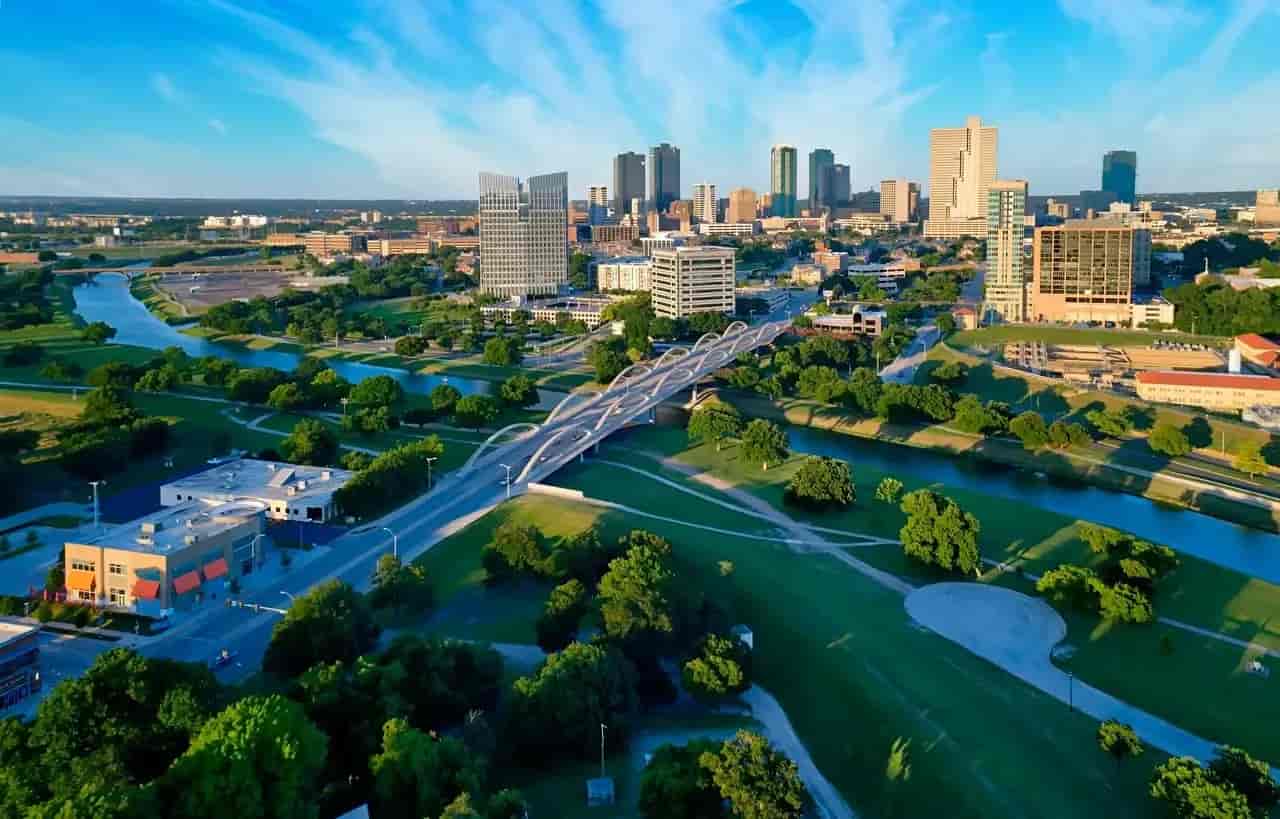
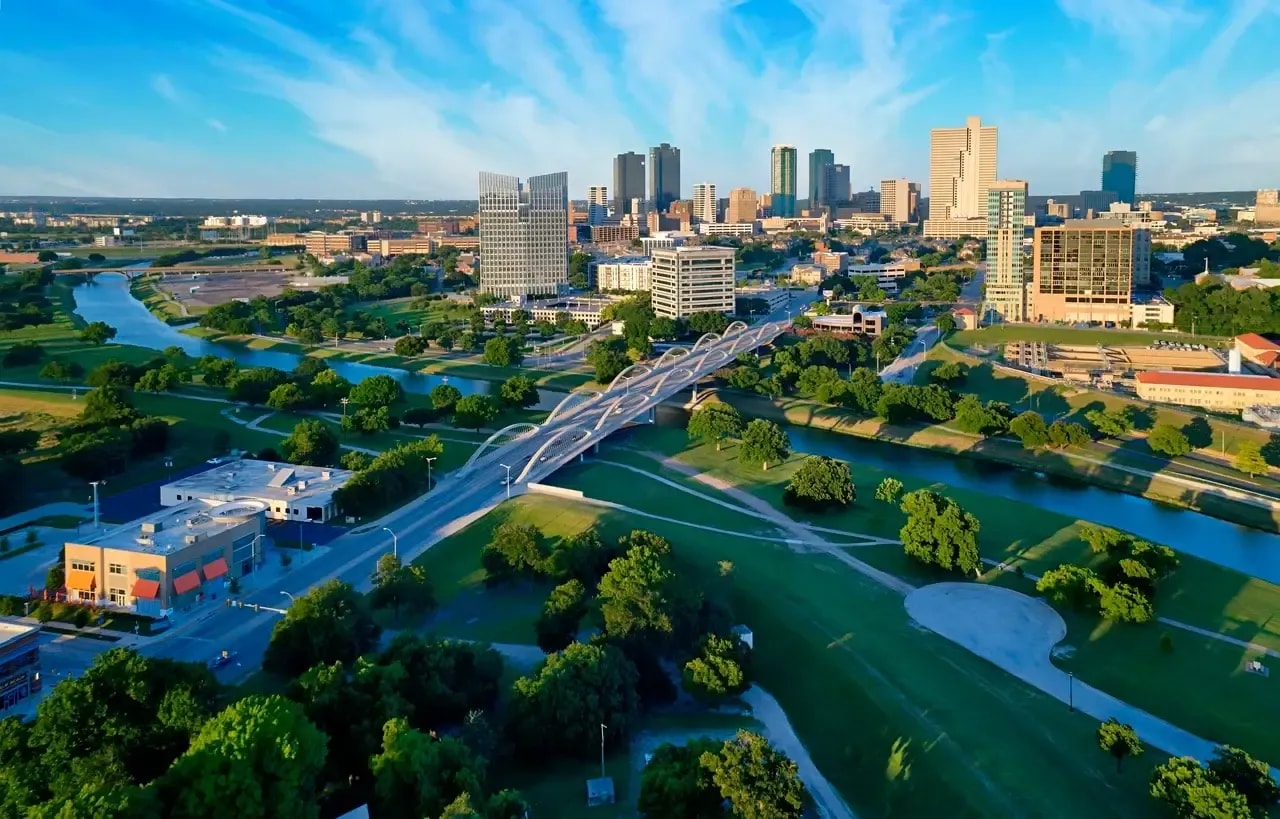
Best Neighborhoods in Fort Worth, TX
by 10 Federal Storage
Published on April 16, 2026
Fort Worth, "The City of Cowboys and Culture", has spent decades quietly becoming one of the most livable large cities in the United States. While Dallas often gets top billing in the Metroplex narrative, Fort Worth has built something arguably more distinctive: a city that genuinely balances Western heritage with world-class culture, big-city scale with neighborhood-level walkability, and Texas affordability with serious quality of life. It is the fifth-largest city in Texas, one of the fastest-growing major cities in the country, and home to a range of neighborhoods that can match virtually any lifestyle or budget.
What makes Fort Worth different from most cities of comparable size is how clearly its neighborhoods express individual identities. The Stockyards is a living, working piece of American Western history, where longhorn cattle still walk the streets at noon and honky-tonks open at 10 a.m. The Cultural District, less than two miles away, houses three of the most architecturally significant art museums in the country. Near Southside's Magnolia Avenue has become a dining and boutique corridor that rivals anything in Austin or Dallas. And TCU's surrounding neighborhoods deliver the kind of tree-canopied, community-anchored family lifestyle that people search years to find. Fort Worth is, in this sense, six or seven cities layered into one, and understanding those layers is the whole challenge of choosing where to live here.
This guide covers the six best neighborhoods in Fort Worth for renters and buyers in 2025, with honest data on what homes and apartments cost, what safety looks like, what you'll have access to every day, and who each area suits best. We've also included a dedicated section on self storage, because Fort Worth's growth, driven by constant corporate relocations, military transfers from Naval Air Station Fort Worth, and a steady stream of transplants from Austin and California, creates year-round demand for smart, flexible storage solutions throughout the city and the broader DFW Metroplex.
Quick Facts: Fort Worth at a Glance
- Population: ~978,000 (city proper); ~7.8 million (Dallas-Fort Worth Metroplex)
- Nickname: Cowtown; The City of Cowboys and Culture
- Climate: Hot summers (regularly 100°F+), mild winters; occasional ice storms December–February
- Primary employers: American Airlines, BNSF Railway, Lockheed Martin, Bell Textron, TPG Global, JPS Health Network, Alcon, Naval Air Station Fort Worth (NAS JRB), Fort Worth ISD, Cook Children's Medical Center
- Median home price: ~$295,000–$310,000 (Redfin/Zillow, early 2026), approximately 17% below the national median
- Cost of living: Approximately 5% below the national average; no state income tax
- Safest neighborhoods: Far Northwest, TCU/Westcliff, Arlington Heights, Tanglewood
- Most walkable neighborhood: Downtown Fort Worth / Sundance Square (Walk Score: 85)
Quick Facts: Renting in Fort Worth
- Average 1BR rent: ~$1,200–$1,300/month
- Average 2BR rent: ~$1,500–$1,700/month
- Rent vs. national average: Approximately 21% below national average, one of the most affordable large-city rental markets in Texas
- Most popular renter neighborhoods: Downtown, Near Southside, West 7th
- Most affordable neighborhoods for renters: Candleridge (~$1,100–$1,400/mo avg 2BR), Arlington Heights (~$1,331/mo avg 2BR), North Side (~$1,300/mo avg 2BR)
- Year-over-year rent change: Down approximately 3–5% from 2023 peak as DFW multifamily supply increased significantly
- Military note: Fort Worth is home to Naval Air Station Fort Worth (Joint Reserve Base), which creates active demand for flexible, month-to-month rental housing across the western and northern suburbs
Table of Contents
- Fort Worth Housing & Rental Market Overview
- Downtown Fort Worth / Sundance Square, Most Walkable, Most Urban
- Near Southside / Fairmount, Best for Arts, Dining & Young Professionals
- TCU / Westcliff, Best for Families & Schools
- Arlington Heights, Most Established, Most Character
- Cultural District / Monticello, Best for Art Lovers & Heritage
- West 7th / Clearfork, Best for Modern Urban-Suburban Living
- How to Choose Your Fort Worth Neighborhood
- Self Storage in Fort Worth, 10 Federal Storage Locations
- Frequently Asked Questions
FORT WORTH HOUSING & RENTAL MARKET OVERVIEW
Fort Worth's housing market is one of the best value propositions among major American cities, a metro with genuine world-class amenities priced at a significant discount to comparable markets. The median home sale price in Fort Worth sits at approximately $295,000–$310,000 as of early 2026, roughly 17% below the national median, and well below what comparable square footage commands in Austin, Denver, or any major coastal city. The market has softened meaningfully from its 2022 peak, when bidding wars were common and prices rose at double-digit annual rates. That normalization has improved affordability, though desirable neighborhoods in the Cultural District, TCU corridor, and Monticello still command premium pricing.
For renters, Fort Worth represents an exceptional value among Texas's major cities. Average one-bedroom apartments run approximately $1,200–$1,300 per month citywide, roughly 21% below the national median and significantly cheaper than Austin (averaging $1,600+) or Dallas proper. Two-bedroom units average $1,500–$1,700 depending on neighborhood, with genuine variation from the $1,100–$1,300 range in family-oriented outer neighborhoods to $1,800–$2,200+ in the walkable urban core around West 7th and Clearfork. Rents have declined about 3–5% from their 2023 peak as a significant wave of new multifamily supply hit the DFW market, a positive development for renters entering the market now.
One important practical note for new Fort Worth residents: the city is car-dependent across virtually all neighborhoods outside of the Sundance Square core. Trinity Metro provides bus service and the TEXRail commuter rail line connecting downtown Fort Worth to DFW Airport, but daily life in most Fort Worth neighborhoods, grocery runs, school drop-offs, gym visits, requires a vehicle. That said, Fort Worth's highway infrastructure is exceptionally well-developed, and commutes from outer neighborhoods into major employment corridors along I-35W, I-20, and SH-183 are generally faster and less congested than comparable commutes in Dallas.
1. DOWNTOWN FORT WORTH / SUNDANCE SQUARE, MOST WALKABLE, MOST URBAN
Downtown Fort Worth is the rare American downtown that actually works, a 35-block urban core centered on Sundance Square that feels genuinely lived-in, pedestrian-friendly, and complete in a way that most Texas downtowns never quite achieve. Where other cities have downtown cores that empty at 5 p.m., Fort Worth's has restaurants, bars, theaters, hotels, offices, and a growing residential population operating simultaneously. Sundance Square itself, an open-air entertainment and retail district anchored by Bass Performance Hall, dozens of independent and upscale chain restaurants, boutiques, and the iconic street-level fountains, regularly draws crowds on weeknights and weekends alike.
For residents, the neighborhood delivers Fort Worth's only genuine car-optional lifestyle. The Walk Score of 85 is among the highest in North Texas and reflects a ground-level reality: residents of downtown condos and apartment towers can reach dinner, a live show at Bass Hall, weekend brunch, and the Sundance Square farmers market entirely on foot. The Trinity Metro bus hub and the TEXRail station at the T&P Building connect downtown residents to DFW Airport and eastern Tarrant County communities without a car. For young professionals who commute to DFW Airport, NAS Fort Worth, or Lockheed Martin's nearby campus, the combination of urban lifestyle and transit access makes downtown uniquely functional.
Residential options in downtown run the spectrum from restored historic lofts and converted office buildings to modern high-rise apartments and luxury condos with skyline views. Rents for one-bedroom units average $1,800–$2,200 per month in newer properties, with the two-bedroom average running $2,000–$2,800, Fort Worth's most expensive rental price points, but still significantly more affordable than comparable downtown housing in Austin, Denver, or Nashville. Buyers can find historic loft units starting in the mid-$200,000s and luxury condos extending into the $700,000–$1M range for full-floor penthouse units.
Median Home Price: $200,000–$800,000+ (varies widely by building age, size, and floor) | Average Rent: 1BR: $1,600–$2,200/mo | 2BR: $2,000–$2,800/mo
Safety: Downtown carries higher aggregate crime statistics than surrounding residential neighborhoods, typical of dense urban commercial cores. The bulk of incidents are property crimes (vehicle break-ins, theft from retail) rather than violent crime. Sundance Square's active security presence and strong foot traffic make the core blocks feel genuinely safe, especially in the evening entertainment hours. Residents generally feel secure within the well-lit core, with more caution warranted on the periphery blocks east and south of the Square.
Walkability / Transit: Fort Worth's most walkable neighborhood by a considerable margin. Walk Score 85; Transit Score 61 (highest in the city). Trinity Metro's bus network and TEXRail link downtown to broader DFW. The Panther Island Bicycle Boulevard and improving bike infrastructure make cycling viable for many daily trips. A car becomes significantly less necessary here than anywhere else in Fort Worth.
Top Amenities:
- Sundance Square, 35-block pedestrian-friendly entertainment, dining, and retail district; the social heart of Fort Worth
- Bass Performance Hall, One of America's finest mid-sized concert halls; home to the Fort Worth Symphony, Fort Worth Opera, Texas Ballet Theater, and Broadway touring productions
- Panther Island / Trinity River Vision, Ongoing urban waterfront development transforming the Trinity River corridor with parks, trails, and new recreation
- Fort Worth Water Gardens, Iconic Philip Johnson-designed public park; an architectural landmark and downtown gathering space
- Kimbell Art Museum (10 minutes), One of the world's great art museums, designed by Louis Kahn, just west in the Cultural District
- TEXRail, Commuter rail connecting downtown to DFW International Airport via multiple stops
- Stockyards National Historic District (10 minutes), The legendary Western heritage district with the world's only twice-daily cattle drive, Billy Bob's Texas, and Stockyards Hotel
Best For: Young professionals who want an urban lifestyle without a car, DFW Airport commuters who value TEXRail access, arts and culture enthusiasts, empty nesters seeking a low-maintenance urban base, anyone for whom walkability and vibrancy take priority over space and quiet
Nearest 10 Federal Storage Location:
- 2920 Avenue F, Ste 200, Arlington, TX 76011, 10 Federal's Arlington facility, just east via I-30, offers climate-controlled and drive-up units convenient for downtown condo residents managing renovation overflow, downsizing from a larger home, or staging a move into or out of the urban core
2. NEAR SOUTHSIDE / FAIRMOUNT, BEST FOR ARTS, DINING & YOUNG PROFESSIONALS
Near Southside is the neighborhood that most surprised people who hadn't visited Fort Worth in a decade. What was once a modest residential and medical district south of downtown has evolved into one of the most vibrant, walkable, and creative urban neighborhoods in North Texas. The transformation is anchored by Magnolia Avenue, a stretch of converted storefronts, independent restaurants, craft cocktail bars, boutique coffee shops, and local retailers that has become Fort Worth's most talked-about commercial corridor. Names like Brewed (one of DFW's most celebrated coffee roasters), Wabi House, The Usual, and Fixture Kitchen have earned reputations that extend well beyond the neighborhood's borders.
The neighborhood's residential fabric is equally compelling. Fairmount, which sits at the heart of Near Southside, is Fort Worth's most intact historic residential district, nearly 900 homes built primarily between 1895 and 1940, ranging from craftsman bungalows and Queen Anne cottages to Prairie-style foursquares and Colonial Revival two-stories. The architecture is genuinely remarkable by any standard, and the Fairmount Historic District's preservation guidelines have kept the neighborhood's character intact as values have risen. Renovation projects are active throughout the district, with buyers from across the Metroplex drawn by the combination of historic charm and Magnolia Avenue walkability.
For renters, Near Southside offers some of Fort Worth's most interesting options, from renovated bungalows and carriage houses on residential streets to newer apartment developments that have risen along the medical district corridor near Harris Methodist Hospital and Texas Health Resources. The neighborhood's dual identity as both a creative residential district and Fort Worth's medical employment hub creates a tenant mix of healthcare workers, young professionals, and creative-class residents that gives it an energy unlike anywhere else in the city. Average two-bedroom rents run approximately $1,400–$1,900 depending on property type and condition.
Median Home Price: ~$350,000–$650,000 (historic Fairmount properties often command premium pricing for condition and lot) | Average Rent: 1BR: $1,200–$1,700/mo | 2BR: $1,400–$1,900/mo
Safety: Near Southside has improved meaningfully in safety over the past decade as investment and renovation have increased resident stability and foot traffic. The Magnolia Avenue corridor and core Fairmount blocks are well-patrolled and active at all hours. As with most urban neighborhoods, crime rates are higher than suburban equivalents, property crime is the primary concern, and residents should take standard urban precautions. The neighborhood's improving trajectory is consistent and well-documented.
Walkability / Transit: One of Fort Worth's most walkable residential neighborhoods, with a Walk Score around 73. Magnolia Avenue's concentration of amenities means many daily errands are achievable on foot or by bike. Trinity Metro bus routes along Magnolia and Rosedale connect Near Southside to downtown and the broader network. Several protected bike lanes have been added as part of the city's Near Southside Urban Village improvements.
Top Amenities:
- Magnolia Avenue dining corridor, Fort Worth's premier independent restaurant and bar street; award-winning chefs, local roasters, cocktail bars, and brunch spots in a walkable stretch
- Fairmount Historic District, Nearly 900 historically significant homes spanning five decades of early 20th-century residential architecture
- Harris Methodist Hospital / Texas Health Resources, Major healthcare employment hub within walking distance for medical professionals
- Harrold's on 8th, Community gathering spot and social anchor on the north end of the neighborhood
- Ryan's Place Community Garden, A neighborhood institution reflecting Near Southside's strong community ethos
- Cycling infrastructure, Improved bike lanes and trails connecting Near Southside to Trinity Trails and downtown
- Medical District Employment, Cook Children's Medical Center, JPS Health Network, and multiple specialty clinics within minutes of the residential core
Best For: Healthcare workers employed in the medical district, young professionals who want a walkable lifestyle with dining and nightlife within reach, buyers seeking historic character homes with appreciation potential, artists and creatives drawn by Magnolia Avenue's energy, anyone who wants urban Fort Worth living at a price point below downtown condos
Nearest 10 Federal Storage Location:
- 2920 Avenue F, Ste 200, Arlington, TX 76011, 10 Federal's Arlington facility offers flexible, month-to-month storage for Near Southside renters moving between historic bungalows, staging home renovations in Fairmount, or managing the kind of overflow that older homes with smaller closets and no garages inevitably create
3. TCU / WESTCLIFF, BEST FOR FAMILIES & SCHOOLS
The neighborhoods surrounding Texas Christian University, principally Westcliff, Ryan Place, and the blocks immediately adjacent to the TCU campus, consistently rank as Fort Worth's best combination of school quality, neighborhood safety, lifestyle amenities, and everyday convenience. This is the part of Fort Worth where families looking for top-rated public schools, walkable streets, and a genuine community feel tend to land after exhausting other options. The TCU/Westcliff corridor sits close enough to downtown, the Cultural District, and Magnolia Avenue to maintain urban access, while its residential character feels distinctly calm, established, and family-centered.
The school quality argument is the strongest in the city here. Alice Carlson Applied Learning Center, Fort Worth ISD's well-regarded elementary school offering a hands-on, project-based curriculum, draws families from across the city. Paschal High School, serving much of the TCU/Westcliff area, consistently earns strong ratings within the Fort Worth ISD system. Buyers moving to this area frequently cite the ability to walk to Alice Carlson as a non-negotiable factor in their decision. Several private school options, including Fort Worth Country Day, All Saints' Episcopal School, and Trinity Valley School, are also within a short drive, giving families meaningful education choices within a tight radius.
Housing in the TCU/Westcliff corridor spans a wide range: everything from classic 1940s–1950s brick ranches and craftsman bungalows to newer infill construction on subdivided lots. Bluebonnet Place, the sub-neighborhood immediately adjacent to TCU's west campus, features some of the area's most desirable bungalows on tree-lined streets with genuine walkability to campus coffee shops and restaurants along University Drive. Ryan Place, slightly further south, offers larger lot sizes and a quieter residential character that attracts families with multiple school-age children. Median home prices across the corridor run approximately $350,000–$550,000, with premium properties on larger lots in Ryan Place and along Westcliff Park approaching $700,000+.
Median Home Price: ~$350,000–$700,000+ (wide range based on lot size, condition, and proximity to TCU campus) | Average Rent: 1BR: $1,200–$1,600/mo | 2BR: $1,400–$1,956/mo
Safety: TCU/Westcliff consistently earns some of Fort Worth's highest safety grades, with crime rates well below the city average. The stable, long-term owner-occupant character of Ryan Place and Westcliff Park, combined with active community involvement, contributes to a neighborhood feel that residents routinely describe as safe and welcoming. Walk Score around 82 in the Bluebonnet Place sub-area near TCU.
Walkability / Transit: Strong walkability near the TCU campus, University Drive provides concentrated restaurant, retail, and coffee options within walking distance. Bike-friendly streets connect to Camp Bowie Boulevard and the Cultural District corridor. Trinity Metro bus routes serve University Drive. Car-dependent for most daily errands outside of the immediate campus area.
Top Amenities:
- Alice Carlson Applied Learning Center, One of Fort Worth ISD's most sought-after elementary schools; project-based curriculum drawing families citywide
- Paschal High School, Long-established Fort Worth ISD high school serving the TCU/Westcliff corridor
- Texas Christian University (TCU), The Big 12 university anchoring the neighborhood; cultural events, athletic facilities, and the TCU Horned Frogs experience available to community
- University Drive dining corridor, Coffee shops, restaurants, and independent retail within walking distance of the residential core
- Westcliff Park, Beloved neighborhood park with tennis courts, playground, and open green space
- Overton Park, Larger community park serving the south end of the corridor with trails and recreational fields
- Cultural District proximity, The Kimbell, Amon Carter, and Modern Art Museum of Fort Worth are less than 10 minutes by car
Best For: Families with school-age children prioritizing Fort Worth ISD school quality, buyers who want a walkable neighborhood feel without sacrificing proximity to the city's cultural and employment core, TCU faculty and staff, young families drawn by Alice Carlson's curriculum, anyone who values a tree-canopied residential neighborhood within easy reach of everything Fort Worth offers
Nearest 10 Federal Storage Location:
- 2920 Avenue F, Ste 200, Arlington, TX 76011, A practical option for TCU/Westcliff families managing the storage reality of older homes, smaller closets, limited garage space, and no room for seasonal gear, that many of the corridor's charming bungalows were built before garages became standard
4. ARLINGTON HEIGHTS, MOST ESTABLISHED, MOST CHARACTER
Arlington Heights is the neighborhood that Fort Worth residents who grew up here describe when they talk about what made Fort Worth special before the growth boom. It is one of the city's oldest and most intact residential neighborhoods, developed primarily in the early decades of the 20th century, and its streets still feel like they belong to a different era, wide sidewalks shaded by mature pecan and live oak trees, brick-built craftsman bungalows and Tudor Revival cottages with original woodwork and character that new construction cannot replicate, and a neighborhood fabric held together by decades of community identity rather than an HOA board. Camp Bowie Boulevard, the neighborhood's commercial spine, is one of Fort Worth's great neighborhood commercial streets, a nearly continuous stretch of locally owned restaurants, antique dealers, wine bars, specialty grocers, and boutiques running from downtown toward the west.
For families, Arlington Heights delivers something increasingly rare in the modern DFW suburbs: genuine walkability within a residential neighborhood rather than within a master-planned commercial village. Arlington Heights Elementary and South Hi Mount Elementary serve the area's school-age children within the Fort Worth ISD system. Arlington Heights High School, a well-established neighborhood high school with a multi-decade presence in the community, anchors the north end of the neighborhood. The combination of walkable streets, strong public schools within the immediate area, and Camp Bowie's concentrated dining and retail is why Arlington Heights consistently appears on lists of Fort Worth's top family neighborhoods and commands some of the city's most consistent buyer interest.
Two-bedroom rents in Arlington Heights average approximately $1,331 per month, meaningfully below both the TCU/Westcliff corridor and Downtown, making it one of the strongest value propositions in the city for families seeking quality of life without an urban price tag. Home values have risen steadily as buyers have recognized the neighborhood's combination of walkability, schools, and character, with most single-family homes trading between $300,000 and $500,000 and renovated premium properties approaching $600,000–$700,000.
Median Home Price: ~$300,000–$600,000+ (wider range based on condition and lot; extensively renovated properties on desirable blocks can exceed this range) | Average Rent: 1BR: $1,000–$1,400/mo | 2BR: $1,200–$1,700/mo
Safety: Arlington Heights earns consistently above-average safety grades by Fort Worth standards. Its stable, owner-occupied character, active neighborhood association, and Camp Bowie's commercial activity contribute to a neighborhood that feels significantly safer than Fort Worth's citywide average. Crime rates are well below the citywide mean, with property crime, particularly vehicle-related, being the primary concern.
Walkability / Transit: One of Fort Worth's best-performing residential neighborhoods for walkability. Camp Bowie's density of amenities means most daily errands, dining, and entertainment are reachable on foot from much of the neighborhood. Trinity Metro bus service runs along Camp Bowie. Walk Score of approximately 65–75 for most residential blocks, stronger near Camp Bowie's commercial corridor.
Top Amenities:
- Camp Bowie Boulevard, Fort Worth's great neighborhood commercial corridor; local restaurants, wine bars, antique shops, specialty grocers, and independent retail spanning several miles
- Central Market, The beloved gourmet grocery store anchoring Camp Bowie's western end; widely considered one of DFW's best food retail destinations
- Arlington Heights High School, Established neighborhood high school with long community history
- South Hi Mount Elementary, Highly regarded Fort Worth ISD elementary school
- Cultural District (5 minutes), World-class art museum campus, the Kimbell, Modern, Amon Carter, immediately accessible from the neighborhood's eastern edge
- Z Boaz Park, 168-acre park with disc golf, walking trails, and open green space serving the western side of the neighborhood
- Ridglea Hills, Adjacent neighborhood with additional park space and recreational trails
Best For: Families seeking the combination of walkable schools, character homes, and Camp Bowie's lifestyle amenities at a price point below the TCU corridor; buyers who prioritize historic architectural character; anyone relocating from an older established neighborhood in another city who wants the same feel in Fort Worth; renters seeking genuine walkability without downtown prices
Nearest 10 Federal Storage Location:
- 2920 Avenue F, Ste 200, Arlington, TX 76011, Conveniently accessible from Arlington Heights via Camp Bowie and I-30; ideal for residents storing seasonal gear, renovating older homes with limited storage space, or managing the transition between Camp Bowie-area rentals
5. CULTURAL DISTRICT / MONTICELLO, BEST FOR ART LOVERS & HERITAGE
Fort Worth's Cultural District is internationally significant in a way that most American cities cannot claim. Within a single walkable campus on the western edge of downtown, you'll find the Kimbell Art Museum, widely considered one of the greatest small museums in the world, housed in Louis Kahn's masterpiece of a building, directly alongside the Modern Art Museum of Fort Worth (a Tadao Ando structure set in a reflecting pool), the Amon Carter Museum of American Art, the National Cowgirl Museum and Hall of Fame, and the Will Rogers Memorial Center. No city of Fort Worth's size has a cultural institution campus of this quality, and for residents of the surrounding Monticello neighborhood and the mid-century homes flanking University Drive's western stretch, it's all accessible within a 10-minute walk.
Monticello is the residential neighborhood that bookends the Cultural District to the south and west, and it is one of Fort Worth's most quietly exceptional places to live. Developed primarily in the 1930s through 1950s, Monticello features well-preserved Tudor Revival, Colonial Revival, and early Ranch-style homes on generous lots with mature tree canopies. The neighborhood has attracted architects, artists, physicians, and professors for decades, drawn by its proximity to the museum campus, Camp Bowie's restaurants, and the kind of architectural quality and lot size that comparable homes in other cities would cost twice as much to acquire. Median home prices in Monticello typically run $400,000–$700,000 for well-maintained historic properties, with fully renovated showcase homes approaching $1 million.
For renters who want proximity to the Cultural District without committing to a purchase, several apartment communities along University Drive and the Camp Bowie corridor provide access to the area's amenities. Average rents run $1,300–$1,700 for one-bedrooms, with two-bedrooms in the $1,600–$2,100 range for newer properties with updated amenities. The area is less overtly "renter-marketed" than downtown or West 7th, most of its housing is owner-occupied, but those who do rent here often describe it as one of Fort Worth's best-kept secrets for lifestyle quality.
Median Home Price: ~$400,000–$900,000+ (Monticello homes in premium condition on large lots) | Average Rent: 1BR: $1,200–$1,700/mo | 2BR: $1,600–$2,100/mo
Safety: The Cultural District and Monticello earn strong safety grades by Fort Worth standards. The area's high home values, stable long-term owner-occupancy, and proximity to the museum campus (which generates daytime foot traffic and security presence) contribute to low crime rates throughout the neighborhood.
Walkability / Transit: The cultural campus itself is pedestrian-friendly and designed to be explored on foot, with walking paths connecting the Kimbell, Modern, and Amon Carter. The surrounding residential areas are walkable for recreational purposes, less so for daily errands beyond Camp Bowie's restaurants. Trinity Metro routes serve the museum area. A car is still needed for most daily errands.
Top Amenities:
- Kimbell Art Museum, One of America's greatest art museums; the permanent collection includes Michelangelo, Rembrandt, Velázquez, Picasso, and El Greco; admission to the permanent collection is free
- Modern Art Museum of Fort Worth, Tadao Ando's landmark glass-and-concrete building housing a world-class modern and contemporary collection
- Amon Carter Museum of American Art, Premier collection of American painting, photography, and sculpture in a Philip Johnson-designed building
- National Cowgirl Museum and Hall of Fame, One-of-a-kind institution celebrating women of the American West
- Will Rogers Memorial Center, Major event venue and rodeo arena hosting the Fort Worth Stock Show & Rodeo and other signature events
- Camp Bowie corridor, Restaurant, wine bar, and specialty retail accessible within walking distance of Monticello's residential blocks
- Trinity Trails access, The Trinity River trail network is accessible from the Cultural District corridor, connecting cyclists and walkers to miles of off-street paths
Best For: Art lovers, architects, and design-minded buyers, academics and museum professionals, empty nesters seeking a quiet residential neighborhood with cultural proximity, buyers looking for large-lot historic homes with renovation potential, anyone who wants to wake up and walk to one of America's great art museums
Nearest 10 Federal Storage Location:
- 2920 Avenue F, Ste 200, Arlington, TX 76011, 10 Federal's Arlington facility, just east via I-30, provides accessible storage for Cultural District and Monticello residents managing art collections, staging historic home renovations, or bridging moves between larger historic properties
6. WEST 7TH / CLEARFORK, BEST FOR MODERN URBAN-SUBURBAN LIVING
West 7th and the adjacent Clearfork development represent Fort Worth's most successful attempt to create a modern mixed-use urban lifestyle experience in a traditionally car-dependent Texas city. The two corridors, connected along the Trinity River's western bank, give residents access to a walkable commercial district with rooftop bars, high-end restaurants, Whole Foods, specialty fitness studios, an upscale cinema, and a retail mix that would be at home in any major U.S. city, all embedded within a neighborhood that also provides access to Trinity Trails, the river greenway, and easy highway access for broader DFW commuting.
West 7th Street, running from downtown toward the Cultural District, anchors the eastern end with a concentrated dining and entertainment strip, known for venues like Cane Rosso, Ellerbe Fine Foods, The Woodshed Smokehouse on the Trinity River, and a dozen cocktail bars that have become Fort Worth's most reliable nightlife corridor. The Clearfork development extends the momentum westward along Hulen Street, where a curated retail village, Think Shake Shack, Sur La Table, Warby Parker, and The RIM's worth of options, has become a primary weekly errand destination for residents from across west Fort Worth and Tarrant County.
For renters and buyers, West 7th and Clearfork offer Fort Worth's most modern residential product, glass-and-steel apartment towers with rooftop pools, luxury condos with river or city views, and townhome communities with attached garages that appeal to buyers relocating from more expensive markets who want the amenity level they're accustomed to at Texas prices. One-bedroom apartments at newer West 7th properties average $1,600–$2,000 per month; two-bedrooms run $1,900–$2,500. For buyers, luxury condo and townhome options in Clearfork start around $400,000 and extend well past $1 million for premium riverfront units.
Median Home Price: Townhomes and condos from $400,000; luxury units $700,000–$1.5M+ | Average Rent: 1BR: $1,500–$2,000/mo | 2BR: $1,900–$2,500/mo
Safety: West 7th and Clearfork earn solid safety ratings, with crime levels well below downtown and comparable to other mid-range Fort Worth neighborhoods. The areas' active commercial presence, strong foot traffic, and newer residential buildings with controlled-access parking contribute to a generally safe residential experience.
Walkability / Transit: West 7th provides the highest walkability within the corridor, the concentration of dining and retail on the 7th Street strip supports car-optional evenings and weekends. Clearfork is more car-oriented for daily shopping despite its walkable village feel. Trinity Trails access from both ends of the corridor allows for serious cycling and running without road traffic. Walk Score: approximately 65–75 near West 7th Street's commercial core.
Top Amenities:
- West 7th Street dining corridor, Fort Worth's most concentrated modern restaurant and nightlife district; rooftop bars, James Beard-nominated chefs, and creative cocktail bars in a walkable strip
- The Woodshed Smokehouse, Legendary riverfront smokehouse and bar set directly on the Trinity River; one of Fort Worth's most beloved dining experiences
- Clearfork retail village, Curated mix of national and independent retailers anchored by Whole Foods; a weekly errand destination for western Tarrant County residents
- Trinity Trails, Fort Worth's impressive off-street trail network running along the Trinity River; accessible directly from West 7th and Clearfork for cycling, running, and walking
- Perot Museum of Nature & Science nearby, Cultural amenity accessible via the broader corridor
- Cultural District (5 minutes), The Kimbell, Modern, and Amon Carter are a short drive or ride from both West 7th and Clearfork
- Luxury fitness and wellness, Equinox, Pure Barre, Orange Theory, and specialty studios concentrated in the Clearfork development
Best For: Young professionals and dual-income couples who want modern amenities and an active social life, buyers relocating from high-cost markets seeking premium product at Texas prices, fitness-oriented residents who want trail access from their front door, anyone who wants the "new urbanism" mixed-use lifestyle experience within easy reach of DFW's major employment corridors
Nearest 10 Federal Storage Location:
- 3802 Rufe Snow Dr, North Richland Hills, TX 76180, Accessible via I-820 from the West 7th and Clearfork corridor; a practical option for residents whose modern luxury apartments and townhomes, efficient by design, often lack space for outdoor gear, seasonal items, or the accumulated contents of a previous larger home
HOW TO CHOOSE YOUR FORT WORTH NEIGHBORHOOD
Fort Worth's neighborhoods are distinctive enough that the right choice genuinely depends on what you're optimizing for. Here's a framework for narrowing it down.
If urban walkability and nightlife are the priority: Downtown / Sundance Square is the only Fort Worth neighborhood with a genuine car-optional lifestyle. The Walk Score of 85 is not matched anywhere else in the city, and for residents willing to pay the premium, the Bass Hall, Sundance Square entertainment, and TEXRail access make it uniquely functional without a vehicle.
If arts, dining, and a creative community matter most: Near Southside / Fairmount delivers Magnolia Avenue's concentrated excellence within a residential context that feels deeply rooted rather than newly constructed. For younger renters and buyers who want a neighborhood identity rather than a managed community, this is Fort Worth's answer.
If school quality and family community are the driving factors: TCU / Westcliff's combination of Alice Carlson Applied Learning Center, Paschal High School, walkable streets, and University Drive's amenities make it the clear leader. Families who have done their research consistently end up here.
If historic character and everyday walkability at a reasonable price point matter: Arlington Heights offers what most city neighborhoods in Texas have lost, genuine walkability, mature architecture, and a commercial corridor (Camp Bowie) that rewards exploration. For buyers who've toured newer subdivisions and found them soulless, Arlington Heights is the antidote.
If cultural proximity is non-negotiable: The Cultural District / Monticello corridor is the only Fort Worth neighborhood where you can walk to the Kimbell Art Museum on your lunch break. For arts-oriented buyers and residents, this proximity is worth the premium.
If modern amenities, trail access, and a social lifestyle are the priority: West 7th / Clearfork delivers the most polished modern urban-suburban experience in the city. Buyers relocating from cities with higher baseline amenity expectations often find it the easiest adjustment.
SELF STORAGE IN FORT WORTH, 10 FEDERAL STORAGE LOCATIONS
Fort Worth and the broader DFW Metroplex are among the most active relocation markets in the United States, driven by corporate headquarters relocations (AECOM, Charles Schwab, Caterpillar, and dozens of others have moved to DFW in recent years), military transfers through NAS Fort Worth, and a constant stream of residents moving from higher-cost markets. All of that movement creates significant demand for flexible, well-located self storage across the Metroplex. 10 Federal Storage operates multiple locations across the DFW area, giving Fort Worth residents and those throughout Tarrant and surrounding counties convenient access to secure, month-to-month storage.
Every 10 Federal facility offers fully online rental, reserve your unit, sign your lease, and get your gate access code without visiting an office or filling out paperwork in person. All leases are month-to-month, which fits Fort Worth's transient market well. New customers qualify for up to 2 months free with no hidden fees or long-term commitment required.
10 Federal Storage Locations Serving the Fort Worth & DFW Area
- 2920 Avenue F, Ste 200, Arlington, TX 76011, Located in central Arlington with access to I-20, Highway 360, and I-30; serves the mid-cities corridor connecting Fort Worth and Dallas. Ideal for Fort Worth residents, including those in Downtown, Near Southside, TCU/Westcliff, Arlington Heights, the Cultural District, and West 7th, who need convenient, accessible storage close to the heart of the Metroplex. Climate-controlled units available.
- 3802 Rufe Snow Dr, North Richland Hills, TX 76180, Located in North Richland Hills off Loop 820; serves the northeast Fort Worth suburbs including Richland Hills, Haltom City, Watauga, and North Fort Worth communities. Convenient for residents moving through the I-820 corridor.
- 7510 Smithfield Rd, North Richland Hills, TX 76182, Located near Smithfield Middle School and Iron Horse Golf Course in North Richland Hills; serves the northeast Tarrant County communities including Hurst, Euless, and Bedford as well as north Fort Worth neighborhoods. Climate-controlled and drive-up units available.
- 4270 Keller Hicks Rd, Keller, TX 76244, Located in northwest Tarrant County; serves the rapidly growing communities of Keller, Southlake, Colleyville, and the Alliance corridor. Convenient for residents of master-planned communities in these sought-after suburbs who need overflow storage as their families grow.
- 2060 Whitley Rd, Keller, TX 76248, Located near Keller High School and Bear Creek Park; serves Keller and the surrounding communities along FM 1709. Climate-controlled units available; ideal for Keller families protecting electronics, wood furniture, and seasonal items from North Texas's heat and humidity.
- 2121 S Burleson Blvd, Burleson, TX 76028, Located in Burleson; serves the fast-growing southern Tarrant County corridor including Burleson, Crowley, Joshua, and Cleburne. Ideal for the wave of buyers moving to south Fort Worth and Johnson County communities seeking DFW affordability with suburban space.
Unit sizes range from compact 5x5 for boxes and small items up to large 10x30 units for full household contents. Vehicle, RV, and boat storage options are available at select locations. View all Fort Worth-area 10 Federal locations and available units here, or find your nearest DFW-area 10 Federal facility.
WELCOME TO FORT WORTH
Fort Worth rewards residents who look past the Stockyards postcard. The cattle drives are real, and Billy Bob's Texas is genuinely fun, but what defines Fort Worth as a place to live is something more layered: the Kimbell's unmatched permanent collection available free of charge, the Magnolia Avenue dinner you lingered over for three hours, the weekend morning run along Trinity Trails with the skyline in view, the neighborhood block party in Fairmount that has been running for twenty years. Fort Worth is a city that has grown up without losing its sense of itself, one that can be simultaneously Western and cosmopolitan, affordable and ambitious, car-dependent and increasingly walkable in the places that matter most. That combination is harder to find than it sounds, and it's why the city's growth shows no signs of slowing down.
And wherever you land in Fort Worth or across the DFW Metroplex, 10 Federal Storage has multiple locations to help make your move, renovation, or ongoing storage needs as straightforward as possible, with fully online rental, 24/7 access, month-to-month leases, and up to 2 months free for new customers.
Find your nearest Fort Worth location and reserve a unit online today.
About 10 Federal Storage, Fort Worth & DFW
10 Federal Storage operates multiple self-storage facilities across the Dallas-Fort Worth Metroplex, including locations in Arlington (2920 Avenue F), North Richland Hills (3802 Rufe Snow Dr & 7510 Smithfield Rd), Keller (4270 Keller Hicks Rd & 2060 Whitley Rd), and Burleson (2121 S Burleson Blvd), covering Fort Worth and the broader Tarrant County market with secure, accessible storage. Fully online rental, 24/7 access, and flexible month-to-month leases available at all locations. View all Fort Worth and DFW locations here.
FREQUENTLY ASKED QUESTIONS ABOUT FORT WORTH NEIGHBORHOODS
For renters, Candleridge and North Side consistently offer Fort Worth's most affordable two-bedroom rents, typically ranging from $1,100–$1,400 per month, well below the city average. Arlington Heights also delivers strong value relative to its amenity level, with two-bedroom rents averaging around $1,331 per month despite its walkable Camp Bowie access. For buyers, North Fort Worth and the communities along I-35W north of downtown offer the most accessible entry-level home prices in Tarrant County, with many single-family homes available under $250,000.
CrimeGrade data and neighborhood safety analyses consistently identify Far Northwest Fort Worth, TCU/Westcliff, Arlington Heights, and Tanglewood as the city's safest areas for renters, with crime rates meaningfully below Fort Worth's citywide average. Fort Worth as a whole carries a Crime Grade of D on CrimeGrade's scale, so neighborhood-level research is especially important here, the differences between Fort Worth's safest and most dangerous areas are significant. Violent crime across the city dropped approximately 14–16% year-over-year in 2025, a meaningful trend improvement, but neighborhood selection remains the most important safety variable for new residents.
For many buyers, the case for Fort Worth is compelling. The median home price around $295,000–$310,000 represents a significant discount to the national median while sitting in a metro that contains Fortune 500 headquarters, world-class cultural institutions, a major international airport, and one of the country's most robust job markets. Texas has no state income tax, which meaningfully improves after-tax cost comparisons versus coastal alternatives. The primary risk factors are Texas property taxes (effective rates among the highest in the nation), the hot climate and occasional severe weather, and, for some neighborhoods, crime rates that require careful research before committing to a specific area.
TCU/Westcliff is the consistent top pick for families prioritizing school quality, Alice Carlson Applied Learning Center and Paschal High School are the strongest public options within Fort Worth ISD. Arlington Heights delivers an excellent combination of walkable schools, character homes, and Camp Bowie access at prices below the TCU corridor. Candleridge and Western Hills/Ridglea appeal to families who want larger lots, more square footage, and access to greenbelt trails at more accessible price points. North Fort Worth and Alliance-area communities offer newer construction, top-rated school districts like Northwest ISD and Keller ISD, and suburban space for families who are willing to drive for urban amenities.
Fort Worth consistently offers lower average rents than Dallas, approximately 10–20% less for comparable unit types. The trade-off is fewer transit options, a smaller concentration of urban amenities, and generally longer commutes for residents whose employers are based in central Dallas. For renters who work in Fort Worth, in the Alliance/North Fort Worth employment corridor, at DFW Airport, or at major Tarrant County employers (Lockheed Martin, Bell Textron, American Airlines HQ in Fort Worth), the combination of lower rents, Texas affordability, and shorter commutes makes Fort Worth the stronger practical choice. For those committed to Dallas employment, the mid-cities corridor around Arlington and North Richland Hills can split the difference.
Fort Worth summers are significantly hotter than many transplants expect, temperatures above 100°F for extended stretches are normal from June through September. Air conditioning is not optional; it's infrastructure. Winter weather is generally mild but can include ice storms, Fort Worth's flat terrain and elevated highway system is poorly suited to icy conditions, and even modest freezing precipitation can shut the city down for 24–48 hours. The February 2021 winter storm (Winter Storm Uri) remains a landmark event for the city, demonstrating the vulnerability of Texas infrastructure to extreme cold. New residents should understand the risk and ensure their home is properly weatherized and that they have emergency supplies on hand during winter storm watches.
About the Author
10 Federal Storage
Our team at 10 Federal Storage has been in the self storage industry for decades. With knowledge gained from multiple universities and in the field, we are well-prepared and excited to assist with your storage needs. When you rent a unit with us, you can feel confident that our seasoned customer service team’s help will make your transition as seamless as possible. Customer satisfaction is our number one priority, and we strive to make your experience exceptional with our automated leasing options, diverse unit sizes, and a strong commitment to sustainability.