
.svg)
Best Neighborhoods in Hampton, VA
by 10 Federal Storage
Published on April 14, 2026
Hampton, Virginia — the oldest continuously English-speaking settlement in the Americas — doesn't typically get the same spotlight as its neighbors in Hampton Roads, but that quiet profile is exactly what makes it one of the Peninsula's most compelling places to actually live. Positioned at the southern tip of the Virginia Peninsula where the James River meets the Chesapeake Bay, Hampton offers something genuinely rare in coastal Virginia: a mix of authentic history, real waterfront access, military-community stability, and housing prices well below what you'd find across the water in Norfolk or an hour south in Virginia Beach. Whether you're PCS-ing to Joint Base Langley-Eustis, relocating for work on the Peninsula, or simply looking for a coastal Virginia city that hasn't been priced out of reach, Hampton rewards the people who take the time to understand it.
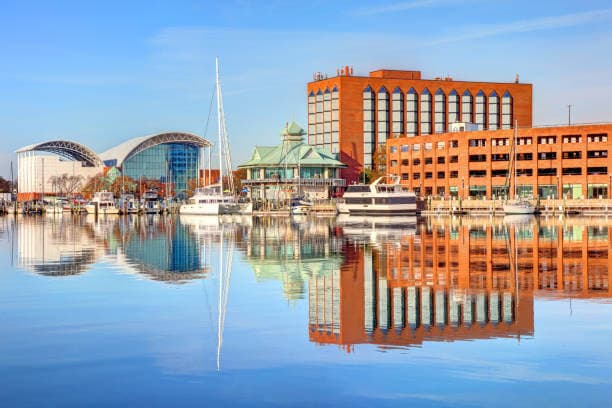
What Hampton lacks in name recognition it more than compensates for with neighborhood diversity and character. Phoebus is a nationally recognized historic district undergoing one of the more genuine arts and dining revivals in the region — a small-town-within-a-city feel that has attracted independent restaurants, breweries, galleries, and boutiques to its Civil War-era streetscape. Downtown Hampton's waterfront has reinvested in parks, the Virginia Air & Space Center, and urban amenities. Buckroe Beach is the Peninsula's most underrated beachfront neighborhood, where bungalows and beach access coexist at prices that would be unthinkable in Virginia Beach. And the quiet residential corridors of Willow Oaks and Fox Hill offer the kind of tree-lined, family-oriented suburban stability that's becoming increasingly hard to find at Hampton's price points.
This guide covers the six neighborhoods that best represent what Hampton has to offer in 2026: honest data on what homes and rentals cost, what safety looks like neighborhood by neighborhood, what amenities are actually accessible day-to-day, and who each area tends to suit best.
Quick Facts: Hampton at a Glance
- Population: ~137,000 (city proper); ~1.8 million (Hampton Roads metro)
- Nickname: The Birthplace of America (oldest continuous English-speaking settlement in the U.S.)
- Climate: Humid subtropical; mild winters, warm summers, hurricane exposure June–November
- Primary employers: Joint Base Langley-Eustis (Langley Air Force Base), NASA Langley Research Center, Sentara Healthcare, Hampton University, Hampton City Schools, Newport News Shipbuilding (short drive)
- Median home price: ~$220,000–$240,000 (city-wide); 22% below national average
- Cost of living: Approximately 4–6% below national average
- Safest neighborhoods: Willow Oaks, Fox Hill, Northampton, Greater Wythe (northern section)
- Most walkable neighborhood: Phoebus / Historic Downtown Hampton
- Military population: Significant; Langley AFB and Fort Eustis make Hampton one of the most military-connected cities on the East Coast
Quick Facts: Renting in Hampton
- Average 1BR rent: ~$1,131–$1,363/month (city-wide average; varies significantly by neighborhood)
- Average 2BR rent: ~$1,330–$1,559/month
- Rent vs. national average: Approximately 17% below the national average rent of ~$1,637/month (Apartments.com, 2025)
- Most affordable neighborhoods for renters: Old North Hampton/Langley (~$1,099/mo 1BR), Buckroe Beach (~$1,120/mo 1BR), Fox Hill (~$1,150/mo 1BR), Northampton (~$1,154/mo 1BR)
- Most expensive neighborhoods: Coliseum Central, Coliseum Crossroads, Hampton Roads Center (newer apartments near the I-64 corridor command premium rents)
- Renter/owner split: 44% renter-occupied, 56% owner-occupied
- Military note: BAH rates for E-5 and above at Langley AFB typically cover Hampton rents comfortably, making the city popular for service members choosing to live off-base
- Year-over-year rent trend: Up approximately 3% year-over-year; still well below state average of ~$1,969/mo
Table of Contents
- Hampton Housing & Rental Market Overview
- Phoebus — Most Historic, Most Character-Rich Neighborhood
- Downtown Hampton / Waterfront — Most Walkable, Most Cultural
- Buckroe Beach — Best for Beach Access & Coastal Living
- Willow Oaks — Best Established Family Neighborhood
- Fox Hill — Best Community Feel & Quiet Suburban Character
- Northampton — Best for Affordability & Easy Commutes
- How to Choose Your Hampton Neighborhood
- Frequently Asked Questions
HAMPTON HOUSING & RENTAL MARKET OVERVIEW
Hampton's housing market sits at a meaningful discount relative to both the national median and most of its Hampton Roads neighbors. Median home values citywide run between $220,000 and $240,000 — roughly 22% below the national median — according to data from Kurby and Census sources compiled in early 2026. The most desirable neighborhoods, concentrated in the city's northwest (Willow Oaks, Fox Hill, Greater Wythe), command prices in the $250,000–$350,000+ range, while the city's central and eastern areas offer entry points well under $200,000. The market has been steady rather than speculative, supported by the consistent demand anchor of Joint Base Langley-Eustis and a growing civilian professional population drawn by NASA Langley Research Center and the Peninsula's broader healthcare and technology employment base.
One structural dynamic worth understanding: Hampton's housing market is partially shaped by the military PCS cycle. Service members rotating in and out of Langley AFB create both reliable rental demand and a steady supply of homes coming onto the market when families relocate. This keeps the rental market competitive, particularly for single-family homes in the $1,200–$1,600 range, and provides landlords with a dependable tenant pool. For renters, it also means that furnished short-term options are more available here than in comparable non-military cities. Current Basic Allowance for Housing (BAH) rates for mid-grade enlisted and officer ranks at Langley typically cover Hampton's average rents at the one- and two-bedroom level without requiring out-of-pocket supplementation — a dynamic that supports strong rental occupancy across the city's better neighborhoods.
The rental market is meaningfully affordable relative to both the state and national averages. Average one-bedroom rents citywide run approximately $1,131–$1,363 per month depending on which data source and unit type you're comparing, with two-bedrooms averaging $1,330–$1,559. Both figures sit 15–20% below the Virginia state average of $1,844–$1,997 for comparable unit types, making Hampton one of the more accessible rental markets on the entire East Coast for a city with genuine waterfront access. The most affordable neighborhoods for renters are Old North Hampton/Langley, Buckroe Beach, and Fox Hill; the highest-rent corridor is the Coliseum area near I-64, where newer apartment communities command $1,500–$1,900 for modern amenities and proximity to the regional highway network.
1. PHOEBUS — MOST HISTORIC, MOST CHARACTER-RICH NEIGHBORHOOD
Few neighborhoods in Hampton Roads can claim the density of genuine history that Phoebus carries within a walkable district. The area's roots trace back to a 16th-century Algonquian settlement called Kikotan, and the land has been shaped by every significant chapter of American history since — the Civil War (when Fort Monroe's proximity made Phoebus a haven for freedom-seeking enslaved people under General Butler's Contraband Decision), Reconstruction-era entrepreneurship, World War I and II military activity, and a 20th-century fallow period that left its Victorian-era commercial streetscape largely intact, waiting to be rediscovered. That rediscovery has arrived. Phoebus was formally designated an Advancing Virginia Main Street community by Governor Glenn Youngkin in December 2024, recognizing the investment, small-business growth, and community-led revitalization that the Phoebus Partnership has driven along Mellen Street and surrounding blocks.
What you find in Phoebus today is genuinely compelling: a walkable, neighborhood-scale commercial district with award-winning restaurants, craft breweries, antique shops, independent boutiques, and a live-performance venue in the historic American Theatre — all anchored by the proximity of Fort Monroe National Monument at the end of the road. The Phoebus Film Festival, Phabulous Phoebus Pride Festival, and a rotating calendar of street events make this one of Hampton's most socially active neighborhoods year-round. For renters, Phoebus offers relatively affordable pricing — the older housing stock keeps rents competitive — and a neighborhood identity that is attracting young professionals and creative-class residents who might have previously defaulted to Norfolk's Ghent or Virginia Beach's Oceanfront corridor.
The housing stock is a mix of historic Victorian and Craftsman-era homes, smaller row houses, and some converted commercial spaces — reflecting the neighborhood's roots as an independent incorporated town before it merged with Hampton in 1952. Home values have been rising with the revitalization; median home prices in the Greater Wythe/Phoebus corridor now run approximately $225,000–$290,000, with waterfront-adjacent properties commanding premiums. The neighborhood's designation as a National Historic District means that major exterior renovations require Architectural Review Board approval, which preserves character but limits some forms of rapid development or modernization.
Median Home Price: ~$225,000–$290,000 | Average Rent: 1BR: ~$1,100–$1,400/mo | 2BR: ~$1,300–$1,700/mo (limited rental inventory; mix of older apartments and single-family rentals)
Safety: Phoebus has historically carried higher crime statistics than Hampton's suburban neighborhoods — a function of its urban density and commercial activity. The ongoing revitalization and increased foot traffic have had a measurable positive effect, and residents consistently describe the core commercial district as safe and welcoming. Visitors and new residents should apply the same urban awareness they would in any revitalizing neighborhood: the active, well-lit commercial corridor is distinct from some of the surrounding residential blocks.
Walkability / Transit: The best walkability in Hampton outside of Downtown. The commercial district on Mellen Street and surrounding blocks is fully navigable on foot, with restaurants, bars, shops, and the American Theatre all within a short walk. Hampton Roads Transit (HRT) bus service connects Phoebus to the broader Peninsula. Fort Monroe is a short walk or bike ride south.
Top Amenities:
- Fort Monroe National Monument — Decommissioned Civil War-era Army post now managed by the National Park Service; stunning waterfront fortification, historic casemates, trails, and the Casemate Museum on Chesapeake Bay
- The American Theatre — Beloved historic performance venue hosting live music, comedy, theatrical productions, and the annual Phoebus Film Festival
- Mill Creek waterfront — Tidal creek waterfront accessible from Phoebus with kayaking and water views; part of the Master Plan's public waterfront vision
- Mellen Street commercial corridor — Independent restaurants, craft breweries, antiques, vintage shops, and galleries in a walkable historic streetscape
- Buckroe Beach proximity — One of Hampton's best beach access points is a short drive or bike ride east through Fox Hill
- Hampton History Museum — Comprehensive museum documenting 400+ years of Hampton's history, accessible in nearby Downtown
Best For: Young professionals seeking neighborhood character over suburban convenience, renters who want walkability and an arts-and-dining scene without Norfolk/Virginia Beach pricing, history enthusiasts, military families stationed at Langley who want proximity to Fort Monroe's outdoor amenities, anyone who wants to be in a neighborhood that's actively on the upswing
Nearest Storage Depot Location:
- 185 East Mercury Blvd, Hampton, VA 23669 — Located just minutes from Phoebus along the Mercury Blvd corridor; climate-controlled units available, ideal for storing antiques, vintage finds, and household items during a move or renovation in this character-rich historic neighborhood
2. DOWNTOWN HAMPTON / WATERFRONT — MOST WALKABLE, MOST CULTURAL
Downtown Hampton occupies a narrow peninsula jutting into Hampton Roads harbor, and that geography has always defined its character: a city built on water, military history, and civic ambition. The modern Downtown is anchored by the Virginia Air & Space Center — one of the most significant aviation and space science museums in the eastern United States, and the official visitor center for NASA Langley Research Center — alongside the Hampton History Museum, the Hampton Carousel (a fully restored 1920 antique carousel housed in a dedicated pavilion on the waterfront), and a revitalized Waterfront District that has attracted restaurants, entertainment venues, and public park investment along the Hampton River.
The residential side of Downtown Hampton reflects the city's ongoing push to attract urban-minded residents who want to live close to cultural amenities and waterfront access. The housing stock is a mix of older apartment buildings, historic homes, and newer mixed-use residential development. Median home values in the Downtown core hover around $240,000–$280,000, with condos and townhomes representing the most active segment of the ownership market. Average rents for one-bedroom units in the Downtown area run approximately $1,200–$1,500 per month — affordable for the amount of walkable amenity access the location provides. The Hampton Coliseum, one of the most storied mid-size concert venues on the East Coast, is a short drive northwest and contributes to the neighborhood's identity as an entertainment destination.
Downtown Hampton's primary appeal is its combination of civic infrastructure and waterfront charm. The Hampton River Trail — a scenic waterfront park path along the river — is one of the city's best walking and running corridors. The area's restaurant scene, while not as dense as Phoebus's boutique commercial district, includes a solid range of waterfront dining options and bars. Hampton University, one of Virginia's historically Black universities, sits just west of Downtown, and its campus and facilities contribute to the neighborhood's cultural fabric and population mix.
Median Home Price: ~$240,000–$280,000 | Average Rent: 1BR: ~$1,200–$1,500/mo | 2BR: ~$1,400–$1,800/mo
Safety: Downtown Hampton carries higher aggregate crime statistics than the city's suburban residential neighborhoods — typical of urban commercial cores — driven primarily by property crime rather than violent crime in the revitalized waterfront areas. Residents and visitors consistently report feeling comfortable in the active waterfront blocks nearest the Virginia Air & Space Center and Waterfront District. Standard urban awareness applies, particularly away from the well-lit, high-traffic waterfront corridor.
Walkability / Transit: Hampton's most walkable neighborhood. The Virginia Air & Space Center, Hampton History Museum, Hampton Carousel, waterfront restaurants, and the Hampton River Trail are all accessible on foot. Hampton Roads Transit bus service operates multiple routes through Downtown. Biking is practical for most day-to-day needs in the immediate area, and the Hampton River Trail accommodates cyclists.
Top Amenities:
- Virginia Air & Space Center — Official NASA Langley visitor center and one of the premier aviation and space science museums on the East Coast; features IMAX theater, authentic spacecraft, and rotating exhibitions
- Hampton Waterfront / Hampton River Trail — Scenic harbor waterfront with walking and running trails, public parks, waterfront dining, and views of Hampton Roads
- Hampton History Museum — One of the most comprehensive urban history museums in the region, documenting Hampton's 400+ years as the oldest English-speaking settlement in America
- Hampton Carousel — A fully restored 1920 antique merry-go-round in its own dedicated waterfront pavilion; one of only a handful of original carousels still operating in the United States
- Hampton Coliseum — Iconic mid-size concert and event venue (Northwest of Downtown) that has hosted major acts for decades; a defining piece of Hampton's entertainment identity
- Hampton University — Historic HBCU campus immediately adjacent to Downtown, contributing to the neighborhood's cultural and academic energy
Best For: Young professionals who work on the Peninsula or commute via HRBT, urban-lifestyle renters who want waterfront access and cultural amenities within walking distance, anyone who wants to be close to NASA Langley and the Virginia Air & Space Center's programming, military families who want a more urban experience than base housing offers
Nearest Storage Depot Location:
- 185 East Mercury Blvd, Hampton, VA 23669 — Conveniently located near the Downtown corridor along Mercury Blvd, this facility serves Downtown Hampton residents managing condo moves, urban apartment transitions, or overflow storage from smaller urban units
3. BUCKROE BEACH — BEST FOR BEACH ACCESS & COASTAL LIVING
Buckroe Beach is one of the most underrated neighborhoods in all of Hampton Roads — a genuine beachfront community where you can rent a cottage-style home with free parking, uncrowded sand, and direct Chesapeake Bay access at prices that would be laughable in Virginia Beach or the Outer Banks. The Buckroe Beach park and shoreline sits at the northeastern tip of Hampton, looking out across the mouth of the Chesapeake Bay toward the Atlantic, and the neighborhood surrounding it is a mix of older bungalows, beach cottages, modest single-family homes, and some newer construction that has followed the recent investment in the waterfront park.
The city of Hampton has invested meaningfully in Buckroe's public infrastructure over the past decade. The Buckroe Beach Regional Park features a renovated pavilion, a newly rebuilt pier, a splash pad and playground, volleyball courts, a bandshell, and an outdoor concert series called "Buckroe Beach Live" that draws crowds throughout the summer. Parking is free at the beach — a detail that feels almost disorienting coming from any comparable Virginia Beach or Ocean City market. The beach itself is calm, family-oriented, and sheltered from Atlantic swells by the Peninsula's geography, with small waves ideal for children and casual swimmers.
Housing in Buckroe runs from the deeply affordable to the modestly priced. Older cottages and ranch homes in the interior blocks sell for $180,000–$270,000; properties closer to the water or with bay views command premiums into the $300,000s. Rents for one-bedroom units in Buckroe Beach average approximately $1,120 per month — one of the lowest averages in Hampton for a waterfront-adjacent neighborhood and representing exceptional value for the access it provides. The neighborhood has an active community association, hosts regular yard sales and Christmas parades, and retains a small-town residential feel that has made it popular with military families, retirees, and anyone who wants water access without the price tag that comes with it in other coastal Virginia markets.
Median Home Price: ~$200,000–$300,000 (varies significantly by water proximity) | Average Rent: 1BR: ~$1,100–$1,300/mo | 2BR: ~$1,300–$1,600/mo
Safety: Buckroe is generally considered a safe residential neighborhood. The beach park area sees the typical activity of any public recreational space, but the surrounding residential blocks are quiet, well-maintained, and family-oriented. The community association's active engagement contributes to the neighborhood's overall stability.
Walkability / Transit: The immediate beach and park area is walkable from neighboring residential streets, and Fox Hill Road provides a bike-friendly corridor to the rest of Hampton. For most daily errands, a car is needed. Hampton Roads Transit provides bus connections to Downtown Hampton and the broader Peninsula network.
Top Amenities:
- Buckroe Beach Regional Park — Free public beach with renovated pavilion, pier, splash pad, playground, volleyball courts, and bandshell; uncrowded and family-oriented with free parking
- Buckroe Beach Live — Outdoor summer concert series at the beach pavilion; free and family-friendly, drawing the local community every season
- Chesapeake Bay access — Calm bay waters ideal for kayaking, paddleboarding, crabbing, and fishing; direct access to one of the East Coast's most productive estuary systems
- Fox Hill community corridor — The adjacent Fox Hill neighborhood provides additional shopping, dining, and community resources within a short drive
- Langley AFB proximity — For military families, Buckroe's location between the base and the beach makes it a popular choice for service members who want coastal living within minutes of the gate
- Grandview Nature Preserve — Undeveloped barrier island preserve north of Buckroe with primitive beach access, birding, and natural shoreline — one of Hampton's best-kept natural secrets
Best For: Military families at Langley who want beach access within their BAH budget, retirees seeking affordable coastal living, young couples and families who want the Virginia Beach lifestyle at a fraction of the cost, kayakers and paddleboard enthusiasts, anyone who wants to walk to the beach from their front door
Nearest Storage Depot Location:
- 185 East Mercury Blvd, Hampton, VA 23669 — Accessible from Buckroe via Mercury Blvd; well-suited for storing seasonal beach and water sports gear, kayaks and paddleboards, outdoor furniture, and the extra gear that coastal living tends to accumulate
4. WILLOW OAKS — BEST ESTABLISHED FAMILY NEIGHBORHOOD
Willow Oaks is consistently rated Hampton's top neighborhood for families — a distinction it earns through the combination of quiet, tree-lined streets, solid nearby schools, a neighborhood pool association, a distinctive brick construction aesthetic, and a strong community identity that keeps residents invested in the neighborhood long-term. A "serpentine brick wall" — a rare architectural feature that references Thomas Jefferson's similar design at the University of Virginia — partially encloses the neighborhood, giving Willow Oaks a distinct sense of arrival that few Hampton neighborhoods share. Residents describe the area as genuinely close-knit, where neighbors know each other and look out for each other's homes, children, and pets.
The housing stock in Willow Oaks is predominantly mid-century brick single-family homes — sturdy, well-built construction from the 1950s through 1970s that has held up well and maintained desirable character. Homes here typically sell in the $240,000–$310,000 range, with recent appreciation of approximately 7–8% year-over-year reflecting sustained demand. Homes move quickly — often within 20 days of listing — indicating that buyers actively compete for Willow Oaks inventory when it becomes available. The neighborhood's school access is strong: Samuel P. Langley Elementary and Booker Elementary are the most frequently cited elementary options for Willow Oaks families, and Kecoughtan High School is rated as one of Hampton's top high schools.
The Willow Oaks Recreation Association operates a neighborhood pool that serves as a genuine community anchor through the summer months — the kind of infrastructure that creates the multi-generational social fabric that makes neighborhoods truly livable. Gosnold's Hope Park, located east of Willow Oaks near the Back River waterfront, provides additional outdoor amenities including a boat and kayak launch, athletic fields, riverfront trails, charcoal grills, and even an RV campground. The park is a meaningful quality-of-life addition that Willow Oaks residents leverage heavily.
Median Home Price: ~$250,000–$310,000 | Average Rent: 1BR: ~$1,200–$1,500/mo | 2BR: ~$1,400–$1,700/mo (limited rental inventory; predominantly owner-occupied)
Safety: Willow Oaks is one of Hampton's safest neighborhoods. Its established residential character, active community association, and predominantly owner-occupied housing stock contribute to consistently low crime rates relative to the broader city. The neighborhood regularly appears at or near the top of Hampton's safety rankings.
Walkability / Transit: Primarily car-dependent for daily errands, as is the case across most of Hampton's suburban neighborhoods. Internal streets are well-maintained and walkable within the neighborhood, and the proximity to recreational amenities like Gosnold's Hope Park makes it a strong neighborhood for walking and cycling in leisure contexts. Hampton Roads Transit serves the broader area.
Top Amenities:
- Willow Oaks Recreation Association Pool — Private neighborhood pool and recreation association that serves as the community's summer social hub; a rare and valued amenity in Hampton's neighborhood landscape
- Gosnold's Hope Park — Riverfront park on the Back River waterway with a boat/kayak launch, sports fields, fishing pier, charcoal grills, picnic facilities, and RV campground — one of Hampton's best outdoor recreation assets
- Hampton BMX Track — BMX riding facility open to riders of all levels, located near Willow Oaks and popular with families
- Kecoughtan High School — One of Hampton's highest-rated public high schools; proximity is a meaningful consideration for families with school-age children
- Central Hampton location — Willow Oaks sits in roughly the geographic center of Hampton, providing balanced commute distances to Langley AFB, Downtown Hampton, Mercury Blvd commercial corridors, and the Hampton Roads Bridge-Tunnel
- Back River waterfront access — The Back River estuary adjacent to the neighborhood provides additional boating, fishing, and nature access beyond the park's formal facilities
Best For: Families with school-age children, military families at Langley who want a stable, community-oriented neighborhood with low crime and good schools, empty nesters who want established neighborhood character, anyone who values the combination of community infrastructure (pool, parks, schools) and central Hampton positioning
Nearest Storage Depot Location:
- 185 East Mercury Blvd, Hampton, VA 23669 — Located near the Mercury Blvd corridor that Willow Oaks residents use for daily shopping and errands; convenient for military families managing PCS moves, storing seasonal gear, or holding furniture during renovation
5. FOX HILL — BEST COMMUNITY FEEL & QUIET SUBURBAN CHARACTER
Fox Hill occupies the eastern reaches of Hampton, bordered to the south by Phoebus and Buckroe and to the north by Back River, with Grandview Nature Preserve at its northeastern tip. It is almost entirely residential — a community of single-family homes, modest yards, and the kind of quiet residential consistency that makes it feel more like a small town than a neighborhood within a mid-size city. Residents consistently describe Fox Hill as exceptionally dog-friendly, parking-easy, yard-well-kept, and neighborly — the kind of place where community yard sales happen seasonally, the Christmas parade is genuinely anticipated, and people actually know the families on their street.
Fox Hill's housing stock is a mix of older ranch homes, Cape Cods, and modest single-family houses, reflecting the mid-20th-century development era that shaped most of eastern Hampton. Home prices are among the more accessible in the desirable eastern section of the city, typically running from $200,000 to $330,000 depending on condition, lot size, and proximity to the water. Average one-bedroom rents run approximately $1,150 per month — making Fox Hill one of the most affordable entry points for renters who want a quiet, family-oriented residential community with easy access to Hampton's eastern waterfront amenities.
The neighborhood's practical appeal is genuine: Fox Hill sits at a geographic sweet spot that puts Langley AFB, Fort Eustis, the Hampton Roads Bridge-Tunnel (and by extension, the Newport News Shipyard and the broader Peninsula employment base), and the Buckroe Beach shoreline all within 15–25 minutes. It extends from the intersection of Bloxoms Corner down Beach Road toward Grandview Island, giving the eastern end of the neighborhood a genuinely coastal character with marina access and undeveloped nature preserve adjacent. For buyers and renters who want a quiet address with solid commute positioning, Fox Hill's combination of affordability, community character, and access represents unusual value.
Median Home Price: ~$200,000–$330,000 | Average Rent: 1BR: ~$1,100–$1,300/mo | 2BR: ~$1,300–$1,550/mo
Safety: Fox Hill is considered one of Hampton's safer residential neighborhoods. Its predominantly residential character, active community identity, and eastern location away from the city's higher-density commercial corridors contribute to low crime rates. Residents consistently describe the area as safe for families and children.
Walkability / Transit: Car-dependent for most daily needs, as is typical across Hampton's suburban and semi-rural eastern sections. The neighborhood's residential streets are bikeable, and the proximity to Buckroe Beach and Grandview Nature Preserve makes it excellent for outdoor recreation on foot. Hampton Roads Transit connects to the broader Peninsula system.
Top Amenities:
- Grandview Nature Preserve — Undeveloped barrier island nature preserve at the northern tip of Fox Hill; primitive beach access, birding, fishing, and some of Hampton's most serene natural shoreline
- Marina and waterfront access — Fox Hill's coastal position provides access to Back River marinas and boat launches for fishing, crabbing, and boating on the Chesapeake Bay system
- Buckroe Beach proximity — Beach access is a short drive or bike ride south through the Fox Hill corridor; the neighborhood benefits from beach proximity without beach-town pricing
- Community yard sales & Christmas parade — Genuine neighborhood events that reflect Fox Hill's unusually strong community identity; the annual Christmas parade is a well-attended local tradition
- Langley AFB access — Fox Hill's location makes it one of the more popular off-base neighborhoods for Langley service members, with gate access quick and commute times manageable
- Elementary school options — Several well-regarded Hampton City Schools elementary schools serve the Fox Hill community, making it a practical choice for families with young children
Best For: Military families at Langley who want a quiet, established residential neighborhood close to the base and the beach, retirees who value a quiet community with water access nearby, families who prioritize neighborhood character and community identity over urban amenities, budget-conscious buyers looking for the best value in Hampton's desirable eastern section
Nearest Storage Depot Location:
- 185 East Mercury Blvd, Hampton, VA 23669 — Accessible from Fox Hill via Mercury Blvd; serves Fox Hill and Buckroe residents storing seasonal recreational gear, boats and kayaking equipment, PCS overflow, and household items during transitions
6. NORTHAMPTON — BEST FOR AFFORDABILITY & EASY COMMUTES
Northampton is Hampton's go-to neighborhood for buyers and renters who want solid, family-friendly suburban living at the city's most accessible price points. Located in the northwestern section of Hampton with convenient access to the major highway corridors — I-64, I-664, and the Mercury Blvd commercial strip — Northampton offers a dependable combination of affordability, community infrastructure, and commute positioning that makes it one of the city's most consistently popular residential areas, particularly among military families and first-time buyers.
The neighborhood is characterized by well-maintained single-family homes and apartment communities at price points that are genuinely accessible. Median home prices in Northampton average approximately $205,000–$225,000, with the housing mix running from modest ranch and Cape Cod-style single-family homes to apartment complexes. Average one-bedroom rents run approximately $1,154 per month — among the lowest in Hampton for a neighborhood with this level of community infrastructure access. Tucker-Capps Elementary and Bethel High School are the most frequently cited schools serving Northampton families; Bethel High School in particular has a solid academic reputation within the Hampton City Schools system.
Northampton's strategic advantage is its commute positioning. Residents sit within practical range of both Langley AFB and the Newport News Shipyard — the two largest employment anchors on the Peninsula — as well as easy access to I-64 for commuters heading toward Norfolk, Virginia Beach, or further up the Peninsula toward Williamsburg. The commercial corridor along Mercury Blvd provides grocery, dining, fitness, and retail options without requiring significant travel. For the budget-conscious renter or first-time buyer who wants a functional suburban address at Hampton's most affordable price point, Northampton delivers without sacrificing too much on community amenity or school quality.
Median Home Price: ~$200,000–$225,000 | Average Rent: 1BR: ~$1,100–$1,350/mo | 2BR: ~$1,300–$1,500/mo
Safety: Northampton is generally considered a safe neighborhood — above average for Hampton's suburban residential areas. Its family-oriented character, active community involvement, and proximity to local parks and schools contribute to a stable, low-crime environment. As with most of Hampton's suburban residential neighborhoods, standard common-sense precautions apply.
Walkability / Transit: Car-dependent for most daily errands, though the Mercury Blvd commercial corridor is accessible. Hampton Roads Transit serves the area, providing connections to Downtown Hampton, the Peninsula, and across the HRBT to Norfolk. The highway access that makes Northampton appealing for commuters also makes it accessible for transit users on established bus routes.
Top Amenities:
- Mercury Blvd commercial corridor — Major east-west commercial artery with grocery stores, restaurants, retail, fitness centers, and service businesses within easy reach of Northampton residential streets
- Tucker-Capps Elementary / Bethel High School — Well-regarded schools serving the Northampton area; Bethel High is consistently cited as one of Hampton's stronger academic high school options
- Local parks and recreation — Multiple neighborhood parks and recreational areas serving Northampton families; proximity to Hampton's broader park system
- I-64 / I-664 highway access — Northampton's position near the Peninsula's major interstate interchanges makes it one of Hampton's best-positioned neighborhoods for commuters heading in any direction
- Hampton Roads Bridge-Tunnel proximity — HRBT access for commuters heading to Norfolk, Virginia Beach, and the Southside is among the quickest from this part of Hampton
- Coliseum Central proximity — The Hampton Coliseum entertainment and dining district is a short drive, providing access to concerts, sporting events, and an expanding range of restaurant options
Best For: First-time buyers who want the most home for their budget in a family-oriented neighborhood, military families at Langley or Fort Eustis who want affordable housing with strong highway access, renters who want below-average Hampton rents in a neighborhood with functional community infrastructure, commuters who need easy access to I-64 and the HRBT corridor
Nearest Storage Depot Location:
- 185 East Mercury Blvd, Hampton, VA 23669 — Directly accessible via Mercury Blvd, which bisects Northampton's daily commute and errand routes; convenient for Northampton residents managing PCS moves, downsizing storage, or business inventory
HOW TO CHOOSE YOUR HAMPTON NEIGHBORHOOD
Hampton has enough neighborhood diversity that the right choice depends heavily on what you're optimizing for — and how your daily life is structured around work, family, and lifestyle priorities. Here's a practical framework for narrowing down your options.
If neighborhood character, history, and a walkable arts-and-dining scene are what you're looking for: Phoebus is the clear answer. Its 400-year history, National Historic District status, ongoing commercial revitalization, and proximity to Fort Monroe National Monument make it Hampton's most distinctive address — and one of the most interesting neighborhoods in all of Hampton Roads. Rents are competitive, and the neighborhood trajectory is unmistakably upward.
If you want walkability, urban amenities, and direct waterfront access: Downtown Hampton's Waterfront District delivers Hampton's most urban experience, with the Virginia Air & Space Center, Hampton History Museum, Hampton River Trail, and Chesapeake Bay access all within walking distance. It's also the right base for anyone doing the Hampton Roads Bridge-Tunnel commute to Norfolk or Virginia Beach who wants to live on the Hampton side.
If beach access is your primary priority: Buckroe Beach is the answer, and it's not particularly close. Free parking, calm Chesapeake Bay waters, a renovated public park, and cottage-style homes at prices that would be unrecognizable in Virginia Beach make Buckroe the Peninsula's best-value coastal living option. Military families at Langley who want to walk to the beach from their rental home will struggle to find a better combination of price and proximity.
If family infrastructure — schools, safety, and community amenities — is what you're optimizing for: Willow Oaks is Hampton's top family neighborhood and has been for decades. The neighborhood pool, Gosnold's Hope Park, strong school proximity, and the neighborhood's reputation for being genuinely community-oriented make it the strongest all-around family choice in the city. Expect to compete for available inventory when it comes to market.
If quiet, community-oriented residential living at an affordable price point is the goal: Fox Hill's combination of community character, coastal adjacency, affordable prices, and military-base proximity makes it a consistent choice for families, retirees, and budget-conscious buyers who want a stable residential neighborhood in Hampton's desirable eastern section without paying Willow Oaks prices.
If your budget is your primary constraint and commute positioning matters most: Northampton delivers Hampton's most accessible price points in a functional suburban neighborhood with solid school access, Mercury Blvd commercial infrastructure, and excellent highway positioning for commuters heading to Langley, Fort Eustis, the Shipyard, or across the HRBT. It's the pragmatic choice when the budget needs to go further.
WELCOME TO HAMPTON
Hampton rewards the residents who look past its modest regional profile and actually engage with what it offers. The city's 400-year history is not a marketing abstraction — it's a living presence in Phoebus's Victorian streetscapes, Fort Monroe's Civil War fortifications, and the Hampton History Museum's exhaustive collection of primary source material. The Virginia Air & Space Center and NASA Langley's research legacy give Hampton an intellectual identity that sets it apart from other coastal Virginia cities. The military community anchors an enormous portion of the residential population and creates a culture of service, mobility, and pragmatic decision-making that shapes the city's character in fundamentally positive ways.
Housing is genuinely affordable by any reasonable coastal Virginia comparison. Waterfront access — whether at Buckroe Beach's Chesapeake Bay shoreline, the Hampton River waterfront downtown, or the tidal marshes and creeks of Fox Hill — is accessible to anyone who chooses to live here, not just those who can pay premium waterfront prices. And neighborhoods like Phoebus, in the middle of an authentic revitalization driven by local investment and community pride, give Hampton a momentum story that deserves more attention than it typically receives.
FREQUENTLY ASKED QUESTIONS ABOUT HAMPTON NEIGHBORHOODS
For renters, Old North Hampton/Langley (~$1,099/mo average 1BR), Buckroe Beach (~$1,120/mo), and Fox Hill (~$1,150/mo) consistently offer the lowest rents in Hampton according to Rent.com and RentCafe data. Northampton is also among the most affordable at approximately $1,154/mo for a one-bedroom. For buyers, Northampton and the central Hampton area offer the most accessible entry-level home prices, with many single-family homes available under $220,000.
Yes — Hampton is one of the most military-accommodating cities on the East Coast. Joint Base Langley-Eustis (combining Langley AFB and Fort Eustis) is one of the country's largest combined air and Army installations, and the surrounding city has decades of experience supporting service members and their families. BAH rates for mid-grade enlisted and officer ranks typically cover Hampton's average rents at the one- and two-bedroom level. The most popular military family neighborhoods are Willow Oaks, Fox Hill, Buckroe Beach, and Northampton, all of which offer solid schools, low crime, and practical commute distances to base gates.
Willow Oaks, Fox Hill, and Northampton consistently rank among Hampton's safest residential neighborhoods, with low crime rates relative to the broader city. Hampton's overall violent crime rate is approximately 31% below the national average according to FBI 2024 data, though property crime runs higher than average at the city-wide level — typical of a mid-size coastal city with significant commercial activity. Safety varies considerably by specific neighborhood; the city's northwest and eastern residential areas consistently outperform the city's urban commercial core in safety metrics.
Hampton offers meaningfully more affordability than both Virginia Beach and Norfolk for comparable housing quality. Average one-bedroom rents in Hampton run approximately $1,131–$1,363 per month, compared to significantly higher averages in Virginia Beach's beachfront and Oceanfront corridors and Norfolk's Ghent and Downtown areas. The tradeoff is that Hampton lacks the density of dining and nightlife options that Ghent or Virginia Beach's resort strip provides, though Phoebus's ongoing revitalization is narrowing that gap. For military families and working professionals who prioritize square footage, school quality, and commute access over urban density, Hampton frequently wins the comparison.
Hampton, like all Hampton Roads cities, has meaningful flood risk driven by its low-elevation coastal geography and proximity to the Chesapeake Bay and its tributaries. FEMA flood zone designations vary significantly across the city — properties closer to tidal waterways, the harbor, and Back River carry the highest flood risk, while inland residential neighborhoods like Northampton and Willow Oaks typically have lower flood exposure. Sea level rise is a documented and accelerating concern in Hampton Roads — Hampton has invested in infrastructure adaptation, but buyers should carefully review FEMA flood zone maps, current flood insurance costs, and property elevation certificates before purchasing in any waterfront-adjacent area. Renters should confirm whether their lease includes any flood disclosure requirements and consider renter's insurance with flood riders for properties near tidal areas.
Hampton Roads Transit (HRT) operates bus service throughout Hampton, connecting major neighborhoods to Downtown Hampton, the Peninsula, and (via the HRBT) Norfolk and the Southside. Service is functional but not frequent enough to eliminate car dependency for most daily routines — Hampton is primarily a car-oriented city, and the vast majority of residents drive for most errands and commutes. Transit is most useful for commuters heading into Downtown Hampton and for residents near the major Mercury Blvd and Coliseum-area corridors where bus frequency is highest.
About the Author
10 Federal Storage
Our team at 10 Federal Storage has been in the self storage industry for decades. With knowledge gained from multiple universities and in the field, we are well-prepared and excited to assist with your storage needs. When you rent a unit with us, you can feel confident that our seasoned customer service team’s help will make your transition as seamless as possible. Customer satisfaction is our number one priority, and we strive to make your experience exceptional with our automated leasing options, diverse unit sizes, and a strong commitment to sustainability.