

Best Neighborhoods in Little Rock, AR
by 10 Federal Storage
Published on April 14, 2026
Little Rock is a mid-sized capital city that consistently surprises people who haven't lived here. It offers walkable neighborhoods with genuine character, a restaurant and arts scene anchored by the Heights and the River Market District, an extensive outdoor trail network along the Arkansas River, and some of the most affordable rents among state capitals in the entire South. Renters relocating from Nashville, Atlanta, or Dallas can expect to pay 40 to 55 percent less for comparable housing, and that's not a catch. It's the Little Rock reality: a livable, connected city that hasn't yet been priced out of reach.
The city's economy is anchored by state government employment, a major healthcare sector led by the University of Arkansas for Medical Sciences (UAMS), and a growing corporate and professional services presence along the Chenal Parkway corridor. Arkansas Children's Hospital, Baptist Health, and CHI St. Vincent add to the healthcare employment base. The Clinton Presidential Center draws visitors and anchors the River Market arts and dining district. The Arkansas River Trail system, including the iconic Big Dam Bridge, the longest pedestrian and bicycle bridge in North America built specifically for non-motorized traffic, provides the kind of outdoor infrastructure that bigger, more expensive cities struggle to match.
Little Rock spans six distinct living environments: the walkable, restaurant-lined Heights; the historic and eclectic Hillcrest; the urban River Market District downtown; the master-planned Chenal Valley corridor in West Little Rock; the centrally convenient Midtown; and across the river, North Little Rock's Argenta Arts District. Each serves a different lifestyle and renter profile. Below, we break down what you actually need to know about each one, rents, safety, walkability, amenities, and who each neighborhood is genuinely best for.
Quick Facts: Little Rock at a Glance
- Population: ~202,000 (city proper); ~750,000 (Little Rock–North Little Rock–Conway MSA)
- State capital: Arkansas's largest city and government seat
- Primary employers: State of Arkansas, UAMS Medical Center, Arkansas Children's Hospital, Baptist Health, CHI St. Vincent, Dillard's, Windstream, Stephens Inc., Little Rock School District
- Median home price: ~$200,000 (city-wide); varies widely by neighborhood from ~$150,000 to $630,000+
- Cost of living: Significantly below national average; rents 40–55% below Nashville, 35–50% below Atlanta
- Safest neighborhoods: The Heights, Hillcrest, Chenal Valley, Rock Creek
- Most walkable neighborhoods: The Heights (Kavanaugh Blvd), Hillcrest, Downtown River Market
- Best for young professionals: The Heights, Argenta (North Little Rock), Hillcrest
- Best for families: Chenal Valley, Rock Creek, Midtown
Quick Facts: Renting in Little Rock
- Average studio rent: $650–$900/month
- Average 1BR rent: $800–$1,200/month (varies significantly by neighborhood and building age)
- Average 2BR rent: $950–$1,500/month
- Most affordable rental neighborhoods: Hillcrest (older inventory), North Little Rock/Argenta, Midtown
- Premium rental neighborhoods: The Heights, Chenal Valley/West Little Rock (newer Class A communities)
- Renter share of households: Over 40% of metro-area households are occupied by renters, a strong renter market with consistent inventory
- Rent trend: Steady growth; median 3BR rates have increased ~10% year-over-year; overall market remains significantly more affordable than comparable Southern metros
- WalletHub ranking: Little Rock is ranked among the top cities in the nation for renters, citing affordability, quality of life, and renter market conditions
Table of Contents
- Little Rock Housing & Rental Market Overview
- The Heights (Pulaski Heights), Most Walkable, Most Sought-After
- Hillcrest, Best Historic Character & Value for Renters
- Downtown / River Market District, Best for Urban Living & Entertainment
- Chenal Valley / West Little Rock, Best Master-Planned Community & Family Infrastructure
- Midtown, Best for Central Location & First-Time Buyers
- Argenta (North Little Rock), Best for Creatives & Young Professionals
- How to Choose Your Little Rock Neighborhood
- Self Storage Near Little Rock, 10 Federal Storage Locations
- Frequently Asked Questions
LITTLE ROCK HOUSING & RENTAL MARKET OVERVIEW
Little Rock's housing market is defined by a combination that's increasingly rare in American cities: genuine neighborhood diversity, meaningful affordability, and a rental market that favors the tenant in ways that comparable Southern metros no longer can. The city-wide median home price sits around $200,000, well below the national median, but that figure masks wide variation. The Heights commands median values around $370,000 with character homes and walkable retail. Chenal Valley's luxury estates push $555,000 and higher. Midtown offers an accessible entry point near $261,000. And neighborhoods like Reservoir and Capital View-Stiff provide genuine affordability for buyers working with tighter budgets.
For renters, the picture is even more compelling. Studios run $650–$900 per month in most neighborhoods; one-bedrooms $800–$1,200; two-bedrooms $950–$1,500. Little Rock's rents are running 40 to 55 percent below Nashville and 35 to 50 percent below Atlanta for comparable unit types and submarkets, a gap that reflects real, structural affordability rather than a temporarily soft market. WalletHub has ranked Little Rock among the best cities in the country for renters, factoring in affordability, quality of life, and renter market conditions. Over 40% of metro-area households are renter-occupied, which means the rental infrastructure, availability, variety, management quality, is well-developed.
One important context note for people relocating from larger metros: Little Rock is car-dependent across most of the city. The Heights and Hillcrest offer genuine walkability along their commercial strips; downtown's River Market District is legitimately walkable within its core blocks; and the Arkansas River Trail system is exceptional for cycling and recreation. But daily errands, most commutes, and the connections between neighborhoods all require a vehicle. Factor that into your neighborhood decision, particularly if you're used to a city where transit is a viable option. Little Rock has a bus network (Rock Region METRO), and it serves some corridors reasonably well, but it's not a practical substitute for a car in most circumstances.
1. THE HEIGHTS (PULASKI HEIGHTS), MOST WALKABLE, MOST SOUGHT-AFTER
The Heights, formally known as Pulaski Heights, is Little Rock's most desirable neighborhood by nearly every metric, and it has been for decades. The neighborhood is built around Kavanaugh Boulevard, a commercial corridor lined with acclaimed restaurants, independent boutiques, coffee shops, and professional services that creates the kind of walkable, neighborhood-retail experience that most of Little Rock's suburban corridors can't replicate. Residents of the Heights have a genuine ability to leave their car parked and walk to dinner, coffee, the farmers market, and back, a rarity in a predominantly car-dependent city.
The housing stock reflects the neighborhood's status: meticulously maintained historic homes from the early and mid-20th century ranging from charming bungalows to substantial estates, interspersed with newer mid-rise apartment communities that have been drawn by the neighborhood's exceptional location and resident demographic. Median home values in the Heights sit around $370,000, the highest in the city by a significant margin, driven by the combination of architectural quality, walkability, and the neighborhood's established reputation. For renters, the Heights commands a premium: average rents run around $2,000 per month, with the Heights being consistently cited as Little Rock's highest-rent submarket. That premium buys access to the city's best restaurant strip, a short commute to both downtown state agencies and UAMS Medical Center, and a neighborhood identity that younger professionals in particular find genuinely compelling.
Nextdoor reviews and resident accounts describe the Heights as one of Little Rock's safest neighborhoods, one of the city's top-rated communities for safety alongside Hillcrest and Chenal Valley. The neighborhood attracts a mix of state government workers, healthcare professionals commuting to UAMS, and young professionals who prioritize walkability and the city's best dining above all else. The Heights is not immune to the property crime that affects most of Little Rock's in-town neighborhoods, break-ins are occasionally reported, but its residential character, community engagement, and higher median incomes contribute to a generally safe living environment.
Median Home Value: ~$370,000 | Average Rent: 1BR: $1,100–$1,500/mo | 2BR: $1,500–$2,200/mo (newer communities; older inventory available at lower rates)
Safety: Consistently rated among Little Rock's safest neighborhoods. One of the city's top communities per safety data aggregators including CrimeGrade. Elevated median income and active community engagement support low violent crime rates. Property crime, particularly vehicle break-ins, is occasionally reported and worth being aware of, as it is across most of Little Rock's in-town neighborhoods.
Walkability / Transit: Little Rock's most walkable neighborhood. Kavanaugh Boulevard and the surrounding commercial strip allow residents to walk to restaurants, coffee shops, grocery (including Heights Kroger), and retail for most daily needs. Rock Region METRO bus service serves the corridor. Biking is viable for most intra-neighborhood trips. A car is still needed for commutes and cross-city errands.
Top Amenities:
- Kavanaugh Boulevard restaurant corridor, Little Rock's premier dining strip; home to acclaimed local restaurants including ZaZa Fine Salad & Wood Oven Pizza Co., Heights Taco and Tamale Co., Ciao Baci, and dozens of other independent establishments
- Heights Kroger, Full-service grocery within walking distance; anchors the neighborhood's day-to-day retail
- Heights Farmers Market, Weekend market with local produce, crafts, and community gathering
- Allsopp Park, Historic green space near the Heights/Hillcrest border with disc golf, walking paths, and creek access
- UAMS Medical Center proximity, Short commute for healthcare workers and medical students; a primary driver of The Heights' renter demand
- Arkansas River Trail system, Accessible via a short drive or bike ride; 88-mile trail network connecting both sides of the Arkansas River
Best For: Young professionals employed at UAMS or state government agencies who prioritize walkable access to great restaurants and coffee, renters willing to pay a premium for Little Rock's best neighborhood character, buyers who want the city's most walkable address, anyone for whom the restaurant scene and community identity are the primary drivers of neighborhood choice
Nearest 10 Federal Storage Location:
- 103 Spriggs Rd, North Little Rock, AR 72118, Accessible via I-630 and I-30 from the Heights; convenient for Heights residents managing overflow, staging a renovation in a historic home, or storing seasonal items
- 6140 Remount Rd, North Little Rock, AR 72118, Second North Little Rock option with drive-up access; useful for residents who need quick, frequent access to stored items
2. HILLCREST, BEST HISTORIC CHARACTER & VALUE FOR RENTERS
Hillcrest is Little Rock's oldest planned suburb, developed in the late 19th century as the first suburban neighborhood west of downtown, and still one of the city's most coveted addresses more than a century later. The neighborhood's layout follows natural contours rather than a rigid grid, creating curving, tree-lined streets that feel genuinely different from the straight-line suburban development that came later. The architectural variety is exceptional: Colonial Revival, Tudor, Craftsman, Mediterranean Revival, and mid-century bungalows create streetscapes with real visual interest, and most of these homes have been maintained with the kind of care that reflects a neighborhood where residents have genuine pride in their surroundings.
For renters, Hillcrest is arguably Little Rock's best value in the walkable in-town neighborhoods. Apartment inventory here skews toward older construction, duplexes, converted homes, and smaller apartment buildings that lack the amenity packages of newer West Little Rock communities but make up for it with character, location, and lower price points. Where the Heights commands premium rents, Hillcrest offers comparable walkability and community character at a meaningful discount. UAMS Medical Center and the Medical District are within easy biking distance or a short drive, making Hillcrest the neighborhood of choice for medical students, residents, and UAMS staff who want the character of an established neighborhood without the Heights premium.
Kavanaugh Boulevard runs through both the Heights and Hillcrest, and residents of either neighborhood can walk to the same restaurant strip, though Hillcrest's section of Kavanaugh has its own distinct collection of locally-owned coffee shops, bars, and dining. The Hillcrest Farmers Market, held weekly with local produce, crafts, and live music, reinforces the neighborhood's community feel. Allsopp Park, which touches Hillcrest's southern edge, provides green space and disc golf. The neighborhood is just 3 miles from downtown Little Rock, with I-630 access making citywide commuting straightforward.
Median Home Value: ~$287,000 | Average Rent: 1BR: $900–$1,300/mo | 2BR: $1,200–$1,800/mo (older inventory at lower end; renovated properties command premiums)
Safety: Consistently rated among Little Rock's safest neighborhoods alongside the Heights and Chenal Valley. Active community involvement, high owner-occupancy in the single-family residential blocks, and a neighborhood association with genuine presence contribute to a stable safety profile. Property crime, vehicle break-ins in particular, is the most commonly reported issue, consistent with most of Little Rock's in-town neighborhoods.
Walkability / Transit: Highly walkable along the Kavanaugh and Beechwood commercial strip. Grocery, restaurants, coffee, bars, and community retail are accessible on foot for most Hillcrest addresses. Rock Region METRO bus serves the neighborhood. Biking is practical within the immediate area. A car is still needed for cross-city commutes and most shopping.
Top Amenities:
- Kavanaugh & Beechwood restaurant and retail strip, Local restaurants, coffee shops, bars, and boutiques that form Hillcrest's neighborhood commercial character; some of Little Rock's best-reviewed independent restaurants are on this stretch
- Hillcrest Farmers Market, Weekly market with local produce, artisan goods, and live music; community institution
- Allsopp Park, Historic park with disc golf, walking paths, creek access, and green space; borders Hillcrest's southern edge
- UAMS Medical Center proximity, Biking distance or a very short drive; Hillcrest is one of the top neighborhoods for UAMS medical students and residents
- HarvestFest, Annual outdoor community celebration with live music, local food, and family programming
- Historic architecture, One of the most architecturally diverse and well-preserved residential streetscapes in Arkansas
Best For: UAMS medical students and residents who want walkable character at below-Heights prices, creative and arts professionals drawn to Hillcrest's eclectic independent scene, long-term Little Rock residents who prioritize neighborhood identity and community, budget-conscious renters who want the in-town experience without the premium
Nearest 10 Federal Storage Location:
- 103 Spriggs Rd, North Little Rock, AR 72118, Accessible via I-630 from Hillcrest; useful for residents in older homes with limited storage, staging renovations, or managing belongings during an academic or career transition
3. DOWNTOWN / RIVER MARKET DISTRICT, BEST FOR URBAN LIVING & ENTERTAINMENT
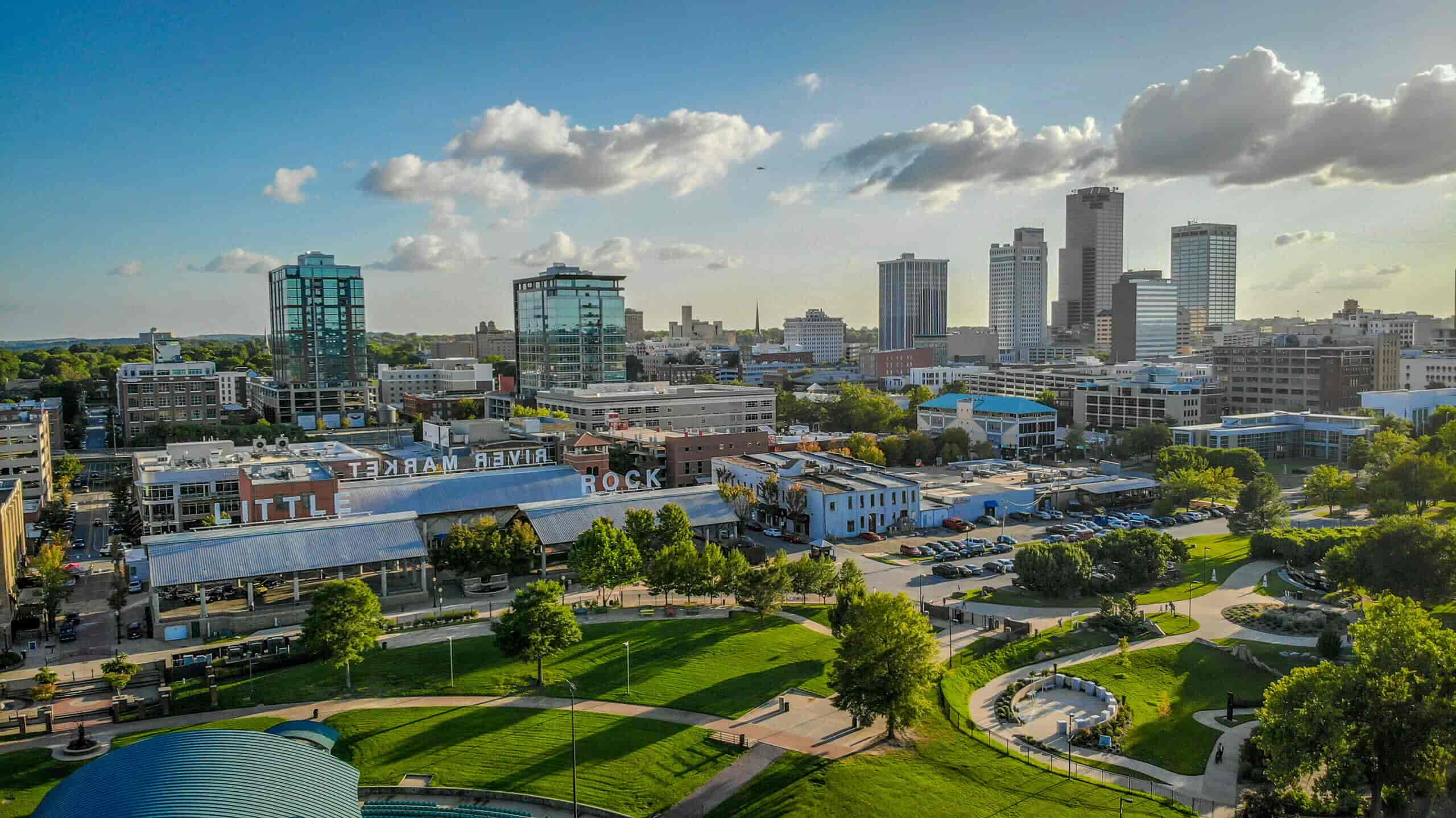
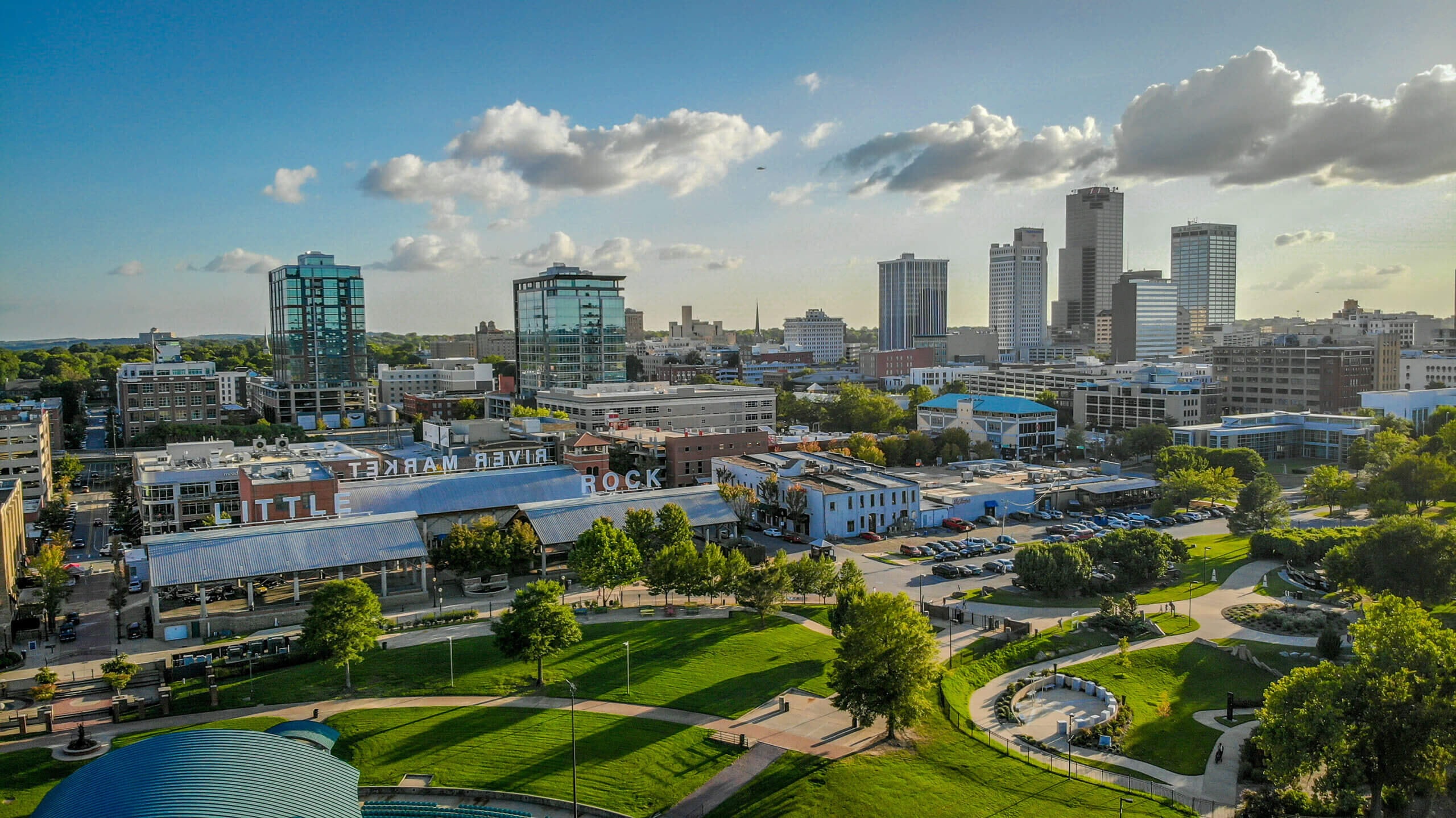
Little Rock's downtown and River Market District represent the city's most urban living experience, and over the past decade, that experience has become genuinely compelling. The River Market District, anchored by the Clinton Presidential Library on the east and the Arkansas River on the north, has evolved into a legitimate entertainment and dining destination with museums, restaurants, a riverfront farmers market, live music venues, and a connected trail system that makes the neighborhood feel genuinely alive in ways that weren't always the case. The Museum of Discovery, the Arkansas Arts Center, and the William J. Clinton Presidential Library give the neighborhood cultural weight alongside its food and nightlife infrastructure.
For renters, downtown Little Rock offers a mix of historic loft-style conversions, newer mid-rise apartment communities with river views, and price points that reflect the neighborhood's ongoing development trajectory. Some apartments near the river's edge and the Clinton Library offer skyline views that would be luxury amenities in a larger city, here, they're available at prices that remain within reach of young professionals. State government offices, the federal courthouse, and the bulk of Little Rock's corporate professional services are within walking distance of downtown's residential options, making this the neighborhood of choice for professionals who genuinely want to minimize their commute to city and state offices.
One practical note: downtown Little Rock's entertainment and dining appeal is strongest on weekends and during events. The neighborhood's weekday-evening and late-night activity depends on which blocks and venues you're near. Residents consistently describe the River Market area's immediate core as safe and lively, while blocks farther from the riverfront require more awareness. Downtown's ongoing development is positive, new residential projects have added inventory and contributed to a more active street environment, but it remains a neighborhood in transition in some parts, and choosing your specific block matters.
Median Home Value: Varies widely by unit type; condos and lofts from $180,000 to $500,000+ | Average Rent: 1BR: $900–$1,400/mo | 2BR: $1,200–$2,000/mo (premium for river views)
Safety: Downtown Little Rock's aggregate crime statistics are elevated, typical of most American urban commercial cores, driven significantly by property crime in parking areas and retail zones. The River Market's immediate residential environment is actively managed and has improved considerably with increased residential density. Residents recommend choosing buildings and blocks close to the active waterfront core, where foot traffic and eyes-on-the-street are most consistent.
Walkability / Transit: Little Rock's most urban and transit-connected neighborhood. The River Market area is walkable for dining, entertainment, museums, and riverfront recreation. Rock Region METRO bus serves downtown with multiple routes. The Arkansas River Trail is directly accessible. A car is still recommended for cross-city needs, but downtown residents can genuinely minimize car use more than any other Little Rock neighborhood.
Top Amenities:
- River Market District, Restaurants, bars, the Ottenheimer Market Hall with local vendors, live music, and a weekend farmers market; Little Rock's entertainment hub
- William J. Clinton Presidential Library & Museum, World-class presidential library and museum; anchor of the district's cultural identity
- Museum of Discovery, Interactive science and nature museum; popular with families and visitors
- Arkansas River Trail & Big Dam Bridge, Direct riverfront trail access; the Big Dam Bridge is the longest pedestrian/bicycle bridge in North America built specifically for non-motorized traffic
- Argenta Arts District, Just across the I-30 bridge into North Little Rock; walkable extension of Little Rock's arts and dining scene
- Amtrak connectivity, Little Rock's Amtrak station is downtown; regional rail access for those who want it
Best For: State and federal government employees who want a walking commute to work, young professionals and singles who prioritize urban entertainment access, residents who want to minimize car dependence more than anywhere else in Little Rock, anyone for whom arts, dining, and a connected trail system are the primary neighborhood drivers
Nearest 10 Federal Storage Location:
- 6140 Remount Rd, North Little Rock, AR 72118, A short drive over the Arkansas River bridge; convenient for downtown residents in loft-style apartments with minimal storage, managing a move, or storing overflow that doesn't fit in an urban unit
- 103 Spriggs Rd, North Little Rock, AR 72118, Second North Little Rock option; accessible via I-30 from downtown
4. CHENAL VALLEY / WEST LITTLE ROCK, BEST MASTER-PLANNED COMMUNITY & FAMILY INFRASTRUCTURE
Chenal Valley is the defining statement of modern suburban development in Central Arkansas, a master-planned community spanning approximately 4,800 acres in the far west of Little Rock that has been developed primarily since the 1980s into one of the region's most sought-after addresses. At its center is the Chenal Country Club with two championship golf courses; around it, neighborhoods with names like Hillsborough, Pinnacle Valley, and Valley Ranch offer housing from luxury estates on multi-acre lots to well-appointed single-family homes with access to the community's full infrastructure. The Promenade at Chenal, one of the premier open-air shopping centers in the state, anchors the area's retail and dining scene, while top-rated schools like Chenal Valley Montessori, Pinnacle View Middle School, and convenient access to Little Rock Central High give the neighborhood its reputation as the metro's top destination for families who prioritize education.
For renters, Chenal Valley offers a range of options across the West Little Rock corridor: one- to three-bedroom apartments in Class A communities that represent the premium end of Little Rock's rental market, priced between $1,300 and $1,700 per month; single-family home rentals in the $2,000+ range that give families access to the neighborhood's full school and amenity infrastructure without the commitment of ownership. The Chenal Parkway corridor extends the neighborhood's character into a broader collection of West Little Rock communities that share the master-planned area's orientation toward newer construction, ample parking, and family-scaled amenities. Pinnacle Mountain State Park is literally at Chenal Valley's doorstep, the iconic 1,011-foot summit and 30+ miles of hiking trails make for exceptional access to one of Arkansas's most beloved state parks.
The tradeoff in Chenal Valley and West Little Rock is distance. This is the farthest neighborhood from downtown's River Market, UAMS, and the Heights' restaurant scene, typically a 20–30 minute drive during normal traffic. Chenal Parkway and the I-430 interchange manage traffic reasonably well, but west-side residents who work downtown are commuters in a way that Heights or Midtown residents are not. The neighborhood is also car-dependent to an extreme, there is no walkable commercial core, and virtually every daily errand requires driving. For families who prioritize schools, space, safety, and the community infrastructure of a master-planned environment, that trade is worth making. For singles and young professionals who want urban access, it generally isn't.
Median Home Value: ~$555,000 (Chenal Valley proper); West Little Rock corridor broadly $300,000–$500,000 | Average Rent: 1BR: $1,100–$1,500/mo | 2BR: $1,400–$1,900/mo | 3BR: $1,700–$2,500/mo
Safety: Chenal Valley consistently earns among the highest safety ratings of any Little Rock neighborhood, cited by multiple sources as one of the city's safest communities alongside The Heights and Hillcrest. The combination of gated community sections, active homeowner association governance, higher median incomes, and limited through-traffic contributes to very low crime rates. Families consistently rate Chenal Valley as one of the metro's most comfortable environments for children.
Walkability / Transit: The least walkable neighborhood in this guide, by design. Chenal Valley's master-planned suburban layout assumes car access for everything. The Promenade at Chenal provides a walkable retail destination within the community, but reaching it from most residences still requires a short drive. No practical transit exists for daily commuting.
Top Amenities:
- Chenal Country Club, Two championship 18-hole golf courses; private club with tennis, pool, dining, and social facilities
- Promenade at Chenal, Premier open-air shopping center with national retail, dining, and entertainment anchors
- Pinnacle Mountain State Park, Immediately adjacent; 1,011-foot summit with 30+ miles of hiking trails; one of Arkansas's most-visited state parks
- Chenal Valley Montessori School & top-rated public schools, Some of Little Rock's highest-performing schools serve this corridor; a primary driver of family demand
- Community parks, pools, and neighborhood infrastructure, Chenal Valley's master-planned character includes walking trails, neighborhood pools, and green spaces integrated throughout the development
- I-430 access, The major north-south interstate on the west side of Little Rock makes cross-metro travel manageable despite the distance from downtown
Best For: Families who prioritize top-rated schools, community infrastructure, and safety above all else, affluent professionals and retirees who want a premium neighborhood experience with golf and resort-style amenities, buyers who want the most master-planned and organized residential environment in the Little Rock metro
Nearest 10 Federal Storage Location:
- 8007 Counts Massie Rd, North Little Rock, AR 72113, Accessible from West Little Rock via I-430 north; convenient for Chenal Valley and West Little Rock residents managing overflow from large family homes, staging during a sale, or storing seasonal and outdoor equipment
5. MIDTOWN, BEST FOR CENTRAL LOCATION & FIRST-TIME BUYERS
Midtown sits at the geographic and practical center of Little Rock, roughly equidistant from downtown, UAMS, the Heights, and the broader West Little Rock corridor, making it the neighborhood that offers the best commute math for residents who work across different parts of the city. Originally developed in the mid-20th century, Midtown features an eclectic mix of ranch homes, renovated bungalows, and newer townhouses tucked beneath mature trees and wide sidewalks. It's the kind of place where front-yard life still happens, kids playing, neighbors chatting, but where you're also a five-minute drive from a sushi restaurant or an indie bookshop, as World Atlas describes it. That combination of residential comfort and genuine urban proximity is what makes Midtown consistently rank among Little Rock's best neighborhoods for first-time homebuyers.
The average home value in Midtown runs around $261,000, significantly below the Heights and meaningfully more affordable than Chenal Valley, which makes it one of the most accessible entry points for buyers in Little Rock's established in-town neighborhoods. The architectural diversity (mid-century bungalows, ranch homes, and newer construction share the same streets) creates a neighborhood that feels genuinely evolved rather than uniform, and renovation activity in Midtown over the past decade has brought a wave of updated, well-finished homes to the market without pricing out the neighborhood's working-class roots.
For renters, Midtown is particularly attractive because of its combination of central positioning and moderate pricing. Studies of rental demand consistently cite Midtown as a strong renter market alongside the Reservoir neighborhood, reflecting strong occupancy rates and steady demand from healthcare workers, state employees, and young families who need central access without Heights-level rents. War Memorial Stadium, the Little Rock Zoo, Meriwether Park, and Reservoir Park with its disc golf and hiking trails all sit within Midtown's orbit, giving the neighborhood a recreational infrastructure that goes beyond what most similarly-priced neighborhoods in the region can offer.
Median Home Value: ~$261,000 | Average Rent: 1BR: $800–$1,100/mo | 2BR: $1,000–$1,400/mo
Safety: Midtown's safety profile reflects its central, mixed-use character, better than downtown's commercial core, comparable to Hillcrest. Property crime is the primary concern, as it is across most of Little Rock's in-town neighborhoods. The neighborhood's active residential character and ongoing renovation investment have supported a stable safety trajectory. Residents generally describe Midtown as a comfortable neighborhood for daily life when you know your immediate surroundings.
Walkability / Transit: Moderate walkability, better than most of Little Rock, with some daily needs accessible on foot along University Avenue and nearby commercial corridors. Rock Region METRO bus serves the neighborhood. The central positioning means that whatever you need to drive to, you're not far from it. I-630 access makes citywide commuting efficient.
Top Amenities:
- War Memorial Stadium, Major event venue; hosts Arkansas Razorbacks football games and major concerts; practically a Midtown backyard
- Little Rock Zoo, Home to 500 animals; Midtown's most family-friendly institution; within the War Memorial Park complex
- Meriwether Park & Reservoir Park, Disc golf, hiking trails, and playgrounds; Midtown's primary green space infrastructure
- UAMS Medical Center & CHI St. Vincent Infirmary, Major medical institutions within short driving distance; a key reason Midtown attracts healthcare workers
- University Avenue commercial corridor, Dining, retail, and services along the neighborhood's primary commercial spine
- Heights & Hillcrest proximity, Midtown's positioning puts both of Little Rock's premier walkable neighborhoods within a 5-minute drive
Best For: First-time homebuyers who want an affordable entry point in an established in-town neighborhood, renters who need central positioning for multi-destination commutes, healthcare workers at UAMS and CHI St. Vincent, families who want War Memorial Park and the Zoo as a practical neighborhood amenity, anyone who wants to be close to everything Little Rock offers without paying Heights prices
Nearest 10 Federal Storage Location:
- 103 Spriggs Rd, North Little Rock, AR 72118, Accessible via I-630 and I-30 from Midtown; a practical option for residents in mid-century homes with limited built-in storage, staging a renovation, or managing a move
6. ARGENTA (NORTH LITTLE ROCK), BEST FOR CREATIVES & YOUNG PROFESSIONALS
Technically across the Arkansas River in North Little Rock, the Argenta Arts District is functionally part of the same metro ecosystem as Little Rock's own in-town neighborhoods, and for young professionals and creative workers who want urban energy at lower price points, it deserves a place in any honest guide to the best places to live in the Little Rock area. Argenta is North Little Rock's answer to Little Rock's River Market: a revitalized historic commercial district with art galleries, independent restaurants, music venues, and a creative-economy community that has been building intentional momentum for more than a decade.
Main Street in Argenta is the spine of the neighborhood's character. Gallery openings, art walks, live music events, and a farmers market give the district a cultural calendar that draws residents from both sides of the river. The Arkansas River Trail connects directly to Argenta, making the neighborhood a natural hub for cyclists and outdoor enthusiasts who want to integrate trail access into their daily commute or weekend recreation. The Big Dam Bridge, the iconic pedestrian and bicycle connector linking North Little Rock and Little Rock across Murray Lock and Dam, is accessible from the Argenta side, which gives residents direct non-motorized access to the Little Rock trail network and downtown riverfront.
For renters, Argenta offers some of the best value in the metro for renters who want urban character and creative energy. Prices here run below the Heights and Hillcrest, with one-bedrooms available in the $800–$1,100 range and some older inventory below that. The housing stock is a mix of renovated historic buildings, newer infill development, and apartment communities that reflect the neighborhood's ongoing investment trajectory. Argenta attracts UALR faculty and staff, UAMS-affiliated professionals who don't need to be walking distance from the campus, artists and creative-economy workers, and young professionals who value the neighborhood's energy and affordability over the Heights' polish and price.
Median Home Value: ~$175,000–$220,000 (North Little Rock broadly; Argenta specific values vary by property type) | Average Rent: 1BR: $800–$1,100/mo | 2BR: $1,000–$1,400/mo
Safety: Argenta's active street life, gallery openings, restaurant traffic, market days, creates the kind of eyes-on-the-street dynamic that supports neighborhood safety in an urban context. The district has experienced meaningful safety improvements alongside its commercial revitalization. Residents describe Argenta as a neighborhood where community presence and engagement make the difference; knowing your neighbors and participating in the neighborhood's events is part of what makes it work. Blocks farther from the active Main Street core require more awareness.
Walkability / Transit: Highly walkable within the Argenta core along Main Street and the riverfront. Rock Region METRO serves the North Little Rock side of the metro. The Arkansas River Trail and Big Dam Bridge provide exceptional non-motorized connectivity to Little Rock. A car is still needed for most daily errands and cross-metro commutes, but Argenta residents can minimize car use more than most North Little Rock neighborhoods allow.
Top Amenities:
- Argenta Arts District / Main Street, Art galleries, independent restaurants, live music venues, and a creative community calendar that makes the district feel genuinely alive
- Arkansas River Trail & Big Dam Bridge, Direct trail access from Argenta; the Big Dam Bridge provides non-motorized connection to the Little Rock side of the trail network
- Argenta Farmers Market, Community market with local produce, artisan goods, and neighborhood gathering
- Dickey-Stephens Park, Home of the Arkansas Travelers (AA baseball); a neighborhood institution for summer evenings
- Two Rivers Park, River access and recreational green space at the confluence of the Arkansas and Little Maumelle Rivers; accessible from the North Little Rock side of the trail system
- I-30 corridor access, Direct highway connection to downtown Little Rock; makes cross-river commuting manageable despite the river's physical separation
Best For: Creative professionals and artists drawn to a neighborhood with genuine arts community infrastructure, young professionals who want urban energy at prices below the Heights, cyclists and outdoor enthusiasts who prioritize trail access, UALR faculty and staff, and anyone who wants to be part of a neighborhood that's actively building its own identity
Nearest 10 Federal Storage Location:
- 6140 Remount Rd, North Little Rock, AR 72118, Closest to Argenta among the North Little Rock locations; convenient for creative professionals with studio overflow, residents in smaller historic apartments, or those managing an arts or small-business inventory
- 103 Spriggs Rd, North Little Rock, AR 72118, Also in North Little Rock; accessible from Argenta via Camp Robinson Road
HOW TO CHOOSE YOUR LITTLE ROCK NEIGHBORHOOD
Little Rock's neighborhoods are genuinely distinct from one another, different in price, character, commute implications, and the kind of life they enable. Here's how to narrow it down based on what matters most to you.
If walkability and the city's best restaurant scene are non-negotiable: The Heights is the clear answer. No other Little Rock neighborhood gives you this combination of walkable retail, acclaimed independent restaurants, and a central location that keeps most of the city within a short drive. You'll pay the city's highest rents, but what you get in return is genuinely the best daily lifestyle infrastructure Little Rock offers.
If you want Heights-adjacent character without the premium: Hillcrest delivers almost everything the Heights does, the same Kavanaugh boulevard, comparable walkability, great local restaurants, and UAMS proximity, at meaningfully lower price points. The older inventory and eclectic residential character appeal to renters who want character over newness and community over polish.
If a true urban experience and entertainment access are your priority: Downtown's River Market District gives you Little Rock's most urban living environment, with the Clinton Presidential Library, museums, riverfront dining, and the Arkansas River Trail all within walking distance. It's the neighborhood for professionals who want to walk to work in state government or corporate offices and spend their evenings within the district rather than driving across town.
If schools, safety, and family infrastructure matter most: Chenal Valley and the West Little Rock corridor have no real competition in the Little Rock metro for master-planned family living. Top-rated schools, Pinnacle Mountain access, the Promenade's retail infrastructure, and Chenal Country Club's amenities make this the clear choice for families who can afford the price and are willing to commute to downtown or UAMS.
If you want central positioning at an accessible price point: Midtown is the most underrated neighborhood in this guide. Its combination of mid-century residential character, genuine central positioning, War Memorial Park access, and first-time-buyer-accessible home prices make it a strong choice for anyone who needs to be within practical range of multiple destinations across the city without paying Heights or Chenal Valley prices.
If you want creative community energy and are drawn to an emerging neighborhood: Argenta in North Little Rock is the answer. It's the neighborhood that's actively building its identity, arts district, river trail, farmers market, AA baseball, and doing it at price points that remain meaningfully below Little Rock's most established in-town neighborhoods. If being part of a neighborhood's growth story appeals to you, Argenta is worth a serious look.
SELF STORAGE NEAR LITTLE ROCK, 10 FEDERAL STORAGE LOCATIONS
Little Rock's established in-town neighborhoods, the Heights, Hillcrest, Midtown, and downtown, are full of older homes and apartments with limited built-in storage. Historic bungalows on Kavanaugh, loft-style downtown conversions, and mid-century ranch homes all share the same characteristic: character and location in abundance, closets and garage space less so. 10 Federal Storage's North Little Rock facilities serve both sides of the Arkansas River, accessible from Little Rock's major neighborhoods via the I-630 and I-30 corridors.
Both North Little Rock locations offer fully online rental, choose your unit, complete your digital lease, and receive your gate access code from your phone, without setting foot in an office. Month-to-month leases fit the flexible timelines of renters in transition, students at UAMS, and professionals navigating a relocation. Drive-up units make loading and unloading efficient for moves in and out of historic properties where elevator access doesn't exist. Climate-controlled units (where available) are particularly valuable in Little Rock's hot, humid summers for protecting wood furniture, electronics, documents, and art.
10 Federal Storage Locations Serving Little Rock
- 103 Spriggs Rd, North Little Rock, AR 72118, Accessible via I-30 from Little Rock's downtown, Heights, Hillcrest, and Midtown neighborhoods. Serves the central Little Rock corridor with drive-up access and month-to-month leases. Ideal for Heights and Hillcrest residents with limited home storage, UAMS students and residents between living situations, and anyone managing a move in the central Little Rock area.
- 6140 Remount Rd, North Little Rock, AR 72118, A second North Little Rock option with drive-up access; useful for residents who need quick, frequent access to stored items. Accessible from downtown, Argenta, and the east side of the metro. Convenient for River Market residents in loft apartments with minimal storage and for Argenta-area renters managing creative studio or small-business overflow.
- 8007 Counts Massie Rd, North Little Rock, AR 72113, Best positioned for West Little Rock and Chenal Valley residents; accessible via I-430 north from the Chenal corridor. Ideal for families in larger Chenal Valley homes managing seasonal overflow, staging during a sale, or storing outdoor and recreational equipment from the Pinnacle Mountain area lifestyle.
View all Little Rock-area 10 Federal Storage locations and available units here.
WELCOME TO LITTLE ROCK
Little Rock is a city that doesn't announce itself the way some capitals do, and that's part of what makes it worth paying attention to. It has a walkable neighborhood in the Heights that any mid-sized American city would be proud of. It has a restaurant scene anchored by independent establishments that have earned genuine national recognition. It has the Big Dam Bridge and 88 miles of Arkansas River Trail. It has a presidential library, a thriving arts district in Argenta, and a healthcare and government employment base that provides economic stability. And it has a housing and rental market that remains among the most affordable of any state capital in the South, a market where professionals from Nashville, Atlanta, and Dallas can genuinely reset their financial picture while gaining access to a quality of life that doesn't require compromise.
The right neighborhood depends on what matters most to you. But in a city this livable at this price point, most people who look carefully find what they're looking for. And when you need storage to go with the move, whether you're arriving from out of state, transitioning between neighborhoods, or simply managing the overflow from a historic Heights bungalow with two closets, 10 Federal Storage's North Little Rock facilities are ready with fully online rental, month-to-month leases, and up to one month free for new customers.
Find your nearest Little Rock-area location and reserve a unit online today.
About 10 Federal Storage, Serving Little Rock
10 Federal Storage serves the Little Rock and North Little Rock metro with three facilities in North Little Rock: 103 Spriggs Rd (72118), 6140 Remount Rd (72118), and 8007 Counts Massie Rd (72113), covering the central, east, and west corridors of the metro with accessible locations off I-30 and I-430. Fully online rental, 24/7 access, drive-up units, climate-controlled options (where available), and flexible month-to-month leases. View all locations here.
FREQUENTLY ASKED QUESTIONS ABOUT LITTLE ROCK NEIGHBORHOODS
The Heights (Pulaski Heights) consistently tops rankings for best overall neighborhood in Little Rock, combining walkable access to acclaimed restaurants, excellent proximity to UAMS and downtown, high safety ratings, and strong property values. HomeSnacks, Niche, and multiple real estate data sources rank the Heights first or near-first across quality-of-life metrics. For families prioritizing schools and suburban amenities, Chenal Valley rivals or surpasses the Heights. For renters who want the Heights experience at lower cost, Hillcrest is the best alternative.
Hillcrest's older apartment inventory offers the best value among Little Rock's walkable in-town neighborhoods, with one-bedrooms available in the $900–$1,100 range. Midtown runs comparably. North Little Rock's Argenta area and the Park Hill neighborhood offer in-town character at prices below most of Little Rock's established neighborhoods. For maximum affordability at the cost of location, neighborhoods farther from the Heights/UAMS corridor, including parts of South Little Rock and West Markham, offer the lowest absolute rents in the metro.
Little Rock's overall crime statistics are elevated compared to national averages, a fact worth stating directly. The city has well-documented challenges with property crime and certain areas of elevated violent crime. However, Little Rock's neighborhoods vary enormously in their safety profiles. The Heights, Hillcrest, Chenal Valley, and Rock Creek consistently earn high safety marks. Midtown and Argenta are stable with reasonable community safety, particularly in their residential cores. The importance of researching specific blocks and streets, rather than relying on city-wide statistics, cannot be overstated. CrimeGrade.org and the Little Rock Police Department's publicly available crime data are useful tools for neighborhood-level research.
The Heights is the top choice for young professionals who want walkable access to the city's best restaurant scene and the shortest commute to UAMS and downtown government offices. Hillcrest is the best value alternative, comparable walkability and character at lower price points, and a slightly more eclectic, arts-oriented community. Argenta in North Little Rock is an increasingly compelling option for young professionals who want creative community energy and riverside trail access at below-Heights rents. Downtown's River Market District appeals to those who genuinely want the most urban experience the metro offers.
Chenal Valley and the broader West Little Rock corridor are the strongest choices for families who prioritize schools, safety, and community infrastructure. The top-rated schools serving Chenal Valley, combined with Pinnacle Mountain State Park access and the Promenade at Chenal's retail environment, make this the most complete family neighborhood in the metro. Rock Creek is a strong runner-up, highly rated schools including Pinnacle View Middle School, good safety marks, and an accessible median home value around $284,000. For families who want in-town character over suburban infrastructure, Hillcrest's walkable streets and strong school access make it a viable alternative at meaningful savings versus Chenal Valley.
Little Rock's outdoor infrastructure is genuinely exceptional for a city of its size. The Arkansas River Trail is the centerpiece, an 88-mile trail network tracing both banks of the Arkansas River through Little Rock and North Little Rock, connecting parks, bridges, and neighborhoods. The Big Dam Bridge at Murray Lock and Dam is the longest pedestrian and bicycle bridge in North America built specifically for non-motorized traffic. Pinnacle Mountain State Park, immediately west of Chenal Valley, offers a 1,011-foot summit hike and 30+ miles of trails that feel wilderness-adjacent despite being minutes from suburban development. Two Rivers Park at the confluence of the Arkansas and Little Maumelle Rivers provides additional riverside green space. War Memorial Park in Midtown, Allsopp Park on the Heights/Hillcrest border, and the broader city park system round out a recreational network that consistently surprises people who arrive expecting a mid-sized Southern capital with limited outdoor access.
About the Author
10 Federal Storage
Our team at 10 Federal Storage has been in the self storage industry for decades. With knowledge gained from multiple universities and in the field, we are well-prepared and excited to assist with your storage needs. When you rent a unit with us, you can feel confident that our seasoned customer service team’s help will make your transition as seamless as possible. Customer satisfaction is our number one priority, and we strive to make your experience exceptional with our automated leasing options, diverse unit sizes, and a strong commitment to sustainability.