

Best Neighborhoods in Waukesha, WI
by 10 Federal Storage
Published on April 14, 2026
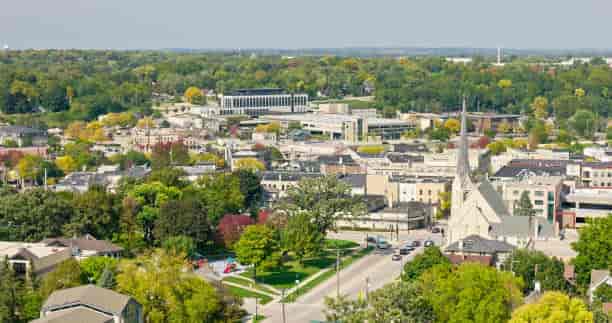
Waukesha surprises people who know it only as a name on the map. The county seat of Waukesha County, one of the most prosperous counties in the Midwest, it is a city of 72,000 that has built a genuine identity around its Fox River waterfront, a historic downtown undergoing a real revitalization, and a position at the heart of one of Wisconsin's strongest employment corridors. The city has been the county seat and the commercial anchor of this region since the 1840s, which gives it a depth of civic infrastructure that many suburban communities twice its size don't have: a thriving community theater, an active farmers market, a university, a nationally recognized parks system, and a downtown that has become one of southeastern Wisconsin's most talked-about dining and arts destinations.
Waukesha is also the city where the electric guitar was essentially invented. Les Paul, born Lester William Polsfuss in Waukesha in 1915, pioneered the solid-body electric guitar and multitrack recording in ways that reshaped the entire trajectory of American popular music. The city has leaned into this legacy through its "GuitarTown" identity, and the Les Paul Performance Center at Cutler Park anchors a downtown cultural identity that most communities its size would struggle to manufacture. It is not manufactured. Les Paul was from here.
This guide covers the six best neighborhoods in Waukesha for renters and buyers in 2026, with genuine detail on housing costs, rental prices, walkability, daily life, and who each area serves best. Whether you're relocating from Chicago, moving within Waukesha County, or simply trying to understand what life looks like in different parts of the city, this is the most thorough neighborhood-level breakdown available.
Quick Facts: Waukesha at a Glance
- Population: ~72,000 (city); Waukesha County ~416,000
- County seat of: Waukesha County, consistently ranked among the most prosperous counties in Wisconsin and the broader Midwest
- Nickname: "GuitarTown" (birthplace of Les Paul, inventor of the solid-body electric guitar)
- Climate: Continental Midwestern; cold, snowy winters (average January lows 12°F); warm summers (average July highs 82°F). Annual snowfall ~40 inches.
- Primary employers: GE Healthcare (major manufacturing and production center), ProHealth Waukesha Memorial Hospital, Waukesha School District, Waukesha County government, Carroll University, manufacturing sector throughout the county
- Median home price: ~$421,000 (Redfin, November 2025), up 8.5% year-over-year, 19% below the national average
- Waukesha County median: ~$495,000 (Redfin, November 2025)
- Cost of living: Approximately at national average; meaningfully below Chicago, Milwaukee's most expensive suburbs, and most coastal metros
- Safest neighborhoods: Waukesha overall has a below-average crime rate; the neighborhoods around Carroll University, the Fox River corridor, and established west-side residential areas consistently earn the highest safety marks
- Most walkable neighborhood: Downtown Waukesha / Historic District
Quick Facts: Renting in Waukesha
- Average 1BR rent: ~$1,227–$1,328/month (Apartments.com / RentCafe, 2025–2026)
- Average 2BR rent: ~$1,492–$1,531/month
- Studio average: ~$1,156–$1,157/month
- Median rent (all types): ~$1,155–$1,446/month across sources
- Rent vs. national average: Approximately 24% below national average, an exceptional value for a county-seat city with this quality of schools, employment access, and civic infrastructure
- Year-over-year rent change: Up approximately 2.5–2.6%, modest, stable growth
- Most affordable rental neighborhoods: Downtown Waukesha (older stock at accessible prices), West Side apartment communities
- Renter share of housing: Approximately 37–41% of households are renter-occupied, higher than neighboring Pewaukee or Brookfield, reflecting Waukesha's broader housing diversity
Table of Contents
- Waukesha Housing & Rental Market Overview
- Downtown Waukesha / Historic District, Most Walkable, Most Culturally Rich
- Fox River Corridor, Best for Riverfront Living & Trail Access
- Carroll University District, Best for Young Professionals & University Lifestyle
- Sunset Heights & East Waukesha, Best Established Residential Neighborhood
- West Side / Bluemound Road Corridor, Best for Value & Suburban Convenience
- South Waukesha / New Development Areas, Best for Families & Newer Construction
- How to Choose Your Waukesha Neighborhood
- Self Storage in Waukesha, 10 Federal Storage
- Frequently Asked Questions
WAUKESHA HOUSING & RENTAL MARKET OVERVIEW
Waukesha's housing market occupies a compelling position in the southeast Wisconsin landscape: the quality, employment access, and civic infrastructure of a Waukesha County city at price points meaningfully below neighboring Brookfield, Pewaukee, and Elm Grove. Redfin's November 2025 data shows a median home sale price of $421,000, up 8.5% year-over-year and running 19% below the national median. For families and professionals relocating from Chicago (the most common out-of-state buyer origin in the data) or comparing options across southeast Wisconsin, this combination of price and quality is one of the stronger value propositions in the region. Homes in Waukesha are selling within approximately 39 days on average, with many receiving multiple offers and closing above list price, a competitive market that rewards prepared, pre-approved buyers.
The housing stock in Waukesha is notably diverse, which is one of the city's distinct advantages over neighboring communities. The historic downtown and Fox River corridor neighborhoods feature Victorian, Craftsman, and early-20th-century architecture that has been maintained and in many cases meticulously restored, homes with the kind of character that new construction cannot replicate, priced in ranges that are genuinely accessible compared to historic neighborhoods in Milwaukee or Madison. Mid-century neighborhoods in the city's established east and west sides offer solid, well-located residential living at prices that make single-family homeownership realistic for a wide range of buyers. The south side and outer edges of the city have newer suburban development with the modern construction quality and larger lots that growing families often prefer. Waukesha's market truly does have a home for almost every budget and lifestyle, which is not something every city of its size can say.
The rental market is among the most affordable in the southeast Wisconsin suburban corridor. Average one-bedroom apartments rent for approximately $1,227–$1,328 per month, roughly 24% below the national average and considerably more accessible than comparable space in Brookfield, Pewaukee, or Milwaukee's most desirable neighborhoods. Studios average around $1,156, and two-bedrooms come in at approximately $1,492–$1,531. For renters who work in Waukesha County's robust employment corridor (GE Healthcare, ProHealth hospital system, the manufacturing base, and the Carroll University ecosystem) and don't need a Milwaukee commute, Waukesha's rental pricing represents exceptional value for what the city delivers.
As with all Wisconsin cities, property taxes are a meaningful cost consideration for buyers. Wisconsin's effective rate of approximately 1.61% means that a $421,000 home carries roughly $6,778 in annual property taxes. This is part of the cost structure of Wisconsin homeownership and should be factored alongside purchase price in any affordability analysis.
1. DOWNTOWN WAUKESHA / HISTORIC DISTRICT, MOST WALKABLE, MOST CULTURALLY RICH
Downtown Waukesha is southeastern Wisconsin's most compelling small-city downtown revival story. Main Street follows the Fox River through the heart of the historic district, and at the intersection of Main and Broadway, the scene that greets you, brick-paved streets, period lighting, sidewalk cafe seating, brightly painted storefronts in historic buildings, signals that this is not a simulated downtown experience. The architecture is genuinely historic. The buildings have been here since the late 1800s and early 1900s, housing generations of different businesses before the current wave of restaurants, taprooms, art galleries, and boutiques moved in. The revitalization is real, and downtown Waukesha is in the middle of it.
The dining and drinking scene is the most talked-about in Waukesha County for its size. The Weary Traveler Freehouse has developed a loyal following for its eclectic comfort food, extensive beer list, and warm, welcoming atmosphere that embodies what a neighborhood bar is supposed to feel like. Indulge American Kitchen and Wine Bar brings farm-to-table ambition and a serious wine program to a downtown that's increasingly capable of sustaining it. Black Sheep Restaurant & Bar has been a community anchor long enough to have regulars who've been coming for years. The craft brewery movement has arrived, taprooms on Main Street and the surrounding blocks have diversified the nightlife and made downtown Waukesha a genuine destination for drinks beyond bar-hopping into Milwaukee.
Cutler Park and the Les Paul Performance Center sit in the heart of downtown, offering an outdoor concert venue carved into the hillside amphitheater-style, the site of Riverfest, JazzFest, and a summer calendar of outdoor performances that brings the community out of its homes and into shared public space in exactly the way that city parks are supposed to. Carroll University, established in 1846 as the oldest university in Wisconsin, anchors the southern edge of downtown, bringing students, faculty, and academic energy into a neighborhood that already has significant civic and cultural density. The Clock Tower, a downtown landmark, overlooks the full streetscape in a way that makes even a casual walk through the area feel like an intentional urban experience.
Median Home Price: $280,000–$450,000 (mix of historic condos, renovated Victorian homes, and newer infill) | Average Rent: Studio: $1,050–$1,300/mo | 1BR: $1,150–$1,450/mo | 2BR: $1,350–$1,700/mo
Safety: Downtown Waukesha carries higher aggregate crime statistics than Waukesha's residential neighborhoods, characteristic of any active commercial district. The revitalization has brought active street life and improved lighting throughout the core, and residents describe feeling safe in their daily routines, particularly on the blocks closest to the riverfront and Carroll University. Property crime in commercial areas warrants standard precautions, but residential crime is not a defining concern for downtown neighborhood residents.
Walkability / Transit: Waukesha's most walkable neighborhood by a significant margin. Restaurants, bars, shops, the farmers market, Cutler Park, the Fox River Trail, and Carroll University are all accessible on foot from most downtown addresses. Waukesha County Transit offers bus service; a car is recommended for connecting to the broader city and county.
Top Amenities:
- Fox River Trail, 7-mile paved multi-use trail running directly through downtown along the river; connects to Frame Park, Minooka Park, and the broader Waukesha trail network
- Cutler Park & Les Paul Performance Center, Outdoor amphitheater-style venue; site of Riverfest, JazzFest, Waukesha's summer event calendar, and the city's most popular community gathering space
- Waukesha Farmers Market, Saturday mornings from June through October; local produce, baked goods, artisan crafts, and live music in a downtown setting that captures community life at its best
- Carroll University, Wisconsin's oldest university on the southern edge of downtown; theatrical and arts programming, concerts, and community events open to the public
- Waukesha Civic Theatre, One of Wisconsin's longest-running community theater organizations; productions year-round in the restored Marcus Center-caliber downtown venue
- Cobblestone Restaurant & dining corridor, Main Street's concentration of independent restaurants, taprooms, and wine bars that make Waukesha's downtown a genuine dining destination
- GuitarTown & Les Paul Legacy, Guitar sculptures throughout downtown and at the Les Paul Performance Center celebrating Waukesha's most famous son
Best For: Renters who want the most walkable and culturally engaged lifestyle Waukesha offers at its most accessible rental price points; young professionals working within Waukesha County who don't need a Milwaukee commute; anyone who values historic architecture and neighborhood character over suburban newness; first-time homebuyers who want the urban lifestyle of a renovated historic home at prices that don't require a tech salary
Nearest 10 Federal Storage Location:
- 229 Sussex Street, Pewaukee, WI 53072, (262) 476-7290, Accessible from downtown via I-94; serves downtown Waukesha residents in compact historic units who need overflow storage for furniture, renovation materials, seasonal gear, and the accumulated items that city living in older buildings rarely accommodates
2. FOX RIVER CORRIDOR, BEST FOR RIVERFRONT LIVING & TRAIL ACCESS
The residential neighborhoods nestled along the Fox River as it winds through Waukesha represent one of the city's most distinctive and most sought-after living environments, a linear community of charming older homes, river access, and quiet streets that provides the feel of a small-town riverfront without the small-town trade-offs in employment, services, or cultural access that would come with living farther from the urban core. The Fox River Trail runs directly through this corridor, making trail access a practical daily amenity rather than a weekend destination: residents can step out their front doors and be on a 7-mile dedicated path within minutes, connecting north toward Frame Park and south through a chain of riverside parks without encountering a single vehicle.
The homes along the Fox River corridor reflect the neighborhood's age and character: a mix of 1920s–1960s Craftsman bungalows, American Foursquares, and Cape Cods that have been maintained and in many cases thoughtfully updated by successive owners who chose the neighborhood specifically for its architectural character and river setting. The housing stock here is the kind that photographs well and feels even better in person, the sort of established neighborhood where mature trees canopy residential streets, gardens are tended over decades rather than seasons, and the scale of the homes and lots creates a human-paced residential environment that newer subdivisions struggle to replicate regardless of budget.
River Island Park, a popular urban green space with river views and a regular events presence, sits along this corridor and functions as a community gathering point in the warmer months. Kayaking and canoeing on the Fox River are practical recreational options for corridor residents; the river is also popular for fishing, with bass, walleye, and panfish regularly pulled from its banks. For buyers, the Fox River corridor offers some of Waukesha's most interesting real estate: character homes in a genuine neighborhood context at price points that remain accessible relative to the overall market.
Median Home Price: $280,000–$420,000 (older character homes; varies significantly by condition and river proximity) | Average Rent: 1BR: $1,150–$1,450/mo | 2BR: $1,400–$1,800/mo
Safety: The Fox River corridor earns consistently good safety marks within Waukesha. The residential character of the neighborhood, active homeowner community, and proximity to downtown's improving safety environment contribute to a stable, safe residential experience.
Walkability / Transit: Highly walkable to the Fox River Trail and to downtown Waukesha's amenities. The trail provides dedicated off-street connection to parks, the downtown core, and the broader Fox River network. A car is needed for most errands beyond the immediate neighborhood and downtown. Waukesha County Transit bus service available.
Top Amenities:
- Fox River Trail, 7-mile paved multi-use trail running directly through the neighborhood along the riverbank; the defining daily amenity of Fox River corridor living
- River Island Park, Urban riverfront park with green space, community events, and direct Fox River views; a community anchor for the corridor
- Fox River kayaking and fishing, Practical water recreation accessible from neighborhood launch points; bass, walleye, and panfish available from the riverbank
- Frame Park, Waukesha's most prominent park, with botanical gardens, a turf baseball diamond, an outdoor amphitheater, and river access; connected to the corridor via the Fox River Trail
- Downtown Waukesha walkable access, Fox River corridor residents can walk or bike to Main Street's restaurants, farmers market, and Cutler Park events
- Historic architectural character, Craftsman bungalows, American Foursquares, and established residential streetscapes that reflect over a century of neighborhood continuity
Best For: Buyers seeking architectural character and river access in an established neighborhood context; outdoor-active residents who want trail access from their front door; those who want to be a walkable distance from downtown Waukesha's amenities while living in a quieter, more residential setting; buyers who've done their research and know that character homes in this corridor represent strong long-term value
Nearest 10 Federal Storage Location:
- 229 Sussex Street, Pewaukee, WI 53072, (262) 476-7290, Short drive via I-94 from the Fox River corridor; serves residents of older homes who need overflow storage during renovation projects, seasonal kayak and outdoor gear storage, and space for the antiques and estate contents that historic home purchases often include
3. CARROLL UNIVERSITY DISTRICT, BEST FOR YOUNG PROFESSIONALS & UNIVERSITY LIFESTYLE
The neighborhood surrounding Carroll University, Wisconsin's oldest university, established in 1846, has developed a distinct character shaped by the institution's presence, the concentration of faculty, staff, healthcare professionals, and young professionals who want proximity to both the university's cultural programming and downtown Waukesha's amenities. The Carroll campus itself brings a stream of theatrical productions, concerts, art exhibitions, and public lectures to the community, all open to the broader public in a way that smaller institutions sometimes aren't. For residents who value educational and cultural access as a neighborhood amenity, the Carroll district delivers.
The housing stock immediately around Carroll blends older residential properties (some converted to multi-family use serving student and young professional renters) with intact single-family homes on tree-lined streets that predate the university's most recent expansion periods. Prices here reflect an interesting tension: close enough to downtown and the university to command a premium over Waukesha's least expensive neighborhoods, but generally more accessible than the Fox River corridor's most coveted character homes. For renters, the Carroll district offers genuine walkability to both the campus and downtown in a setting that doesn't require a car for the most frequently accessed amenities.
ProHealth Waukesha Memorial Hospital sits directly in the city's center, only 6 miles from the farthest residential neighborhoods, and effectively a short drive from the Carroll district. For healthcare professionals at the hospital system (the city's second-largest employer) who want to walk or bike to work, or at minimum keep the commute to single digits, the Carroll area and immediately adjacent neighborhoods offer the strongest positioning in the city.
Median Home Price: $250,000–$380,000 | Average Rent: Studio: $950–$1,200/mo | 1BR: $1,100–$1,400/mo | 2BR: $1,350–$1,700/mo
Safety: The Carroll University district maintains a generally good safety record. The university's presence, active pedestrian traffic during daytime and evening hours, and the neighborhood's community orientation contribute to a stable residential environment. Standard urban neighborhood awareness applies; the university's security infrastructure and campus lighting also extend into the immediately adjacent blocks.
Walkability / Transit: The Carroll district is among Waukesha's more walkable neighborhoods, with the university campus, downtown Main Street, Cutler Park, and the Fox River Trail all accessible on foot. The walkability is most practical for residents in the blocks immediately adjacent to campus and the downtown core. Waukesha County Transit bus service available.
Top Amenities:
- Carroll University, Wisconsin's oldest university (est. 1846); theatrical productions, concerts, art exhibitions, and academic programming open to the public; a cultural resource that extends well beyond the student population
- Downtown Waukesha walkability, Main Street's restaurants, taprooms, farmers market, and Cutler Park events are accessible on foot from the Carroll district
- ProHealth Waukesha Memorial Hospital proximity, Waukesha's largest healthcare facility is a short commute from the Carroll area; ideal positioning for healthcare professionals
- Fox River Trail access, Walking distance to the trail network that connects the city's parks and riverfront
- Waukesha County Technical College proximity, The WCTC campus, located near the downtown area, provides additional educational and workforce development resources
- Historic Waukesha County Courthouse, The imposing Victorian courthouse anchors the government district adjacent to the Carroll neighborhood, adding to the architectural character of the surrounding blocks
Best For: Young professionals and recent graduates working in Waukesha County who want walkability, university cultural access, and affordable rents without commuting daily to Milwaukee; healthcare workers at Waukesha Memorial Hospital seeking close-in housing; faculty, staff, and administrators at Carroll University; renters who want the walkable character of downtown Waukesha with slightly more residential quiet than Main Street itself delivers
Nearest 10 Federal Storage Location:
- 229 Sussex Street, Pewaukee, WI 53072, (262) 476-7290, Accessible from the Carroll district via I-94; ideal for young professionals in studio and one-bedroom apartments who need overflow space, and for seasonal storage in Wisconsin's demanding four-season climate
4. SUNSET HEIGHTS & EAST WAUKESHA, BEST ESTABLISHED RESIDENTIAL NEIGHBORHOOD
Sunset Heights and the broader east Waukesha residential neighborhoods represent the city's most established suburban character, mid-century homes from the 1950s through 1980s on well-maintained lots with mature tree canopy, the kind of neighborhood where residents have lived for 15 and 20 years and where the neighbors know each other well enough to exchange keys. These are the neighborhoods that Waukesha's longtime residents tend to identify as the heart of the city's residential fabric, not the most glamorous addresses, not the most architecturally dramatic, but genuinely livable, stable, and well-positioned relative to the city's employment and amenity infrastructure.
RentCafe identifies Sunset Heights as one of Waukesha's most active neighborhoods for apartment rentals, reflecting the mix of owner-occupied single-family homes and apartment communities that characterize the area. Rental inventory here spans a range from older apartment buildings with character to newer complexes built to meet the demand from Waukesha County's growing professional population. For buyers, the Sunset Heights area offers some of Waukesha's most practical single-family home pricing, well-maintained mid-century homes with attached garages, established landscaping, and the kind of lot sizes that newer construction rarely replicates at comparable prices, typically in the $280,000–$400,000 range.
The east Waukesha positioning provides reasonable access to both downtown (a short drive or bike ride west via the Fox River Trail connection) and to the I-94 interchange for regional commuting. The Waukesha School District serves these neighborhoods with school access that covers the full range of the district's elementary and secondary programming, one of the most significant factors for families comparing east Waukesha to competing communities.
Median Home Price: $280,000–$400,000 | Average Rent: Studio: $1,050–$1,200/mo | 1BR: $1,150–$1,400/mo | 2BR: $1,400–$1,700/mo
Safety: East Waukesha and Sunset Heights maintain good safety records within the city. The established residential character, high homeownership rates in certain blocks, and active community presence contribute to a stable safety environment. Residents consistently report a comfortable, neighborhood-watch-oriented community feel.
Walkability / Transit: Moderately walkable within the neighborhood for park access and some local commercial strips. Downtown and the Fox River Trail are accessible by bike or short drive. Waukesha County Transit bus service provides connections. A car is recommended for most daily needs outside the immediate neighborhood.
Top Amenities:
- Established neighborhood character, Mature tree canopy, mid-century homes with large lots, and a community atmosphere built over decades of stable owner-occupancy
- Waukesha School District access, Strong school system serving east Waukesha with elementary and secondary options that draw families from across the region
- Fox River Trail access, Bikeable or walkable to the trail via east-west connecting streets; practical connection to downtown and Frame Park
- Minooka Park proximity, Waukesha County's largest park (1,100+ acres) with hiking, skiing, sledding, and disc golf is accessible from east Waukesha; a major seasonal amenity
- Shoppes at Fox River proximity, The east side's major retail corridor provides grocery, pharmacy, home goods, and everyday shopping without requiring a long drive
- ProHealth Waukesha Memorial Hospital, Located centrally in Waukesha and easily accessible from east side neighborhoods; relevant for healthcare employees and families
Best For: Families seeking single-family homeownership in Waukesha at accessible prices, long-term buyers who prioritize neighborhood stability and established community character over architectural drama, renters who want a quiet, residential neighborhood feel with reasonable downtown access, those moving from Milwaukee's eastern suburbs who are used to mid-century neighborhood character and find it well-represented in east Waukesha
Nearest 10 Federal Storage Location:
- 229 Sussex Street, Pewaukee, WI 53072, (262) 476-7290, Accessible from east Waukesha via I-94; serves established residents managing home renovation overflow, seasonal Wisconsin recreation equipment, and the storage needs that accumulate in family homes over years of settled living
5. WEST SIDE / BLUEMOUND ROAD CORRIDOR, BEST FOR VALUE & SUBURBAN CONVENIENCE
The west side of Waukesha, organized around the Bluemound Road and West Moreland Boulevard corridors, is the city's most commercially active residential quadrant: the area where the big-box retailers, shopping centers (including the Westbrook Marketplace), national chain restaurants, and service providers are concentrated, interspersed with apartment communities and residential neighborhoods that offer the most practical suburban living in the city for people who prioritize convenience and commercial access over historic charm or riverfront atmosphere. It is, in the most honest possible sense, a working suburb, designed to function efficiently for the large portion of Waukesha's population that wants reliable access to everything they need within a 10-minute drive.
The Bluemound Road corridor connects Waukesha seamlessly to Brookfield, Waukesha County's commercial hub, home to The Corners of Brookfield (a premium lifestyle retail and dining center), Brookfield Square Mall, and the dense restaurant concentration along the Brookfield/Waukesha border that gives west side residents access to a dining scene that exceeds what any single city of Waukesha's size could sustain on its own. For residents who want to avoid the commute to downtown for a quality dinner or a grocery run to a high-end market, the west side's positioning is a genuine advantage.
For renters, the west side and Bluemound Road corridor offer some of Waukesha's best combination of apartment quality and rent accessibility, newer apartment communities built to attract the working professional population that GE Healthcare, the hospital system, and the county's manufacturing sector generate, at rates that run meaningfully below comparable units in Brookfield or Pewaukee. The Waukesha School District serves this area, which remains a primary draw for families with children who need the school quality but can't sustain the price tags of more exclusive communities.
Median Home Price: $280,000–$420,000 | Average Rent: Studio: $1,050–$1,300/mo | 1BR: $1,200–$1,500/mo | 2BR: $1,450–$1,800/mo
Safety: The west side earns solid safety marks within Waukesha. The commercial corridor generates standard suburban commercial activity, but the residential neighborhoods adjacent to Bluemound Road and in the broader west side maintain a good safety environment. Higher-density commercial areas warrant standard situational awareness; residential blocks are comfortable and well-maintained.
Walkability / Transit: Moderately walkable within the commercial corridor for errands along Bluemound Road. Primarily car-dependent for downtown Waukesha access and regional commuting. I-94 and US Highway 18/59 access from the west side are strong, supporting both local and regional commutes efficiently.
Top Amenities:
- Bluemound Road commercial access, Grocery, pharmacy, national retail, fitness, and dining all within a few minutes' drive; the densest commercial convenience in Waukesha
- Brookfield amenity proximity, The Corners of Brookfield's premium retail and dining corridor is accessible via Bluemound Road within 10–15 minutes; a meaningful lifestyle upgrade available to west side residents
- Westbrook Marketplace, Major west side shopping center with anchor tenants, dining, and services within the neighborhood
- GE Healthcare proximity, Waukesha's largest employer is accessible from the west side with minimal traffic friction; relevant for the large GE workforce that lives throughout the city
- Waukesha School District, Full district access with elementary and secondary school options serving the west side
- West Moreland / Horeb Spring Park, Public parks on the west side including Horeb Spring Park's pool and skate park; community recreation accessible without a long drive
Best For: Families and professionals who prioritize suburban convenience and commercial access over walkable urban character; GE Healthcare and Waukesha County's western industrial corridor employees who want to minimize commute distance; apartment renters who need modern units at Waukesha's most accessible price points; those who plan to use downtown as a destination rather than a daily environment
Nearest 10 Federal Storage Location:
- 229 Sussex Street, Pewaukee, WI 53072, (262) 476-7290, Directly accessible from the Bluemound Road corridor via a short drive; the most convenient 10 Federal location for west side Waukesha residents storing seasonal gear, business inventory, and household overflow
6. SOUTH WAUKESHA / NEW DEVELOPMENT AREAS, BEST FOR FAMILIES & NEWER CONSTRUCTION
The southern portions of Waukesha, where new residential development has expanded along the US Highway 59 corridor and into the city's southern growth edges, offer the newest housing stock in Waukesha and some of the most practical entry points for families who've been priced out of neighboring communities but are committed to the Waukesha County school and employment ecosystem. New construction here means modern open floor plans, energy-efficient systems, attached garages with meaningful storage, larger lot sizes than infill neighborhoods can offer, and a level of maintenance predictability that older homes in Waukesha's central neighborhoods require buyers to carefully research before committing.
South Waukesha's development has benefited from Waukesha County's planning approach, which has encouraged family-oriented residential growth at the city's edges while maintaining the downtown core's historic character. Communities along and near the US-59 corridor include a mix of price points, from townhomes and paired homes accessible to first-time buyers in the $280,000–$380,000 range to larger single-family homes for growing families in the $380,000–$500,000 range. The Village at Fox River luxury apartment community near the Highway 59 and 18 intersection brings higher-end rental inventory to this corridor, with upscale finishes and open-concept floor plans that appeal to renters who want new construction quality at south Waukesha's more accessible rent levels.
The Waukesha School District's southern schools serve this growing residential area with programming that matches the district's overall quality reputation. Access to I-43 south (connecting toward Racine and Kenosha) and US-59 (reaching Oconomowoc to the west) makes south Waukesha a practical positioning for employees whose work doesn't require north-county access, an increasingly useful attribute as Waukesha County's industrial and healthcare employment base has expanded in multiple geographic directions.
Median Home Price: $280,000–$500,000 (newer construction; varies by size and community) | Average Rent: 1BR: $1,200–$1,600/mo | 2BR: $1,500–$1,900/mo | 3BR townhomes: $1,850–$2,300/mo
Safety: South Waukesha's newer development areas maintain strong safety records. The managed community character, active homeownership, and well-lit newer streets contribute to a low-crime environment consistent with Waukesha's overall above-average safety profile.
Walkability / Transit: Car-dependent. Highway 59 and I-43 access provide efficient regional commuting. Daily errands require a car; developing commercial corridors along the southern edge are growing but not yet at the density of the Bluemound Road west side. Downtown Waukesha is a 10–15 minute drive north.
Top Amenities:
- New construction quality, Modern open floor plans, energy-efficient systems, attached garages, and larger lots that established neighborhoods can't match without significant renovation investment
- Village at Fox River apartments, Luxury apartment community at Highway 59 and 18 with upscale finishes, open-concept layouts, and a high-end rental experience at south Waukesha's more accessible rates
- Waukesha School District southern schools, Continued access to one of Wisconsin's strongest school districts through the district's southern campus locations
- I-43 and US-59 corridor access, South and west regional commuting options that serve employees working beyond the I-94 corridor
- Frame Park proximity, Waukesha's most prominent park, with botanical gardens, baseball, and the Fox River, is accessible from south Waukesha via the Fox River Trail or short drive
- Minooka Park proximity, Waukesha County's premier outdoor recreation park is particularly close to south Waukesha, providing 1,100+ acres of hiking, skiing, and disc golf within easy reach
Best For: Young families purchasing their first Waukesha home and prioritizing new construction over neighborhood character, buyers for whom the predictability of newer construction's maintenance profile matters more than architectural history, renters seeking upscale apartment amenities at south Waukesha's pricing, those whose commute pattern takes them south and west rather than east toward Milwaukee
Nearest 10 Federal Storage Location:
- 229 Sussex Street, Pewaukee, WI 53072, (262) 476-7290, Accessible from south Waukesha via I-94 north and connecting roads; serves south Waukesha families and renters with seasonal storage for Wisconsin's outdoor recreation demands, moving overflow, and business inventory
HOW TO CHOOSE YOUR WAUKESHA NEIGHBORHOOD
Waukesha offers genuine variety, from walkable historic urban living to established suburban family neighborhoods to newer development at the city's growing edges. Here's a framework for matching yourself to the right part of the city.
If walkability, cultural access, and urban character are the priority: Downtown Waukesha is the clear answer, the only part of the city where you can reasonably walk to dinner, a farmers market, a concert, a trail, and your local coffee shop without getting in a car. The revitalization is real, the dining scene is genuinely good for a city this size, and the combination of historic architecture and riverside setting makes it one of the most compelling downtowns in Wisconsin outside of Madison and Milwaukee. Rents here are the most accessible in the city for what the location delivers.
If architectural character and trail access are what drew you to Waukesha: The Fox River corridor is the neighborhood. The homes, the trail, the river views, and the walkable connection to downtown create a residential experience that's genuinely distinctive, and the price points reflect a market that hasn't fully priced in the neighborhood's qualities yet compared to similar corridors in Milwaukee or Madison.
If you want university access and young professional community energy: The Carroll University district provides the most direct access to the university's cultural programming, the downtown dining scene, and the community of young professionals that the Carroll/healthcare ecosystem generates. Rents in this area are among Waukesha's most accessible, making it the strongest entry point for new arrivals building their financial footing in the county.
If neighborhood stability and established family character are the priorities: East Waukesha's Sunset Heights and surrounding neighborhoods deliver the solid, well-maintained mid-century residential experience that families who want to put down roots for 10–20 years are looking for. The homes are larger per dollar than anything in Brookfield or Pewaukee at comparable prices, and the school district access is the same.
If commercial convenience and practical suburban access matter most: The west side's Bluemound Road corridor is the most practical choice, and the one that puts Brookfield's more extensive commercial corridor within 10 minutes without paying Brookfield rent or purchase prices.
If new construction quality and growing-family space are the primary drivers: South Waukesha delivers the newest inventory in the city at price points that make Waukesha's most affordable entry point also its most modern construction. For families who've decided that the Waukesha County school and employment ecosystem is where they want to be and need more space per dollar than established neighborhoods offer, the south side makes the strongest practical case.
SELF STORAGE IN WAUKESHA, 10 FEDERAL STORAGE
Wisconsin's four-season climate creates storage needs that residents from more temperate states underestimate. In Waukesha, that means managing not just summer recreation gear, boats, kayaks, bicycles, camping equipment for Kettle Moraine trips, but also significant winter equipment: snowblowers, cross-country skis, snowshoes, ice fishing gear, and the kind of seasonal wardrobe rotation that genuine Midwest winters demand. Historic homes downtown and in the Fox River corridor, charming as they are, often lack the storage infrastructure of newer construction. And apartment renters throughout the city navigate the same challenge that apartment renters everywhere face: more belongings than square footage comfortably accommodates.
10 Federal Storage serves all of Waukesha from a facility at 229 Sussex Street in nearby Pewaukee, positioned just off I-94 with easy access from every Waukesha neighborhood. The fully online rental process lets residents reserve a unit, sign their lease digitally, and receive their gate access code without visiting an office or waiting in line. Climate-controlled units protect against Wisconsin's temperature extremes, particularly important for wood furniture, electronics, documents, antiques, and the contents of Waukesha's many historic homes that might be damaged by cycling from 14°F winter lows to 85°F summer humidity. All leases are flexible month-to-month; new customers qualify for up to 2 months free with no hidden fees.
10 Federal Storage Location Serving Waukesha
- 229 Sussex Street, Pewaukee, WI 53072, (262) 476-7290, Located minutes from downtown Waukesha via I-94, serving every neighborhood in the city. Climate-controlled and drive-up units available. Serves downtown residents in historic homes and compact apartments; Fox River corridor buyers managing renovation overflow; Carroll University-area young professionals needing seasonal storage; east and west side families cycling Wisconsin's full complement of recreational equipment; south Waukesha households with space constraints in newer townhomes; and local contractors and businesses in Waukesha County's manufacturing and services corridor who need reliable, accessible inventory and equipment storage. 24/7 gate access; electronic surveillance; online account management.
Units range from compact 5x5 storage lockers up to large units for full household contents. View available units and pricing for Waukesha here.
WELCOME TO WAUKESHA
Waukesha is the kind of city that earns more appreciation the longer you live in it. The downtown's revitalization is real and still building momentum. The Fox River gives the city something most of its Wisconsin peers don't have, a natural feature that runs through the heart of the community, anchors its parks and trail network, and provides a genuine gathering place across four very distinct seasons. The Les Paul legacy is legitimately remarkable. The school district is strong. The employment base is diverse and substantial. And the housing market offers something increasingly rare: genuine character across a range of price points that haven't been fully arbitraged by the awareness that Waukesha delivers.
And wherever you land in it, 10 Federal Storage has a Pewaukee facility positioned to serve every Waukesha neighborhood, with climate-controlled units, drive-up access, fully online rental, month-to-month leases, and up to 2 months free for new customers.
Find your nearest location and reserve a unit online today.
About 10 Federal Storage, Waukesha
10 Federal Storage serves Waukesha, WI from a facility at 229 Sussex Street, Pewaukee, WI 53072, (262) 476-7290, conveniently accessible from all Waukesha neighborhoods via I-94. Climate-controlled and standard drive-up units available; fully online rental; 24/7 access; flexible month-to-month leases; no long-term commitment required. View available units here.
FREQUENTLY ASKED QUESTIONS ABOUT WAUKESHA NEIGHBORHOODS
For renters, the Carroll University district and the downtown Waukesha area offer studio and one-bedroom apartments in Waukesha's most accessible rent range, studios from around $950–$1,200 per month and one-bedrooms from $1,100–$1,400. These neighborhoods also offer the best walkability in the city for residents who want to minimize car dependency. For buyers, south Waukesha and the west side's established mid-century blocks offer single-family homes frequently under $350,000, a meaningful entry point in a county where the broader median sits at $495,000.
Waukesha offers more home and more neighborhood variety per dollar than either Pewaukee or Brookfield. The median home price in Waukesha (~$421,000) runs meaningfully below Pewaukee's (~$456,000 average home value) and significantly below Brookfield's premium. Waukesha also has a far more developed walkable downtown and a genuine urban character that neither Pewaukee nor Brookfield replicates, both of those communities are primarily residential in character, while Waukesha has a city identity built around the Fox River waterfront, Carroll University, and a revitalized Main Street. Renters will find substantially more inventory and much lower average rents in Waukesha than in either Pewaukee or Brookfield. The trade-offs are that Waukesha lacks Pewaukee Lake's direct recreational access and doesn't quite match Brookfield's aggregate school rating or commercial density, but for many buyers and renters, Waukesha's combination of price, character, and access represents the strongest overall value in the county.
Yes, consistently. The Waukesha School District is one of the largest in Wisconsin and provides strong academic programming, open enrollment flexibility, and a school infrastructure that draws families from across the region. The city's park system was awarded the National Gold Medal for long-range planning and resource management in 2022, its 48 parks, the Fox River Trail, Minooka Park, and Frame Park provide recreational programming and green space that support active family life year-round. The cost of living is reasonable relative to comparable quality in Illinois or the most expensive Wisconsin suburbs. And the proximity to Pewaukee Lake (15 minutes), Kettle Moraine State Forest (30 minutes), and Milwaukee's cultural attractions (20–25 minutes) means that families in Waukesha can access everything the region offers without paying any single city's premium to do it.
Waukesha's downtown revitalization is real and ongoing, not aspirational. Main Street's dining scene has developed over the past 10–15 years from a handful of reliable establishments to a genuinely diverse collection of independent restaurants, taprooms, wine bars, and cafes that make it a regional dining destination rather than just a local one. The Les Paul Performance Center hosts a legitimate summer events calendar. The Waukesha Farmers Market draws vendors and customers from across the county every Saturday morning through the growing season. The Riverwalk Artscape & Placemaking Plan currently in development signals continued investment in the downtown's public realm. For buyers who've been watching smaller Midwest cities' downtown revivals from the outside, Madison, Columbus, Grand Rapids, and wondering whether Waukesha is at a similar inflection point, the honest answer is that the evidence suggests it may be earlier in that arc than those examples, which represents a potentially meaningful opportunity for buyers and renters who choose downtown now.
Les Paul, born Lester William Polsfuss in Waukesha in 1915, is one of the most consequential figures in the history of American music. He pioneered the solid-body electric guitar (the design that became the Gibson Les Paul, still in production today and regarded as one of the instrument's most iconic forms), invented multitrack recording, and developed overdubbing and delay/echo effects that reshaped recording technology for the entire second half of the 20th century. Every stadium rock concert, every electric guitar riff in every song you've heard recorded since roughly 1950, is in some meaningful lineage from innovations Les Paul made in Waukesha. The city has embraced this legacy through the GuitarTown public art installation (decorated guitar sculptures throughout downtown) and the Les Paul Performance Center at Cutler Park. It is genuine local history that the city wears appropriately, with pride rather than overstatement.
About the Author
10 Federal Storage
Our team at 10 Federal Storage has been in the self storage industry for decades. With knowledge gained from multiple universities and in the field, we are well-prepared and excited to assist with your storage needs. When you rent a unit with us, you can feel confident that our seasoned customer service team’s help will make your transition as seamless as possible. Customer satisfaction is our number one priority, and we strive to make your experience exceptional with our automated leasing options, diverse unit sizes, and a strong commitment to sustainability.