
Best Neighborhoods in Winston-Salem, NC
by 10 Federal Storage
Published on April 16, 2026
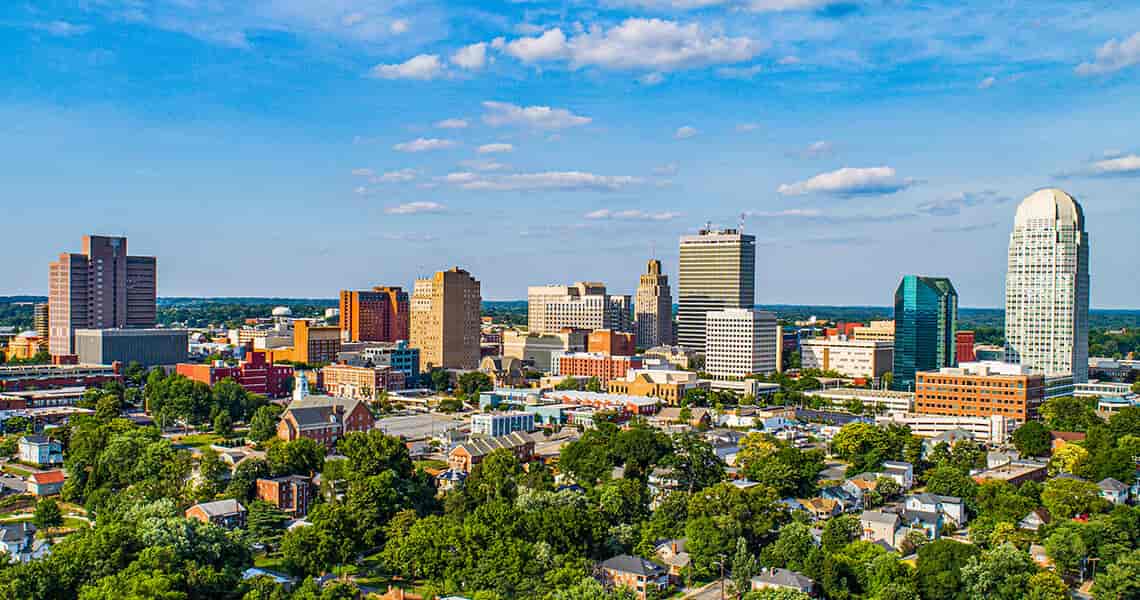
Winston-Salem occupies a particular place in the landscape of mid-sized American cities: it's large enough, at over 250,000 residents, to offer genuine urban amenities, a serious arts and culinary scene, and a diversified economy with major employers in healthcare, education, technology, and advanced manufacturing. But it's small enough that traffic is genuinely manageable, housing remains meaningfully affordable compared to most of the state's coastal and Triangle markets, and neighborhoods still have the kind of character and identity that gets diluted in larger cities. It is, in the language of people who have moved there from Charlotte, Raleigh, or coastal North Carolina, exactly the right size.
The city's identity runs deep. Winston-Salem was shaped by two forces that still define it today: the Moravian heritage of Old Salem, one of the best-preserved 18th-century colonial settlements in America, and the tobacco and textile industrial wealth of the Reynolds and Hanes families, whose patronage funded universities, art collections, parks, and an architectural legacy that gives the city its distinctive visual character. Wake Forest University anchors the northwest of the city. The Innovation Quarter, a 350-acre urban research and technology district built in former tobacco warehouses, has become the most ambitious urban redevelopment project in the Triad and arguably in all of North Carolina. And a restaurant and brewery scene that punches considerably above its weight for a city of this size has made Winston-Salem a legitimate regional culinary destination.
This guide profiles the six best neighborhoods in Winston-Salem in depth, with data on rents and home prices, safety, walkability, amenities, and who each neighborhood actually suits. We've also included a section on self storage, because Winston-Salem's combination of university-driven mobility, healthcare-sector relocations, and ongoing downtown redevelopment means its residents deal with storage needs as regularly as residents of any fast-growing North Carolina city.
Quick Facts: Winston-Salem at a Glance
- Population: ~252,000 (city proper); ~680,000 (Winston-Salem–High Point metro)
- County: Forsyth County
- Location: Piedmont region of central NC; ~100 miles west of Raleigh, ~80 miles northeast of Charlotte; I-40 and US-52 serve as primary corridors
- Nickname: The Twin City; also "Camel City" (a historical nod to Camel cigarettes, one of R.J. Reynolds' flagship brands)
- Climate: Humid subtropical; four distinct seasons, mild winters compared to the mountains, warm summers; annual snowfall possible but rarely severe
- Primary employers: Wake Forest Baptist Medical Center/Atrium Health Wake Forest Baptist (largest employer), Wake Forest University, Hanesbrands, Reynolds American, BB&T (now Truist), Lowes Foods, Forsyth County Schools
- Median home price: ~$240,000–$265,000 (Redfin/Zillow, 2025), significantly below both the national median and most other North Carolina metros
- Cost of living: Approximately 8–10% below the national average, one of the most affordable mid-sized cities in the Southeast
- Safest neighborhoods: West End, Reynolda, Buena Vista, Mount Tabor area
- Most walkable neighborhood: Downtown / West End
Quick Facts: Renting in Winston-Salem
- Average studio rent: ~$845–$941/month
- Average 1BR rent: ~$1,118–$1,158/month
- Average 2BR rent: ~$1,239–$1,293/month
- Median rent (all types): ~$1,495/month (Zillow, 2025)
- Rent vs. national average: Approximately 30% below the national median, among the most affordable rental markets in the Southeast for a city of this size
- Most affordable renter neighborhoods: Wheeling Village (~$750/mo avg 1BR), South Suburban (~$819/mo avg 1BR), Konnoak (~$850/mo avg 1BR), West Salem (~$855/mo avg rent)
- Most expensive renter neighborhoods: Downtown Winston-Salem (~$1,798–$1,859/mo avg), Mount Tabor (~$2,383/mo avg 1BR), West End Winston (~$1,748/mo avg)
- Most popular renter neighborhoods: Ardmore, The Village, Downtown
- Year-over-year rent change: Up approximately 0.43% in 2025, essentially flat; a stable, landlord-competitive market
Table of Contents
- Winston-Salem Housing & Rental Market Overview
- Downtown / Innovation Quarter, Most Urban, Most Transformed
- West End, Most Historic, Most Walkable, Most Character
- Ardmore, Best Established Neighborhood for Young Professionals & Medical Workers
- Buena Vista, Most Prestigious, Most Architecturally Distinctive
- Reynolda / Wake Forest University Area, Best for Families & Academic Lifestyle
- Clemmons / Lewisville, Best Suburban Option & Most Affordable New Construction
- How to Choose Your Winston-Salem Neighborhood
- Self Storage in Winston-Salem, 10 Federal Storage Locations
- Frequently Asked Questions
WINSTON-SALEM HOUSING & RENTAL MARKET OVERVIEW
Winston-Salem's housing market is one of the most compelling value stories in North Carolina. The median home sale price sits in the $240,000–$265,000 range based on 2025 data, significantly below the national median of approximately $420,000 and well below the Triangle metros of Raleigh ($435,000) and Chapel Hill ($575,000). Even relative to Charlotte ($375,000), Winston-Salem represents a meaningful affordability advantage, which has driven sustained in-migration from those higher-cost metros and helped fuel the city's ongoing revitalization. The market is competitive in the most desirable neighborhoods, historic West End, Buena Vista, and the Reynolda corridor move quickly, but inventory remains broader than in markets further east, and buyers have more negotiating room than they'd find in comparable Triangle or Charlotte neighborhoods.
The rental market is defined by affordability that is exceptional for a mid-sized Southeastern city. Average one-bedroom rents ranging from approximately $1,118 to $1,158 per month, roughly 30% below the national average, make Winston-Salem one of the most accessible rental markets in North Carolina for people relocating from larger, more expensive cities. The citywide average rent of approximately $1,280/month (RentCafe, 2025) reflects minimal year-over-year change, indicating a stable market that isn't experiencing the demand-driven rent spikes seen in Charlotte and Raleigh. The most affordable neighborhoods, Wheeling Village, South Suburban, Konnoak, offer one-bedrooms under $900/month. The priciest, Downtown and Mount Tabor, push toward $1,800–$2,400 for premium renovated units and luxury apartments.
One important note for newcomers to the Winston-Salem market: while the city is more walkable than most North Carolina cities of its size, particularly in the downtown, West End, and Ardmore neighborhoods, the majority of the metro area requires a car for daily life. The GreenWay trail network and city bus system (WSTA) provide non-car options for some corridors, but most residents in the suburban and western neighborhoods will rely on a vehicle for commuting and errands. The commute math is favorable: Wake Forest Baptist Medical Center, Wake Forest University, and most major employers are within 15–20 minutes of virtually any neighborhood in this guide.
1. DOWNTOWN / INNOVATION QUARTER, MOST URBAN, MOST TRANSFORMED
Winston-Salem's downtown has undergone one of the more dramatic urban transformations of any mid-sized American city in the past two decades. The catalyst is the Innovation Quarter, a 350-acre research and technology district built within the city's former tobacco and textile industrial district, anchored by Wake Forest University's medical and research programs, Wake Forest School of Medicine, and a growing cluster of biotech, health technology, and creative companies. Former tobacco processing buildings that once produced Lucky Strike cigarettes now house biomedical research labs, a Wake Forest School of Medicine building, the National D-Day Memorial's academic partner, technology startups, and a community of residents who have made their homes in thoughtfully converted industrial lofts. The Reynolds Building, a 1929 skyscraper modeled after the Empire State Building (which was actually built several years later, suggesting the influence ran the other direction), remains one of the most distinctive pieces of pre-war architecture in North Carolina.
For renters, downtown offers the most concentrated and diverse apartment options in Winston-Salem. Converted warehouse lofts in the Innovation Quarter, high-rise condo communities like The Residences at the R.J. Reynolds Building, and newer purpose-built apartment communities all sit within the downtown footprint. One-bedroom units start around $1,034 at Link Apartments Innovation Quarter and climb to $1,352 at The Easley and approximately $1,300–$1,500 at Winston Factory Lofts and other mid-market options. Two-bedroom units range from approximately $1,385 (Reynolds Building Residences) to $2,113 (The Easley), with the premium units reflecting high-end renovation and city view positioning. This is the only part of Winston-Salem where industrial-chic loft living is an option, exposed brick, high ceilings, original hardwood floors, and the bones of buildings that were once central to the American tobacco economy.
The restaurants, bars, and cultural venues that have followed the Innovation Quarter's development are legitimately impressive for a city of Winston-Salem's size. Krankie's Coffee, The Ramkat live music venue in nearby Industry Hill, the Stevens Center for the Performing Arts, and the Southeastern Center for Contemporary Art (SECCA) anchor a cultural scene that draws from the entire Triad. Truist Stadium, home to the Winston-Salem Dash (a Chicago White Sox Double-A affiliate), is steps from the Innovation Quarter and hosts a minor league baseball season that is one of the most beloved summer rituals in the city.
Median Home Price: Downtown condos: $300,000–$700,000+ (premium renovated units); limited single-family inventory | Average Rent: 1BR: $1,034–$1,500/mo | 2BR: $1,385–$2,113/mo
Safety: Downtown's aggregate crime statistics are higher than Winston-Salem's suburban neighborhoods, a pattern consistent with commercial urban cores across North Carolina. Property crime, particularly in tourist-facing retail areas, drives the statistics more than violent crime. The residential blocks and Innovation Quarter campus environment are considered well-managed and generally safe. Residents consistently rate the Innovation Quarter's residential areas as comfortable and improving. Weekend entertainment district noise is a noted consideration for residents in closest proximity to bar and restaurant concentrations.
Walkability / Transit: Winston-Salem's most walkable district. Restaurants, music venues, coffee shops, the Innovation Quarter campus, Truist Stadium, and cultural venues are all accessible on foot. WSTA bus routes connect downtown to the broader city. The GreenWay trail network has multiple downtown access points. A car is still useful for reaching western neighborhoods, Wake Forest University, and suburban commercial areas.
Top Amenities:
- Innovation Quarter, 350-acre research and technology district in former tobacco warehouses; the center of Winston-Salem's economic and urban identity
- Truist Stadium / Winston-Salem Dash, The Double-A affiliate of the Chicago White Sox; minor league baseball is a city institution, and the stadium setting is among the best in the Carolina League
- Stevens Center for the Performing Arts, One of North Carolina's premier performing arts venues; home to the NC School of the Arts professional program productions
- The Ramkat, Winston-Salem's most beloved live music venue in the Industry Hill neighborhood adjacent to downtown; intimate, diverse programming across genres
- Krankie's Coffee, The city's beloved independent roaster; downtown location with outdoor seating and house-roasted beans that have earned regional recognition
- Old Salem Museums & Gardens, Just south of downtown; one of the most authentically preserved 18th-century Moravian settlements in America
- Southeastern Center for Contemporary Art (SECCA), A short drive west; one of the Southeast's leading contemporary art institutions
Best For: Young professionals working in the Innovation Quarter or healthcare sector, residents who want the most urban living experience available in Winston-Salem, people drawn by industrial-loft architecture and walkable cultural access, remote workers who want a vibrant downtown address at a fraction of what a comparable lifestyle would cost in Charlotte or Raleigh
Nearest 10 Federal Storage Location:
- 4835 Country Club Rd, Winston-Salem, NC 27104, Located southwest of downtown, accessible via Business 40 (Salem Parkway); serves downtown residents needing overflow storage for smaller loft units, bike and recreational gear, or business inventory for the Innovation Quarter's startup community. Climate-controlled units available, important for protecting artwork, documents, electronics, and the high-value furniture that frequently fills renovated loft spaces.
2. WEST END, MOST HISTORIC, MOST WALKABLE, MOST CHARACTER
West End is the neighborhood that Winston-Salem residents, particularly those who've moved here from larger cities, most frequently describe as the reason they decided to stay. Roughly bounded by West End Boulevard, Sixth, Broad, and Fourth Streets, it sits directly adjacent to downtown and just north of downtown proper, offering a combination of Victorian and Craftsman homes from the late 19th and early 20th centuries, one of the most active and independently-owned commercial streets in the Triad, genuine walkability, and a community identity that remains intact in a way that's increasingly rare in fast-growing Southern cities. The homes, Queen Anne, Neo-Classical Revival, Colonial Revival, Craftsman, represent some of the finest examples of pre-Depression residential architecture in North Carolina, maintained by a neighborhood that has consistently resisted the fate of neglect that has overtaken comparable historic districts in other mid-sized Southern cities.
The West End commercial bend, where Reynolda Road and West End Boulevard curve through a concentration of independent shops and restaurants, is the beating heart of the neighborhood. Mozelle's Fresh Southern Bistro (brunch and dinner in a setting that feels effortlessly elegant) and West End Cafe (sandwiches and a seasonal dinner menu in an intimate neighborhood house) are West End institutions. Fourth Street Filling Station draws a consistent crowd for outdoor dining. Collage and Elizabeth's offer the kind of consignment and vintage furniture hunting that sustains a weekend afternoon. It is, in short, the kind of walkable neighborhood commercial district that most American cities have spent decades trying to recreate and largely haven't managed.
Real estate in West End reflects its desirability. Home prices range from the $300,000s for smaller bungalows on the neighborhood's periphery to $700,000–$1M+ for the larger Victorian and Neo-Classical homes on the best streets. The rental market in West End is limited, the neighborhood is heavily ownership-dominated, but divided historic homes and smaller apartment buildings in the area offer rental units that typically start around $1,100–$1,500/month for one-bedrooms, with the premium reflecting the architectural character unavailable in any newer construction. Parking can be challenging on the neighborhood's narrower streets, and the hilly, winding street layout is part of its character rather than a flaw.
Median Home Price: $300,000–$700,000+ (varies significantly by home size and street position); premium Victorian estates $700,000–$1M+ | Average Rent: 1BR: $1,100–$1,500/mo | 2BR: $1,400–$1,900/mo (limited availability; primarily divided historic homes and small apartment buildings)
Safety: West End earns high safety ratings and is widely considered one of Winston-Salem's safer and more stable residential neighborhoods. Its active neighborhood association, historic district designation, and higher median household income contribute to low crime rates. It is one of the neighborhoods consistently identified alongside Reynolda and Buena Vista as among the city's safest and most stable environments.
Walkability / Transit: Winston-Salem's most walkable residential neighborhood. Restaurants, coffee shops, boutiques, parks, and downtown are all accessible on foot from most West End addresses. Hanes Park is a 10-minute walk. The neighborhood's hilly street grid is designed for walking. WSTA bus routes serve the West End Boulevard corridor. A car is still useful for reaching eastern employers and suburban commercial areas, but residents consistently describe West End as the most livable-without-a-car neighborhood in the city.
Top Amenities:
- West End commercial district, Mozelle's, West End Cafe, Fourth Street Filling Station, Collage, Elizabeth's, and a rotating cast of independent businesses that give the neighborhood its commercial identity
- Hanes Park, Large public park bordering the neighborhood featuring 20 tennis courts, three baseball diamonds, a quarter-mile track, and open fields; one of Winston-Salem's premier neighborhood parks
- Grace Court (Grace Park), A beautifully maintained small public park with a gazebo, fountains, and mature trees; quintessential West End
- Reynolda House Museum of American Art, The former R.J. Reynolds estate, now a world-class museum housing American art from Georgia O'Keeffe, Grant Wood, and Andrew Wyeth; accessible by foot or short drive from West End
- Reynolda Gardens & Reynolda Village, Botanical gardens and high-end specialty shops and restaurants in the former Reynolds estate outbuildings; a weekend destination for the entire city
- Downtown proximity, West End borders downtown directly; the entire Innovation Quarter, Stevens Center, and downtown restaurant scene is walkable or a very short drive
Best For: Buyers who value historic architectural character above all else, young professionals who want the most walkable neighborhood in the city with direct downtown access, people relocating from larger cities who want a genuine urban neighborhood feel without the density and noise of apartment-heavy districts, anyone drawn to the combination of independent restaurants, walkable parks, and Victorian homes that defines West End's identity
Nearest 10 Federal Storage Location:
- 4835 Country Club Rd, Winston-Salem, NC 27104, Located southwest of West End via Business 40; convenient for West End residents managing estate contents from the neighborhood's large historic homes, renovation overflow from restoration projects, seasonal items, or antique furniture staging. Climate-controlled units are particularly relevant for the irreplaceable antiques and historic furnishings common in West End's residential buildings.
3. ARDMORE, BEST ESTABLISHED NEIGHBORHOOD FOR YOUNG PROFESSIONALS & MEDICAL WORKERS
Ardmore is Winston-Salem's largest historic district, over 4,000 homes, and one of its most beloved neighborhoods by a margin that its residents are entirely aware of. The neighborhood's origin story is relevant to understanding why: Ardmore was Winston-Salem's first commuter neighborhood, developed in the early 20th century as streetcar access made it possible for working and middle-class families to live slightly removed from downtown's industrial air. That history produced a housing stock of Craftsman bungalows, Colonial Revival houses, and American Foursquare residences, homes from the 1910s, 1920s, and 1930s, built at a human scale with front porches, tree-lined sidewalks, and yards large enough to feel private without becoming a maintenance burden. The neighborhood's approximately 4,000 homes are so diverse in their architectural detail and individual personality that walking its streets is a genuine pleasure, which is partly why the Ardmore Art Walk, held annually, draws visitors from across the Triad.
The neighborhood's position is arguably the most strategically useful in Winston-Salem: it sits between Wake Forest University Baptist Medical Center and Forsyth Medical Center, both major hospitals, making it the default neighborhood for physicians, nurses, and healthcare professionals who want to minimize commute time. The result is a community demographic that skews toward educated, income-stable households who have sustained a vibrant local dining and retail scene along the neighborhood's commercial corridors. Miller Park, one of Winston-Salem's largest neighborhood parks, with sports fields, nature paths, playgrounds, and a beloved dog park, sits at the center of Ardmore and functions as its social hub. The neighborhood pool is a summer institution.
For renters, Ardmore offers some of the most character-rich apartments in Winston-Salem. Divided historic homes, converted bungalows, and small apartment buildings provide one-bedroom units averaging approximately $880–$1,231/month, genuinely affordable for the quality and character you're getting. Two-bedroom options in Ardmore's larger homes average around $1,400/month. It's a rental market where you're trading new-construction finishes for architectural detail that new construction categorically can't replicate, a trade that a significant portion of renters, particularly those arriving from larger cities, find very favorable.
Median Home Price: ~$210,000–$350,000 (wide range reflecting the diversity of bungalow sizes; larger Colonial Revival homes toward the upper end) | Average Rent: 1BR: $880–$1,231/mo | 2BR: $1,200–$1,600/mo
Safety: Ardmore earns above-average safety ratings and is generally considered one of Winston-Salem's safer and more stable established neighborhoods. Its active neighborhood association, owner-occupancy concentration, and higher-income medical professional demographic contribute to low violent crime rates. Some commercial corridor property crime is typical of any neighborhood with retail access, but the residential streets are consistently rated as safe by residents and neighborhood data platforms alike.
Walkability / Transit: Among the most walkable residential neighborhoods in Winston-Salem. Miller Park, multiple restaurants, coffee shops (including Stella Brew, a neighborhood institution with ample parking and a loyal local following), and neighborhood services are all accessible on foot. WSTA bus routes serve the neighborhood. The proximity to two major medical centers makes it pedestrian and bike-friendly for healthcare workers. A car is still needed for most outlying errands and commutes west toward Reynolda or Clemmons.
Top Amenities:
- Miller Park, One of Winston-Salem's largest neighborhood parks; sports fields, nature paths, playgrounds, picnic shelters, and a beloved dog park that serves as Ardmore's unofficial community gathering space
- Ardmore neighborhood pool, A genuine community amenity that enhances summer life in the neighborhood and contributes to its distinctly neighborhood-oriented identity
- Ardmore Art Walk, Annual neighborhood celebration of local artists and creative businesses that draws from the entire Triad
- Stella Brew, A neighborhood coffee institution with a loyal following and one of the best parking lots in the Ardmore commercial corridor
- Wake Forest Baptist Medical Center & Forsyth Medical Center proximity, For healthcare workers, walking or biking distance to two of the region's major hospitals is a meaningful lifestyle advantage
- Bolton Park, Additional green space with walking trails and playgrounds in the neighborhood's southern section
Best For: Healthcare workers at Wake Forest Baptist or Forsyth Medical Center who want a short commute, young professionals and couples who value architectural character over new-construction finishes, first-time buyers looking for the most character per dollar in Winston-Salem, renters who want the most interesting apartment options in the city at below-average prices, families who want an established neighborhood with a strong park system and community identity
Nearest 10 Federal Storage Location:
- 4835 Country Club Rd, Winston-Salem, NC 27104, A short drive west of Ardmore via Business 40; well-suited for Ardmore residents staging home renovations (common in a neighborhood of 90-100 year old houses), managing seasonal items, storing extra furniture from homes where period-appropriate storage space is limited, or handling the frequent moves that come with the medical professional population. Month-to-month leases fit the rotation of residents that Ardmore's hospital proximity generates.
4. BUENA VISTA, MOST PRESTIGIOUS, MOST ARCHITECTURALLY DISTINCTIVE
Buena Vista is Winston-Salem's most distinguished neighborhood, and it has been for the better part of a century. The name is pronounced "Byoo-nuh Vistah" locally, a small linguistic signal of how long the neighborhood has been part of the city's fabric. It sits in the northwest section of Winston-Salem, nestled between Forsyth Country Club and Old Town Club, bisected by Stratford Road, and home to an architectural collection that has few peers in the Piedmont: Italian Renaissance villas, Tudor mansions, stately Colonial Revival homes, and Craftsman estates, many designed by notable architects from the early 20th century and maintained to standards that reflect the investment their owners have made in their preservation.
The homes in Buena Vista date primarily from the 1920s through the 1950s, built during the peak of Winston-Salem's industrial prosperity when the Reynolds and Hanes families and their professional class were constructing the city's finest residential neighborhoods. Lot sizes are generous, large, gorgeously landscaped yards with 100-year-old oaks and maples creating a natural canopy that residents frequently describe as the neighborhood's most striking physical characteristic. The combination of architectural grandeur, mature tree coverage, and an active neighborhood culture (local shops for coffee and wine, walkable to Stratford Road's boutiques and restaurants) makes Buena Vista Winston-Salem's most unambiguously desirable address for buyers who prize historic character.
Home prices reflect that desirability: an average of approximately $690,000 across the neighborhood, with Tudor and Italian Renaissance estates at the upper end exceeding $1M. This makes Buena Vista one of the pricier residential addresses in the city, but still dramatically more accessible than comparable historic neighborhoods in Charlotte (Myers Park, Dilworth) or Raleigh (Hayes Barton, Glenwood). The rental market in Buena Vista is very limited, the neighborhood is almost entirely owner-occupied, but the proximity to downtown via Business 40 (5–10 minute commute) and to Wake Forest University makes it occasionally sought after for longer-term professional rentals.
Median Home Price: ~$500,000–$1M+ (average approximately $690,000; architectural estates at the upper end) | Average Rent: Limited rental inventory; occasional professional rentals in the $1,500–$2,500/mo range
Safety: Buena Vista consistently earns among Winston-Salem's highest safety ratings. Its active neighborhood association, low density, high owner-occupancy rate, and higher median household income contribute to very low crime rates across all categories. Along with Reynolda and West End, it is one of the neighborhoods most frequently cited as among the city's safest and most stable residential environments.
Walkability / Transit: Walkable within the neighborhood, residents routinely walk to Stratford Road's shops and restaurants, and the streets are designed for leisurely walking and running. A car is needed for most daily errands beyond the immediate commercial corridor. The Business 40 corridor provides a quick 5–10 minute commute to downtown. Wake Forest University is approximately a 10-minute drive.
Top Amenities:
- Stratford Road commercial corridor, Independent shops, wine bars, boutique restaurants, and the kind of neighborhood retail that reflects the spending habits of an affluent, community-oriented resident base
- Forsyth Country Club & Old Town Club, Two prestigious golf and social clubs bordering the neighborhood; membership provides recreational and social infrastructure that reinforces the community's character
- Shaffner Park & Silas Creek Greenway, Park and multi-use trail access from within the neighborhood's walking distance
- Reynolda Village & Reynolda Gardens, High-end specialty shopping, restaurants, and the botanical gardens of the Reynolds estate; within a short drive or walkable distance from portions of the neighborhood
- Whitaker Elementary & RJ Reynolds High School, Both highly rated within the Winston-Salem/Forsyth County Schools district; among the best school assignments in the city
- Quick Business 40 access to downtown, 5–10 minute commute to the Innovation Quarter, Wake Forest Baptist, and downtown's cultural infrastructure
Best For: Buyers seeking Winston-Salem's most prestigious address and finest residential architecture, established professionals and executives who want the premier neighborhood experience in the Triad at a fraction of the cost of comparable addresses in Charlotte or Raleigh, families who want top school zoning and an active neighborhood community in a quieter, more elegant environment, anyone for whom a 100-year-old home on a tree-canopied street is the aspiration
Nearest 10 Federal Storage Location:
- 4835 Country Club Rd, Winston-Salem, NC 27104, Located directly along Country Club Road, serving Buena Vista and the surrounding northwest Winston-Salem corridor. Ideal for Buena Vista residents managing antiques, fine furniture, estate contents, or the overflow that comes with owning a large, architecturally significant home. Climate-controlled units are essential for protecting the irreplaceable pieces, oil paintings, antique hardwood furniture, heirloom documents, that frequently populate Buena Vista's grand homes.
5. REYNOLDA / WAKE FOREST UNIVERSITY AREA, BEST FOR FAMILIES & ACADEMIC LIFESTYLE
The Reynolda Historic District and its surrounding neighborhoods, occupying the northwestern quadrant of Winston-Salem along the Reynolds Road and Reynolda Road corridor, are defined by the most consequential piece of real estate in the city's history: the former R.J. Reynolds country estate, Reynolda, which now serves as the campus of Wake Forest University. The university's presence has shaped everything around it: the caliber of the school zone, the concentration of professors and researchers in the surrounding neighborhoods, the cultural programming (lectures, concerts, gallery exhibitions, and athletic events) that flows from the campus into the community, and the particular energy of a neighborhood that orbits an intellectually serious institution.
Reynolda Village, the cluster of boutique shops, restaurants, and services built into the former Reynolds estate's agricultural outbuildings, is one of the most distinctive retail environments in North Carolina: high-end but unpretentious, set in 1920s-era buildings with original architectural character, surrounded by the Reynolda Gardens' botanical landscape. The gardens themselves, maintained by Wake Forest University and free to the public, offer walking trails, a greenhouse, and a café that is one of Winston-Salem's best outdoor dining experiences in temperate weather. Reynolda House Museum of American Art, occupying the original Reynolds family home, holds a collection that includes Georgia O'Keeffe, Grant Wood, and Andrew Wyeth, works of genuine national significance housed in a setting that's walkable from the surrounding residential neighborhoods.
The residential communities around Wake Forest span a range of housing types and price points. Cape Cod and Colonial Revival homes along the university's immediate periphery in neighborhoods like Reynolda Park blend into the academic character of the campus itself. Further northwest along the US-421 corridor toward Bethabara, homes become more suburban in character, larger lots, newer construction, more family-sized floor plans, while maintaining access to the Reynolda amenity base. The Bethabara Historic Site, a preserved 18th-century Moravian settlement adjacent to Bethabara Park's extensive trail system, adds a historical and recreational asset specific to the northwest corridor that most of Winston-Salem can't access as easily.
Median Home Price: Reynolda area: $350,000–$650,000; further northwest: $280,000–$450,000 | Average Rent: 1BR: $900–$1,400/mo | 2BR: $1,100–$1,700/mo
Safety: The Reynolda/Wake Forest University area earns high safety ratings and is consistently included alongside West End and Buena Vista as one of the safest residential areas in Winston-Salem. The combination of university campus security, active neighborhood associations, higher median incomes, and owner-occupied housing stability contributes to low crime rates. Bethabara, further north, earns similarly strong marks.
Walkability / Transit: Reynolda Village, the Reynolda Gardens, and the campus perimeter are walkable from immediately adjacent residential streets. The broader neighborhood requires a car for most daily errands, grocery shopping, and commutes to central or eastern Winston-Salem. Bethabara Park's trails provide meaningful non-vehicular recreation within the neighborhood itself. WSTA bus routes have limited coverage in this area.
Top Amenities:
- Wake Forest University, Cultural events, athletic programs (including ACC athletics), lectures, and community programming open to Forsyth County residents; the campus is one of the most beautiful in the Southeast
- Reynolda House Museum of American Art, First-class American art collection housed in the Reynolds family estate; free for Forsyth County residents on certain days
- Reynolda Gardens, Historic botanical gardens with walking trails, greenhouse, seasonal plantings, and café; one of Winston-Salem's most beloved outdoor destinations
- Reynolda Village, Boutique shopping, restaurants, and services in 1920s agricultural buildings; an entirely unique commercial environment that serves the northwest corridor
- Bethabara Historic Site & Bethabara Park, 18th-century Moravian settlement with archaeological excavations alongside an extensive trail system; a combination of historical depth and outdoor recreation rare in any American suburb
- Silas Creek Parkway & Salem Lake proximity, Salem Lake, with its 7-mile trail and kayak/boat rental, is accessible from the western edge of the corridor, one of the best recreational assets in the Winston-Salem metro
Best For: Faculty, staff, and researchers at Wake Forest University, families prioritizing school assignment and a neighborhood environment shaped by an active academic community, buyers who want the Reynolda House, gardens, and village as a walkable lifestyle amenity, retirees drawn to the cultural programming of a major research university, anyone who values the particular quiet and intellectual character that a university neighborhood creates
Nearest 10 Federal Storage Location:
- 4955 Indiana Ave, Winston-Salem, NC 27106, Located in northwest Winston-Salem, serving the Reynolda and Bethabara corridor with convenient access from the US-421 and Reynolda Road corridors. Well-suited for faculty relocating to Wake Forest, families managing renovation overflow in the neighborhood's older homes, seasonal items, and the academic books, research materials, and equipment that periodically need offsite storage between semesters or research cycles.
6. CLEMMONS / LEWISVILLE, BEST SUBURBAN OPTION & MOST AFFORDABLE NEW CONSTRUCTION
Clemmons and Lewisville, two suburban communities west of Winston-Salem proper in Forsyth County, represent the metro area's most popular suburban alternatives for households who want more space per dollar, newer construction, larger lots, and a quieter residential environment without sacrificing access to Winston-Salem's employment base and amenities. Both communities have grown considerably in the past decade as the western Winston-Salem suburban frontier has expanded, and both offer a combination of affordability, school quality, and lifestyle infrastructure that consistently makes them appear at the top of "best suburbs" lists for the Triad region.
Clemmons, immediately west of Winston-Salem on US-421, is the more established of the two. Tanglewood Park, one of the largest county parks in North Carolina at over 1,100 acres, anchors the Clemmons recreational landscape: two championship golf courses, equestrian trails, a festival lawn that hosts major events, a resort hotel, camping, tennis, and lake fishing are all within the park. Country Club Road, which connects Clemmons to central Winston-Salem, runs through the heart of the community, keeping the commute to most major employers under 15–20 minutes. The Muddy Creek Greenway offers bike and pedestrian trail access connecting Clemmons to the broader Winston-Salem greenway network. Newer subdivisions in Clemmons offer single-family homes from the mid-$200,000s to $450,000, meaningful entry-level pricing for new construction in a well-serviced community.
Lewisville, north of Clemmons on the US-421 corridor, offers a slightly more rural character with even larger lots and somewhat lower density. It's the community for households who want true suburban space, room for a workshop, a large garden, or simply more yard than Clemmons's newer subdivisions typically provide, within a 20-minute drive of downtown Winston-Salem. Both communities are served by Forsyth County Schools, with Mount Tabor High School serving much of Clemmons and Reagan High School serving Lewisville, both consistently among the top-performing high schools in the district.
Median Home Price: Clemmons: $280,000–$480,000; Lewisville: $300,000–$500,000+ | Average Rent: 1BR: $850–$1,200/mo | 2BR: $1,100–$1,500/mo (primarily single-family rental rather than apartment communities)
Safety: Both Clemmons and Lewisville earn high safety ratings and are considered among the safer residential communities in the Winston-Salem metro. Their suburban character, lower density, active community associations, and predominantly owner-occupied housing stock contribute to very low crime rates. Both consistently outperform Winston-Salem city averages on safety metrics.
Walkability / Transit: Car-dependent. The Muddy Creek Greenway provides non-vehicular recreational access in Clemmons, and Tanglewood Park is bikeable for residents in its immediate vicinity, but daily errands, commuting, and grocery shopping all require a car. The US-421 corridor and Business 40/I-40 provide fast highway access to central Winston-Salem. WSTA has limited suburban service in these communities.
Top Amenities:
- Tanglewood Park, 1,100+ acre Forsyth County park featuring two championship golf courses, equestrian trails, a festival lawn, camping, fishing, tennis, and a resort hotel; one of the premier county parks in the Southeast
- Muddy Creek Greenway, Multi-use paved trail connecting Clemmons to the broader Winston-Salem greenway network; a genuine alternative to car travel for recreational purposes
- Tanglewood Festival of Lights, One of the largest holiday light displays in the region, drawing visitors from across the Triad and beyond each winter
- Country Club Road commercial corridor, Grocery stores, restaurants, retail, and services within convenient drive distance; Sherwood Forest Elementary and other highly rated schools are served by the corridor
- Salem Lake access, The 7-mile trail and water recreation at Salem Lake is accessible from Clemmons via the Muddy Creek Greenway connection
- Mount Tabor High School & Reagan High School, Both consistently among the top-performing high schools in the Winston-Salem/Forsyth County district
Best For: Families who want new construction, larger lots, and top-performing high schools in a quiet suburban environment, households relocating to Winston-Salem who want more space per dollar than the city's established historic neighborhoods offer, buyers for whom Tanglewood Park's recreational infrastructure (golf, trails, equestrian facilities) is a daily-life amenity, retirees who want low maintenance and a peaceful environment within a reasonable commute of Winston-Salem's medical and commercial resources
Nearest 10 Federal Storage Location:
- 4835 Country Club Rd, Winston-Salem, NC 27104, Country Club Road connects Clemmons and Lewisville directly to this facility; one of the most convenient storage locations for the western suburbs. Serves Clemmons and Lewisville residents needing storage for seasonal sporting equipment, garage overflow, lawn and garden equipment, workshop items, and the extra furniture that comes with downsizing or renovating in the suburbs. Drive-up access and RV/vehicle parking options are available.
HOW TO CHOOSE YOUR WINSTON-SALEM NEIGHBORHOOD
Winston-Salem's neighborhoods are more distinct from each other than the city's size might suggest, the difference between living in Ardmore and living in Clemmons is a genuinely different lifestyle, not just a different commute time. Here's a practical framework for matching the right neighborhood to your priorities:
If urban energy and the Innovation Quarter's walkable district matter most: Downtown is the answer. It's the only part of Winston-Salem where you can walk to your office, a craft brewery, a live music show, and a minor league baseball game in a single day without touching your car. The loft apartments are genuinely distinctive, the rents are higher than the city average but still dramatically below what comparable urban living costs in Charlotte or Raleigh, and the Innovation Quarter's ongoing development means the neighborhood is still in an upward trajectory.
If walkable neighborhood character and historic architecture are your priority: West End is Winston-Salem's best answer. The commercial bend with its independent restaurants and shops, the Victorian and Craftsman homes, Hanes Park, and the direct downtown adjacency make West End feel like a self-contained neighborhood in the way that truly great urban neighborhoods do, and genuinely rare in the Piedmont.
If you work in healthcare and want affordable character: Ardmore. The position between Wake Forest Baptist and Forsyth Medical Center, the Craftsman bungalows and Colonial Revival homes at below-average price points, Miller Park, and a community identity that keeps residents coming back even when they could afford to move up, Ardmore is the neighborhood that Winston-Salem residents most consistently describe as having changed their expectations of what a neighborhood could feel like.
If prestige, architectural grandeur, and the best of Winston-Salem's historic residential fabric define your decision: Buena Vista is the unambiguous answer. The city's finest address. The 100-year-old trees, the Tudor and Italian Renaissance estates, the Stratford Road shopping, the country club adjacency. And still dramatically less expensive than the equivalent in Charlotte or Raleigh.
If a university community environment and cultural programming shape your lifestyle: Reynolda. Wake Forest's campus, Reynolda House, the gardens, and the village make the northwest corridor one of the most culturally rich suburban environments in the Triad. For faculty, researchers, and anyone who draws meaning from proximity to an active academic community, there's no better fit in the city.
If space, new construction, and top suburban schools are what you need: Clemmons or Lewisville. Tanglewood Park alone justifies the suburban trade-off for many residents. Add the pricing advantage over the city's established neighborhoods, the Muddy Creek Greenway, and the district's top-performing high schools, and the western suburbs make a compelling case for households with children or those who simply want more room to breathe.
SELF STORAGE IN WINSTON-SALEM, 10 FEDERAL STORAGE LOCATIONS
Winston-Salem is a city in productive motion. Wake Forest University generates a constant cycle of faculty and student arrivals and departures. Wake Forest Baptist Medical Center's residency and fellowship programs rotate medical professionals through the city every one to three years. The Innovation Quarter continues to attract startup founders and tech professionals who relocate on relatively short notice. And the city's affordability has made it a destination for households downsizing from more expensive metros, often arriving with more furniture than their new homes can hold. All of that movement creates ongoing storage needs, and 10 Federal Storage has two Winston-Salem facilities positioned to serve both sides of the city.
Both locations offer fully online rental: browse available units, sign your lease digitally, and receive your personal gate access code, all without visiting an office or filling out paper forms. Month-to-month leases are standard, which fits the transient rhythms of Winston-Salem's medical and university populations. Climate-controlled units are available at both locations, important in a Piedmont city that experiences real summer heat and occasional winter cold that can affect stored furniture, electronics, and documents.
Both 10 Federal Storage Locations in Winston-Salem
- 4835 Country Club Rd, Winston-Salem, NC 27104, Located on Country Club Road in southwest/central Winston-Salem with quick access from Business 40 (Salem Parkway) and I-40. Serves downtown, West End, Ardmore, Buena Vista, and Clemmons/Lewisville. Climate-controlled and drive-up units available. Ideal for residents managing estate contents from historic homes, renovation overflow, business inventory, and vehicle/RV storage. Particularly convenient for Ardmore and Buena Vista residents given its Country Club Road positioning and the direct corridor connection to Clemmons.
- 4955 Indiana Ave, Winston-Salem, NC 27106, Located in northwest Winston-Salem, serving the Reynolda, Wake Forest University, Bethabara, and northern Forsyth County corridor. 24/7 access, climate-controlled units, and RV and vehicle storage available. Well-suited for Wake Forest faculty and staff, medical professionals at the university's health system, Lewisville residents seeking accessible storage, and households transitioning between the northwest suburbs and the city proper. Boat parking and motorcycle storage also available.
Unit sizes range from 5x5 for boxes and small items up to large units for full household contents. Vehicle, RV, and boat storage options are available at both locations. View both Winston-Salem locations and available units here.
WELCOME TO WINSTON-SALEM
Winston-Salem is a city for people who have decided that the right size matters as much as the right zip code. It offers what genuinely large cities can't, walkable neighborhoods that still know each other, a price structure that doesn't require sacrificing quality of life for proximity to good restaurants, and an architectural heritage from the tobacco and Moravian eras that gives its neighborhoods a character no amount of new development can replicate. The Innovation Quarter represents its economic future. West End and Ardmore represent its residential soul. Buena Vista represents its architectural ambition. And Clemmons and Lewisville represent the practical suburban choice that anchors the western half of a well-functioning metro.
Wherever you land in Winston-Salem, 10 Federal Storage has two facilities to support your move, your renovation, your academic-year storage, or your ongoing overflow needs, at 4835 Country Club Rd serving the city's southwest and central corridor, and at 4955 Indiana Ave serving the northwest and Reynolda/Wake Forest corridor. Both offer fully online rental, 24/7 access, climate-controlled units, month-to-month leases, and the straightforward storage experience that Winston-Salem's straightforward-minded residents tend to prefer.
Find your nearest Winston-Salem location and reserve a unit online today.
About 10 Federal Storage, Winston-Salem
10 Federal Storage operates two self-storage facilities in Winston-Salem, NC, one at 4835 Country Club Rd (27104), serving downtown, West End, Ardmore, Buena Vista, and Clemmons/Lewisville, and one at 4955 Indiana Ave (27106), serving the Reynolda, Wake Forest University, and northwest Winston-Salem corridor. Fully online rental, 24/7 access, climate-controlled units, and flexible month-to-month leases available at both locations. View all Winston-Salem locations here.
FREQUENTLY ASKED QUESTIONS ABOUT WINSTON-SALEM, NC NEIGHBORHOODS
Wheeling Village offers the lowest average one-bedroom rents in the city at approximately $750/month. South Suburban Winston-Salem follows at around $819/month for a one-bedroom, and Konnoak averages approximately $850/month. West Salem ($855/month average) and East Winston ($902/month) are additional budget-friendly options. For comparison, the citywide one-bedroom average is approximately $1,118–$1,158, which is already roughly 30% below the national median. Ardmore and The Village, at approximately $880–$1,231/month for one-bedrooms, offer some of the best value among established, character-rich neighborhoods, combining affordability with historic quality that is genuinely rare at these price points.
West End, Reynolda, and Buena Vista are consistently identified as Winston-Salem's safest residential neighborhoods, earning strong marks from neighborhood rating platforms and community data sources. The western suburbs of Clemmons and Lewisville also rank highly for safety relative to the city average. Ardmore earns above-average safety ratings within the city. Downtown's aggregate safety statistics are lower, driven by commercial-area property crime, but the Innovation Quarter's residential environment is considered well-managed and improving. As a general rule, the northwest and west sides of Winston-Salem (Reynolda corridor, Buena Vista, Clemmons) consistently outperform the city's east and southeast quadrants on safety metrics.
For most buyers, yes, particularly those coming from more expensive North Carolina markets. The median home price of $240,000–$265,000 represents a significant discount to the national median and to Triangle and Charlotte metros, and the combination of a growing Innovation Quarter economy, sustained Wake Forest University employment, and ongoing in-migration from higher-cost metros supports long-term demand. The most important consideration for buyers is the cost of living advantage: Winston-Salem's approximately 8–10% below-national-average cost of living means that the dollar goes further here than almost anywhere else in North Carolina. Historic West End and Buena Vista homes have held value well due to their architectural rarity. The western suburbs have seen strong appreciation as in-migration has pushed demand into Clemmons and Lewisville. The primary risk factor is the city's ongoing diversification away from its tobacco and textile industrial legacy, a transformation that has been more successful than many predicted a decade ago, but that is still in progress.
Clemmons and Lewisville are the most popular choices for families who prioritize suburban infrastructure, new construction, and top-performing high schools (Mount Tabor and Reagan). Buena Vista offers excellent school zoning (Whitaker Elementary, RJ Reynolds High) in a more urban-adjacent historic setting. The Reynolda/Wake Forest University corridor delivers strong school options and the cultural programming of a major university. Ardmore is a strong option for families who want an established neighborhood with Miller Park, sidewalks, and community programming at below-average prices. The Mount Tabor and Sherwood Forest neighborhoods in west Winston-Salem, just east of Clemmons, round out the best family-oriented options with spacious lots, suburban character, and strong school assignments.
All three cities are part of the Piedmont Triad metro, but they have distinct characters and rental markets. Winston-Salem's rental market is comparable in price, average rents across the three cities sit in the $1,100–$1,300/month range for one-bedrooms, but Winston-Salem offers a richer urban experience in its historic neighborhoods (West End, Ardmore, Downtown) and a more developed arts, culinary, and university-driven cultural scene. High Point's identity is more commercial and industrial (centered on the furniture industry and the High Point Market), with a less developed residential neighborhood scene. Greensboro, with UNCG and NC A&T, has a larger student population and more apartment-centric rental inventory. For renters who want neighborhood character, walkability, and urban cultural access alongside affordability, Winston-Salem is generally considered the strongest option among the three Triad cities.
The Innovation Quarter is a 350-acre urban research and technology district in the heart of downtown Winston-Salem, built in former tobacco and textile warehouses and anchored by Wake Forest University School of Medicine, several biotech and health technology companies, the NC School of the Arts, and a growing ecosystem of startups and creative businesses. For people moving to Winston-Salem, it matters for several reasons. First, it's the primary driver of the city's economic diversification away from its tobacco industry heritage, it represents real jobs in healthcare, technology, and research that support the city's long-term growth. Second, it's the reason downtown Winston-Salem has the walkable restaurant scene, loft housing options, and urban energy that distinguish it from comparable mid-sized Piedmont cities. Third, it's a direct employer for a significant and growing segment of the professional population moving to the city. Understanding the Innovation Quarter helps explain why Winston-Salem's downtown has developed in the direction it has, and why the neighborhoods surrounding it are increasingly desirable.
About the Author
10 Federal Storage
Our team at 10 Federal Storage has been in the self storage industry for decades. With knowledge gained from multiple universities and in the field, we are well-prepared and excited to assist with your storage needs. When you rent a unit with us, you can feel confident that our seasoned customer service team’s help will make your transition as seamless as possible. Customer satisfaction is our number one priority, and we strive to make your experience exceptional with our automated leasing options, diverse unit sizes, and a strong commitment to sustainability.