


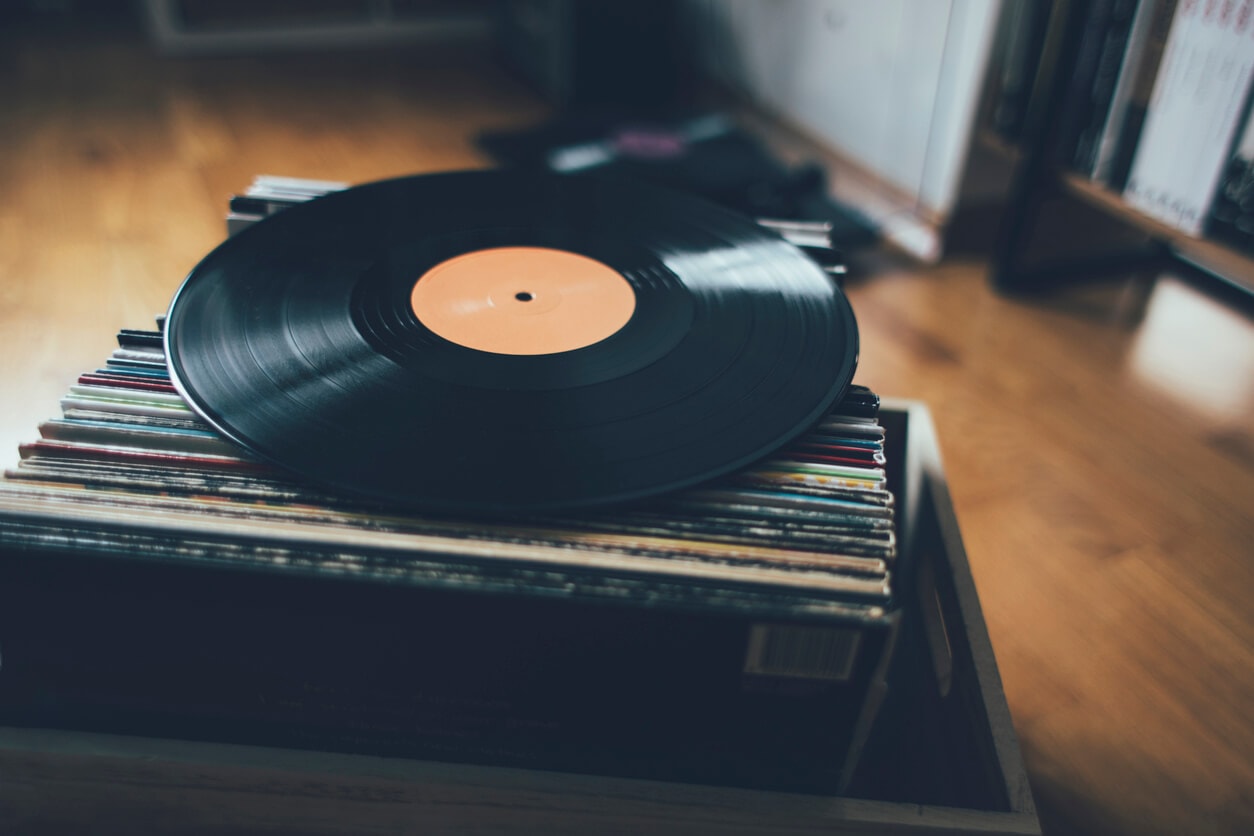
How to Store Vinyl Records: The Complete Preservation Guide
by 10 Federal Storage
Published on March 26, 2026
A vinyl record is a piece of soft plastic with music cut into it in grooves narrower than a human hair. It survives decades not because it is durable, but because most people who own records happen to keep them somewhere reasonable. The collections that get destroyed are almost never destroyed by accident or catastrophe, they are destroyed slowly, by a garage that gets hot every July, by a stack that sat flat for three years, by a paper sleeve quietly sanding the same album a little more with every play.
The good news is that vinyl is genuinely resilient when the basics are right. Records pressed in the 1950s still play beautifully today. Under stable conditions, a well-kept LP has a working life measured in generations, not years. Everything that follows is about getting those basics right, and about what to do when they were not right for a while.
This guide covers the science of how records degrade, the exact temperature and humidity ranges archival institutions use, how to choose sleeves and shelving that will not fail, where in a house records actually survive, how to store a collection off-site in a storage unit, and how to triage damage that has already happened.
Table of Contents
- Why Proper Vinyl Record Storage Matters
- How Vinyl Records Actually Degrade
- The Ideal Temperature and Humidity for Vinyl Records
- Why Records Must Be Stored Vertically
- Pressure, Lean, and Ring Wear: The Slow Killers
- Inner Sleeves: What to Use and What to Replace
- Outer Sleeves and Jacket Protection
- Should You Remove Shrink Wrap Before Storing?
- How to Clean Records Before Storing Them
- How to Handle Records Without Damaging Them
- Choosing Shelving That Can Handle the Weight
- Crates, Cubes, Boxes, and Bins Compared
- Using Dividers to Organize and Support Your Collection
- The Best and Worst Places in Your Home to Store Records
- Short-Term vs. Long-Term Vinyl Storage
- Storing 78s, 45s, Picture Discs, and Colored Vinyl
- The Most Common Vinyl Storage Mistakes
- How to Pack and Move Vinyl Records Safely
- Do Vinyl Records Need a Climate-Controlled Storage Unit?
- What Size Storage Unit Do You Need for a Record Collection?
- How to Set Up a Storage Unit for Vinyl Records
- Diagnosing and Fixing Storage Damage
- Cataloging and Insuring a Valuable Collection
- Quick-Reference Vinyl Record Storage Checklist
- Store Your Collection with 10 Federal Storage
- Frequently Asked Questions About Storing Vinyl Records
Why Proper Vinyl Record Storage Matters
There are three reasons to take record storage seriously, and they matter in different proportions depending on what kind of collector you are.
Sound quality degrades before anything looks wrong. This is the one people underestimate. A record can appear perfect and still sound noticeably worse than it did five years ago. Dust that settles into the grooves gets driven deeper by the stylus on the next play, and once it is compressed into the groove wall it is effectively permanent. The result is the crackle and surface noise that collectors accept as “just how old records sound”, when in reality it is usually just accumulated storage damage.
Physical damage is mostly irreversible. A warp can sometimes be improved. A scratch cannot be removed. Ring wear on a jacket cannot be undone. Mold on a sleeve can be cleaned, but it leaves staining and it will have already begun breaking down the paper fibers. Nearly every failure mode in vinyl storage is a one-way door, which is why prevention is disproportionately valuable compared to remediation.
Records hold real financial value. A common pressing of a common album is worth a few dollars regardless of condition. But condition is the single largest driver of value on anything scarce, and the gap between grades is steep, the difference between a near-mint copy and a visibly worn one is frequently a multiple, not a percentage. For collections built over decades, storage conditions quietly determine a large share of what the collection is actually worth. This matters enormously for anyone who has inherited a collection, is downsizing, or expects to sell eventually.
And there is a fourth reason that does not fit neatly into a category: for most people, a record collection is a personal archive. The albums are attached to specific years, specific people, specific rooms. That is not a value you can put a number on, and it is the reason a lot of collections get stored rather than sold when someone moves into a smaller place.
How Vinyl Records Actually Degrade
Understanding the mechanisms makes every storage decision downstream obvious. Records fail in five distinct ways, and each has a different cause.
Deformation from heat. A record is polyvinyl chloride, a thermoplastic. It does not have a sharp melting point so much as a progressive softening range. At normal room temperatures it is rigid and holds its shape indefinitely. As temperature climbs, it becomes gradually more pliable, and a pliable record will conform to whatever forces are acting on it. On a flat surface with even support, a warm record may be fine. Leaning at an angle, or with weight on one edge, or resting on a hard ridge, it will take on that shape and keep it after it cools. This is why heat and pressure are far more dangerous together than either is alone.
Groove abrasion. The stylus tracks in a groove at pressures that are enormous relative to the contact area. Any hard particle sitting in that groove, dust, grit, a fragment of paper fiber, gets driven into the groove wall. This is cumulative and permanent. The single highest-leverage thing most collectors can do for sound quality is simply cleaning records before they go into storage and before they go on the platter.
Static attraction. Vinyl is an excellent insulator, which means it holds electrostatic charge readily. A charged record pulls airborne dust toward it and holds it there. Static is generated by friction, most notably by sliding a record in and out of a cheap paper sleeve. Anti-static inner sleeves are not a luxury item; they interrupt the primary mechanism by which records get dirty in the first place.
Paper and board deterioration. The jacket, the inner sleeve, and any inserts are paper products, and they are considerably more fragile than the record. They absorb and release moisture with the surrounding air, which causes them to swell, cockle, and lose structural integrity over repeated cycles. They support mold growth at elevated humidity. Acidic paper stock, which is what most commercial inner sleeves are made of, yellows and embrittles on its own over time. In most collections that have been stored badly, the packaging is in worse shape than the vinyl.
Biological growth. Mold needs moisture and an organic food source. The vinyl itself is not food, but the jacket, the sleeve, and any accumulated skin oils and dust absolutely are. Sustained relative humidity above roughly 60–65% is where risk climbs sharply, and it does not require standing water or an obvious leak, a humid basement in August is enough. Once mold establishes in a jacket it spreads through a densely packed shelf efficiently, because the records are pressed against one another with almost no airflow between them.
Notice what is not on this list: normal playing. A well-maintained turntable with a properly aligned cartridge and a stylus replaced on schedule causes negligible wear over hundreds of plays. Records are damaged by storage far more than by use.
The Ideal Temperature and Humidity for Vinyl Records
Most articles on this topic give a vague instruction to keep records “cool and dry.” That is not actionable. Here is what institutions that preserve sound recordings professionally actually specify.
What the archival standards say
- U.S. National Archives recommends audio recordings be kept in stably low temperature and humidity, within a range of 55–70°F and 30–55% relative humidity, and explicitly advises against unregulated spaces like attics and garages for home collections.
- Northeast Document Conservation Center (NEDCC) guidance for grooved media is cooler and drier still, roughly 50–60°F at 30–40% relative humidity for long-term preservation.
- Library of Congress keeps its recorded sound holdings in temperature-controlled vaults set to 50°F and 30% relative humidity. That is a preservation-first environment, not a listening environment.
- Conservation supply guidance commonly cites 65–70°F with relative humidity under 50% for accessible collections, with the important addition that neither figure should swing more than about 10 degrees or 10 percentage points within a 24-hour period.
The practical target for a home or storage unit
Those ranges look inconsistent until you notice they are answering different questions. Colder and drier is always better for pure preservation, but a 50°F vault is impractical for records you actually want to play, and pulling a cold record into a warm room invites condensation. For a collection that lives in a house or a storage unit, aim for:
- Temperature: 60–70°F. Stable matters more than low. A steady 72°F is better than a space that oscillates between 55°F and 80°F.
- Relative humidity: 35–50%, with 40–45% as the sweet spot. Below about 30% the paper components dry out and embrittle; above about 60% you are in mold territory.
- Rate of change: this is the underrated variable. Repeated expansion and contraction cycles fatigue jackets and sleeves, and they are what actually destroys packaging over time. A space that holds 68°F year-round is doing more for your collection than one that averages 65°F while swinging 25 degrees seasonally.
Where heat actually becomes dangerous
You will see claims that records warp above 70°F or 80°F. They do not. Records sit in rooms at those temperatures constantly and are fine, and if 80°F destroyed vinyl, virtually no collection in the American South would have survived the 1970s.
The realistic concern is sustained exposure above roughly 100°F, and the danger multiplies when heat is combined with pressure or uneven support. The places records genuinely die are the places that blow past that number: a car interior on a summer afternoon can reach 130–170°F, and an unventilated attic in July is not far behind. A record left on a dashboard for an afternoon is a common and unrecoverable loss. A record on a shelf in a 78°F living room is not in danger.
Cold is less of a threat than heat, but it is not harmless. Vinyl becomes more brittle at low temperatures and is more prone to cracking if flexed or dropped, and adhesives in jacket seams get stiff. The bigger cold-weather risk is condensation: bring a very cold record into a warm humid room and moisture will form on its surface, which then wicks into the sleeve. If you retrieve records from a cold space, let them acclimate in their sleeves for several hours before opening them.
Measuring instead of guessing
An inexpensive digital hygrometer, the kind sold for humidors and greenhouses, typically ten to twenty dollars, will tell you more about your storage situation than any article can. Put one where the records are, not across the room, and check it in different seasons. Most people who assume their basement is fine discover it runs 65–70% relative humidity in late summer. Most people who assume their spare closet is a compromise discover it is the most stable spot in the house.
Why Records Must Be Stored Vertically
If you take one rule away from this guide, it is this one: records are stored upright, like books on a shelf, at a true 90-degree angle. Never flat, never stacked.
The reasoning is straightforward once you look at the numbers. A 12-inch LP with its jacket and sleeve weighs roughly half a pound. Stack fifty of them flat, and the record on the bottom is carrying something in the neighborhood of 25 pounds. That load is not evenly distributed either, the raised label area and the outer rim bear more of it than the grooved surface between them, so the pressure concentrates exactly where you least want it.
Three things follow from that:
- Dish warping. The record slowly deforms into a shallow bowl, following the pressure profile of the stack. On a badly warped record the stylus cannot maintain consistent contact with the groove, producing audible pitch wobble and, in severe cases, skipping entirely.
- Ring wear. The outer edge of the record presses into the inside of its jacket, eventually wearing a visible circular impression through the printed surface. This is one of the most common condition defects in used records and it is purely a storage artifact.
- Groove deformation. Under sustained pressure the fine detail of the groove wall can compress. This is subtler than warping and harder to detect visually, but it degrades high-frequency reproduction.
Vertical storage eliminates all three, because each record supports its own weight through its edge rather than through its face.
The one nuance worth knowing: vertical only works if the records are actually vertical. A record leaning at an angle on a half-empty shelf is under a different kind of stress than a stacked record, but it is still under stress, and over months it will take a set. That is what the next section is about.
Pressure, Lean, and Ring Wear: The Slow Killers
Vertical storage solves the biggest problem and introduces a smaller one. Records on a shelf exert lateral force on each other, and the record at the end of a long unsupported run absorbs all of it.
Consider a three-foot shelf packed with roughly 150 records. That is somewhere between 60 and 80 pounds of material, and if there is nothing dividing that run, the records at the ends are supporting a substantial sideways load. Over a year or two, that is enough to introduce a gentle curve into the outermost albums.
The fix is to break the run into short segments:
- Support every 4 to 6 inches. A rigid divider every four to six inches, roughly every 15 to 30 records, means no single record ever carries more than a manageable load. This is the single most effective structural change most collectors can make.
- Fill partial sections properly. A half-empty compartment is worse than a full one, because the records lean. If a section is not full, use a rigid filler board or an acid-free spacer to keep the remaining records upright rather than letting them fall against the side.
- Pack snug, not tight. The target is records standing on their own with light contact between neighbors. If you have to force a record in or wrestle one out, the shelf is overpacked, and forced removal scuffs jackets and creases spines. A reasonable rule of thumb is that you should be able to flip through the section comfortably with one hand.
- Keep same sizes together. Mixing 7-inch singles into a run of 12-inch LPs creates uneven support and lets the larger records lean into the gaps. Store formats in separate sections.
Gatefolds and box sets deserve a note here. A gatefold jacket is roughly twice the thickness of a standard sleeve and considerably heavier, and a box set can be four or five times either. They tend to act as informal dividers, which is fine, but they also concentrate weight. Distributing them through the collection rather than clustering them all in one section keeps the load more even.
Inner Sleeves: What to Use and What to Replace
The inner sleeve is the only thing touching the playing surface, which makes it the most consequential accessory in the entire chain, and the one most collectors ignore longest.
The problem with stock paper sleeves
The plain paper sleeve most records ship in is a cost-control decision, not a preservation choice. It causes three problems:
- Uncoated paper has a rough surface at the microscopic scale. Sliding a record in and out drags that texture across the grooves, producing the fine hairline scuffs collectors call “sleeve scratches” or paper scuffs.
- Paper sheds fibers and particulate, which end up in the grooves.
- Most commercial paper stock is acidic and lignin-containing. It yellows, embrittles, and can transfer acidity to what it is in contact with over long periods.
What to use instead
There are two legitimate answers, and the internet tends to insist on only one.
Poly-lined or high-density polyethylene sleeves are the mainstream recommendation and are excellent. The record contacts a smooth, chemically inert plastic surface. Anti-static formulations reduce charge buildup, which reduces dust attraction. Poly-lined designs, a paper shell with a plastic liner, give you the rigidity of paper with the smooth surface of plastic, and are what most serious collectors use as a default.
Archival-grade, acid-free, lignin-free paper sleeves are the choice conservation professionals often make. Good archival paper is smoother than commercial stock, chemically stable, and generates less static than plastic does, which is a real advantage, because static is the primary driver of dust accumulation. The tradeoff is that paper offers less protection against moisture. If you go this route, the important part is that it be genuinely archival stock, not just a nicer-looking paper sleeve.
Either is a large upgrade over stock paper. What matters is that you stop using the sleeve the record came in.
Practical guidance
- Keep original sleeves, just not against the record. Many original inner sleeves carry lyrics, artwork, credits, or liner notes, and discarding them reduces the record’s value and completeness. Move the record into a new sleeve and store the original flat inside the jacket, behind the record.
- Orient the openings. Position the inner sleeve so its opening does not align with the jacket opening. This significantly reduces the amount of dust that can find its way to the record.
- Avoid overstuffing. A jacket holding a record, a modern inner sleeve, and the original paper sleeve is under strain. Watch the seams, and consider storing bulky original sleeves separately for records where the jacket is tight.
- Replace anything visibly aged. Yellowed, brittle, torn, or musty inner sleeves should come out. Whatever is degrading them is in contact with the record.
Doing an entire collection at once is expensive and tedious. A reasonable approach is to replace sleeves opportunistically, every time you play a record, it goes back into a new sleeve, and to prioritize anything valuable or irreplaceable up front.
Outer Sleeves and Jacket Protection
Outer sleeves protect the jacket rather than the record, which makes them sound optional. They are not, for two reasons: the jacket is a meaningful share of the record’s value, and jacket damage is completely unfixable.
An outer sleeve prevents shelf wear along the spine and edges, keeps dust off the artwork, blocks a portion of incidental light, and dramatically reduces friction between adjacent albums when you flip through a shelf.
Choosing a material
- Polyethylene is the flexible, slightly cloudy material used in most inexpensive outer sleeves. It is chemically stable and inert, which is what you want, and the softness means it will not scuff a jacket. Typical thickness runs 2 to 3 mil.
- Polypropylene is crisper and noticeably clearer, so artwork looks better through it. It is also archivally sound. It is stiffer, which some collectors prefer for shelf structure and others find harder to work with.
- PVC outer sleeves should be avoided. This is the one genuine material warning in the category. PVC can plasticize over time and bond to the jacket’s printed surface, and separating them takes the print with it. If a sleeve is unusually soft, glossy, and has a distinct plastic smell, be suspicious. Reputable record-supply retailers do not sell PVC outer sleeves, but they turn up in generic bulk listings.
Thickness and format
Sleeves in the 2 to 3 mil range are fine for general shelving and are what most collectors use. Heavier 4 to 6 mil sleeves cost more and add bulk, roughly 10% to the linear space your collection occupies, but are worth it for anything valuable or anything going into long-term storage, where the sleeve may be doing structural work.
Resealable sleeves with a flap are useful for records you rarely handle. For active listening, an open-top sleeve is faster and there is no real protection penalty.
One caution on gatefolds and box sets: measure before buying in bulk. Standard sleeves will not accommodate a thick gatefold, and forcing one in splits the sleeve or bends the jacket.
Should You Remove Shrink Wrap Before Storing?
This is a genuinely contested question, and the honest answer depends on what you are optimizing for.
The preservation case for removing it: shrink wrap is under tension by design, and that tension increases as the plastic ages and as temperature cycles. On a thin or aging jacket, that constant inward pressure can bow the board, split seams, or produce a permanent concave warp in the cover. Conservation guidance generally recommends removing shrink wrap from records intended for long-term preservation. Wrap also traps whatever humidity was sealed inside with it, which in a damp environment means creating a small enclosed space that cannot dry out.
The collector-market case for keeping it: a factory-sealed record is worth substantially more than an opened one, and for some pressings the premium is dramatic. Original shrink also frequently carries hype stickers and price tags that are part of the record’s provenance. Once removed, that value is gone permanently.
A workable position:
- Genuinely sealed, collectible, never-opened records: leave them sealed, and be deliberate about the environment. Sealed records are more sensitive to bad conditions, not less, so these are the ones that most need stable temperature and humidity. If you are storing them off-site, climate control is not optional.
- Records you have already opened, with the shrink still partly on: remove it. It is providing nothing and is actively squeezing the jacket. Cut the hype sticker section free and store it inside the jacket if you want to preserve it.
- Any record with visible bowing: remove the wrap immediately. That is the tension doing exactly what it does.
If you remove shrink wrap, replace it with a proper outer sleeve. A bare jacket on a shelf picks up edge wear quickly.
How to Clean Records Before Storing Them
Anything left on a record when it goes into storage stays there, and given time and humidity cycling, some of it bonds to the surface. Cleaning before storage is the cheapest preservation step available.
Dry cleaning: the baseline
A carbon fiber brush is the standard tool and it takes about fifteen seconds per side. The fibers reach into the groove and lift loose particulate, and the conductive carbon bleeds off static charge at the same time.
Technique matters more than people assume. Rest the brush lightly on the record with the platter turning, let it ride for two or three rotations, then sweep it gently outward toward the edge to carry the collected dust off the surface. Do not press, the brush works by contact, not force. Lifting the brush straight up drops most of the dust back onto the record.
For any record that has been in a garage, a basement, or an estate sale box, dry brushing alone is not enough.
Wet cleaning: for anything actually dirty
- Manual wet cleaning with a proper record cleaning solution and a microfiber applicator handles most cases. Work in the direction of the grooves, never across them, and use distilled water for any rinse, tap water leaves mineral residue in the grooves as it dries, which is exactly the problem you are trying to solve.
- Vacuum record cleaning machines apply fluid and then extract it along with the suspended dirt. This is the standard for serious collections and is meaningfully more effective than manual methods.
- Ultrasonic cleaners use cavitation in a fluid bath to lift material out of the groove. They produce the best results available and are the most expensive option. For a large or valuable collection heading into long-term storage, a one-time cleaning service is worth pricing out.
Things that damage records
- Never use alcohol on 78 rpm records. Shellac dissolves in alcohol. This will destroy the record, not clean it. See Section 16.
- Avoid alcohol-heavy solutions on picture discs and some colored pressings, where it can attack the surface layer or the adhesive beneath it.
- Do not use dish soap, household cleaners, or window cleaner. These leave surfactant residue in the groove that attracts dirt and can react with the vinyl over time.
- Do not use cloth, paper towel, or tissue. They shed lint into the grooves and their fibers are abrasive enough to scuff the surface.
- Never put a wet record back in its sleeve. Let it air-dry completely on a rack, not flat on a towel. Trapped moisture in an enclosed sleeve is the single most reliable way to grow mold on a collection.
Clean the jacket too, at least superficially. A soft dry brush over the exterior removes surface dust before it gets sealed into an outer sleeve for years.
How to Handle Records Without Damaging Them
Storage habits and handling habits are the same habit. Records get damaged in the seconds between the shelf and the platter more often than they get damaged sitting still.
- Touch the edge and the label only. Standard technique is fingers on the outer edge with the thumb on the label. Skin oils on the playing surface are not merely cosmetic, they are sticky, they capture dust that would otherwise blow off, and they hold it in the groove.
- Use two hands for anything heavy or valuable. One-handed removal from a tight shelf is how records get dropped and jackets get creased.
- Extract the record by bowing the sleeve, not by pulling. Slide the inner sleeve partway out, flex it gently so the record’s edge lifts clear, and grip the edge. Dragging a record out against a sleeve interior is a leading cause of paper scuffs.
- Never set a record down on a bare surface. Every countertop has grit on it. If it is not on the platter or in the sleeve, it should be on a clean mat.
- Put it away immediately after playing. A record left out on the platter or leaning against the console overnight collects dust for hours and is a candidate for getting knocked over.
- Wash and dry your hands first. Free, and more effective than most accessories.
Choosing Shelving That Can Handle the Weight
Collectors consistently underestimate how heavy records are in aggregate, and shelf failure, whether sudden collapse or slow sagging, is one of the more common ways a collection gets damaged all at once.
The numbers
- A single 12-inch LP with jacket and sleeve weighs roughly 7 to 9 ounces. Audiophile 180-gram pressings and gatefolds run heavier.
- Records per linear foot: roughly 40 to 50 when comfortably packed with outer sleeves, up to 60 to 80 when packed tightly. Comfortable is the better target, tight packing makes browsing difficult and forces you to yank records out.
- Weight per linear foot: roughly 25 to 45 pounds, depending on packing density and pressing weight. Collectors who have weighed a foot of their own shelf commonly report figures in the low 40s.
- A four-foot shelf at typical density holds around 180 records and carries somewhere between 100 and 160 pounds.
That last figure is the one to sit with. A hundred and sixty pounds spread across a four-foot span is a load most decorative bookshelves are not rated for, and particleboard shelving in particular will bow visibly within a year. Once a shelf bows, the records on it are no longer vertical.
What to look for
- Depth of at least 13 inches. A jacket is roughly 12.4 inches square, and adding an outer sleeve pushes it closer to 12.75. Anything shallower leaves records protruding, where they get bumped and dust-loaded along the exposed edge.
- Height clearance of 13 to 14 inches per tier. Enough to lift a record out cleanly without scraping it on the shelf above.
- Short spans. Sagging scales sharply with unsupported length. A 30-inch span in solid wood or plywood is far safer than a 48-inch span in the same material. Cube-style units are popular for records specifically because every 13 inches there is a vertical support carrying load down to the floor.
- Solid wood, plywood, or steel, not particleboard or MDF. Engineered board deflects under sustained load and does not recover. If you already own particleboard shelving, adding a center support underneath each shelf helps considerably.
- Wall anchoring for anything tall. A loaded record shelf is extremely top-heavy relative to its footprint. Anchor it.
- Floor loading for very large collections. Collections in the thousands concentrated in one corner of an upper floor are worth a moment’s thought. A wall-adjacent placement, where floor joists have the most support, is the safer default.
Wood is generally preferable to bare metal for the shelf surfaces in contact with records, mostly for static reasons, though this is a minor factor compared to structural adequacy.
Crates, Cubes, Boxes, and Bins Compared
Different containers suit different situations, and some of the most popular options have real drawbacks.
Cube shelving units are the most common solution for good reason. The standard cube interior is about 13 inches square, which fits 12-inch records almost exactly and holds roughly 65 to 90 albums depending on packing. Every cube wall acts as a divider, so lean is structurally prevented. The main caution is that most flat-pack cube units are engineered board, so keep an eye on shelf deflection and do not stack units higher than the manufacturer specifies with records inside.
Record crates, wood or heavy plastic, typically around 12 to 13 inches square, hold somewhere around 65 to 95 LPs and are genuinely portable, which makes them the right answer for records that need to move. Choose crates rated for the load; a full crate weighs 40 to 60 pounds and cheap plastic ones flex and crack. Do not stack loaded crates more than two or three high, and be aware that stacking blocks access to everything below.
Purpose-built record boxes with reinforced corners are the best option for moving and for boxed long-term storage. They are sized correctly so records do not shift, and the good ones have hand holds. A typical box holds 65 to 75 records and lands in the 35 to 50 pound range, which is about as heavy as a box should ever be.
Standard cardboard moving boxes are a poor substitute. They are the wrong dimensions, so records either do not fit or slide around, and the walls are not rigid enough to hold records vertical. If you must use them, use small boxes, pack records upright and snug, and fill voids with crumpled packing paper.
Sealed plastic bins are the option most likely to cause problems, and they are widely recommended anyway. The appeal is obvious, waterproof, stackable, pest-proof. The problem is that a sealed bin creates a microclimate. Whatever humidity was in the air when you closed it is trapped, and as the bin warms and cools, moisture condenses on the interior walls and cycles back into the paper. Collections have been ruined this way in spaces that were otherwise perfectly acceptable.
If you use plastic bins:
- Make absolutely certain records and jackets are bone dry before sealing.
- Pack on a dry, low-humidity day, not a humid one.
- Include silica gel desiccant packs, and understand that they saturate, they need replacing or recharging periodically, and a saturated pack does nothing.
- Prefer a bin with a loose-fitting or vented lid over an airtight gasketed one, if the space is otherwise clean and dry.
- Check on them. A sealed bin you never open is a sealed bin you find out about too late.
In a climate-controlled environment, open shelving or crates are the better choice, because ambient air circulation is doing exactly what you want and there is no microclimate to manage.
Using Dividers to Organize and Support Your Collection
Dividers solve a structural problem and an organizational one simultaneously, which makes them unusually good value.
Structurally, a rigid divider every four to six inches breaks a long shelf run into short segments and stops records from leaning. This is the mechanism described in Section 5, and it is the difference between a shelf that keeps records flat for decades and one that gradually curves the albums at each end.
Organizationally, dividers make a collection browsable. Past a few hundred records, finding a specific album without some indexing system becomes genuinely tedious, and the friction reduces how often you actually listen.
Common organizing schemes, each with tradeoffs:
- Alphabetical by artist is the most intuitive and the easiest for someone else to navigate. It ignores genre entirely, which some collectors dislike.
- Genre, then alphabetical within genre mirrors how record stores are laid out and suits browsing by mood. The friction point is artists who span genres, and you will spend real time relitigating those decisions.
- Chronological by release year is uncommon but interesting for collections built around a particular era.
- By play frequency, heavy rotation at eye level and arm’s reach, deep catalog elsewhere, is unglamorous and extremely practical. It also naturally reduces handling of the records you touch least.
Dividers can be purchased ready-made in plastic, wood, or acrylic, or cut from rigid acid-free board. If making your own, the important properties are rigidity, a flimsy divider provides no structural support, and a slightly greater height than the records so the tabs are visible.
For collections in storage rather than active rotation, label dividers by box and section and keep a written index. Finding one specific album in a storage unit without an index means unpacking most of it.
The Best and Worst Places in Your Home to Store Records
Most collections are stored wherever there happened to be room. Here is how the common options actually perform.
Good locations
- An interior closet or interior room. Rooms surrounded by conditioned space on all sides have the most stable temperature and humidity in a typical house. An interior closet is frequently the single best spot available and is almost always overlooked.
- A main-floor living space, away from windows and vents. If the room is comfortable for you year-round, it is broadly acceptable for records. Keep the shelving off exterior walls and out of direct sun.
- A conditioned, finished basement with humidity control. Basements run cool and stable, which is ideal, but the humidity has to be actively managed. With a dehumidifier holding relative humidity in the 40s, a finished basement is excellent. Without one, it is a mold incubator.
- An interior bedroom or home office. Stable conditions and, usefully, you are in the room often enough to notice if something changes.
Locations to avoid
- Attics. The worst option by a wide margin. Summer attic temperatures routinely exceed 130°F, which is well into the range where vinyl deforms, and the swing between summer and winter is punishing for paper. Federal preservation guidance specifically names attics as unsuitable for home collections.
- Garages. Unconditioned, subject to the full outdoor temperature range, frequently humid, and exposed to vehicle exhaust, dust, and pests.
- Unfinished basements and cellars. The temperature is often fine; the humidity usually is not. Unfinished basements commonly run 60–70% relative humidity in summer, and there is often a flood risk at floor level.
- Sheds and outbuildings. All the problems of a garage, plus worse insulation and more pests.
- Against an exterior wall. Exterior walls swing with outdoor temperature and can develop condensation on the interior surface. Leave a few inches of gap if you cannot relocate.
- Near heat sources. Radiators, baseboard heaters, HVAC supply vents, refrigerators, fireplaces, and the tops of electronics all create localized warm zones.
- In front of a window. Direct sunlight fades jacket artwork surprisingly fast and creates a hot spot on whatever it lands on. A record leaning against a sunny window can warp in an afternoon.
- Directly on a concrete floor. Concrete wicks moisture from the ground and stays cool enough to encourage condensation. Anything on a concrete slab belongs on a pallet or shelving.
- Under anything that carries water. Bathrooms, kitchens, laundry rooms, and the floor below any of them. Supply lines and drain lines fail eventually.
If the only available space in your home is on that second list, an off-site climate-controlled unit is not an extravagance, it is likely cheaper than replacing even a small fraction of the collection.
Short-Term vs. Long-Term Vinyl Storage
The requirements diverge meaningfully once records will not be touched for a year or more.
Short-term storage: active listening
Records in regular rotation live under looser constraints, because you are handling them frequently enough to notice problems. Ordinary room temperature is fine. Ordinary shelving is fine. The important habits are the everyday ones, brush before and after each play, return the record to its sleeve immediately, keep the shelf out of the sun, and do not let stacks accumulate on the console.
The main risk in short-term storage is not environmental. It is the temporary stack that becomes permanent: five records set flat on top of the shelf after a listening session, still there four months later.
Long-term storage: preservation mode
For a year or more, environmental stability moves to the top of the list because nobody is checking on the collection. Long-term storage justifies a more thorough preparation pass:
- Clean everything before it goes in. Dust left in a groove for five years is not the same as dust left for a week. This is the highest-value single step.
- Upgrade sleeves first. If you are going to replace inner sleeves on part of the collection, do it on the part going into long-term storage. Acidic paper against vinyl for five years is a chemistry experiment.
- Add outer sleeves. They do more work over long durations, where dust accumulation and edge wear compound.
- Remove shrink wrap from opened records, the tension issue described in Section 8 works slowly, which makes it a long-term problem specifically.
- Prioritize environmental stability over any other factor. A merely acceptable but stable environment beats an ideal but fluctuating one over multi-year spans.
- Inventory before you pack. A written or photographed index costs an afternoon and saves days later.
- Plan to check in. Twice a year, open a box and look. You are checking for musty smell, sleeve cockling, any visible mold, and any change in how the records sit. Catching a humidity problem in month four rather than year three is the difference between a fix and a loss.
Storing 78s, 45s, Picture Discs, and Colored Vinyl
Not everything in a collection is a standard black 12-inch LP, and some formats have genuinely different requirements.
78 rpm records
Records pressed before roughly 1950 are typically shellac composite, not vinyl, and they behave completely differently. Shellac is brittle, a 78 that is dropped shatters rather than flexes. It is also heavier, so a shelf of 78s carries substantially more weight per foot than the same shelf of LPs.
The critical rule: never clean a shellac 78 with alcohol. Alcohol is a solvent for shellac. It will soften the surface and, with enough contact time, dissolve the record. This is the most consequential piece of format-specific information in this guide, and it is the mistake that most often destroys 78s in inherited collections, because the person cleaning them reasonably assumes record-cleaning advice is universal. Mild soap and distilled water, applied gently in the direction of the grooves and dried thoroughly, is the accepted approach.
Store 78s vertically like anything else, but in shorter unsupported runs, the added weight and brittleness mean lean is more dangerous. Support every three to four inches. Warped or bowed 78s should generally be left alone; heat-based flattening softens shellac unpredictably and pressure flattens the ridges between grooves, causing distortion.
7-inch singles and 45s
Physically robust, but they get lost. Store them separately from 12-inch records, mixing sizes creates the uneven support problem described in Section 5. Purpose-made 7-inch boxes and dividers exist and are inexpensive. Many 45s came in plain paper company sleeves that are acidic; sleeves are available in the right size and are worth the upgrade for anything valuable.
Picture discs
A picture disc is a printed paper or film image sandwiched between layers of clear vinyl. That construction has two consequences. First, they are more sensitive to humidity than solid vinyl, because the paper core can absorb moisture and cause delamination or bubbling that is completely unrecoverable. Second, aggressive cleaning solutions can attack the outer layer or seep to the edge seam, so stick to gentle methods.
Picture discs are also acoustically inferior by construction and are usually collected as objects rather than for play. Store them in the most stable part of your space, and if you are framing one for display, keep it out of direct sunlight and use UV-filtering glazing.
Colored and specialty vinyl
Standard colored vinyl is chemically similar to black vinyl and stores identically, the pigment replaces the carbon black used in standard pressings. Splatter, marbled, and multi-color pressings are the same. The genuine exceptions are novelty formats: liquid-filled discs, which can leak and should never be exposed to heat or stored flat; shaped discs, which need custom support because their edge is not circular; and flexi-discs, which are thin enough to take a permanent curl and should be stored flat between rigid boards rather than upright.
Box sets and gatefolds
Heavy and dimensionally awkward. Store them vertically like everything else, but confirm your shelving is deep enough, some box sets exceed 13 inches. Distribute them through the collection rather than clustering them, and treat any box set with a bottom-loading design carefully, since the weight of the contents stresses the seam.
The Most Common Vinyl Storage Mistakes
Nearly every damaged collection is damaged by one of these.
- Stacking records flat. The number one cause of warping, ring wear, and groove damage. It is also the easiest to fix, and the fix is free.
- Attic or garage storage. The number one cause of catastrophic heat damage. Any conditioned space in the house is better.
- Leaving records in the car. An afternoon on a hot dashboard or in a closed trunk is enough. Plan record-store trips so the records are the last stop.
- Keeping the original paper inner sleeve in service. Slow, invisible, and cumulative, you will not notice until you hear the difference between a well-sleeved copy and yours.
- Overpacking the shelf. Makes browsing hard, and forced extraction creases spines and scuffs jackets.
- Underfilling the shelf. Records lean and take a set. Use fillers or dividers.
- Undersized shelving. Sagging shelves make every record on them non-vertical. Check the span and the material before loading.
- Sealing records in airtight containers. Creates a moisture trap. See Section 12.
- Storing directly on concrete. Moisture wicks up and condensation forms. Always elevate.
- Storing records dirty. Time and humidity bond contaminants into the groove.
- Storing records wet. The most reliable way to grow mold. Air-dry completely.
- Direct sunlight. Fades artwork permanently and creates hot spots that warp.
- Using alcohol on 78s. Destroys the record outright.
- Cheap PVC outer sleeves. Can bond to and lift the printed jacket surface.
- Never checking on stored records. Every recoverable problem is recoverable only if found early.
How to Pack and Move Vinyl Records Safely
Moving concentrates every risk factor into a few days: heat in a truck, vibration on the road, boxes stacked under other boxes, and unfamiliar hands.
Packing
- Pack records upright, standing on their edges, exactly as they sit on a shelf. Never flat. This applies to every box, every time, including “just for the drive.”
- Use small, purpose-sized boxes. Record boxes or small moving boxes, 65 to 75 records maximum. A box of records is far heavier than it looks, keep it under about 50 pounds, or nobody will carry it carefully.
- Fill every void. Any gap lets records shift and lean in transit. Crumpled packing paper or rigid filler board along the sides. The records should not move when you tilt the box.
- Do not overfill either. A box packed so tight that records bulge the walls is putting pressure on the edges.
- Reinforce the bottom. Extra tape along the bottom seam. A blown box seam over a hard surface is a bad afternoon.
- Label clearly and specifically: “RECORDS, KEEP UPRIGHT, DO NOT STACK, HEAVY” on all four sides and the top. Movers cannot follow instructions they cannot see.
Transport
- Never stack anything on top of a record box. The whole point of packing upright is defeated by 60 pounds of books on the lid.
- Load record boxes last and unload them first, which minimizes their time in an unconditioned truck.
- Consider transporting records in your own vehicle for a valuable collection. The passenger compartment is air conditioned; the cargo area of a moving truck can exceed 120°F on a summer afternoon.
- Never leave records in a parked vehicle, particularly overnight or during a meal stop on a long drive.
- Secure boxes against sliding. Vibration and shifting over hundreds of miles works records loose within a box.
On arrival
Unpack records promptly rather than leaving them boxed for months. If they have been through significant temperature change, let the sealed boxes acclimate to indoor conditions for several hours before opening, this prevents condensation on cold vinyl in warm humid air. Then unpack, get everything upright on shelving, and take the opportunity to inspect as you go.
Do Vinyl Records Need a Climate-Controlled Storage Unit?
Yes. Of all the household categories people put into self storage, vinyl records are among the clearest cases for climate control, alongside photographs, documents, musical instruments, and electronics. This is one of the few storage recommendations that is not a judgment call.
Here is the reasoning, in the terms established earlier in this guide.
A standard drive-up storage unit is an unconditioned space. Its interior tracks outdoor conditions with a lag, which means in most of the country it spends part of the year well above the range where vinyl is stable and it spends much of the year cycling through wide temperature and humidity swings. In the Southeast and Texas, summer interior temperatures in an unconditioned metal building routinely climb past 100°F. That is not a marginal case, that is the range where records deform, particularly under the lateral pressure that exists on any packed shelf or in any packed box.
Humidity is the quieter half of the problem. Unconditioned units track ambient relative humidity, which in humid climates means extended periods above 60%, the threshold where jackets, inner sleeves, and inserts become viable substrate for mold. And because records are stored pressed against one another with minimal airflow between them, mold that establishes anywhere on a shelf spreads efficiently.
A climate-controlled unit addresses both. It holds a moderated temperature year-round and keeps humidity in a controlled band, which means the collection experiences neither the summer heat spikes nor the seasonal humidity cycling that cause the damage described throughout this guide. For a collection worth anything at all, financially or otherwise, the monthly difference between a standard and climate-controlled unit is small next to the cost of replacing even a handful of albums.
A few related considerations when evaluating a facility:
- Interior units over exterior drive-up. Even within climate-controlled facilities, an interior unit surrounded by other conditioned units is more thermally stable than one on an exterior wall.
- Upper floors run warmer. Heat rises. A ground-floor or middle-floor interior unit is typically the most stable position in a multi-story facility.
- Ask what range the facility maintains. Climate control is not a standardized term across the industry. Some operators control temperature only; others control both temperature and humidity.
- Ask about pest control. Cardboard and paper are attractive to insects and rodents, and jackets are cardboard.
What Size Storage Unit Do You Need for a Record Collection?
Most guides answer this vaguely. Here is the actual math, which is more encouraging than most collectors expect, records are dense, but they are also compact, and a surprisingly small unit holds a very large collection.
The math
Start from the figures in Section 11: roughly 40 to 50 records per linear foot of shelving at comfortable density. Records stand about 13 inches tall, so a shelving unit with tiers spaced 14 inches apart fits four to five tiers in the usable height of a standard unit.
That means a single four-foot-wide, five-tier shelving unit gives you 20 linear feet of storage, roughly 800 to 1,000 records, in a footprint of about four feet by sixteen inches.
Recommendations by collection size
- Under 500 records: a 5x5 unit is comfortable. One shelving unit along one wall holds the collection with room left over for a turntable, a receiver, and a few boxes of related gear, plus space to stand and browse.
- 500 to 1,500 records: a 5x5 still works with shelving on two walls, though it gets tight if you are storing equipment too. A 5x10 is the more comfortable choice and gives you an aisle to actually access the collection rather than unstacking to reach anything.
- 1,500 to 3,000 records: a 5x10 or 10x10 unit. At this scale, plan the layout deliberately, shelving on two or three walls with a center aisle, because a collection you cannot browse is a collection you will not use.
- 3,000+ records, or a full listening setup: a 10x10 or larger. Collections in this range with speakers, amplification, and multiple turntables benefit from the room to set up shelving properly and leave working space.
- A short-term move with the collection in boxes: figure roughly 70 records per box, boxes stacked no more than three high (records upright, weight considered), and size from there. A 5x5 handles a few hundred boxed records easily.
Two things people consistently get wrong. First, they overestimate how much space records need and rent larger than necessary, a 5x5 genuinely handles most home collections. Second, they underestimate the access problem and rent exactly enough space for the records with no room to move, which turns every retrieval into an unpacking project. Pay for the aisle.
If you are storing records alongside other household goods, our storage unit size guide walks through how the sizes compare for mixed contents.
How to Set Up a Storage Unit for Vinyl Records
Renting the right unit is half of it. How you set it up determines whether the collection is genuinely protected and whether you can actually use it.
Getting records off the floor
Nothing containing paper should sit directly on a concrete slab. Concrete transmits ground moisture and stays cool enough that condensation can form where a box meets the floor. Bring freestanding shelving, or at minimum wooden pallets or plastic risers, and keep everything a few inches up.
Positioning within the unit
- Keep shelving a few inches off the walls, especially exterior walls, so air can circulate behind it and so records are not in contact with the coldest surface in the unit.
- Stay back from the roll-up door. The area immediately inside the door experiences the largest temperature and humidity swing every time the unit is opened, and it is the most likely point of water intrusion in heavy rain. Put low-priority items there and records toward the interior.
- Leave an aisle. Even in a small unit, a walkway down the middle or along one side means you can retrieve an album without dismantling the setup.
- Assemble shelving inside the unit, and check that it is stable and level on the slab before loading. A loaded record shelf that tips is a total loss.
Loading the shelves
- Records stay upright, in dividers or crates, exactly as they would at home.
- Heavy on the bottom. Load the lowest tiers first and keep the center of gravity low, particularly for freestanding units on a smooth concrete floor.
- Nothing on top of record boxes. If boxes are stacked, stack record boxes on record boxes and put nothing heavier above them.
- Do not seal in airtight bins. In a climate-controlled unit, ambient circulation is an asset. Sealing it out creates the microclimate problem described in Section 12.
Ongoing care
- Keep an index. A written or photographed map of what is where turns a two-hour search into a two-minute retrieval.
- Visit a couple of times a year. Pull a few records at random and check for musty smell, sleeve cockling, and any change in how things sit.
- Bring a hygrometer on the first visit and leave it in the unit. Reading it each visit gives you actual data rather than assumptions.
- Check your insurance. See Section 23, stored property coverage is often narrower than people assume.
For general setup and packing guidance beyond records specifically, our storage tips cover organizing a unit for access.
Diagnosing and Fixing Storage Damage
If you have inherited a collection, bought an estate lot, or discovered that a storage situation was worse than you thought, here is how to assess and what can realistically be done.
Warping
Lay the record on a flat surface and look across it at eye level, then set it on the platter and watch the tonearm. A slight warp that the cartridge tracks without audible effect is not worth intervening on, and this is the most common outcome. Warping matters when it produces audible pitch wobble or causes the stylus to lose contact.
Options, from safest to riskiest:
- Pressure only, no heat. Clean the record, sleeve it, place it between two flat rigid boards, and add moderate even weight. Leave it for weeks. This is slow and works only on mild warps, but the downside risk is close to zero.
- Professional vinyl flattening machines apply carefully regulated heat and pressure and are what a record shop or restoration service will use. If a record matters, this is the right answer.
- DIY heat methods, approach with real caution. The commonly circulated oven technique involves sandwiching the record between glass and applying low heat. It works sometimes. It also destroys records regularly, because home ovens are inaccurate at low settings and vinyl does not recover from overheating. Do not attempt this on anything valuable or irreplaceable. If you try it at all, use an independent oven thermometer, use the lowest workable temperature, and check constantly.
- Never attempt heat flattening on a shellac 78. Shellac softens unpredictably, and pressure alone flattens the ridges between grooves, introducing distortion. Most 78 collectors leave warps alone unless a record is genuinely unplayable.
Mold and mildew
Mold on the vinyl itself is usually removable, because vinyl is not porous. Mold in the jacket and sleeve is more serious, because paper is porous and the growth extends into the fibers.
- Isolate affected records immediately. Move them away from the rest of the collection before doing anything else. Spores spread.
- Work in a ventilated space and wear a mask. Disturbing mold aerosolizes spores, and some people react badly.
- Discard the affected inner sleeve. Do not attempt to save it. Replace it.
- Clean the record properly, a record cleaning solution and a vacuum or ultrasonic machine, or careful manual wet cleaning with a distilled water rinse. Dry completely before sleeving.
- Jackets are harder. Brush loose surface growth off outdoors with a dry soft brush, then treat gently. Expect staining to remain. Dry thoroughly in moving air before storing. For a valuable jacket, a paper conservator is a real option.
- Fix the underlying cause. Mold means the humidity was too high. Cleaning the records without changing the environment just resets the clock.
Surface dirt, haze, and groove noise
Frequently recoverable, and often dramatically. A record that sounds hopeless can clean up remarkably well with a vacuum or ultrasonic machine. Before writing off an inherited collection as noisy, get a few representative records properly cleaned, the results tend to change people’s minds about the rest.
Scratches
Not repairable. Various fill-and-polish techniques circulate online; none of them restore the groove, because the groove is the information. A scratch that causes a skip can sometimes be mitigated by a very slight increase in tracking force within the cartridge’s specified range, but this is a workaround, not a repair.
Jacket damage
Seam splits can be repaired from the inside with acid-free archival tape, never on the exterior, and never with household tape, whose adhesive yellows and migrates. Ring wear, water staining, and fading are permanent. An outer sleeve prevents all of it going forward.
Cataloging and Insuring a Valuable Collection
Once a collection reaches a few hundred records, it is a meaningful asset, and most collectors have no documentation of it whatsoever.
Cataloging
Collector database platforms let you build an inventory by scanning barcodes or searching pressings, and they track specific pressings rather than just albums, which matters enormously, since a first pressing and a reissue of the same title can differ by an order of magnitude in value. Most also surface recent sale prices, which gives you a defensible basis for valuation.
Even a spreadsheet is a large improvement over nothing. At minimum, record the artist, title, label and catalog number, pressing year, and condition. Photograph anything notable, including the jacket, the labels, and any matrix or runout markings.
Do this before putting a collection into storage, not after. It is far easier to inventory as you pack, and if something happens you will need documentation that predates the loss.
Insurance
This is where people are most often surprised.
- Homeowners and renters policies typically cover personal property in a storage unit at reduced limits, commonly a percentage of your total personal property coverage, and often a small one. Confirm the actual number with your agent rather than assuming.
- Collectibles frequently fall under special limits. Many standard policies cap certain categories well below their replacement value, and a serious record collection can exceed that cap easily.
- A scheduled personal property endorsement, a rider listing specific high-value items with agreed values, is the standard solution for individual rare records. It requires documentation, which is another argument for cataloging.
- Storage facility protection plans are offered by most operators and are worth understanding on their own terms. Read what is covered and what is excluded.
- Documentation is what makes any of it work. An inventory with photographs, purchase records where you have them, and dated valuations is the difference between a paid claim and an argument.
We are a storage operator, not an insurance advisor, and coverage varies substantially by carrier and by state. A short conversation with your agent before you move a collection is worth having.
Quick-Reference Vinyl Record Storage Checklist
Environment
- Temperature 60–70°F, held stable
- Relative humidity 35–50%, ideally 40–45%
- Minimal daily and seasonal fluctuation
- No direct sunlight or UV exposure
- Away from heat sources, exterior walls, and water lines
- Never an attic, garage, shed, or unconditioned basement
Orientation and support
- Every record upright at 90 degrees, never stacked flat
- Rigid dividers every 4 to 6 inches
- Packed snug but browsable
- Partial sections filled with rigid spacers
- Same formats grouped together
Protection
- Poly-lined or archival paper inner sleeves, stock paper sleeves retired
- Original inner sleeves kept flat behind the record
- Polyethylene or polypropylene outer sleeves on every jacket
- No PVC outer sleeves
- Shrink wrap removed from opened records
- Everything cleaned and fully dry before storage
Shelving
- At least 13 inches deep, 13 to 14 inches of tier clearance
- Solid wood, plywood, or steel, not particleboard
- Short unsupported spans
- Rated for 25 to 45 pounds per linear foot
- Anchored to the wall if tall
- Nothing sitting directly on concrete
Storage unit
- Climate-controlled, ideally interior and not top-floor
- Everything elevated on shelving or pallets
- Shelving off the walls and back from the door
- An aisle for access
- No sealed airtight bins
- Written index maintained
- Hygrometer left in the unit
- Checked at least twice a year
- Insurance coverage confirmed
Store Your Collection with 10 Federal Storage
A record collection is rarely just an object. It is usually a few decades of a person’s listening life, assembled one album at a time, and there is no version of it that can be repurchased. When it needs to go somewhere other than the house, because of a move, a downsizing, a renovation, an inheritance, or simply because the shelves ran out, where it goes matters more than it does for almost anything else people put into storage.
Our climate-controlled units hold the stable temperature and humidity that vinyl actually requires, which means no summer heat spikes and no seasonal humidity cycling, the two conditions responsible for most of the damage described in this guide. As this guide covers in Section 20, a collection of several hundred records fits comfortably in one of our smallest units, with room left for a turntable and gear, which usually makes this a smaller monthly line item than people expect.
Every 10 Federal Storage location offers month-to-month agreements with no long-term commitment, 24/7 access so you can get to your collection on your schedule, and contactless online move-in. If you are storing a collection long-term, that access matters, the twice-a-year check-in recommended in Section 21 is much easier when you are not working around office hours.
Find a climate-controlled unit near you and reserve online in a few minutes.
Frequently Asked Questions About Storing Vinyl Records
Always vertically, standing upright at a 90-degree angle like books on a shelf. Storing records flat or stacked places the full weight of the stack on the records underneath, which causes warping, groove deformation, and ring wear on the jackets. Fifty stacked LPs put roughly 25 pounds on the bottom record. Vertical storage lets each record support itself through its edge.
Aim for 60–70°F and 35–50% relative humidity, with 40–45% humidity as the ideal target. Stability matters as much as the absolute numbers, a space that holds steady conditions year-round is better than one that averages ideal figures while swinging widely. Archival guidance ranges from 50–60°F at 30–40% humidity for pure preservation up to about 70°F for collections in regular use.
Records do not warp at normal room temperatures, despite common claims about 70°F or 80°F thresholds. Real risk begins with sustained exposure above roughly 100°F, and it increases sharply when heat is combined with pressure or uneven support. The genuine danger zones are car interiors, which can reach 130–170°F, and unventilated attics in summer.
Yes. Vinyl records are one of the clearest cases for climate control in self storage. A standard unconditioned unit tracks outdoor conditions, which in most of the country means summer interior temperatures that can exceed 100°F and extended periods of humidity above the mold threshold. A climate-controlled unit holds both in a stable range year-round.
A 5x5 unit comfortably holds up to roughly 500 records on a single shelving unit, with space left over for a turntable and equipment. Collections of 500 to 1,500 records fit a 5x5 with shelving on two walls or, more comfortably, a 5x10. Collections of 1,500 to 3,000 suit a 5x10 or 10x10. A four-foot, five-tier shelving unit holds roughly 800 to 1,000 records on its own.
Roughly 40 to 50 records per linear foot when comfortably packed with outer sleeves, or 60 to 80 when packed tightly. Comfortable packing is better, since tight shelves make browsing difficult and force you to pull records out against friction. A standard 13-inch storage cube holds about 65 to 90 records.
A 12-inch LP with jacket and sleeve weighs roughly 7 to 9 ounces, so a linear foot of shelved records weighs somewhere between 25 and 45 pounds. A four-foot shelf holding about 180 records carries 100 to 160 pounds, more than many decorative bookshelves are rated for.
No. Attics are the worst option available, with summer temperatures that routinely exceed 130°F, well into the range where vinyl deforms. Garages are unconditioned, subject to the full outdoor temperature range, and often humid. Federal preservation guidance specifically identifies attics and garages as unsuitable for home collections.
Generally no, particularly airtight bins. A sealed container traps whatever humidity was present when it was closed, and temperature cycling causes that moisture to condense on the interior and cycle back into the paper. If you use bins, make certain everything is completely dry, pack on a low-humidity day, add silica desiccant packs and replace them periodically, and prefer a vented lid. In a climate-controlled space, open shelving or crates are better.
Yes for anything you care about. Stock paper inner sleeves have a rough surface that scuffs the grooves during insertion and removal, they shed fibers into the grooves, and the paper is typically acidic. Replace them with poly-lined, high-density polyethylene, or archival acid-free paper sleeves, and store the original sleeve flat inside the jacket behind the record so you keep any artwork or liner notes.
For records you have already opened, yes, shrink wrap stays under tension and can bow or split the jacket over time. For genuinely sealed collectible records, leaving them sealed preserves significant market value, but be aware that sealed records are more sensitive to poor conditions, so stable temperature and humidity become more important rather than less. Remove wrap immediately from any jacket that is visibly bowing.
At minimum, use a carbon fiber brush on each side with the record turning, sweeping outward to carry dust off the surface. For anything genuinely dirty, use a proper record cleaning solution with a microfiber applicator working in the direction of the grooves, or a vacuum or ultrasonic cleaning machine. Rinse with distilled water only, and let records dry completely before sleeving. Never use alcohol on shellac 78s, and never use dish soap or household cleaners.
Sometimes. Mild warps often respond to slow flattening between rigid flat boards under moderate even weight over several weeks, which carries almost no risk. Professional vinyl flattening machines apply regulated heat and pressure and are the reliable option for records that matter. DIY oven methods work occasionally but ruin records regularly and should not be attempted on anything valuable. Shellac 78s should generally not be heat-flattened at all.
Under stable conditions with proper sleeving and handling, records have a working life measured in generations rather than years, pressings from the 1950s still play well today. Lifespan is determined almost entirely by storage conditions and handling habits, not by age or the number of times a record has been played on well-maintained equipment.
Pack them upright on their edges in small purpose-sized boxes, 65 to 75 records maximum and under about 50 pounds per box. Fill any voids with packing paper so records cannot shift or lean, reinforce the bottom seam with extra tape, and label every side “RECORDS, KEEP UPRIGHT, DO NOT STACK.” Never stack anything on a record box, load them last and unload them first, and transport valuable collections in an air-conditioned passenger vehicle rather than a moving truck.
Yes, particularly on concrete. Concrete transmits ground moisture and stays cool enough that condensation can form where a box or crate meets the floor, which is absorbed by jackets and sleeves. Floor-level storage is also the first thing affected by any water intrusion. Always elevate records on shelving, pallets, or risers.
Mostly, with two important differences. Shellac 78s are brittle and considerably heavier than vinyl LPs, so they need shorter unsupported runs on the shelf, support every three to four inches. More critically, never clean a shellac 78 with alcohol, which dissolves shellac and will destroy the record. Use mild soap and distilled water instead.
Store with Confidence at 10 Federal Storage
At 10 Federal Storage, we understand that your vinyl collection isn't just music, it's history, art, and memory. Our climate-controlled storage units provide the stable temperature and humidity environment your records require to stay in perfect condition, whether you're storing for a few months or several years.
From compact units perfect for a few crates to larger spaces for serious collectors, we have options to fit every collection and every budget. Ask about our month-to-month agreements, no long-term commitment required.
Have a collection that needs a home? Find climate-controlled storage near you and reserve online today.
About the Author
10 Federal Storage
Our team at 10 Federal Storage has been in the self storage industry for decades. With knowledge gained from multiple universities and in the field, we are well-prepared and excited to assist with your storage needs. When you rent a unit with us, you can feel confident that our seasoned customer service team’s help will make your transition as seamless as possible. Customer satisfaction is our number one priority, and we strive to make your experience exceptional with our automated leasing options, diverse unit sizes, and a strong commitment to sustainability.