
.png)
Pros and Cons of Buying a Townhome: What to Know Before You Buy
by 10 Federal Storage
Published on July 23, 2026
Townhomes sit in the sweet spot between an apartment and a single-family house. You get your own front door, your own walls (mostly), and a mortgage that builds equity instead of a rent check that disappears — all without the price tag or the weekend yard work that comes with a detached home.
But townhomes come with their own set of trade-offs. Shared walls. HOA fees. Vertical layouts that eat into usable space. Rules about what you can park in the driveway and what color you can paint the front door.
This guide walks through the real advantages and real drawbacks of buying a townhome, how townhomes actually differ from condos and apartments, what kind of buyer they suit best, and the questions worth asking before you sign anything.
Table of Contents
- What Is a Townhome, Exactly?
- Townhome vs. Condo vs. Apartment vs. Single-Family Home
- The Pros of Buying a Townhome
- The Cons of Buying a Townhome
- Understanding HOA Fees and What They Actually Cover
- Is a Townhome a Good Investment?
- Who Should Buy a Townhome?
- Who Might Want to Look Elsewhere
- Financing a Townhome: What to Know
- Questions to Ask Before You Buy
- Making the Most of Townhome Square Footage
- Frequently Asked Questions
What Is a Townhome, Exactly?
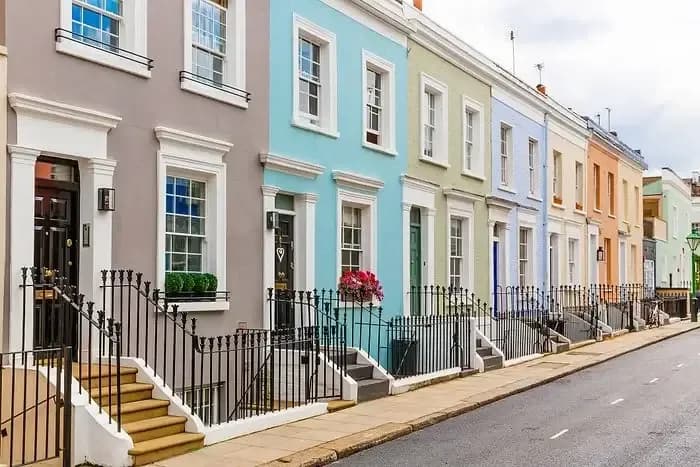
A townhome (or townhouse) is a multi-floor home that shares one or more walls with the units next to it, but sits on its own individual lot. That last part is the piece most people miss, and it’s the piece that matters most.
When you buy a townhome, you typically own:
- The interior — everything inside your walls, same as any home
- The structure — your roof, your exterior walls, your foundation (though the HOA may maintain them)
- The land underneath — the actual lot your unit sits on
- Your outdoor space — a small yard, patio, or courtyard, if the unit has one
Townhomes are usually two or three stories, often with an attached garage on the ground floor. Rows of them are called “runs” or “blocks,” and end units — the ones with only one shared wall — tend to sell at a premium for the extra windows and privacy.
One important note: “townhome” describes the architecture, not the ownership structure. Some properties that look exactly like townhomes are legally structured as condos. We’ll get into why that distinction matters in the next section, because it changes what you own, what you owe, and how you finance it.
Townhome vs. Condo vs. Apartment vs. Single-Family Home
These four get used interchangeably in casual conversation, and they shouldn’t be. Here’s what actually separates them.
Townhome vs. Condo
This is the comparison that trips up the most buyers, because a townhome and a condo can look identical from the curb.
- What you own: With a townhome, you own the building and the land beneath it. With a condo, you own the airspace inside your unit — essentially from the drywall in. The land, the exterior, and the roof are jointly owned by all residents.
- Exterior maintenance: Townhome owners are often responsible for their own roof, siding, and windows (though many HOAs handle it). Condo associations almost always handle the entire exterior.
- HOA fees: Condo fees are typically higher because the association maintains more.
- Outdoor space: Townhomes frequently include a private yard or patio you own outright. Condos usually offer only a balcony, which may be classified as a limited common element rather than your property.
- Layout: Townhomes are vertical — multiple floors, one household. Condos are usually single-level units stacked in a larger building.
- Financing: Townhomes are generally easier to finance. Condos require the entire complex to meet lender approval standards, which can complicate or kill a loan.
The practical takeaway: before you make an offer, ask your agent to confirm the legal ownership structure on the deed. A “condo townhome” is a real and common thing, and it follows condo rules, not townhome rules.
Townhome vs. Apartment
The core difference is ownership, not architecture.
- Ownership: Apartments are rented from a landlord or management company. Townhomes are purchased and owned — though rental townhomes do exist.
- Equity: Rent builds nothing. Mortgage payments build equity over time.
- Customization: Apartment renters generally can’t renovate. Townhome owners can remodel interiors freely, subject to HOA rules on anything exterior-facing.
- Cost predictability: Rent can rise at every lease renewal. A fixed-rate mortgage payment stays put, though taxes, insurance, and HOA dues can still climb.
- Space: Townhomes are typically larger, commonly 1,200 to 2,000 square feet across multiple floors, versus 700 to 1,100 for a comparable apartment.
- Responsibility: Apartment maintenance is a phone call. Townhome maintenance is your problem and your bill.
Townhome vs. Single-Family Home
- Price: Townhomes generally cost meaningfully less than detached homes in the same area — often the difference between buying in a neighborhood and being priced out of it.
- Land: Detached homes come with a real yard. Townhomes come with a small one, or none.
- Privacy: Shared walls mean shared sound. A detached home has none of that.
- Maintenance: Townhome HOAs often handle lawn care, snow removal, and exterior upkeep. Detached homeowners handle everything themselves.
- Rules: Most townhome communities have an HOA with enforceable restrictions. Many detached neighborhoods don’t.
- Storage: Detached homes usually offer attics, basements, sheds, and full garages. Townhomes rarely offer more than one of those.
The Pros of Buying a Townhome
1. A Lower Price of Entry Into Homeownership
This is the headline advantage. Townhomes consistently price below detached homes in the same neighborhood because they sit on smaller lots and share construction costs across units. For first-time buyers in expensive metros, a townhome is frequently the only path to owning anything at all in a location they actually want to live in.
2. You Build Equity Instead of Paying Rent
Every mortgage payment chips away at principal. After a few years, that adds up to real money you can borrow against or cash out when you sell. Renting the equivalent space for the same period leaves you with nothing but receipts.
3. Dramatically Less Exterior Maintenance
Most townhome HOAs handle lawn mowing, landscaping, snow removal, and often roof and siding upkeep. If you travel often, work long hours, or simply have zero interest in owning a lawnmower, this is worth real money in time saved — and it’s a genuine quality-of-life upgrade over a detached home.
4. Access to Shared Amenities
Townhome communities often include facilities that would be unaffordable to own individually: pools, fitness centers, clubhouses, playgrounds, dog parks, walking trails. You’re splitting the cost across every household in the development.
5. Better Locations Than Comparable Detached Homes
Because townhomes use land efficiently, developers build them closer to city centers, transit lines, and commercial districts. A townhome frequently buys you a shorter commute and walkable amenities that a same-priced detached home simply can’t.
6. More Space Than an Apartment or Condo
Multiple floors mean genuine separation between living and sleeping areas. Many townhomes include an attached garage, a powder room on the main level, and a finished basement or bonus room — features you almost never get in a single-level condo at the same price.
7. Built-In Community
Shared walls and shared spaces mean you actually meet your neighbors. For people relocating to a new city, buying alone, or raising young kids, that built-in social layer is a real benefit rather than a marketing line.
8. Improved Energy Efficiency
Shared walls mean fewer exterior surfaces losing heat in winter and gaining it in summer. Interior units in particular tend to show noticeably lower utility bills than comparably sized detached homes.
9. Stronger Security Profile
Close neighbors, shared entryways, and in many cases gated access or on-site security make townhome communities a harder target than isolated detached homes. Units that sit empty during workdays benefit especially.
The Cons of Buying a Townhome
1. HOA Fees Never Stop
You will pay HOA dues every month for as long as you own the property — including after your mortgage is fully paid off. Fees also tend to rise over time, and they aren’t optional. Unpaid dues can result in a lien against your home.
2. HOA Rules Limit What You Can Do
Associations commonly restrict exterior paint colors, landscaping choices, fence installation, satellite dishes, holiday decorations, visible storage, parking, pet size or breed, and whether you can rent the unit out. Some restrictions are reasonable. Some are maddening. Read the covenants before you buy, not after.
3. Shared Walls Mean Shared Noise
Construction quality varies enormously. In a well-built townhome, you’ll rarely hear a neighbor. In a poorly built one, you’ll hear conversations, televisions, footsteps, and dogs. This is the single most common regret among townhome buyers — and the hardest thing to assess during a 20-minute showing.
4. Little or No Yard
Outdoor space is usually a small patio or a strip of grass. If you garden seriously, own large dogs, want a play structure, or host outdoors, a townhome will feel constrained fast.
5. Limited Storage Space
This one catches nearly everyone off guard. Townhomes are built vertically on small footprints, which means they rarely include full basements, walk-up attics, or backyard sheds. The garage — if there is one — often becomes the default storage room, until it’s full and the car ends up in the driveway. HOA rules frequently prohibit visible outdoor storage, so a deck box or a shed usually isn’t an option.
6. Slower Appreciation Than Detached Homes
Townhomes historically appreciate more slowly than single-family homes in the same market, largely because land drives appreciation and townhomes come with less of it. They also tend to soften faster in a downturn, since buyers with flexibility often prefer detached properties.
7. Your Neighbors’ Decisions Affect Your Home
In a community with shared structural elements, a neighbor’s deferred maintenance, water leak, or pest problem can become yours. If the HOA is poorly managed or underfunded, a major repair can trigger a special assessment — a lump-sum bill split among owners that can run into the thousands.
8. Harder to Resell in Some Markets
Townhomes appeal to a narrower pool of buyers than detached homes. In markets with heavy townhome inventory, you may be competing against a dozen near-identical units, which puts pressure on your asking price.
9. Parking Can Be Genuinely Limited
Many communities allocate one or two spots per unit with tightly controlled guest parking. If your household has three drivers, or you entertain often, confirm the parking rules early — this is a frequent source of ongoing friction.
Understanding HOA Fees and What They Actually Cover
HOA dues are the most misunderstood line item in a townhome purchase. They’re not a scam and they’re not free money — they’re a bundled service fee, and whether they represent good value depends entirely on what’s included.
Commonly covered:
- Landscaping and lawn maintenance for common areas
- Snow and ice removal on shared walkways and roads
- Exterior building maintenance, sometimes including roofs and siding
- Amenity upkeep — pool, gym, clubhouse, trails
- Master insurance policy on common structures
- Trash and recycling collection
- Reserve fund contributions for future major repairs
Commonly not covered:
- Anything inside your unit
- Your personal homeowners insurance (an HO-6 policy is typically required)
- Utilities, in most communities
- Your own windows, doors, and in many cases your roof
- Special assessments for large unplanned projects
Before closing, request the association’s financial statements and reserve study. A healthy reserve fund is the single best predictor of whether you’ll get hit with a surprise assessment. An association with minimal reserves and an aging roof across the community is a warning sign worth taking seriously.
Is a Townhome a Good Investment?
Usually yes — with realistic expectations.
The case in favor:
- You build equity rather than paying someone else’s mortgage
- Lower entry price means you start building that equity sooner
- Mortgage interest and property taxes may be deductible, depending on your situation
- Strong rental demand in most markets if you later move and keep the unit
- Fixed-rate financing protects you from rising housing costs
The case against:
- Appreciation typically trails detached homes in the same market
- HOA fees are a permanent carrying cost that reduces net return
- Special assessments can arrive without warning
- Some HOAs cap or prohibit rentals, which limits your exit options
- High-inventory townhome markets can mean slow, competitive resales
The honest summary: a townhome is usually a better financial outcome than renting and a somewhat weaker one than a comparable detached home — but a townhome you can actually afford in a location you want beats a detached home you can’t afford in a location you don’t.
Who Should Buy a Townhome?
First-time buyers. The lower price point and reduced maintenance load make a townhome a realistic entry into ownership without a punishing learning curve.
Young professionals and couples. Proximity to work, walkable amenities, and a lock-and-leave lifestyle suit people whose schedules don’t accommodate yard work.
Empty nesters downsizing. Less square footage to clean, no lawn to maintain, and often a main-floor primary bedroom option — with enough room to host visiting family.
Small families. Multiple bedrooms across separated floors, community playgrounds, and access to good school districts at a price detached homes in the same zone can’t match.
Relocating buyers. A townhome community is a much softer landing in a new city than an isolated house on an unfamiliar street.
Buyers who travel frequently. Shared walls, neighbor visibility, and HOA-managed exteriors mean an empty townhome takes care of itself far better than an empty detached house.
Who Might Want to Look Elsewhere
Anyone who values quiet above all. If noise sensitivity is a real factor for you, shared walls are a daily compromise. An end unit helps. A detached home helps more.
Serious gardeners and outdoor entertainers. A patio is not a yard, and HOA landscaping rules will constrain what you can plant.
People with large or multiple pets. Breed and weight restrictions are common, and limited outdoor space makes daily life harder for big dogs.
Hobbyists who need space. Woodworking, auto restoration, home gyms, band practice, large collections — townhome garages and basements rarely accommodate these, and neighbors are close enough to notice.
Buyers who bristle at rules. If the idea of needing written approval to change your front door color sounds intolerable, an HOA community will wear on you.
Anyone with a lot of stuff. This deserves its own section, and it gets one below.
Financing a Townhome: What to Know
Financing a true townhome works much like financing a single-family home, which is one of its quiet advantages over a condo.
- Loan types: Conventional, FHA, VA, and USDA loans are all generally available for townhomes that are legally structured as fee-simple properties.
- Down payment: Conventional loans can start as low as 3% for qualified first-time buyers; FHA loans start around 3.5%; VA loans may require nothing down for eligible borrowers.
- HOA fees count against you. Lenders include monthly HOA dues in your debt-to-income calculation, which directly reduces how much home you qualify for. A $300 monthly fee can meaningfully shrink your budget.
- Condo-structured townhomes are harder. If the property is legally a condo, the entire association must meet lender requirements — owner-occupancy ratios, reserve levels, litigation history, and insurance adequacy. Some complexes simply aren’t warrantable, which limits your loan options.
- Insurance is layered. You’ll typically need your own policy covering the interior and your belongings, sitting alongside the HOA’s master policy on the structure and common areas. Confirm exactly where one ends and the other begins.
Get pre-approved before you shop, and tell your lender upfront that you’re looking at townhomes so HOA dues are built into your number from the start.
Questions to Ask Before You Buy
Run through this list before you make an offer. The answers will tell you far more than a listing photo will.
- Is this property legally a townhome or a condo? What does the deed say?
- What are the monthly HOA dues, and how much have they increased over the past five years?
- What exactly do the dues cover — and what do they specifically exclude?
- How much is in the reserve fund, and when was the last reserve study completed?
- Have there been special assessments recently? Are any anticipated?
- Who is responsible for the roof, siding, windows, and foundation — me or the association?
- Are there rental restrictions or caps on investor-owned units?
- What are the pet restrictions?
- How many parking spaces come with the unit, and what are the guest parking rules?
- What’s the wall construction between units, and how well is it insulated for sound?
- Is the association currently involved in any litigation?
- How much storage does the unit actually have — garage, closets, attic access, basement?
On that last question: measure it. Walk through with a rough inventory of what you own and be honest about whether it fits. It’s far easier to plan for the gap before you move than to discover it while standing in a driveway surrounded by boxes.
Making the Most of Townhome Square Footage
Townhomes are efficient by design, which is another way of saying there’s not much slack in them. The square footage on the listing is largely usable living space — there’s rarely a basement absorbing overflow or an attic swallowing holiday decorations.
A few strategies that genuinely help:
- Go vertical. Townhome ceilings are often nine feet or higher. Floor-to-ceiling shelving in closets, garages, and utility areas captures space most people ignore.
- Use the stairwell. Under-stair space is frequently wasted. Built-in drawers or a closet conversion turns dead volume into real storage.
- Choose furniture that stores. Storage ottomans, bed frames with drawers, lift-top coffee tables, and benches with interior compartments all pull double duty.
- Protect the garage. Once a garage becomes a storage room, it stops being a garage. Wall-mounted systems and overhead racks keep the floor clear for the thing the garage was built for.
- Rotate seasonally. Only a fraction of what you own is in use at any given time. Keeping the current season accessible and the rest out of the way makes a small home feel considerably larger.
That last point is where most townhome owners eventually run into the wall. Seasonal decorations, camping and sports gear, off-season clothing, tools, inherited furniture, kids’ outgrown equipment, business inventory — none of it needs to be in the house, but all of it needs to be somewhere. And with HOA rules typically prohibiting sheds, deck boxes, and visible outdoor storage, a townhome offers nowhere to put it.
A storage unit solves this cleanly. For most townhome owners, a 10x10 handles seasonal items, extra furniture, and recreational gear with room to spare, while a 5x10 covers the essentials for a smaller household. It keeps the garage functional, keeps the closets breathable, and keeps you compliant with the HOA — usually for less than the cost of upgrading to a larger unit with an extra bedroom you’d only use for boxes.
It’s also worth considering during the move itself. Buying a townhome frequently involves a gap between closing and moving, or a period of overlap where you need furniture out of the way for painting and flooring. Short-term storage removes that pressure entirely.
Ready to Make Your Townhome Work Harder?
A townhome can be an excellent buy — lower cost, better location, less upkeep, real equity. The trade-off is space, and specifically storage space. The good news is that it’s the easiest of the trade-offs to solve.
Whether you’re bridging a gap between closing dates, clearing the house for renovations, or simply reclaiming a garage that’s stopped fitting a car, 10 Federal Storage offers clean, secure, contactless-access units in a full range of sizes — with month-to-month terms and no long-term commitment.
Find a storage unit near your new townhome and get more out of every square foot.
Frequently Asked Questions
Financially, usually yes, if you plan to stay at least three to five years. Mortgage payments build equity while rent doesn’t, and a fixed-rate loan protects you from rising housing costs. If you expect to relocate within a year or two, the transaction costs of buying and selling can outweigh the benefit.
Yes, though typically at a slower rate than detached single-family homes in the same market. Land is the primary driver of appreciation, and townhomes come with less of it. Location, community condition, and HOA management quality all influence how well a specific townhome holds value.
No. HOA dues are a legal obligation attached to the property, not an optional service. Nonpayment can lead to late fees, a lien against your home, and in extreme cases foreclosure. Some townhome communities have no HOA at all, but they’re uncommon — and in those, all exterior maintenance falls to you.
It depends entirely on construction quality. Modern townhomes built with staggered-stud walls, double drywall, and proper insulation can be remarkably quiet. Older or budget construction may not be. Visit at different times of day — a weekday evening and a weekend afternoon — before deciding.
Largely regional terminology. Rowhouses are typically older, urban, and uniformly built in continuous rows, often without an HOA. Townhomes usually refer to newer developments with shared amenities and an association. Structurally they’re very similar.
Less than most buyers expect. Standard bedroom and hall closets, sometimes a pantry, and a one- or two-car garage if you’re fortunate. Full basements and walk-up attics are uncommon, and HOA rules generally prohibit outdoor sheds. Plan for this before you move rather than after.
Often, but not always. Many HOAs cap the percentage of units that can be rented at one time, and some require a minimum ownership period before renting is permitted. If keeping the property as a rental is part of your plan, verify the rules before you buy.
For many buyers, yes. End units have one shared wall instead of two, which means less transmitted noise, more windows and natural light, and often a slightly larger lot. They also tend to resell more easily. Whether the premium is worth it depends on how much noise and light matter to you.
About the Author
10 Federal Storage
Our team at 10 Federal Storage has been in the self storage industry for decades. With knowledge gained from multiple universities and in the field, we are well-prepared and excited to assist with your storage needs. When you rent a unit with us, you can feel confident that our seasoned customer service team’s help will make your transition as seamless as possible. Customer satisfaction is our number one priority, and we strive to make your experience exceptional with our automated leasing options, diverse unit sizes, and a strong commitment to sustainability.