.svg)
Storage Units vs. Storage Lockers: What’s the Difference (and Which One Do You Actually Need)?
by 10 Federal Storage
Published on May 11, 2026
If you’ve ever searched for self storage and found yourself comparing a 10x10 unit to a 4x5 locker, you’ve probably wondered the same thing most renters do: what’s actually the difference, and which one am I supposed to pick? The short answer is that storage units and storage lockers do the same job, they keep your stuff safely out of your house, but they’re sized, priced, and accessed in very different ways.
This guide breaks down exactly what each option is, how they compare side by side, what fits inside, and how to decide which one matches your situation and budget.
Table of Contents
- Storage Units vs. Storage Lockers at a Glance
- What Is a Storage Unit?
- What Is a Storage Locker?
- 7 Key Differences Between Storage Units and Storage Lockers
- What to Store in a Storage Unit
- What to Store in a Storage Locker
- How to Decide: A 5-Question Checklist
- Frequently Asked Questions
Storage Units vs. Storage Lockers at a Glance
Before we dig into the details, here’s a quick side-by-side. If you only have 30 seconds, this is the takeaway.
- Typical Size
- Storage Unit: 25 to 300+ sq ft (5x5 up to 10x30)
- Storage Locker: Under 25 sq ft (often 2x2 to 4x5)
- Ceiling Height
- Storage Unit: 8 ft or taller
- Storage Locker: Often reduced (4–6 ft); may be stacked
- Typical Monthly Cost
- Storage Unit: $50–$300+ depending on size and amenities
- Storage Locker: $20–$75 in most markets
- Access
- Storage Unit: Walk-in or drive-up; some 24/7
- Storage Locker: Walk-up only; may require a step stool or rolling stairs
- Climate Control
- Storage Unit: Widely available
- Storage Locker: Sometimes, depends on facility
- Best For
- Storage Unit: Furniture, appliances, vehicles, business inventory, whole-home storage
- Storage Locker: Boxes, documents, seasonal gear, small valuables, college overflow
- Availability
- Storage Unit: Available at most facilities nationwide
- Storage Locker: More common in dense urban facilities
Prices vary by region, facility, and current demand. Use these ranges as a starting point, then check live availability at facilities near you.
What Is a Storage Unit?
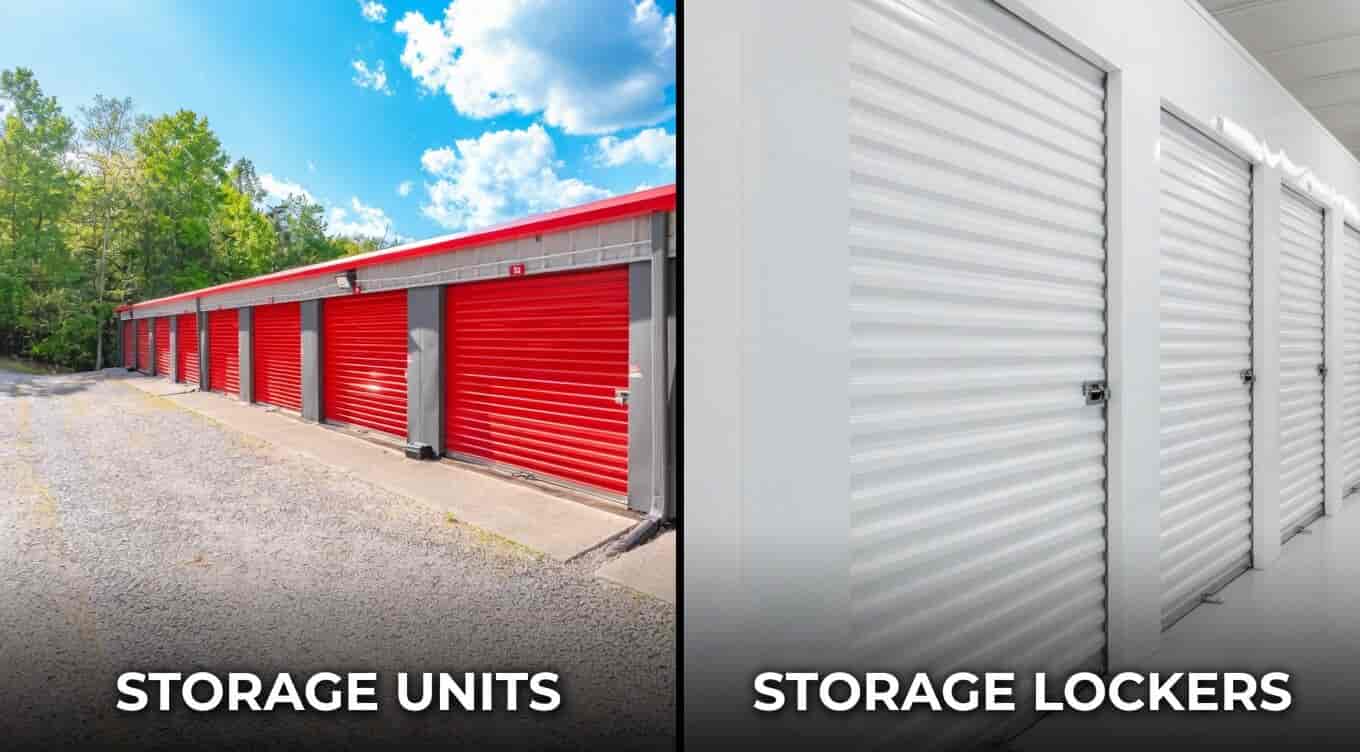
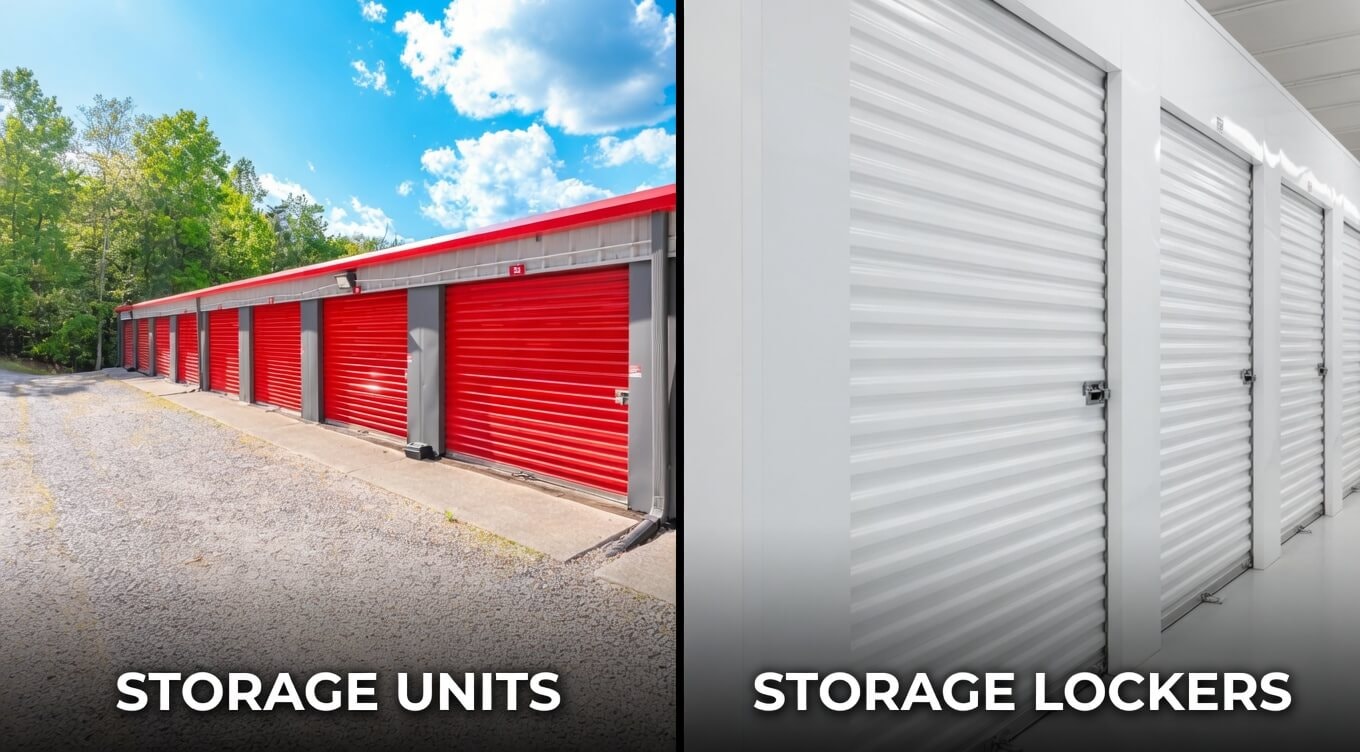
A storage unit is a fully enclosed, lockable space that you rent on a month-to-month basis to store personal or business belongings. Think of it as a private mini-room inside (or attached to) a self storage facility. Storage units typically have standard ceiling heights of around 8 feet, are large enough to walk inside, and are accessed through a roll-up or swing door secured by your own lock.
Storage units are the workhorse of the self storage industry. The vast majority of what people think of as “self storage” refers to a storage unit.
Common Storage Unit Sizes (and What Actually Fits)
Sizes vary by facility, but most operators offer a similar lineup. Here’s a realistic look at what each size holds:
- 5x5 (25 sq ft), Comparable to a small walk-in closet. Holds about 10–15 boxes, plus a chair or small dresser. Good for seasonal items, documents, or dorm overflow.
- 5x10 (50 sq ft), Roughly the size of a large closet. Fits the contents of a small studio: a queen mattress set, dresser, boxes, and a few small items.
- 10x10 (100 sq ft), The most popular size. Holds the contents of a one- to two-bedroom apartment, including furniture, appliances, and around 20–30 boxes.
- 10x15 (150 sq ft), Fits a two- to three-bedroom home, including larger items like a sectional sofa, dining set, and major appliances.
- 10x20 (200 sq ft), Roughly a one-car garage. Holds a three- to four-bedroom home or a vehicle plus household items.
- 10x30 (300 sq ft), The size of a two-car garage. Stores the contents of a four- to five-bedroom home, or a vehicle with significant overflow.
Common Storage Unit Features
- Drive-up access, Pull a vehicle right up to the door, ideal for heavy items, business inventory, or frequent visits.
- Climate control, Indoor units that maintain a stable temperature (and often humidity) range, protecting sensitive items like wood furniture, electronics, artwork, and documents.
- Indoor vs. outdoor, Indoor units sit inside a larger building; outdoor units function like a row of garages.
- 24-hour access, Many facilities offer extended or 24/7 gate access for tenants.
- Security features, Gated entry with keypad codes, surveillance cameras, individual unit alarms at some facilities, and well-lit aisles.
Pros of Storage Units
- Wide range of sizes, from a small closet up to garage-sized.
- Drive-up access is widely available, saving time and your back.
- Climate-controlled options protect sensitive belongings year-round.
- Can fit furniture, appliances, and even vehicles in larger sizes.
- Available at virtually every self storage facility, so it’s easy to find one nearby.
Cons of Storage Units
- More expensive than lockers, especially with premium amenities.
- Larger units can become disorganized fast if you don’t pack strategically.
- You may pay for space you don’t fully use if your needs are small.
What Is a Storage Locker?
A storage locker is a smaller enclosed storage space, usually 25 square feet or less, designed for renters who don’t need a full walk-in unit. Lockers are typically too short to walk into, often have a reduced ceiling height, and are sometimes stacked two-high inside a facility (accessed with a built-in step or rolling stairs).
Think of a storage locker as the self storage equivalent of a deep cabinet or pantry. It’s purpose-built for a few boxes, a piece of luggage, or a small stack of seasonal items, not your couch.
Common Storage Locker Sizes
- 2x2 or 3x3 (4–9 sq ft), Small “mini lockers” for documents, a few totes, or a single piece of luggage.
- 3x4 or 4x4 (12–16 sq ft), Fits roughly 8–12 medium boxes plus a few small items.
- 4x5 (20 sq ft), The largest locker size at most facilities. Holds the contents of a small closet or a college dorm.
Sizes above this generally graduate into “small storage unit” territory (5x5 and up).
Common Storage Locker Features
- Indoor location, Lockers are almost always inside a climate-controlled or temperature-regulated building.
- Stackable design, To use space efficiently, lockers are often arranged in two tiers. Upper lockers may need a step stool or rolling stairs.
- Lower price point, Because they take up less square footage, lockers cost significantly less than full units.
- Easier organization, Less space means less room for clutter to hide.
Pros of Storage Lockers
- The most affordable form of self storage.
- Small footprint encourages tight, organized packing.
- Indoor location means your items are usually protected from temperature swings and weather.
- Ideal for apartment dwellers, students, and minimalists.
Cons of Storage Lockers
- Limited size options, you can’t scale up much without switching to a unit.
- Reduced ceiling height makes them unsuitable for tall items, furniture, or anything bulky.
- Upper-tier lockers can be physically awkward to load, especially with heavy boxes.
- Not every facility offers them, they’re more common in urban and high-density markets.
- Drive-up access generally isn’t available.
7 Key Differences Between Storage Units and Storage Lockers
The table above gave you the snapshot. Here’s a closer look at the seven differences that matter most when you’re choosing.
1. Size and Square Footage
This is the headline difference. Storage units start around 25 square feet and scale up to 300 or more. Storage lockers cap out at around 20–25 square feet and typically have shorter ceilings. If you need to store anything larger than a few boxes and a piece of luggage, you’re almost certainly in unit territory.
2. Cost
Lockers are the cheapest form of self storage by a wide margin. In most markets, a small locker runs $20–$50 per month, while a comparable small unit (5x5) might be $40–$80. Larger units climb from there. The general rule: pay for the smallest space that fits everything plus a reasonable amount of breathing room, not so much that you end up with empty real estate, but enough to actually retrieve items without unpacking the whole space.
3. Access Style
Storage units let you walk inside, hang shelving on a wall, or even back a truck up to a drive-up door. Lockers are accessed from outside the space, you reach in, you don’t go in. Upper-tier lockers may require a rolling stair, which makes them less convenient for frequent trips or heavy items.
4. Ceiling Height and Vertical Storage
Storage units typically have 8-foot ceilings, which means you can stack boxes vertically and store tall items like floor lamps, ladders, or freestanding shelving. Lockers often have reduced height (4–6 feet is common), which puts a hard ceiling, literally, on what you can fit.
5. Climate Control
Most lockers live inside a climate-controlled building by default. Storage units are split: outdoor and drive-up units are exposed to ambient temperatures, while indoor and climate-controlled units offer the same protection as a locker. If you’re storing anything temperature-sensitive (electronics, wood furniture, vinyl records, photos, important documents), make sure the unit you choose specifies climate control.
6. Security
Both options live inside a secured facility, gated entry, surveillance, individual locks. Some renters find lockers feel a bit more secure because they’re tucked inside a building, but in practice, security depends far more on the facility itself than on the unit type. Look for keypad entry, cameras, well-lit common areas, and a manager who keeps a regular presence on-site.
7. Availability
Storage units are everywhere, you’ll find them at virtually every self storage facility in the country. Lockers are more selective. They’re most common at urban facilities where space is at a premium and demand for small storage is high. If you live in a smaller city or suburb, you may need to call around or look at the smallest available unit (often a 5x5) as a locker alternative.
What to Store in a Storage Unit
Storage units are the right call when you have volume, bulk, or both. They’re built for life’s bigger transitions and the items that come with them. Common things to store in a unit include:
Household and Furniture
- Sofas, sectionals, recliners, and dining sets
- Mattresses and bed frames
- Dressers, armoires, and bookshelves
- Major appliances (refrigerators, washers, dryers)
- Whole-home contents during a move or remodel
Vehicles and Recreation
- Cars, motorcycles, and ATVs (in larger units)
- Boats and personal watercraft
- RVs, campers, and trailers (typically in outdoor or oversized units)
- Bikes, kayaks, paddleboards, and skis
- Grills, patio furniture, and tailgating gear
Business and Inventory
- Product inventory for e-commerce sellers
- Trade tools, ladders, and contractor equipment
- Office furniture during a move or renovation
- Event supplies, trade show booths, and seasonal displays
- Bulk filing or archived records
Life Transitions
- Moving between homes or staging a home for sale
- Downsizing to a smaller space
- Deployment, sabbatical, or living abroad
- Inheriting a household full of items you don’t have room for yet
What to Store in a Storage Locker
Storage lockers shine when you have a small, specific overflow problem. They’re the right tool when you want self storage without the price tag (or square footage) of a full unit.
Documents and Records
- Personal records (tax returns, wills, deeds)
- Business files and archived paperwork
- School transcripts and academic records
- Memorabilia, photo albums, and yearbooks
Seasonal and Holiday Items
- Christmas trees, ornaments, and string lights
- Halloween costumes and decorations
- Off-season clothing, coats, and boots
- Beach gear, camping supplies, and pool toys
Small Valuables and Hobby Gear
- Collectibles (cards, coins, action figures)
- Smaller musical instruments and gear
- Photography equipment
- Small tools, fishing tackle, and hobby supplies
Small-Space Living Overflow
- Apartment overflow when closet space runs out
- College dorm essentials between semesters
- Tiny home, van life, or RV living overflow
- Wedding gifts and inherited items you’re not ready to part with
How to Decide: A 5-Question Checklist
Still on the fence? Walk through these five questions. Your answers will point you to the right choice almost every time.
- What’s the largest single item you’re storing?
If it’s bigger than a large suitcase or two stacked totes, you need a unit. If everything fits in a few boxes, a locker likely works. - How often will you need to access it?
Weekly trips with bulky gear? A drive-up unit is worth the upgrade. A few visits a year for documents or seasonal items? A locker is plenty. - Are any of your items temperature- or humidity-sensitive?
Wood furniture, electronics, vinyl, photos, leather, and important papers all benefit from climate control. Both lockers and climate-controlled units cover this; outdoor drive-up units don’t. - What’s your budget, and your timeline?
If you’ll be storing for years, the cost difference between a locker and a small unit compounds. Pick the smallest space that genuinely fits your stuff. - Will you be lifting heavy items in and out?
Upper-tier lockers are awkward for heavy boxes. If you’re storing anything weighty, a ground-floor locker or a small unit is the smarter pick.
The general rule of thumb: If a few boxes and totes will cover it, start with a locker. If you can’t imagine getting everything in without stacking it to the ceiling, step up to a 5x5 or 5x10 unit. When in doubt, sizing slightly up costs less than the hassle of upgrading mid-rental.
Find the Right Storage Space Near You
Whether you need a locker for a few boxes of holiday decorations or a 10x20 unit for a whole-home move, the right space is the one that fits your stuff, your budget, and the way you’ll actually use it. With 10 Federal Storage locations across the country, you can browse available sizes, check pricing, and reserve online to lock in current rates, no paperwork, no long lines, and month-to-month leases for full flexibility.
Find a 10 Federal Storage location near you and reserve your unit or locker online today.
Frequently Asked Questions
In most markets, a storage locker runs $20–$75 per month, while the smallest storage unit (a 5x5) starts around $40–$80 and scales up from there. A 10x10 unit, the most popular size, typically falls in the $100–$200 range. Prices vary widely by city, facility, season, and amenities like climate control.
Generally, no. Most lockers have reduced ceiling height and a footprint too small for furniture. A chair or small nightstand might fit in a 4x5 locker, but a couch, bed, dresser, or dining set requires a storage unit.
Often, yes, because lockers are almost always located inside a building, they typically share that building’s climate control. That said, it’s not universal. Always confirm with the specific facility before storing anything sensitive.
School and gym lockers are tall, narrow metal cabinets meant for short-term use of personal items during the day. A self storage locker is a fully enclosed, lockable storage space inside a secured facility, rented monthly and used to store boxes, totes, documents, and small belongings long-term.
It depends on the facility, not on whether you rent a locker versus a unit. Some facilities offer 24-hour gate access; others have set hours. If round-the-clock access matters to you, ask before signing the lease.
No. Lockers are more common in dense, urban facilities where space is at a premium and demand for small storage is high. In suburban and rural markets, you may need to opt for the smallest available unit (often a 5x5) instead.
Yes, most facilities allow you to add an authorized user to your account so multiple people can access the same space. Just make sure both names are on the rental agreement so there’s no friction down the road.
Most facilities require some form of coverage on stored items. Your homeowner’s or renter’s insurance may already include off-premises personal property coverage; if not, the facility usually offers an affordable tenant protection plan at sign-up.
About the Author
10 Federal Storage
Our team at 10 Federal Storage has been in the self storage industry for decades. With knowledge gained from multiple universities and in the field, we are well-prepared and excited to assist with your storage needs. When you rent a unit with us, you can feel confident that our seasoned customer service team’s help will make your transition as seamless as possible. Customer satisfaction is our number one priority, and we strive to make your experience exceptional with our automated leasing options, diverse unit sizes, and a strong commitment to sustainability.