
The Complete Guide to Moving to Seattle, Washington
by 10 Federal Storage
Published on March 16, 2026
Seattle, Washington is one of America's most dynamic, spectacular, and sought-after cities, a place where tech giants and independent coffee shops coexist, where world-class mountains and pristine saltwater sound bracket the skyline, and where an unmatched spirit of innovation, outdoor adventure, and culinary creativity draws ambitious people from around the world. Home to roughly 780,000 residents within city limits and more than 4 million in the greater Puget Sound metro area, Seattle serves as the economic engine of the Pacific Northwest and one of the nation's premier technology and aerospace hubs. With Amazon, Microsoft, Boeing, Starbucks, Costco, and countless other Fortune 500 companies headquartered here or nearby, the Emerald City offers career opportunities matched by few cities on earth.
This comprehensive moving guide will help you navigate every aspect of your relocation to Seattle, from understanding the city's notoriously competitive housing market and choosing the right neighborhood to setting up utilities, connecting with the region's outstanding healthcare system, and finding secure storage during your transition to Pacific Northwest life.
Quick Facts:
- Cost of living approximately 58% higher than the national average, with housing the dominant factor
- No state income tax in Washington, a significant financial benefit
- Home to Amazon, Boeing, Microsoft (Redmond), Starbucks, Costco, and 17 Fortune 500 companies
- Seattle City Light: one of the lowest electricity rates in the U.S. thanks to hydroelectric power
- World-class outdoor recreation: Cascade Mountains, Olympic Peninsula, Puget Sound, and over 400 parks
- Nationally acclaimed food scene with a focus on fresh Pacific seafood and Pacific Northwest ingredients
- Famously overcast and rainy from October through April; warm and sunny from June through September
- Population: approximately 780,000 (city); 4+ million (metro area)
Table of Contents
- Why Seattle?
- Neighborhoods and Communities
- Cost of Living
- Housing Market
- Schools and Education
- Employment and Economy
- Transportation
- Self Storage
- Utilities and Services
- Healthcare
- Recreation and Entertainment
- Moving Checklist
1. WHY CHOOSE SEATTLE?
A World-Class Career Hub
If career advancement is a primary driver of your move, few cities in America can compete with Seattle. The region is home to two of the world's five most valuable technology companies in Amazon and Microsoft, plus Boeing, one of the world's largest aerospace manufacturers, along with a dense ecosystem of innovative companies, startups, and Fortune 500 headquarters. The tech sector alone employs over 23,000 workers in the Seattle metro, and compensation reflects it: software engineers in Seattle average over $145,000 annually, and the absence of Washington State's income tax means every dollar of that goes further than comparable salaries in California or New York. The region's economy generates a GRP of over $560 billion, representing over 70% of Washington State's total economic output. Whether you're in technology, healthcare, aerospace, retail, maritime, or the creative economy, Seattle offers career trajectories and compensation levels that are difficult to match outside of a handful of major metros.
No State Income Tax, A Powerful Financial Advantage
Washington is one of nine states in the U.S. with no state income tax, and this single fact significantly changes the financial calculus of living here despite the high cost of housing. For a tech worker earning $150,000, the absence of a state income tax can represent $8,000–$12,000 in annual savings compared to living in California, Oregon, or other income-taxing states. Combined with Seattle's relatively low utility costs (thanks to hydroelectric power), this financial benefit partially offsets the higher housing costs that characterize the market.
Spectacular Natural Beauty and Outdoor Recreation
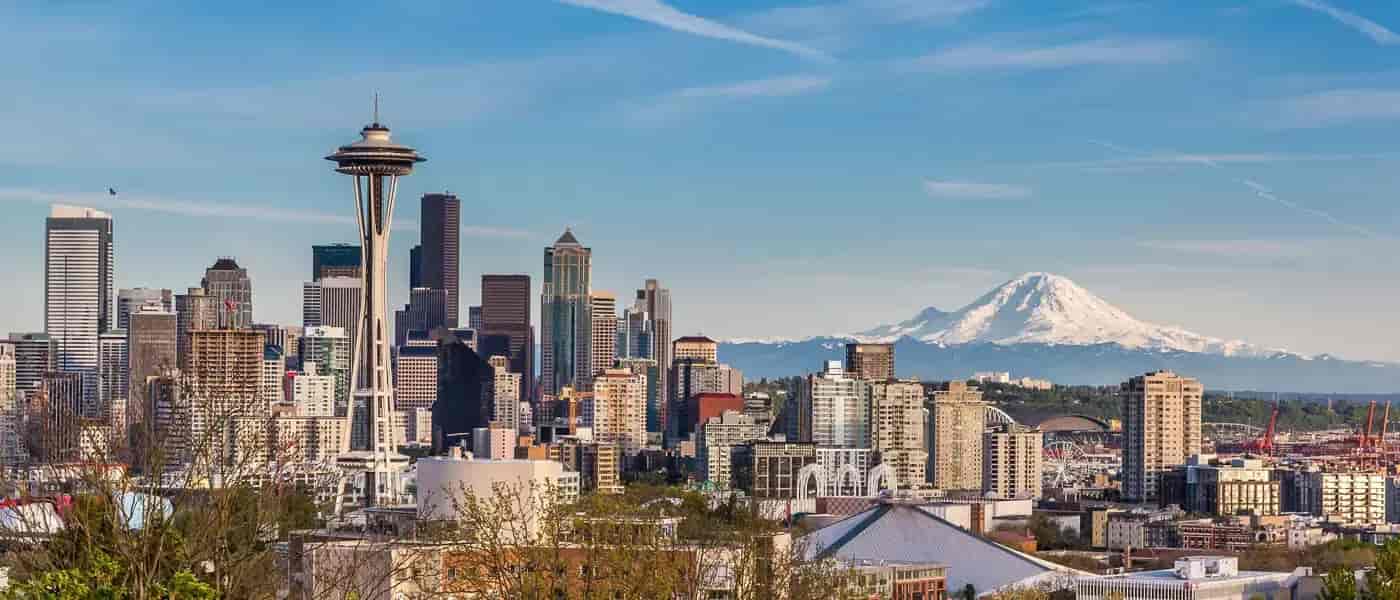
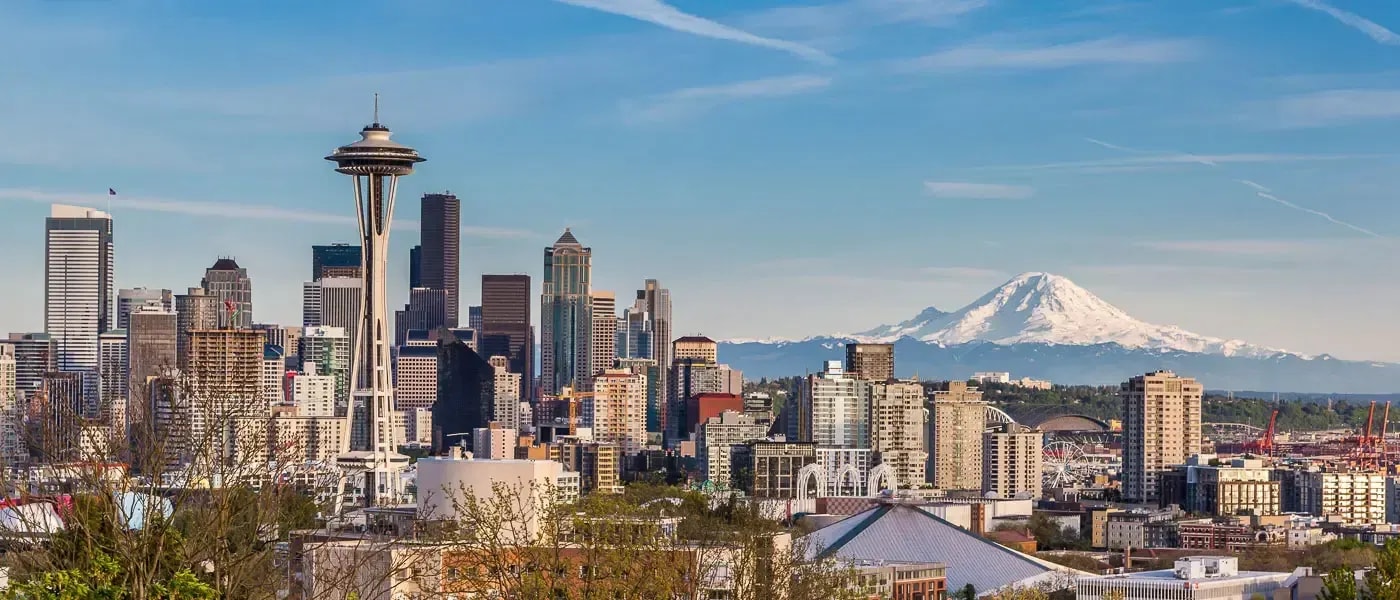
Seattle's setting is simply extraordinary. The city is ringed by water and mountains, Puget Sound lies to the west, Lake Washington to the east, the Cascade Mountains define the eastern horizon, and on clear days, the massive volcanic cone of Mount Rainier dominates the southeastern skyline. This geography translates into an outdoor lifestyle that is the envy of every other American city:
- Skiing and snowboarding at world-class resorts (Crystal Mountain, Stevens Pass, Snoqualmie Pass) within 1–2 hours
- Hiking in Mount Rainier National Park, Olympic National Park, and North Cascades National Park, all within a 2–3 hour drive
- Kayaking, paddleboarding, and sailing on Puget Sound and Lake Union
- Mountain biking on hundreds of miles of trails in the Cascades
- Whale watching and marine wildlife viewing in Puget Sound and the San Juan Islands
- Camping and backpacking in some of America's most spectacular wilderness just hours from downtown
- Over 400 parks within Seattle city limits, including Discovery Park's 534 acres of bluffs, forest, and Puget Sound beaches
Nationally Acclaimed Food and Culture
Seattle punches significantly above its weight class in food, arts, and culture. Pike Place Market, open since 1907 and one of the nation's oldest continuously operating farmers markets, anchors a culinary culture that celebrates fresh Pacific seafood, local farms, and extraordinary culinary creativity. The city boasts dozens of James Beard Award winners and nominees, a thriving coffee culture (as the birthplace of Starbucks and home to countless beloved independent roasters), a craft beer scene, and diverse international cuisine reflecting the region's deep Pacific Rim connections. Culturally, Seattle offers world-class music (the city that gave the world Jimi Hendrix, Nirvana, and Pearl Jam still hosts vibrant live music), the Seattle Symphony, Seattle Opera, Pacific Northwest Ballet, and an internationally significant visual arts scene anchored by the Seattle Art Museum and Olympic Sculpture Park.
A City Built for Innovation
Seattle consistently ranks among the most highly educated cities in America, with 56% of residents holding at least a bachelor's degree. The University of Washington, which receives more federal research funding than any other public university in the country, drives a robust pipeline of innovation in biotech, medicine, computer science, and engineering. This culture of intellectual curiosity and innovation permeates the city's character and creates an environment that attracts and retains exceptional talent from around the world.
2. NEIGHBORHOODS AND COMMUNITIES IN SEATTLE
Seattle is a city of distinct, walkable neighborhoods, each with its own character, dining scene, and community identity. The city's terrain, built on hills between Puget Sound and Lake Washington, means views and topography vary dramatically from neighborhood to neighborhood.
Capitol Hill, Urban Energy and Cultural Heart
Capitol Hill is Seattle's most vibrant urban neighborhood and the beating heart of the city's nightlife, arts, and LGBTQ+ culture. The Pike/Pine corridor buzzes with bars, restaurants, coffee shops, and boutiques, while the adjacent streets are lined with beautiful early 20th-century apartment buildings, Victorian homes, and craftsman houses.
Capitol Hill Features:
- Seattle's premier nightlife and dining destination, hundreds of restaurants, bars, and clubs
- Dense walkability, one of Seattle's most car-optional neighborhoods
- Vibrant LGBTQ+ community with strong cultural identity
- Home to Volunteer Park, a landmark 1900s Olmsted park with panoramic city and mountain views
- Excellent Link Light Rail connectivity to downtown, the airport, and the Eastside
- Lively arts and music scene with small venues and galleries
- Mix of apartments, condos, and older single-family homes
- Popular with young professionals, artists, students, and longtime Seattle residents
Ballard, Maritime Heritage Meets Modern Living
Ballard, in northwestern Seattle, began as a Scandinavian fishing village and retains its maritime soul while evolving into one of Seattle's most popular neighborhoods for families and young professionals. Historic Ballard Avenue is lined with excellent restaurants, breweries, and boutiques, and Shilshole Bay provides access to Puget Sound.
Ballard Highlights:
- Highly walkable neighborhood core along Ballard Avenue NW and Market Street
- Exceptional restaurant and craft brewery scene (Reuben's Brews, Hale's Ales, and more)
- Hiram M. Chittenden Locks, fascinating working locks connecting Lake Union to Puget Sound
- Golden Gardens Park, popular Puget Sound beach park with mountain views and sunsets
- Ballard Farmers Market, one of Seattle's best year-round markets
- Mix of historic homes and new multi-family development
- Strong family demographic with excellent community schools nearby
- Burke-Gilman Trail access for cycling
Fremont, "The Center of the Universe"
Fremont's self-proclaimed title as "The Center of the Universe" reflects its irreverent, creative personality. This charming neighborhood on the north shore of Lake Union is beloved for its public art (including the famous Fremont Troll sculpture), independent restaurants, and quirky community events like the Summer Solstice Parade. It's one of Seattle's most beloved neighborhoods.
Fremont Features:
- Beloved public art including the iconic Fremont Troll under the Aurora Bridge
- Fremont Sunday Market, eclectic outdoor market with antiques, crafts, and food
- Excellent dining and drinking (Fremont Brewing is a neighborhood anchor)
- Beautiful waterfront along the north ship canal
- Strong cycling culture with Burke-Gilman Trail connectivity
- Community-oriented, creative atmosphere
- Mix of young professionals, families, and longtime residents
Queen Anne, Views and Classic Seattle Living
Queen Anne sits atop one of Seattle's highest hills, offering spectacular panoramic views of downtown, Lake Union, Puget Sound, and the Olympic Mountains. The neighborhood is divided into Upper and Lower Queen Anne, with the latter (also called Uptown) near Seattle Center and many of the city's cultural institutions.
Queen Anne Highlights:
- Sweeping views of the Seattle skyline, Lake Union, and Puget Sound from Kerry Park and Queen Anne Hill
- Proximity to Seattle Center, Space Needle, Museum of Pop Culture, and Seattle Opera
- Excellent schools and family-friendly streets in Upper Queen Anne
- Historic architecture with large craftsman and Tudor revival homes
- Queen Anne Avenue shops, cafes, and restaurants
- Relatively quieter residential feel despite central location
West Seattle, Waterfront Lifestyle and Neighborhood Charm
West Seattle, connected to the city via the West Seattle Bridge, offers a more relaxed, neighborhood-focused lifestyle with Alki Beach, Seattle's unofficial summer destination, as its crown jewel. The Junction serves as the neighborhood's commercial heart, with an excellent mix of local restaurants, shops, and services.
West Seattle Features:
- Alki Beach, 2.5 miles of sandy beach with views of downtown Seattle and the Olympics
- The Junction, walkable village commercial district
- More affordable than many in-city neighborhoods
- Strong community identity and active neighborhood culture
- Lincoln Park, beautiful forested park with Puget Sound shoreline access
- Families, long-time Seattleites, and value-conscious urban dwellers
South Lake Union, Tech Hub and Urban Core
South Lake Union has been transformed over the past 15 years from an industrial waterfront district into Seattle's most urban, dense neighborhood, home to Amazon's massive headquarters campus and thousands of tech workers. While newer and more corporate in character than other Seattle neighborhoods, it offers unmatched walkability and proximity to downtown amenities.
South Lake Union Features:
- Amazon's headquarters campus, The Spheres, HQ buildings, and thousands of employees
- Lake Union access for kayaking, paddleboarding, and seaplane flights
- Excellent dining and coffee options catering to tech workers
- Modern apartment towers with top amenities
- MOHAI (Museum of History and Industry) on the lake waterfront
- Short commute to Downtown and Capitol Hill
Bellevue, Premium Eastside Living
Bellevue, across Lake Washington from Seattle, has grown from a Seattle suburb into a major city in its own right, home to Microsoft (headquartered just north in Redmond), a booming downtown core, and some of the region's most prestigious neighborhoods and schools. Many tech workers choose to live in Bellevue or the broader Eastside to reduce their commutes.
Bellevue Highlights:
- Bellevue Downtown, rapidly developing urban core with luxury retail, dining, and high-rises
- Bellevue Square and The Bravern, premier regional shopping destinations
- Exceptionally top-rated schools in Bellevue School District
- Proximity to Microsoft and major Eastside tech employers
- Lower traffic congestion than Seattle proper
- Mercer Island, Kirkland, and Redmond also excellent Eastside options
Other Notable Seattle Neighborhoods and Suburbs
Beacon Hill, Affordable, diverse, with great transit access via Link Light Rail
Columbia City / Rainier Valley, Vibrant, diverse community with a growing dining scene and light rail access; more affordable than comparable neighborhoods
Green Lake / Wallingford, Family-friendly North Seattle neighborhoods surrounding the beloved Green Lake park with a 3-mile walking and running path
Northgate, More affordable housing with excellent Link Light Rail connectivity to downtown
Redmond, Home to Microsoft headquarters; excellent schools; lower cost than Seattle; ideal for technology industry workers
Kirkland, Beautiful waterfront on Lake Washington; charming downtown; A+-rated schools; popular with families
Sammamish, Top-rated schools; family-friendly; lower cost than Seattle; newer housing stock; growing community
Renton, South King County value option with Boeing presence; good transit access; growing restaurant scene
3. COST OF LIVING IN SEATTLE
Seattle's cost of living is approximately 58% above the national average, a figure that demands careful financial planning for anyone relocating from a more affordable market. Housing is by far the dominant cost driver, with home prices and rents well above national benchmarks. However, several factors partially offset this premium: Washington has no state income tax, Seattle City Light's electricity rates are among the lowest in the nation, and the region's high wages, particularly in the tech sector, provide strong purchasing power for those employed in the economy's leading industries.
Cost of Living Comparison (National Average = 100)
- Overall Cost of Living: 158 (approximately 58% above national average)
- Housing: 212 (112% above national average)
- Groceries: 111 (approximately 11% above national average)
- Utilities: 69 (approximately 31% below national average, a major savings)
- Transportation: 129 (approximately 29% above national average)
- Healthcare: approximately at national average
The No Income Tax Advantage
Washington's absence of a state income tax is one of the most financially significant aspects of living in Seattle, and it substantially improves the real cost comparison against high-income-tax states. For a household earning $150,000, the savings versus California (where state income taxes at this level run ~9%) amount to roughly $10,000–$13,000 per year. This single factor materially changes the true cost comparison for professionals relocating from states like California, New York, Massachusetts, or Oregon, and is a primary reason why Seattle continues to attract high-earning tech professionals from across the country.
Utility Costs, A Hidden Advantage
Seattle City Light, the city's publicly owned electric utility, draws approximately 90% of its power from hydroelectric sources, producing electricity that is both extremely low in carbon emissions and among the cheapest in any major American city. Monthly electricity bills for Seattle residents typically run just $60–$90 for an average apartment, a fraction of what the same home would cost in Phoenix, Atlanta, or even New York City. The mild Pacific Northwest climate, which rarely requires air conditioning and has relatively short peak heating demands, further minimizes utility costs year-round.
Monthly Budget Estimates
Single Person Renter, Approximately $5,000–$6,500/month
- Housing (rent, 1BR): $2,000–$2,500
- Groceries: $500–$700
- Utilities (electric, gas, water): $150–$220
- Transportation: $300–$500
- Healthcare: $150–$200
- Other expenses: $900–$2,000
Family of Four (Homeowner), Approximately $10,000–$14,000+/month
- Housing (mortgage, taxes, insurance): $4,000–$6,000+
- Groceries: $1,200–$1,600
- Utilities: $300–$450
- Transportation: $900–$1,400
- Healthcare: $400–$700
- Other expenses: $2,000–$3,500
Costs vary dramatically by neighborhood. South Lake Union and Belltown are among the priciest; West Seattle, Beacon Hill, and suburban communities like Renton and SeaTac offer significantly more value.
Washington State Taxes
Washington's tax structure is distinctive: while there is no state income tax, the state relies more heavily on sales tax and property tax to fund public services. Key tax facts for newcomers:
- State income tax: None, Washington is one of nine states with no personal income tax
- Sales tax: In Seattle (King County), the combined state and local sales tax rate is approximately 10.35%, one of the higher combined rates nationally
- Property tax: Seattle/King County effective property tax rates typically run 0.8%–1.1% of assessed value
- Business and Occupation (B&O) tax: Washington businesses pay a gross receipts tax instead of a corporate income tax
4. HOUSING MARKET OVERVIEW
The Seattle Rental Market
Seattle's rental market is one of the most competitive in the United States, characterized by low vacancy rates, rising rents, and strong demand driven by the region's continued tech sector growth. In 2025, the Washington State legislature passed House Bill 1217, which caps annual rent increases at 7% plus inflation or 10%, whichever is lower, providing new protections for renters. Landlords in Seattle must also provide at least 180 days' notice before raising rent. This legislation is important for renters to understand when budgeting for the future.
Average Rental Rates (2025):
- Studio Apartments: $1,400–$1,800/month
- 1-Bedroom Apartments: $1,900–$2,500/month
- 2-Bedroom Apartments: $2,400–$3,200/month
- 3-Bedroom Homes: $3,200–$4,500/month
- Single-Family Homes (suburban): $3,000–$5,000+/month
More affordable options exist in neighborhoods like Beacon Hill, Columbia City, and suburban communities (Renton, SeaTac, Burien, and Kent), where rents run $300–$600 below the city median.
Important Seattle Renter Notes:
- Utilities are typically NOT included in rent, budget separately for electricity, gas, water, and internet
- Seattle law requires 14 days' notice for lease non-renewal, 20 days for a rent increase (city law adds further protections beyond state requirements)
- Washington State prohibits local rent control, though the 2025 HB 1217 caps apply statewide
- Seattle's market moves fast, be prepared to act quickly, ideally with documentation ready
Home Buying in Seattle
Seattle's home prices are among the highest in the nation, driven by limited land supply (the city is bounded by water and hills), strong job-driven demand, and a decades-long pattern of under-building. Homeownership remains attainable for high-income tech workers, though it requires significant capital.
Median Home Prices:
- City of Seattle: $823,000–$900,000+
- Bellevue: $1.2 million+
- Kirkland: $950,000–$1.2 million
- Redmond: $850,000–$1.1 million
- Renton: $650,000–$800,000
- West Seattle: $750,000–$950,000
- Beacon Hill / Columbia City: $650,000–$850,000
Home Types Available:
- Craftsman bungalows, iconic older Seattle housing style, highly sought-after
- Tudor and colonial revival homes in established neighborhoods
- Modern condominiums and high-rise towers in South Lake Union and downtown
- Townhomes, increasingly common in all urban neighborhoods
- New construction single-family homes in suburban communities
- Floating homes and houseboats on Lake Union and Lake Washington (unique to Seattle)
Property Taxes in Seattle
Property taxes in King County typically run $8,000–$12,000+ per year on a median-priced Seattle home. The effective tax rate is approximately 0.9%–1.1% of assessed value, assessed annually by King County. Property taxes fund Seattle Public Schools, Metro Transit, King County government, and other services.
Example: On an $850,000 Seattle home, annual property taxes would typically be approximately $7,500–$9,000, or about $625–$750 per month.
5. SCHOOLS AND EDUCATION
Seattle Public Schools
Seattle Public Schools (SPS) serves approximately 49,000 students across the city, operating under a single district that encompasses schools from highly-rated to those in need of improvement. School quality varies significantly by attendance area, and many families research school assignments carefully before choosing a neighborhood.
Notable Seattle Public Schools Programs:
- Garfield High School, Long-established school with excellent arts, athletics, and academics; in Capitol Hill
- Lincoln High School, Modern facility in Wallingford with strong academic programs
- Roosevelt High School, Highly regarded school known for exceptional music program and academics
- Nathan Hale High School, Strong academics and athletics in Northgate area
- Advanced Learning (Highly Capable Cohort) programs at select schools throughout the district
- International Baccalaureate (IB) programs at multiple schools
- Strong dual language immersion programs (Spanish, Japanese, Chinese)
Bellevue School District
For families settling on the Eastside, the Bellevue School District is among the top-performing large districts in Washington State, consistently ranked among the best school systems in the Pacific Northwest. The district serves Bellevue, Medina, Clyde Hill, and portions of Redmond and Kirkland.
Other Outstanding Suburban Districts
- Northshore School District (Bothell, Kenmore, Woodinville), Consistently high academic performance
- Lake Washington School District (Kirkland, Redmond, Sammamish), One of Washington's highest-rated large districts, benefiting from Microsoft/tech family demographics
- Issaquah School District (Issaquah, Sammamish), Top-rated with excellent AP and dual enrollment programs
Private and Independent Schools
- University Prep, Highly selective nonsectarian college preparatory school
- Lakeside School, Prestigious private school (alma mater of Bill Gates and Paul Allen)
- Seattle Academy of Arts and Sciences, Arts-integrated college preparatory school
- The Bush School, K–12 independent school with progressive philosophy
- Multiple Catholic and faith-based schools (O'Dea, Holy Names Academy, Seattle Prep)
- Montessori options and Waldorf programs throughout the metro
Higher Education
University of Washington (UW)
- Major public research university with approximately 50,000 students on the Seattle campus
- Receives more federal research funding than any other public university in the country
- Nationally ranked programs in computer science, medicine, law, engineering, and the social sciences
- UW Medicine system operates some of the region's top hospitals
- Has supported 258+ startup companies since 1990
Seattle University
- Jesuit university on Capitol Hill with strong programs in business, law, and social sciences
- Approximately 7,000 students
Seattle Pacific University, Bellevue College, and Additional Institutions
- Seattle Pacific University, Christian liberal arts university in Queen Anne
- Bellevue College, Highly regarded community college serving the Eastside
- Seattle Central College, North Seattle College, and South Seattle College, Affordable community college options throughout the city
- Cascadia College, Technology-focused community college in Bothell
6. EMPLOYMENT AND ECONOMY
Economic Overview
The Greater Seattle economy is one of the most productive and diverse regional economies in the United States, generating over $560 billion in gross regional product, more than 70% of Washington State's entire economic output. The region has produced some of the world's most transformative companies and continues to attract investment, talent, and innovation at a remarkable rate. The top industries, information technology, aerospace, healthcare, professional services, and global trade, provide a diversified economic base that has proven resilient through economic cycles. The Seattle metropolitan area is home to 17 Fortune 500 companies headquartered within the metro area, including five in the Fortune 50.
Major Employers
Technology:
- Amazon, 55,000+ employees in Seattle alone; world's largest e-commerce company and cloud computing provider (AWS); dramatically reshaped South Lake Union; additional major Bellevue campus expansion underway
- Microsoft, 58,000+ employees; headquartered in Redmond; Windows, Office 365, Azure, LinkedIn, Xbox, Activision Blizzard
- Google, Major campus in Kirkland (South Lake Union office also); thousands of employees
- Meta/Facebook, Significant Bellevue and Redmond office presence
- Apple, Salesforce, Oracle, Zillow Group, Expedia Group, All have major Seattle offices
Aerospace and Manufacturing:
- Boeing, 60,000+ employees in Washington State; commercial aircraft production in Renton and Everett; one of the world's largest aerospace companies
- PACCAR, Bellevue-headquartered Fortune 500 truck manufacturer (Kenworth, Peterbilt brands)
Retail and Consumer:
- Amazon, Also operates physical retail locations and logistics networks
- Starbucks, Seattle-founded and headquartered Fortune 500 coffeehouse chain
- Costco Wholesale, Issaquah-headquartered Fortune 50 warehouse retailer
- Nordstrom, Seattle-based Fortune 500 fashion retailer
- REI Co-op, Outdoor gear cooperative headquartered in Kent
Healthcare and Life Sciences:
- University of Washington Medicine, 24,000+ employees; academic medical center
- Providence Swedish, Largest healthcare employer in King County
- Seattle Children's Hospital, Major pediatric research and care center
- Fred Hutch Cancer Center, World-renowned cancer research institution
- Allen Institute, Cutting-edge biotech and brain research
Transportation and Logistics:
- Alaska Airlines, Headquartered in SeaTac; major regional carrier and top employer
- Port of Seattle, Major Pacific Rim trade hub employing thousands
Job Market Conditions and Considerations
Seattle's job market remains strong in absolute terms, though 2024–2025 brought some headwinds from tech sector adjustments. Amazon and Microsoft both conducted significant workforce reductions in 2023–2024, and the broader tech market was more competitive than during the hiring frenzy of 2020–2022. Unemployment in King County runs around 5%, slightly above historical lows but still reflecting a functional labor market. The tech sector remains a powerful economic force, and Seattle continues to attract company formations and expansions. Healthcare, construction, and service industries continue to see strong demand. Those relocating for tech roles should research current hiring conditions at specific target employers and have realistic expectations about the competitive nature of top-tier roles at Amazon, Microsoft, and major tech companies.
7. TRANSPORTATION OPTIONS
Getting Around by Car
Seattle is a car-dependent city by necessity, though heavy traffic and limited/expensive parking make owning a vehicle more challenging and costly than in many American cities. The region's highway system carries significant congestion, particularly during rush hours:
- I-5, Major north-south spine running through downtown Seattle
- I-405, Eastern parallel to I-5; serves Bellevue, Renton, and Kirkland
- I-90, East-west corridor connecting Seattle to Bellevue and Mercer Island via Lake Washington floating bridge
- SR-520, Second Lake Washington crossing, connecting Seattle to Bellevue and Redmond; tolled
- SR-99 / Alaskan Way Viaduct Tunnel, North-south alternative to I-5 through downtown
Important Seattle Driving Notes:
- Seattle has some of the worst traffic congestion in the nation; peak morning and evening commutes can be severe
- The I-405 and I-90/SR-520 cross-lake commutes are particularly heavy for Eastside workers
- Downtown parking typically costs $20–$40/day in commercial garages
- Tolls apply on SR-520 and portions of SR-99
- Studded snow tires are prohibited except in certain mountain pass conditions
Typical Drive Times from Downtown Seattle:
- To Sea-Tac Airport: 25–45 minutes depending on traffic
- To Bellevue: 15–30 minutes via I-90 (traffic-dependent)
- To Redmond/Microsoft: 30–50 minutes (traffic-dependent)
- To Boeing Renton: 20–35 minutes
- To Everett/Boeing: 40–60 minutes
- To Tacoma: 35–60 minutes
- To Portland, OR: approximately 3 hours via I-5
- To Vancouver, BC: approximately 2.5–3 hours via I-5
Light Rail and Public Transit, Sound Transit Link
Sound Transit's Link Light Rail system has grown into one of the region's most important transportation assets, and major expansion projects are adding significant new coverage:
- The 1 Line connects Sea-Tac Airport, Tukwila, SODO, Downtown Seattle, Capitol Hill, University District, Northgate, Lynnwood (future)
- The 2 Line connects downtown Seattle to Bellevue and Redmond (opening 2025–2026)
- Future extensions will reach Tacoma, Redmond, and Everett
- Trains run every 6–12 minutes during peak hours
- ORCA Card provides integrated transit payment across Link, Sounder commuter rail, Metro buses, and ferry
- One-way base fare: approximately $3.50; monthly unlimited pass: approximately $100
King County Metro Buses
- Extensive bus network covering Seattle and King County
- RapidRide bus rapid transit lines on major corridors
- Works best for commuters along well-served corridors
- Night Owl service on select routes
- Integrated with Link Light Rail via ORCA Card
Washington State Ferries
Washington State Ferries is the largest ferry system in the United States, operating routes that are essential transportation for many Seattle-area residents:
- Seattle–Bainbridge Island, 35-minute crossing; popular commuter route with excellent Bainbridge schools and quieter lifestyle
- Seattle–Bremerton, 60-minute crossing; serves the Kitsap Peninsula
- Edmonds–Kingston and other Puget Sound routes
- Washington State Ferry commuting is a beloved Seattle experience with stunning views of Puget Sound and the Olympics
Air Travel
Seattle-Tacoma International Airport (SEA / Sea-Tac)
- One of America's top 10 busiest airports by passenger volume
- Comprehensive domestic service to virtually all major U.S. cities
- Extensive international connections including Asia, Europe, and Canada
- Home hub of Alaska Airlines; major service from Delta, United, Southwest, American
- Light Rail Link provides convenient, economical access from downtown Seattle (~38 minutes)
- Seattle Boeing Field (BFI), smaller airport south of downtown serving some domestic routes and private aviation
Biking, Walking, and Active Transportation
- Burke-Gilman Trail, 27-mile paved multi-use trail connecting Ballard, Fremont, Wallingford, University District, and Kenmore
- Eastlake Trail, Lakeside cycling connection
- Seattle's extensive bike lane network continues to expand, with protected bike lanes on major corridors
- Lime and Lyft e-bikes and e-scooters available for short trips throughout the city
- Challenging topography (Seattle's hills) makes cycling effort-intensive in some areas; e-bikes have expanded bike commuting significantly
- Many neighborhoods in Capitol Hill, Fremont, Belltown, and South Lake Union are highly walkable
8. SELF-STORAGE SOLUTIONS IN SEATTLE
Why Storage Matters During Your Seattle Move
Relocating to Seattle means navigating one of the country's most competitive real estate markets, and storage can be an essential resource throughout the process. Seattle's high housing costs mean many residents downsize, wait out lease transitions, or stage current homes for sale. Seattle's famously wet Pacific Northwest climate, with persistent rain and dampness from October through April, also makes proper storage conditions important for protecting belongings during any gap between homes.
Common Storage Needs in the Seattle Area:
- Temporary storage between closing dates or lease transitions in a tight housing market
- Decluttering and staging homes for sale in competitive market conditions
- Storing furniture or belongings that won't fit in a smaller Seattle apartment
- Seasonal storage for outdoor recreational gear (skis, kayaks, bikes, camping equipment)
- Protecting belongings during Seattle's long rainy season in an unprotected space
- Business inventory, equipment, and records storage
- Vehicle and recreational equipment storage
- Students at UW, Seattle University, and other area colleges during summer transitions
9. UTILITIES AND SERVICES
Seattle's utility setup is distinctive, and in many ways advantageous, compared to other major cities. Multiple providers serve different utility categories, and which specific provider you use depends on whether you live within Seattle city limits or in surrounding communities.
Electric Service
For City of Seattle Residents:
Provider: Seattle City Light
Phone: (206) 684-3000
Website: www.seattle.gov/city-light
Seattle City Light is a publicly owned, city-operated electric utility, and one of the greenest and most affordable in the nation. Approximately 90% of its power comes from hydroelectric sources, producing some of the lowest electricity rates of any major American city. Seattle City Light was named a 2025 Residential Customer Champion, reflecting its service quality.
Average Monthly Costs: $60–$90 for a typical apartment; $80–$130 for a single-family home (Seattle's mild climate means minimal air conditioning costs, which keeps bills low year-round)
For Residents Outside Seattle City Limits (suburbs, Eastside):
Provider: Puget Sound Energy (PSE)
Phone: 1-888-225-5773
Website: www.pse.com
PSE serves approximately 1.1 million customers in the Puget Sound region outside Seattle proper, including Bellevue, Redmond, Kirkland, Renton, and Tacoma. PSE uses a larger portion of natural gas and other sources in its energy mix compared to Seattle City Light.
Tips for Setting Up Electric Service:
- Schedule service with Seattle City Light at least 5–7 business days in advance; register online at seattle.gov or call (206) 684-3000
- A $16 connection fee applies to new accounts
- Budget Billing programs are available to smooth out seasonal fluctuations
- Take advantage of Seattle City Light's extensive rebate programs for energy-efficient appliances and heat pump water heaters
Natural Gas Service
Provider: Puget Sound Energy (PSE)
Phone: 1-888-225-5773
Website: www.pse.com
Puget Sound Energy provides natural gas service throughout the Puget Sound region, including within Seattle city limits (Seattle City Light handles electricity but not gas). PSE provides natural gas for home heating, hot water, and cooking throughout King County.
Average Monthly Costs: $50–$100 in winter months for space and water heating; $20–$40 in summer
Important Note: Unlike many cities where a single utility provides both gas and electricity, Seattle residents often have two separate utility bills, Seattle City Light for electricity and Puget Sound Energy for natural gas. This is straightforward to set up but requires two separate accounts and calls/registrations when you move in.
Water and Sewer Services
For City of Seattle Residents:
Provider: Seattle Public Utilities (SPU)
Phone: (206) 684-3000 (same city utility portal)
Website: myutilities.seattle.gov
Seattle Public Utilities provides water, drainage, wastewater, and solid waste services to Seattle residents. Water and sewer service is often set up through the same online portal and city account as Seattle City Light for city residents.
Average Monthly Costs: $70–$120 for water, sewer, and garbage combined for a single-family home; less for apartment renters (often included in rent)
For Residents in Surrounding Suburbs:
Water and sewer service is provided by the respective city or county utility. Contact your local city hall (Bellevue, Kirkland, Renton, etc.) when establishing service in suburban areas.
Trash Collection and Recycling
Seattle has one of the most comprehensive and strictly enforced recycling and composting programs in the country. Residents are expected to separate food waste into compost, recyclables into recycling, and true trash into garbage, and rates for garbage are based on container size (incentivizing reduced trash).
- City of Seattle: Recology (formerly Cleanscapes) provides garbage, recycling, and organics collection through a city contract. Contact Seattle Public Utilities at (206) 684-3000 to set up service.
- Suburban communities: Contact local waste services for your specific city or King County area
- Composting/organics collection is mandatory in Seattle, food scraps must be separated
- Garbage collection is weekly; recycling is every other week in most areas
Internet and Cable Television
Xfinity (Comcast)
- Most widely available cable internet provider throughout Seattle and the greater metro area
- Cable internet with speeds up to 1.2 Gbps; cable TV packages available
- Dominant provider in most Seattle neighborhoods and suburbs
CenturyLink / Quantum Fiber (Brightspeed)
- Fiber internet service available in growing service areas throughout Seattle
- Quantum Fiber (formerly CenturyLink Fiber) offers symmetrical upload and download speeds
- Month-to-month service with no annual contract requirement
Wave Broadband / Astound
- Cable internet available in select Seattle neighborhoods
- Competitive alternative to Comcast in covered areas
T-Mobile Home Internet and Starlink
- Fixed wireless and satellite options available as alternatives
Internet Speed Recommendations:
- Basic browsing and streaming: 50–100 Mbps
- Remote work or video calls: 100–200 Mbps
- Multiple users or 4K streaming: 300–500 Mbps
- Gaming, large household, or developer work: 500 Mbps+
10. HEALTHCARE FACILITIES IN SEATTLE
Seattle is one of America's top healthcare and biomedical research markets, home to world-leading academic medical centers, excellent community hospitals, and globally significant research institutions. The "Pill Hill" district on First Hill hosts the highest concentration of hospitals in the city, and the broader metro area offers exceptional access to specialized care across virtually every medical discipline.
Major Hospital Systems
UW Medicine
- System anchored by the University of Washington School of Medicine, one of the nation's leading medical research institutions
- Harborview Medical Center, Address: 325 9th Ave, Seattle, WA 98104 | Phone: (206) 744-3000, The only Level I Trauma Center in the Pacific Northwest; serves traumatic injury patients from Washington, Alaska, Idaho, and Montana; county-owned but operated by UW Medicine
- UW Medical Center – Montlake, Address: 1959 NE Pacific St, Seattle, WA 98195 | Phone: (206) 598-3300, Major academic medical center with national rankings in cardiac care, neurosciences, and transplant medicine; highest net patient revenue of any Washington state hospital
- UW Medical Center – Northwest, Address: 1550 N 115th St, Seattle, WA 98133 | Phone: (206) 364-0500, Community-focused hospital in North Seattle
- UW Physicians, 1,500+ physicians providing primary and specialty care throughout the region
Providence Swedish Health Services
- Largest healthcare employer in King County; delivers approximately 37% of inpatient care in King and Snohomish counties
- Swedish Medical Center – First Hill, Address: 747 Broadway, Seattle, WA 98122 | Phone: (206) 386-6000, Flagship campus on "Pill Hill" with comprehensive care including oncology, neuroscience, and cardiac services; $1.3 billion new North Tower under construction, expected completion fall 2027
- Swedish Medical Center – Ballard, Address: 5300 Tallman Ave NW, Seattle, WA 98107 | Phone: (206) 781-6341, Community hospital in Ballard serving northwest Seattle
- Swedish Cherry Hill Campus, Address: 500 17th Ave, Seattle, WA 98122 | Phone: (206) 320-2000, Women's health and general services
- Extensive outpatient and urgent care network throughout the metro area
Virginia Mason Franciscan Health (now part of CommonSpirit Health)
- Virginia Mason Medical Center, Address: 1100 9th Ave, Seattle, WA 98101 | Phone: (206) 223-6600, Downtown medical center known for patient-centered care, process improvement (Toyota Production System approach), and excellence in several specialty areas
Specialized Centers of Excellence
- Seattle Children's Hospital, Address: 4800 Sand Point Way NE, Seattle, WA 98105 | Phone: (206) 987-2000, Nationally ranked pediatric hospital with $1.9 billion in annual patient revenue; one of the top children's hospitals in the country for multiple specialties
- Fred Hutch Cancer Center, Address: 1100 Fairview Ave N, Seattle, WA 98109 | Phone: (206) 667-5000, World-renowned cancer research and treatment center; pioneered bone marrow transplantation; one of the world's leading cancer research organizations
- Allen Institute, Cutting-edge brain science and cell biology research based in Seattle
- Overlake Medical Center (Bellevue), Major Eastside community hospital
- EvergreenHealth (Kirkland), Highly-regarded community hospital system serving the Northshore area
- Valley Medical Center (Renton), UW Medicine-affiliated community hospital serving south King County
Urgent Care Options
Seattle has an extensive network of urgent care clinics throughout the metro area:
- ZoomCare, Multiple locations throughout Seattle with extended hours and same-day appointments
- Swedish Urgent Care, Multiple locations throughout the metro
- Virginia Mason Urgent Care, Multiple locations
- UW Medicine Primary Care / Urgent Care, Several clinic locations
- Neighborcare Health and other federally qualified health centers (FQHCs), Community health centers serving all patients regardless of ability to pay
Healthcare Costs
Healthcare costs in Seattle are roughly in line with national averages and may be slightly higher for some services due to the region's high cost of living affecting provider overhead. However, the competitive healthcare market, with multiple major systems, and the presence of academic medicine through UW provides access to innovative care and clinical trials. Washington's Medicaid program (Apple Health) provides coverage for qualifying low-income residents, and the state's insurance marketplace offers a range of plans.
11. RECREATION AND ENTERTAINMENT
Outdoor Recreation, The Pacific Northwest Lifestyle
Seattle's outdoor recreation culture is central to the city's identity. Residents here don't just live near nature, they integrate it into daily life, and the infrastructure to do so is exceptional.
Mountains and Skiing:
- Crystal Mountain, Washington's premier ski resort, 1.5 hours southeast of Seattle; the best skiing in the state with views of Mount Rainier
- Stevens Pass, Popular ski resort 1.5 hours northeast of Seattle; excellent terrain for all levels
- Snoqualmie Pass, Closest ski area to Seattle (~50 miles); four ski areas at the same summit; great for quick winter day trips
- Mount Rainier National Park, Hiking, snowshoeing, and climbing on an active 14,411-foot stratovolcano; one of America's most spectacular national parks, 2 hours from Seattle
- North Cascades National Park, Some of America's most dramatic mountain scenery, 3 hours from Seattle
- Olympic National Park, Accessible via ferry and drive; ancient rainforest, rugged ocean coast, and glaciated peaks on the Olympic Peninsula
Water Recreation:
- Puget Sound kayaking and sailing, Dozens of access points throughout the metro; whale watching tours from the Seattle waterfront
- Lake Union, Floating homes, kayak and paddleboard rentals, seaplane tours, and the historic Center for Wooden Boats
- Lake Washington, Swimming beaches, boating, and paddling with mountain views
- San Juan Islands, World-class kayaking, whale watching, cycling, and island life; 2–3 hours from Seattle via ferry from Anacortes
Urban Parks and Trails:
- Discovery Park, 534-acre forested park on a bluff overlooking Puget Sound; hiking trails, lighthouse, and stunning marine views
- Green Lake Park, Beloved neighborhood park with a 3-mile loop trail popular with joggers, cyclists, and families
- Lincoln Park (West Seattle), Forested trails leading to Puget Sound shoreline
- Seward Park, Old-growth forest on a peninsula jutting into Lake Washington; 2.5-mile loop trail
- Burke-Gilman Trail, 27-mile multi-use trail connecting Ballard to Kenmore through Fremont, Wallingford, and the UW
Arts and Culture
Museums and Galleries:
- Seattle Art Museum (SAM), World-class art museum downtown featuring Native American, modern, and Asian art collections
- Olympic Sculpture Park, SAM's spectacular outdoor sculpture park on the waterfront; free admission
- Museum of Pop Culture (MoPOP), Frank Gehry-designed museum celebrating rock and roll, science fiction, and pop culture at Seattle Center; excellent special exhibitions
- Chihuly Garden and Glass, Stunning exhibition of Dale Chihuly's glass art at Seattle Center with greenhouse and outdoor garden
- Burke Museum of Natural History and Culture, Pacific Northwest natural history and Indigenous cultures at the UW campus
- MOHAI (Museum of History and Industry), Seattle's history museum on the shores of Lake Union
- Wing Luke Museum, Award-winning community museum celebrating Asian American culture and history in the International District
- Seattle Children's Museum, Excellent interactive museum at Seattle Center for families with young children
Performing Arts:
- Seattle Symphony, World-class orchestra performing at Benaroya Hall downtown
- Seattle Opera, One of America's leading opera companies, renowned for its Wagner productions
- Pacific Northwest Ballet, National-caliber ballet company; beloved annual Nutcracker production
- Seattle Repertory Theatre, Premier regional theater company at Seattle Center
- 5th Avenue Theatre, Historic venue presenting Broadway productions and original musicals
- Paramount Theatre, Restored 1928 theater hosting Broadway shows and concerts
Pike Place Market and Downtown Seattle
Pike Place Market is the soul of Seattle's food culture, open since 1907, it's one of America's oldest continuously operating farmers markets and home to over 100 farmers, fishmongers, craftspeople, and specialty food vendors. The legendary fish-throwing fishmongers at Pike Place Fish Company are a must-see, but the market is most valuable as a genuine working market where Seattleites shop for fresh produce, Dungeness crab, wild salmon, oysters, flowers, local honey, and artisan goods throughout the year. The original Starbucks is located in the market at 1912 Pike Place. The surrounding downtown waterfront has been dramatically transformed with the removal of the Alaskan Way Viaduct, opening up beautiful new public spaces along Elliott Bay.
Dining, Nightlife, and Seattle's Food Scene
Seattle has emerged as one of America's premier food cities, driven by the extraordinary quality of Pacific Northwest ingredients, wild salmon, Dungeness crab, Pacific oysters, Walla Walla onions, Yakima Valley produce, and a generation of talented chefs who have built a genuinely world-class dining culture.
Capitol Hill is Seattle's most dense and exciting dining and nightlife district, where the Pike/Pine corridor hosts an ever-evolving collection of acclaimed restaurants, cocktail bars, and cultural venues. Spinasse is a beloved Italian restaurant celebrated for its hand-cut tajarin pasta and intimate atmosphere, one of Seattle's most enduring special-occasion destinations. Lark has earned national recognition for its elegantly composed small plates celebrating Pacific Northwest ingredients, and has been a Capitol Hill anchor for years. Single Shot offers a beautiful marble bar and wood-fired cooking in a sophisticated but relaxed setting. Annapurna Cafe serves exceptional Indian, Tibetan, and Nepalese cuisine that stands among the best of its kind in the Pacific Northwest. Glo's, now in a new location after decades on Olive Way, remains the definitive Capitol Hill brunch destination, be prepared to wait for the legendary hash browns.
Ballard and Fremont offer excellent neighborhood dining and a strong brewery culture. Reuben's Brews in Ballard has grown from a home brewing hobby into one of Seattle's most celebrated craft breweries, winning awards at the Great American Beer Festival and building a passionate following. The Corson Building in Georgetown offers an extraordinary farm-to-table experience, chef Emily Crawford Dann crafts seasonal Pacific Northwest menus in a lantern-lit garden setting that feels utterly unique to Seattle. In Fremont, Fremont Brewing is a neighborhood institution with an excellent taproom and a commitment to community that reflects Seattle values at their best.
Pike Place Market and Downtown anchor a cluster of Seattle's finest seafood and Pacific Northwest cuisine destinations. Canlis, perched high above Lake Union on Queen Anne, has been Seattle's most celebrated fine dining institution for over seven decades, a five-course prix fixe menu with panoramic views that represents the pinnacle of Seattle hospitality. Bar del Corso in Beacon Hill serves what the New York Times named among the top 25 Seattle restaurants: exceptional Neapolitan-style pizza with carefully sourced ingredients. For fresh fish, there is no better place than Pike Place Market's own seafood counters, buy fresh Dungeness crab, wild king salmon, and Pacific oysters from the fishmongers themselves.
Seattle's Coffee Culture:
Seattle is, of course, the birthplace of the contemporary American coffee culture, and the city's passion for excellent coffee remains undiminished decades after Starbucks first opened on Pike Place. The city is home to dozens of outstanding independent roasters and cafes. Victrola Coffee Roasters (Capitol Hill) is a beloved neighborhood institution with excellent single-origin coffees. Lighthouse Coffee Roasters has a loyal following for its seriously sourced and roasted beans. Caffe Vita operates several locations throughout the city and is a Seattle coffee landmark. Stumptown Coffee, though Oregon-born, has a strong Seattle presence. For a quintessential Seattle experience, visit any of dozens of independent neighborhood cafes that reflect the city's culture of slowing down, savoring quality coffee, and reading a book while the rain falls outside.
Shopping
Pike Place Market, The original Seattle shopping experience; farmers, fishmongers, flower vendors, craftspeople, and unique specialty shops in a historic setting along the waterfront.
Capitol Hill and Broadway, Boutiques, vintage shops, record stores, and independent retailers reflecting Capitol Hill's creative, alternative culture.
Ballard, Ballard Avenue offers an excellent collection of locally owned shops including Woodland Mod (design-forward housewares and gifts), vintage clothing boutiques, and specialty retailers.
University Village, Open-air lifestyle shopping center near the UW campus with a mix of national retailers, excellent restaurants, and local favorites.
Bellevue Square and The Bravern, The region's premier high-end retail destination on the Eastside, featuring luxury brands and upscale dining.
REI Flagship Store, REI's massive flagship store on Capitol Hill is a destination in itself for Pacific Northwest outdoor enthusiasts, an enormous multi-floor store with virtually every piece of gear you'll need for Pacific Northwest adventures.
Events and Festivals
- Seafair, Seattle's premier summer festival featuring hydroplane races, the Blue Angels air show, a torchlight parade, and waterfront events each August
- Bumbershoot Music and Arts Festival, Major Labor Day weekend music and arts festival at Seattle Center
- Bite of Seattle, Annual food festival featuring local restaurants at Seattle Center
- Seattle International Film Festival (SIFF), One of the largest and most attended film festivals in North America, running for several weeks in May and June
- Seattle Pride, One of the largest Pride celebrations in the Pacific Northwest
- Salmon Days Festival, Issaquah's annual celebration of the salmon run each October
- Fremont Solstice Parade, Seattle's most beloved quirky community event, featuring naked cyclists and elaborate floats
Sports
- Seattle Seahawks (NFL), One of the NFL's most passionate fanbases; 12th Man culture; Lumen Field downtown
- Seattle Mariners (MLB), Major League Baseball at T-Mobile Park; summer baseball with views of downtown and Puget Sound
- Seattle Storm (WNBA), Four-time WNBA champions; one of the league's most storied and successful franchises
- Seattle Sounders FC (MLS), One of MLS's elite clubs; consistently among the league's attendance leaders at Lumen Field
- Seattle Kraken (NHL), Seattle's newest major sports franchise; plays at Climate Pledge Arena at Seattle Center
- University of Washington Huskies, Pac-12/Big Ten athletics; Husky Stadium on Lake Washington for football
12. COMPLETE MOVING CHECKLIST
Use this comprehensive timeline to organize your move to Seattle and ensure nothing is overlooked. Work through it systematically to reduce moving stress and get settled quickly.
8 WEEKS BEFORE MOVING
Research and Planning:
- Research Seattle neighborhoods using this guide, Niche, and local resources
- Determine your housing budget, understand that Seattle's market requires significant capital and quick decision-making
- Research school options carefully if you have children (school assignment zones vary significantly by neighborhood)
- Get quotes from at least three moving companies
- Consider the Seattle housing market's competitiveness, have financing or rental documentation ready
- Create a comprehensive moving budget including Seattle's 10.35% sales tax on purchases
- Begin decluttering to reduce moving costs and storage needs
6 WEEKS BEFORE MOVING
Secure Housing:
- Finalize rental lease or home purchase contract
- Pay deposits and complete required paperwork
- Get copies of lease or closing documents
- Understand Seattle's tenant protections: 180 days' notice for rent increases; strong local tenant rights
- Note: Many Seattle landlords require first and last month's rent plus a security deposit, budget accordingly
Book Services:
- Reserve moving company or rental truck well in advance, Seattle movers book quickly
- Get written confirmation with dates and costs
- Purchase moving insurance
- Reserve storage unit with 10 Federal Storage if needed at (206) 759-2083
Employment and Schools:
- Notify current employer of your move if changing jobs
- Contact Seattle Public Schools or suburban district about enrollment procedures
- Request school records transfer
- Begin job search in the Seattle area if needed; research Amazon, Microsoft, and other major employers
4 WEEKS BEFORE MOVING
Address Changes and Utilities:
- Submit change of address with USPS (available online at usps.com)
- Update address with employers, banks, and financial institutions
- Set up Seattle City Light (if moving within Seattle limits): (206) 684-3000 or online at seattle.gov, allow 5–7 business days
- Set up Puget Sound Energy for natural gas (if home uses gas): 1-888-225-5773
- Set up water/sewer through Seattle Public Utilities (city) or your suburban utility
- Schedule Comcast Xfinity or Quantum Fiber internet installation
- Update address with all insurance companies
- Note: Washington requires vehicle registration and driver's license update within 30 days of establishing residency
Healthcare Transitions:
- Schedule final appointments with current healthcare providers
- Request medical and dental records transfer
- Transfer prescriptions to a Seattle-area pharmacy
- Research new healthcare providers, UW Medicine, Providence Swedish, and Virginia Mason Franciscan all have excellent primary care networks accepting new patients
- Update health insurance with new Washington address
- Note: Washington's insurance marketplace (Washington Healthplanfinder) is available if you need coverage
Continue Packing:
- Pack non-essential items
- Label all boxes clearly with contents and destination room
- Create a household inventory list
2 WEEKS BEFORE MOVING
Confirm Services:
- Confirm utility connection dates for move-in day
- Confirm internet installation appointment
- Confirm moving company reservation with date and time
- Verify storage unit reservation with 10 Federal Storage if applicable
Final Arrangements:
- Arrange for school enrollment and submit required documents
- Research parking arrangements for moving day, downtown Seattle and Capitol Hill have very limited street parking; consider reserving a dumpster or truck zone permit from the city
- Plan for Seattle's weather, have rain gear and tarps available for moving day regardless of season
- Order ORCA Card for transit if planning to use Sound Transit Link
1 WEEK BEFORE MOVING
Final Preparations:
- Pack essentials box (toiletries, medications, phone chargers, important documents, rain jacket)
- Check Pacific Northwest weather forecast, Seattle's weather can be unpredictable; plan accordingly
- Prepare cash for tips and unexpected expenses
- Clean out and defrost refrigerator/freezer
- Disconnect and prepare electronics
Prepare Vehicles:
- Get oil change for long-distance moves
- Check tire pressure, wiper blades, and fluids (Seattle rain is serious business)
- Plan your route to Seattle, from the south via I-5; from the east via I-90 or US-2
- Research SR-520 tolls if crossing Lake Washington from the east
MOVING DAY
Final Steps at Current Home:
- Do final walkthrough of entire property
- Check all closets, cabinets, attic, basement, and garage
- Take photos of property condition
- Verify all utilities are scheduled for disconnect
- Leave keys and access devices with landlord or agent
At Your New Seattle Home:
- Meet movers at new home
- Verify electricity and water are connected
- Do walkthrough before unloading begins
- Direct movers and check items off inventory as they're unloaded
- Inspect for damage and note on delivery receipt
- Tip movers if service was good
First Day Setup:
- Locate emergency shut-offs (water main, electrical panel)
- Test electricity and water service
- Set up beds and bathroom essentials
- Unpack your essentials box
- Walk to your nearest coffee shop for your first Seattle espresso, it's a rite of passage
- Check all doors, windows, and locks
FIRST WEEK AFTER MOVING
Government and Legal, Washington-Specific Requirements:
- Visit the Washington State Department of Licensing to update your driver's license (within 30 days of establishing residency, strictly enforced)
- Register vehicles with Washington State DOL (within 30 days required)
- Vehicle emissions testing (Puget Clean Air Agency Test Only inspection required for registration in King, Pierce, and Snohomish counties)
- Register to vote at your new Washington address, Washington conducts all-mail voting
- No state income tax returns to file, Washington has no state income tax, which simplifies tax filing significantly
Important Washington-Specific Note:
Washington has no state income tax, but does levy sales tax (Seattle area: approximately 10.35%) on most purchases including vehicles. When purchasing a car in Washington, budget for the sales tax. Additionally, vehicle registration fees in Washington are higher than many states, reflecting a vehicle weight tax and other assessments.
Essential Services:
- Locate nearest urgent care (ZoomCare has multiple convenient locations throughout Seattle)
- Find nearest pharmacy and transfer prescriptions
- Locate grocery stores: QFC, Safeway, Fred Meyer (Kroger-owned), Central Co-op, PCC Community Markets (excellent local co-op with superb produce and seafood), Uwajimaya (beloved Japanese grocery in the International District)
- Set up trash/recycling/compost service
Community Integration:
- Introduce yourself to neighbors, Seattle has a reputation for being somewhat reserved at first, but neighbors are generally warm once you make the first move
- Explore your neighborhood on foot
- Visit Pike Place Market for your first Pacific Northwest oysters and fresh salmon
- Take the Link Light Rail downtown from the nearest station
- Visit Kerry Park at sunset for the iconic Seattle skyline-and-Mount-Rainier view
- Download the ORCA app for transit and Sound Transit Link access
FIRST MONTH AFTER MOVING
Embrace Pacific Northwest Life:
- Buy good rain gear, a quality waterproof jacket is essential Seattle equipment; embrace the rain rather than fighting it
- Get a Washington State Discover Pass for access to state parks ($35/year, essential for beaches, hiking, and outdoor recreation)
- Purchase a National Parks Annual Pass ("America the Beautiful"), with Mount Rainier, Olympic, and North Cascades all within driving distance, this $80 pass pays for itself immediately
- Research ski resort season pass options if you're a winter sports enthusiast
- Explore the Burke-Gilman Trail and Green Lake on foot or bike
- Visit a Washington State Ferry route, the Bainbridge Island ferry is one of the most beautiful commutes in America
Professional Connections:
- Establish care with a primary care physician, UW Medicine, Providence Swedish, and Virginia Mason all have extensive primary care networks
- Find a dentist and schedule a cleaning
- Locate a veterinarian if you have pets
- Update all insurance policies with new Washington address
- Connect with the Greater Seattle Chamber of Commerce or relevant industry associations
This comprehensive checklist ensures a smooth transition to Seattle. Work through it systematically and you'll be settled into Emerald City life and fully embracing the Pacific Northwest lifestyle in no time.
WELCOME TO SEATTLE
Congratulations on choosing Seattle for your next chapter! This comprehensive guide has provided detailed information about relocating to one of America's most dynamic, innovative, and spectacularly beautiful cities.
Seattle offers an extraordinary combination of:
✓ World-Class Career Opportunities, Amazon, Microsoft, Boeing, and a thriving innovation economy
✓ No State Income Tax, Washington's income-tax-free status is a significant financial advantage
✓ Spectacular Natural Beauty, Mountains, saltwater sound, old-growth forests, and 400+ parks
✓ Outstanding Food Culture, Pike Place Market, Pacific Northwest seafood, James Beard chefs, exceptional coffee
✓ Low-Cost, Clean Electricity, Seattle City Light's hydro-powered rates are among the lowest in the nation
✓ World-Class Healthcare, UW Medicine, Providence Swedish, Seattle Children's, and Fred Hutch Cancer Center
✓ Diverse, Vibrant Neighborhoods, From Capitol Hill's urban energy to West Seattle's beach town feel
✓ World-Class Sports, Seahawks, Mariners, Storm, Sounders, and Kraken
✓ Year-Round Outdoor Recreation, Skiing, kayaking, hiking, and cycling in extraordinary scenery
As you settle into your new Seattle home, buy that rain jacket, find your neighborhood coffee shop, get on the Burke-Gilman Trail, and give yourself time to discover why so many people who move to the Pacific Northwest never want to leave. The grey skies of winter give way to the incomparable beauty of a Seattle summer, and the mountains that reveal themselves on clear days will never stop taking your breath away.
Don't forget that 10 Federal Storage is here to support your move with accessible, secure storage solutions throughout your relocation to the greater Seattle area.
Welcome to Seattle, where the mountains watch over the city, the coffee is always exceptional, and the Puget Sound sparkles on every clear morning!
For more information about Seattle, visit the City of Seattle website at www.seattle.gov or contact the Seattle Metropolitan Chamber of Commerce at (206) 389-7200.
About the Author
10 Federal Storage
Our team at 10 Federal Storage has been in the self storage industry for decades. With knowledge gained from multiple universities and in the field, we are well-prepared and excited to assist with your storage needs. When you rent a unit with us, you can feel confident that our seasoned customer service team’s help will make your transition as seamless as possible. Customer satisfaction is our number one priority, and we strive to make your experience exceptional with our automated leasing options, diverse unit sizes, and a strong commitment to sustainability.