
.svg)
Best Places to Live in the South: 50+ Cities and Towns by State, Lifestyle, and Budget
by 10 Federal Storage
Published on October 7, 2026
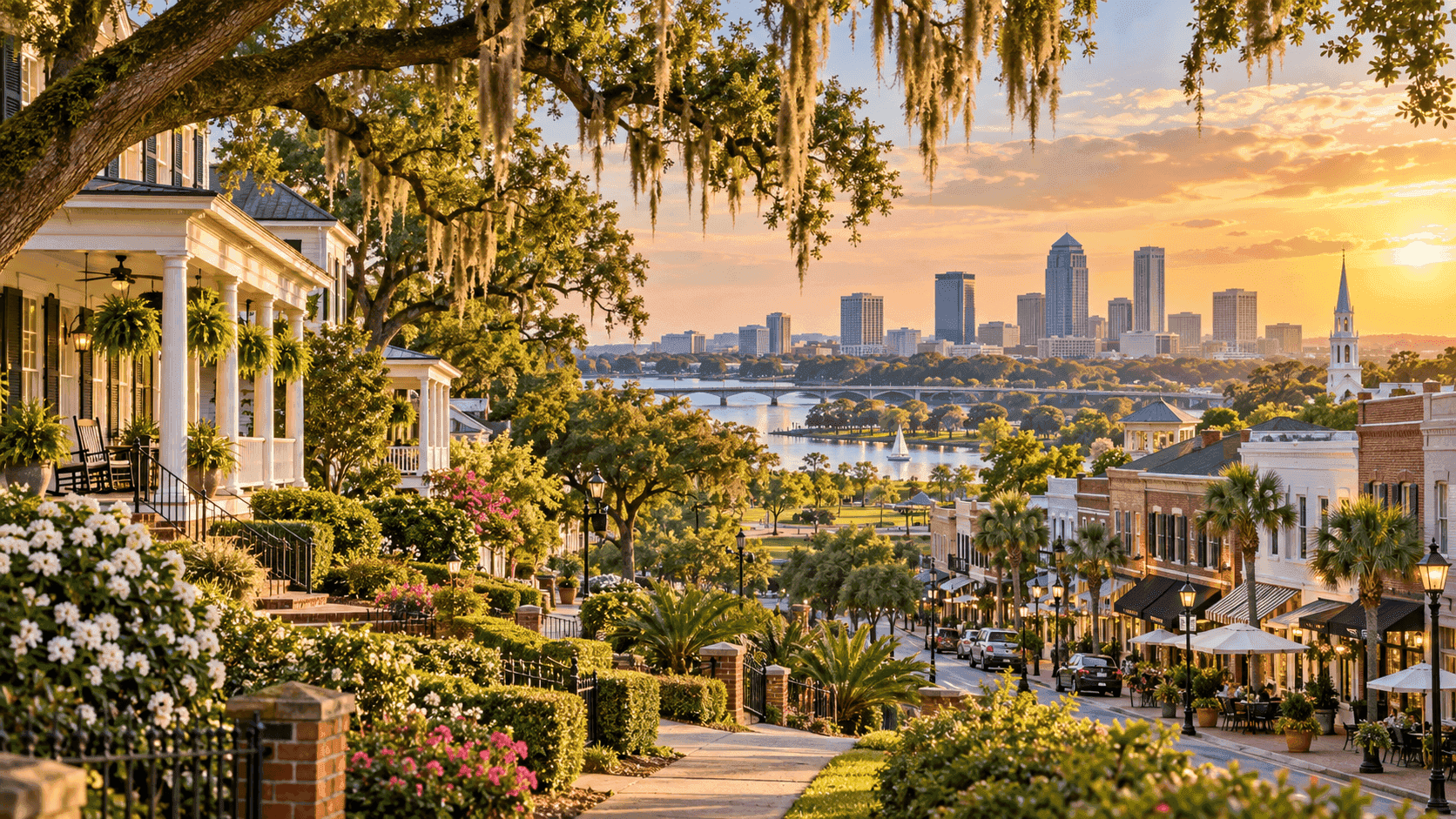
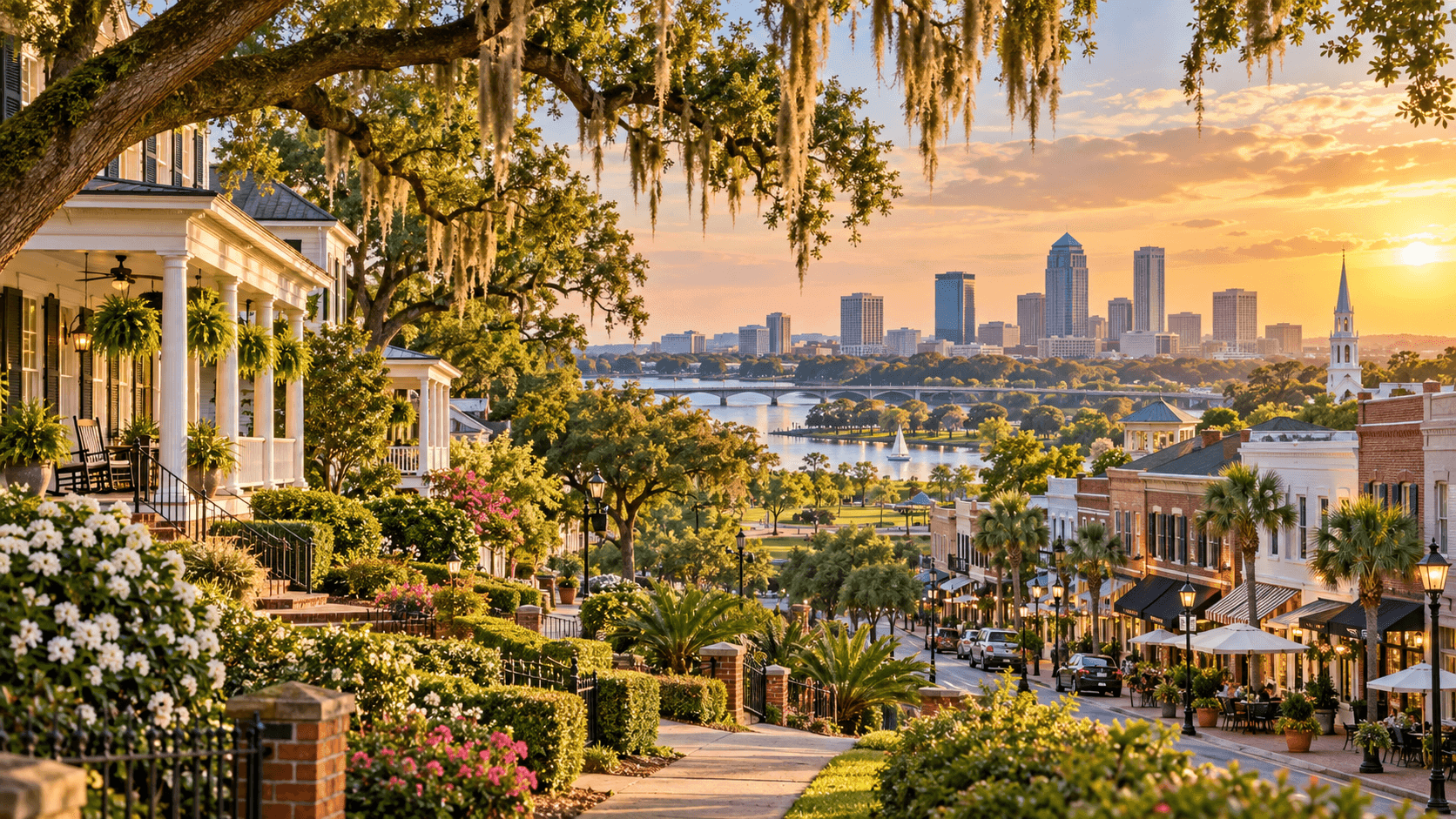
The South has more great places to live than any one list can hold: research cities like Raleigh and Huntsville, mountain towns like Asheville and Johnson City, beach communities from Wilmington to Fort Myers, college towns like Athens and Oxford, and fast-growing suburbs north of Dallas and south of Nashville. It is also where the country is moving. Census Bureau estimates show the South grew by 6.0% between 2020 and 2025, nearly double the national rate, and it was the only region to gain population in every age group, from children to retirees.
This guide profiles more than fifty of the best places to live in the South, state by state, with what each one is like day to day, who it suits best, and what to keep in mind before you move. After the profiles, you will find our picks for families, retirees, remote workers, and tight budgets, followed by a practical look at what it actually costs to live in the region, from property taxes and homeowners insurance to the summer electric bill.
If you are moving from somewhere with basements and cold winters, the last few sections cover the practical side of the move, including how to plan for storage in homes that usually have neither, and when renting a storage unit is not worth it.
Table of Contents
- The Best Places to Live in the South at a Glance
- Best Places to Live in North Carolina
- Best Places to Live in South Carolina
- Best Places to Live in Georgia
- Best Places to Live in Tennessee
- Best Places to Live in Texas
- Best Places to Live in Florida
- Best Places to Live in Alabama, Arkansas and Kentucky
- Best Places to Live in Virginia, Louisiana, Mississippi and Oklahoma
- Best Places in the South for Families
- Best Places in the South for Retirees
- Best Places in the South for Remote Workers and Young Professionals
- Best Places in the South on a Tight Budget
- What It Costs to Live in the South
- Weather and Climate in the South: What to Plan For
- Before You Move: A Checklist for Any Southern City
- Timing a Move South: Heat, Hurricane Season and the School Calendar
- The Basement Gap: Storage Math for a Southern Move
- When You Should Not Rent a Storage Unit for a Move South
- Where 10 Federal Storage Operates in the South
- Frequently Asked Questions
- The Bottom Line
The Best Places to Live in the South at a Glance
If you want the short version first, these are our standout picks across the region. Each one is profiled in more detail in the state sections that follow.
- Best big-city job market: Raleigh and Durham, North Carolina. Universities, Research Triangle Park, and a steady stream of corporate expansions give the Triangle one of the deepest professional job markets in the South, with greenways and good schools to match.
- Best suburbs for families: Cary, North Carolina; Frisco and Flower Mound, Texas; Johns Creek, Georgia; and Franklin, Tennessee. Highly rated schools, low crime, and plenty of parks, at prices that reflect it.
- Best mid-sized city: Greenville, South Carolina. A walkable downtown built around a waterfall, a strong manufacturing economy, and the Blue Ridge foothills less than an hour away.
- Best for engineers and technical careers: Huntsville, Alabama. Aerospace, defense, and NASA work at a moderate cost of living.
- Best small metro: Northwest Arkansas. Fayetteville, Bentonville, and Rogers combine major corporate headquarters, a flagship university, world-class mountain biking, and a celebrated art museum.
- Best for outdoor lovers: Chattanooga, Tennessee. Climbing, paddling, and trail running minutes from downtown, plus some of the best home internet in the country.
- Best mountain living: Asheville, North Carolina, and the Tri-Cities of Tennessee. Cooler summers, lakes, and the Blue Ridge and Smoky Mountains close by.
- Best beach city: Wilmington, North Carolina. A historic riverfront, a university, and three beach towns within a short drive.
- Best for history and food: Charleston, South Carolina, and Savannah, Georgia. Two of the most beautiful historic cities in the country.
- Best for retirees: The South Carolina Upstate, Georgetown in Texas, and Knoxville and the Tri-Cities in East Tennessee. Moderate costs, good healthcare access, and four mild seasons.
- Best value state capital: Little Rock, Arkansas, and Columbia, South Carolina. Stable government and university economies with some of the lowest housing costs of any Southern capital.
- Best Florida pick: Tampa Bay. A large, diverse job market, beaches, and no state income tax, at a lower cost than South Florida.
- Best for remote workers on a budget: Tulsa, Oklahoma, and Chattanooga, Tennessee. Low costs, lively downtowns, and communities that actively court remote workers.
The rest of this guide goes state by state through the Carolinas, Georgia, Tennessee, Texas, Florida, Alabama, Arkansas, Kentucky, Virginia, Louisiana, Mississippi, and Oklahoma. For a national comparison beyond the South, see our guide to the best cities to move to in the US.
Best Places to Live in North Carolina
North Carolina shows up on nearly every Southern ranking, usually more than once. It combines major research universities, a large and diverse job market, a flat state income tax, and a landscape that runs from the Outer Banks to the highest peaks east of the Mississippi.
Raleigh
The state capital anchors the Research Triangle, with North Carolina State University, state government, and the employers in and around Research Triangle Park driving one of the strongest job markets in the region. Raleigh pairs that economy with an easygoing, green feel: a greenway network that stretches for more than a hundred miles, a growing downtown with a lively food and brewery scene, and free state museums of art, history, and natural sciences. Neighborhoods range from walkable older areas near downtown to newer subdivisions in north Raleigh.
Best for: professionals and families who want a big job market without big-city scale. Keep in mind: prices have risen steadily, and commutes on I-40 and the Beltline can be slow at rush hour.
Cary and Apex
These western Wake County towns are perennial ranking favorites. Cary placed 11th nationally in the 2026 U.S. News Best Places to Live list, and neighboring Apex placed in the previous edition’s top ten. Both offer highly rated schools, extensive greenways and parks, low crime, and community events nearly every weekend, from Cary’s outdoor concert series to Apex’s historic downtown festivals.
Best for: families who prioritize schools and safety. Keep in mind: both are among the pricier places in the state, with a median home value in Cary around $571,000 according to U.S. News.
Durham and Chapel Hill
Duke University and Duke Health give Durham a large, stable employment base and a creative, food-forward personality, with old tobacco warehouses converted into offices, restaurants, and the home ballpark of the Durham Bulls. Chapel Hill, home to UNC, is a classic college town with excellent public schools, a tree-shaded campus, and a strong arts scene. Together they offer something the rest of the Triangle cannot quite match: a genuinely urban, university-town character.
Best for: academics, healthcare professionals, and anyone who wants culture with their commute. Keep in mind: Chapel Hill’s limited housing supply keeps prices high for its size; Durham offers more variety.
Charlotte
North Carolina’s largest city is one of the country’s major banking centers and offers the broadest job market in the Carolinas, along with a major airline hub, professional football and basketball, and a light rail line connecting several close-in neighborhoods. Weekends can mean whitewater rafting at the U.S. National Whitewater Center or a day on one of the region’s lakes. Suburbs spread into Union, Cabarrus, and Rowan counties and across the state line into South Carolina.
Best for: career builders, especially in finance, and families who want suburban space near a big city. Keep in mind: most residents depend on a car, and growth in the outer suburbs has outpaced roads.
Lake Norman: Mooresville, Cornelius and Huntersville
North of Charlotte, Lake Norman, the largest man-made lake in North Carolina, is ringed by towns that offer lake living within commuting distance of the city. Mooresville, known as Race City USA for its NASCAR teams and shops, has a classic small-town downtown; Cornelius and Huntersville offer marinas, lakefront restaurants, and easy access to I-77.
Best for: boaters and families who want a weekend lifestyle every day. Keep in mind: I-77 traffic into Charlotte is a well-known pain point, and lakefront property commands a premium.
Greensboro, Winston-Salem and High Point
The Piedmont Triad is the value play in North Carolina’s urban crescent. Winston-Salem has Wake Forest University, a large academic medical center, and a revitalized arts district; Greensboro offers several universities and a busy downtown; High Point is famous worldwide for its furniture market. Major manufacturing investments, including Toyota’s battery plant in nearby Liberty, have added jobs across the region.
Best for: buyers who want a real city with more house for the money. Keep in mind: the job market has historically grown more slowly than the Triangle’s or Charlotte’s.
Wilmington
Wilmington offers a historic riverfront downtown, UNC Wilmington, a film and medical economy, and Wrightsville, Carolina, and Kure beaches within a short drive. Fast-growing Leland sits just across the Cape Fear River. It is one of the few places on the East Coast where you can live near the beach in a real small city at a lower price than many Florida markets.
Best for: beach lovers, remote workers, and retirees who want city amenities. Keep in mind: hurricane and flood exposure is real, and homeowners insurance costs more than inland.
Asheville
Asheville’s mountain setting, arts scene, breweries, and cooler summers have made it a magnet for retirees and remote workers, with the Blue Ridge Parkway and Pisgah National Forest right outside town. Hurricane Helene caused devastating flooding in the city and surrounding counties in 2024, and the region has been rebuilding since, with much of its character and community intact.
Best for: people who bring their income with them and want mountain living with a creative streak. Keep in mind: a tourism-heavy economy means local wages lag housing costs, and flood exposure should be checked parcel by parcel.
Best Places to Live in South Carolina
South Carolina was the fastest-growing state in the country by percentage between 2024 and 2025, according to the Census Bureau. Its appeal is a mix of low property taxes on owner-occupied homes, a long and varied coastline, and an Upstate manufacturing economy that has become one of the strongest in the region.
Greenville
Downtown Greenville is one of the South’s great comeback stories. Main Street is lined with restaurants and shops under a canopy of trees, and it leads to Falls Park on the Reedy, where a curved pedestrian bridge overlooks a waterfall in the middle of the city. The Swamp Rabbit Trail connects downtown to Travelers Rest by bike, and the Blue Ridge foothills are under an hour away. Michelin’s North American headquarters is here, and BMW’s large plant sits between Greenville and Spartanburg.
Best for: families, professionals, and retirees who want a lively small city near the mountains. Keep in mind: prices have risen with popularity, and the main commercial corridors get congested.
Spartanburg, Boiling Springs and Inman
Spartanburg is Greenville’s lower-cost neighbor along I-85, with Wofford College and Converse University, a revitalized downtown, and quick access to the Upstate’s manufacturing and inland port jobs. Boiling Springs and Inman, to the north, are fast-growing family suburbs with newer homes and good access to I-26 toward Asheville.
Best for: buyers who want Upstate jobs with more house for the money. Keep in mind: fewer amenities than Greenville and a car-dependent layout.
Columbia, Lexington and West Columbia
The state capital combines state government, the University of South Carolina, and Fort Jackson, the Army’s largest basic training installation, which gives it an unusually stable employment base. Lexington and West Columbia offer suburban living close to Lake Murray, one of the state’s favorite places for boating and fishing, and the riverwalks along the Congaree and Saluda rivers are a local highlight.
Best for: families and budget-minded buyers who want a capital-city economy. Keep in mind: Columbia’s own slogan calls it "famously hot," and summers live up to it.
Charleston, Mount Pleasant and Summerville
Charleston is one of the most beautiful cities in the country, with cobblestone streets, centuries-old churches, a celebrated restaurant scene, and beaches at Folly, Sullivan’s Island, and Isle of Palms. Its port, military, aerospace, and growing tech sectors support a strong job market. Mount Pleasant offers coastal suburban living near the beaches; Summerville, inland, offers more space and its own charming town square.
Best for: lovers of history, food, and coastal living. Keep in mind: high prices, heavy commuter traffic, tidal flooding in low-lying areas, and coastal insurance costs.
Myrtle Beach, North Myrtle Beach and Little River
The Grand Strand offers sixty miles of beaches, more golf courses than almost anywhere in the country, and a cost of living below much of coastal Florida. North Myrtle Beach and Little River, near the North Carolina line, have grown especially fast and feel quieter than the tourist core.
Best for: retirees, golfers, and remote workers who want the beach on a budget. Keep in mind: a tourism economy with seasonal swings, hurricane exposure, and flood risk in some inland river areas.
Fort Mill, Tega Cay and Rock Hill
These York County communities sit just across the line from Charlotte, offering access to Charlotte jobs with South Carolina’s lower property taxes and well-regarded schools in Fort Mill. Tega Cay sits on Lake Wylie, and Rock Hill has invested in its downtown and a major sports tourism complex.
Best for: families working in Charlotte who want more for their money. Keep in mind: commuting across a state line usually means filing taxes in two states, and fast growth has strained roads and schools.
Best Places to Live in Georgia
Georgia offers the world’s busiest passenger airport, a deep metro Atlanta job market, a coastline anchored by one of the country’s busiest container ports, and mountains in the north. Outside Atlanta’s priciest suburbs, it remains one of the better values in the Southeast.
Johns Creek, Alpharetta and Roswell
North Fulton County’s suburbs are among the most sought-after in the South. Johns Creek ranked first in the 2025–26 U.S. News Best Places to Live list and fifth in 2026, on the strength of top schools, very low crime, and parks along the Chattahoochee River. Alpharetta has a large technology and corporate employment base and a walkable mixed-use district, and Roswell adds a historic downtown with a busy restaurant row.
Best for: families and professionals with the income to match. Keep in mind: the median home value in Johns Creek is around $589,000 according to U.S. News, and GA-400 traffic is a daily factor.
McDonough, Newnan, Douglasville and the southern ring
South and west of Atlanta, Henry, Coweta, Douglas, and Carroll counties offer considerably more house for the money, quick access to Hartsfield-Jackson, and a large logistics and distribution job base. McDonough’s historic square, Newnan’s antebellum homes and lively downtown, and Carrollton’s university-town feel give these communities real character beyond their price point. Locust Grove, Stockbridge, and Villa Rica round out the ring.
Best for: families who want space, newer homes, and airport access. Keep in mind: commutes into the city on I-75 and I-85 can be long.
Savannah and Richmond Hill
Savannah’s 22 historic squares, live oaks draped in Spanish moss, riverfront, and celebrated art and design college make it one of the most distinctive cities in the country. The port and Hyundai’s large electric vehicle plant in neighboring Bryan County have added jobs and momentum. Richmond Hill, south of the city and close to Fort Stewart, has become one of the region’s favorite family suburbs; our guide to moving to Richmond Hill covers it in detail.
Best for: history lovers, creatives, military families, and anyone who wants coastal Georgia living. Keep in mind: hurricane and flood exposure, coastal insurance costs, and the growing pains of rapid development.
Athens
The University of Georgia’s hometown is one of the South’s great college towns, with a legendary music scene, a walkable downtown full of restaurants and venues, and game-day Saturdays that take over the city every fall. It also has a large university-related job base and good access to Atlanta.
Best for: young professionals, academics, and music lovers. Keep in mind: the rental market is shaped by students, and quieter neighborhoods are a short drive out.
Dahlonega and the North Georgia mountains
Dahlonega, site of America’s first major gold rush, offers a charming town square, a university, a growing wine country, and the southern end of the Appalachian Trail nearby. The surrounding North Georgia mountains, including Blue Ridge and Ellijay, offer cooler summers and lake and mountain living within driving distance of Atlanta.
Best for: retirees, remote workers, and weekenders who want to stay. Keep in mind: local jobs are limited, and the drive to major hospitals and the airport is longer.
Macon and Warner Robins
Middle Georgia offers some of the lowest housing costs of any mid-sized Southern metro. Macon has Mercer University, a deep music history, and a spring cherry blossom festival that draws visitors from across the region. Warner Robins is anchored by Robins Air Force Base, one of the state’s largest employers.
Best for: buyers who want a real city at a low price, and military families. Keep in mind: the job market grows more slowly than Atlanta’s.
Valdosta
Near the Florida line, Valdosta is a low-cost military and university town anchored by Moody Air Force Base and Valdosta State University, with easy drives to Florida’s Gulf beaches and springs.
Best for: military households and budget-focused families. Keep in mind: summers are long and hot, and amenities are those of a small city.
Best Places to Live in Tennessee
Tennessee’s headline advantage is no tax on wage income, paired with some of the most beautiful scenery in the South. The state spans three very different regions, and the eastern third, from Chattanooga through Knoxville to the Tri-Cities, offers some of the best value in the region.
Nashville
Nashville’s music industry, large healthcare companies, universities, and steady corporate relocations have made it one of the South’s fastest-growing big cities. Life here means live music every night of the week, a nationally known food scene, professional football, hockey, and soccer, and lakes and state parks within a short drive.
Best for: young professionals, creatives, and anyone who wants big-city energy. Keep in mind: housing costs rose sharply over the past decade, and traffic is a regular complaint.
Franklin, Brentwood and Nolensville
Williamson County, just south of Nashville, is known for highly rated schools, low crime, and rolling green countryside. Franklin’s historic Main Street is one of the most charming in the South, and Brentwood is home to many corporate offices. Nolensville, on the county’s eastern side, has grown quickly as a family suburb while keeping a small-town center.
Best for: families who want top schools near Nashville. Keep in mind: this is among the most expensive places to buy in Tennessee, and I-65 commutes can be slow.
Murfreesboro
Southeast of Nashville, Murfreesboro is home to Middle Tennessee State University and has been one of the fastest-growing cities in the state, with a historic courthouse square, a large Civil War battlefield park, and a lower price point than Williamson County.
Best for: families and first-time buyers who want Nashville access for less. Keep in mind: I-24 commutes into Nashville are among the region’s most congested.
Chattanooga
Chattanooga is an outdoor town with a city attached. Climbing, hiking, mountain biking, and paddling on the Tennessee River are all minutes from a revitalized downtown and riverwalk, and Lookout Mountain rises right over the city. Its city-owned utility, EPB, built one of the country’s first citywide fiber internet networks, which has made it a favorite with remote workers.
Best for: outdoor lovers, remote workers, and families who want a mid-sized city. Keep in mind: local wages generally trail Nashville’s, and some residents live just across the line in Georgia, which brings Georgia’s income tax.
Knoxville
Home to the University of Tennessee and close to Oak Ridge National Laboratory and Great Smoky Mountains National Park, the most visited national park in the country, Knoxville offers a lively Market Square, a growing downtown, and a lower cost of living than Nashville. The Smokies and the lakes of East Tennessee make it an easy place to spend weekends outdoors.
Best for: retirees, families, researchers, and outdoor enthusiasts. Keep in mind: a smaller job market than Nashville’s.
Johnson City, Kingsport and Bristol
The Tri-Cities in Tennessee’s northeast corner offer mountain scenery, lakes, cooler summers, and some of the lowest housing costs of any metro in the state. East Tennessee State University and the regional health system are major employers in Johnson City, Eastman Chemical anchors Kingsport, and Bristol, straddling the Virginia line, is home to Bristol Motor Speedway.
Best for: retirees and remote workers who want mountain living at a low price. Keep in mind: a smaller job market, and Hurricane Helene’s 2024 flooding along the Nolichucky River makes parcel-level flood checks essential.
Memphis
Memphis has the lowest housing costs of Tennessee’s large cities, a music and food culture few places can match, from Beale Street to barbecue, and a logistics economy built around FedEx’s global hub. Suburbs such as Germantown and Collierville are known for strong schools.
Best for: buyers who want big-city culture at a low price. Keep in mind: the city has persistently high violent crime rates, so neighborhood-level research matters more here than in most Southern metros.
Best Places to Live in Texas
Texas placed five cities in the top 15 of the 2026 U.S. News Best Places to Live ranking, more than any other state, and it added more residents than any state in the country between 2024 and 2025. No state income tax, a huge and varied job market, and new housing on a scale few places can match are the draws.
Frisco, McKinney and Princeton
Collin County, north of Dallas, is one of the fastest-growing areas in the country. Frisco ranked ninth in the 2026 U.S. News list and has become a corporate headquarters and pro sports hub, home to the Dallas Cowboys’ headquarters and training facility and the PGA of America. McKinney pairs fast growth with one of the prettiest historic downtowns in Texas, and Princeton, farther out, has been among the fastest-growing small cities in the state.
Best for: families and professionals who want new homes, strong schools, and big-company jobs. Keep in mind: property tax bills grow with home values, and many commutes rely on toll roads.
Flower Mound, Southlake and Keller
Northwest of Dallas and northeast of Fort Worth, these suburbs offer some of the best schools in the state, easy access to DFW International Airport, and plenty of green space. Flower Mound ranked third nationally in the 2026 U.S. News list and sits on Grapevine Lake; Southlake’s town square is a regional shopping and dining destination.
Best for: families with the budget for a premium suburb. Keep in mind: median home values are well above the state average, at around $553,000 in Flower Mound according to U.S. News.
Fort Worth and its western and northern edges
Fort Worth has a personality all its own, from the Stockyards and its twice-daily cattle drive to a world-class museum district and a growing downtown. It has a large aerospace and defense employment base. Communities on its western and northern edges, such as Lake Worth, Azle, Saginaw, and Springtown, offer more space, lakes, and a slower pace for less money.
Best for: families and buyers who want Western character and room to spread out. Keep in mind: longer commutes, and hail drives insurance costs across North Texas.
Austin
Texas’s capital combines state government, the University of Texas, and a large technology sector with a culture all its own: live music, swimming holes like Barton Springs, a long hike-and-bike trail around Lady Bird Lake, and food trucks on seemingly every corner. Home prices cooled from their early-decade peak, which has made the market more negotiable than it was a few years ago.
Best for: tech workers, young professionals, and music lovers. Keep in mind: housing and property taxes still run high for Texas, and traffic on I-35 is notorious.
Round Rock, Georgetown and Leander
The northern Austin corridor combines Austin-area jobs, including Dell’s headquarters in Round Rock and major semiconductor investment in nearby Taylor, with suburban living. Leander ranked eighth nationally in the 2026 U.S. News list, and Georgetown’s historic courthouse square, lined with Victorian-era storefronts, makes it a favorite with retirees and families alike.
Best for: families who want Austin access with more space. Keep in mind: the property tax line is often the biggest long-term cost.
League City, Pearland and Sugar Land
Houston’s southern and southwestern suburbs offer good schools, a large energy and medical job market, and proximity to NASA’s Johnson Space Center in the Clear Lake area. Sugar Land ranked tenth and League City thirteenth in the 2026 U.S. News list, and League City sits close to Galveston Bay’s marinas and beaches.
Best for: families working in energy, healthcare, or aerospace. Keep in mind: flood risk (Hurricane Harvey in 2017 flooded large parts of the region), special utility district taxes in many newer subdivisions, and coastal wind exposure in Galveston County.
The Woodlands, Tomball and Magnolia
North of Houston, The Woodlands is a master-planned community of forested villages, trails, and a waterway lined with shops and an outdoor concert pavilion. Tomball and Magnolia, nearby, offer small-town settings, larger lots, and newer neighborhoods within reach of the large corporate campuses in the area.
Best for: families who want green space and a planned community feel. Keep in mind: commutes into central Houston are long, and drainage should be checked for any specific lot.
San Antonio, Seguin and the Hill Country edge
San Antonio offers big-city amenities at a lower cost than Austin, with the River Walk, the Alamo and the city’s other Spanish missions, a large military presence at Joint Base San Antonio, and a strong healthcare sector. Seguin, New Braunfels, Canyon Lake, and Spring Branch, at the edge of the Hill Country, offer river tubing, lake living, and space.
Best for: military families, retirees, and anyone who wants culture and value. Keep in mind: the Hill Country is one of the most flash-flood-prone areas in the country, as the deadly July 2025 Guadalupe River flooding showed, so creek-side lots deserve careful scrutiny.
Killeen, Harker Heights, Temple and Belton
Central Texas between Austin and Waco is shaped by one of the Army’s largest installations at Killeen and a major medical employer in Temple. Belton has a charming downtown and a university, and Belton and Stillhouse Hollow lakes are local favorites. Housing costs are among the lowest of any growing Texas market.
Best for: military families and budget-focused buyers. Keep in mind: the market moves with military assignment cycles, which affects rental demand and resale timing.
Best Places to Live in Florida
Florida’s year-round warmth, beaches, and lack of a state income tax make it the South’s classic destination for retirees, remote workers, and families alike. The same coast that draws people also shapes costs: homeowners insurance runs higher here than almost anywhere, and buyers should plan for flood and wind coverage from the start.
Tampa and St. Petersburg
Tampa Bay offers a large, diverse job market in finance, healthcare, technology, and defense, plus a major airport, pro sports, a lively riverwalk in Tampa, and an arts scene in St. Petersburg anchored by the Dalí Museum. Gulf beaches are a short drive away, and the cost of living is lower than in South Florida.
Best for: professionals, families, and retirees who want a big metro with beaches. Keep in mind: Hurricanes Helene and Milton brought storm surge and flooding to parts of the region in 2024, and low-lying neighborhoods carry high insurance and flood costs.
Fort Myers, Cape Coral and North Fort Myers
Southwest Florida’s Lee County is a retiree and second-home favorite, with easy access to Sanibel and Fort Myers Beach and hundreds of miles of canals in Cape Coral that let many homeowners keep a boat behind the house. The area has rebuilt substantially since Hurricane Ian’s surge in 2022.
Best for: boaters, retirees, and anyone who wants Gulf Coast living at a lower price than Naples. Keep in mind: know the flood zone, elevation, and construction date of any home, and get insurance quotes before making an offer.
Sarasota and Naples
Both are retiree favorites with beautiful beaches, strong arts scenes, and excellent dining. Sarasota is home to a well-known performing arts and museum community; Naples is known for its pristine beaches, golf, and upscale downtown.
Best for: retirees with a larger budget. Keep in mind: both are among the more expensive markets in the state, with high coastal insurance costs.
Jacksonville
Jacksonville is geographically one of the largest cities in the country, with a major port, two large Navy installations, banking and logistics employers, and miles of Atlantic beaches. Housing generally costs less than in Tampa or South Florida, and neighborhoods range from historic Riverside to newer suburbs in St. Johns County, known for some of the state’s top-rated schools.
Best for: families and military households. Keep in mind: sprawl means long drives, and some areas near the St. Johns River and its tributaries are flood-prone.
Orlando
Orlando sits inland, away from storm surge, with a fast-growing economy that extends well beyond theme parks into simulation and defense technology, healthcare, and a large university. Suburbs such as Winter Garden and Lake Nona have grown quickly with new homes and town centers.
Best for: families and young professionals who want Florida without the coastal flood exposure. Keep in mind: hurricane winds still reach inland, and wages in tourism-related jobs lag housing costs.
Pensacola and Northwest Florida
Pensacola and the Panhandle offer sugar-white Gulf beaches, a strong Navy presence, and lower prices than much of peninsular Florida, with a Southern small-town feel that differs from the rest of the state.
Best for: military families, retirees, and beach lovers on a budget. Keep in mind: Hurricane Michael’s 2018 landfall near Panama City showed how exposed this coast can be.
The condo question
After the 2021 Surfside collapse, Florida rewrote its condominium safety law and has refined it several times since, most recently with a 2025 bill that took effect July 1, 2025. In broad terms, condo buildings three or more habitable stories tall must have milestone structural inspections once they reach a certain age, and associations must complete a structural integrity reserve study and fund reserves for major structural components. Many associations have raised fees or levied special assessments as a result, and buyers now have more time to review association documents before the contract becomes binding.
Before buying a Florida condo, ask for the milestone inspection report if one is required, the reserve study, recent board meeting minutes, and the history of special assessments. Because the details have changed repeatedly, have a Florida real estate attorney review the documents rather than relying on a summary, including this one.
Best Places to Live in Alabama, Arkansas and Kentucky
These three states rarely lead the headlines about Southern migration, but they hold some of the region’s best combinations of quality of life and value. Alabama in particular pairs one of the lowest property tax burdens in the country with a nationally recognized program that helps homeowners storm-proof their roofs.
Huntsville and Madison
Huntsville’s economy is built on aerospace, defense, and federal research, anchored by Redstone Arsenal and NASA’s Marshall Space Flight Center, with a growing federal law enforcement presence on the arsenal as well. The U.S. Space & Rocket Center, a revitalized downtown, and Monte Sano State Park on the edge of town round out a city that topped U.S. News’s list of the best places to live in the South in 2023. Madison, next door, is known for strong schools.
Best for: engineers, technical professionals, and families who want a high-skill job market at a moderate cost. Keep in mind: the economy leans heavily on federal and defense spending, and growth has outpaced some roads.
Hoover and Birmingham’s southern suburbs
Hoover ranked sixth nationally in the 2026 U.S. News Best Places to Live list, with a median home value around $383,000, making it one of the more attainable suburbs near the top of that ranking. Vestavia Hills and Mountain Brook nearby are known for their school systems. Birmingham itself offers a major academic medical center, a celebrated restaurant scene, and Railroad Park and Red Mountain Park for green space close to downtown.
Best for: families who want top schools and low property taxes. Keep in mind: the region sits in tornado country, and the city of Birmingham has struggles with crime that differ from its suburbs.
Fairhope and the Eastern Shore of Mobile Bay
Fairhope, Daphne, and Spanish Fort on Mobile Bay’s Eastern Shore offer bayfront sunsets, a flower-lined walkable downtown in Fairhope, good schools, and Gulf Shores and Orange Beach within an hour. Fairhope in particular has become a favorite for retirees and young families.
Best for: retirees and families who want small-town coastal living. Keep in mind: hurricane exposure and coastal insurance costs; Alabama’s fortified roof program can help.
Fayetteville, Bentonville, Rogers and Springdale
Northwest Arkansas has become one of the South’s standout small metros, powered by the headquarters of Walmart in Bentonville, Tyson Foods in Springdale, and J.B. Hunt in Lowell, plus the University of Arkansas in Fayetteville. Crystal Bridges Museum of American Art, hundreds of miles of mountain bike trails, and the Razorback Regional Greenway connecting the towns give the region a quality of life well beyond its size. (This Fayetteville is the Ozarks college town, not to be confused with Fayetteville, North Carolina.)
Best for: families, cyclists, and professionals who want an outdoorsy small metro. Keep in mind: housing costs have risen faster than in the rest of Arkansas, and the regional airport has fewer direct flights than a major hub.
Little Rock and its suburbs
Arkansas’s capital offers state government, a large academic medical center, the Arkansas River Trail, and some of the lowest housing costs of any Southern state capital. Suburbs such as Benton, Bryant, Maumelle, Sherwood, North Little Rock, and Jacksonville give buyers a wide range of price points, with Hot Springs National Park and the Ouachita Mountains within an easy drive.
Best for: budget-focused families and remote workers. Keep in mind: slower job growth than the region’s leaders, and tornado exposure; a powerful tornado struck the city in March 2023. Our guide to moving to Little Rock covers neighborhoods and costs in more depth.
Louisville
Louisville sits on the Ohio River at the northern edge of the South, home to the Kentucky Derby, UPS’s global air hub, a major healthcare sector, and a downtown known for its bourbon distilleries and tasting rooms. Neighborhoods like the Highlands and Old Louisville offer historic homes and walkable streets, and housing costs are moderate for a city its size.
Best for: people who want a mid-sized city with four real seasons. Keep in mind: low-lying areas near the river depend on a large floodwall system, and crime varies considerably by neighborhood.
Lexington
Lexington combines the University of Kentucky, a large healthcare sector, and the horse farms and stone fences of the surrounding Bluegrass, with Keeneland’s spring and fall race meets as local traditions. It was the first city in the country to adopt an urban growth boundary, which has protected the farmland around it and kept the city compact.
Best for: families and professionals who want a college town with countryside on the doorstep. Keep in mind: the growth boundary limits new housing supply, which keeps prices inside it higher than in comparable Kentucky cities.
Best Places to Live in Virginia, Louisiana, Mississippi and Oklahoma
These four states round out the South with very different offers: Virginia’s high-income economy and history, Louisiana’s unmatched culture, Mississippi’s low costs and celebrated college towns, and Oklahoma’s affordability and remote-worker welcome.
Richmond
Virginia’s capital has deep history, a strong arts and food scene, Virginia Commonwealth University and its health system, and a diverse corporate and government job base. It is also one of the few cities in the country with Class III and IV whitewater running through downtown on the James River. Neighborhoods like the Fan, Church Hill, and Scott’s Addition offer very different takes on city living.
Best for: professionals and families who want a mid-sized city within reach of Washington and the coast. Keep in mind: Virginia has a state income tax, and most localities also charge an annual personal property tax on vehicles.
Charlottesville
Home to the University of Virginia and Thomas Jefferson’s Monticello, Charlottesville sits at the foot of the Blue Ridge with a pedestrian downtown mall, a large university health system, and dozens of wineries nearby.
Best for: academics, retirees, and anyone who wants a small, cultured city near the mountains. Keep in mind: housing is expensive for a city its size.
Virginia Beach, Chesapeake and Norfolk
Hampton Roads is home to Naval Station Norfolk, the largest naval base in the world, along with shipbuilding and port employers. Virginia Beach offers a long oceanfront boardwalk and quieter beach neighborhoods, and Chesapeake offers suburban space and well-regarded schools.
Best for: military families and beach lovers. Keep in mind: recurrent tidal flooding in low-lying parts of Norfolk and nearby communities, plus hurricane exposure.
Baton Rouge and Lafayette
Louisiana offers some of the most affordable home prices in the South and a cultural life no other state can match. Baton Rouge has state government, LSU, and a large petrochemical industry; Lafayette is the heart of Cajun country, with zydeco, festivals, and food that alone can justify the move.
Best for: buyers who want low home prices and rich culture. Keep in mind: homeowners insurance runs among the highest in the nation, and the 2016 floods showed that inland areas carry real flood risk too, so price insurance before relying on the low purchase price.
Oxford, Madison and Ridgeland, Mississippi
Oxford, home to the University of Mississippi, is one of the South’s most celebrated small college towns, with a literary history, a lively courthouse square, and the Grove on football Saturdays. The Jackson suburbs of Madison and Ridgeland offer good schools, newer neighborhoods, and some of the lowest housing costs in the country.
Best for: retirees and families who want small-town charm at a low price. Keep in mind: average wages are lower, and the city of Jackson has faced infrastructure problems, including its 2022 water system crisis.
Tulsa and Broken Arrow
Tulsa combines art deco architecture, a strong music history, the riverfront Gathering Place park, and a well-publicized program that has paid remote workers to relocate. Broken Arrow, next door, is a popular family suburb with a revitalized Rose District downtown.
Best for: remote workers and families who want a low cost of living in a city with momentum. Keep in mind: tornadoes and hail are a fact of life, and homeowners insurance averages rank among the highest in the country.
Oklahoma City and Edmond
Oklahoma City offers very low housing costs, a growing downtown with Scissortail Park and Bricktown, an NBA team, and a steady energy, aerospace, and government job base. Edmond, to the north, is known for strong schools and a university-town feel.
Best for: families and budget-minded buyers. Keep in mind: the same tornado and hail exposure as Tulsa, and a home with a storm shelter and an impact-resistant roof is worth more here than almost anywhere.
Best Places in the South for Families
Families tend to weigh schools, safety, space, and commute above everything else, and the South has excellent options at nearly every price point. Here is how our favorites group by budget.
- Higher budget, top-ranked schools: Cary and Apex near Raleigh, Johns Creek north of Atlanta, Franklin and Brentwood south of Nashville, Flower Mound, Southlake, and Frisco in North Texas, and Vestavia Hills and Mountain Brook near Birmingham.
- Strong schools at a more moderate price: Hoover, Alabama; Madison near Huntsville; Fort Mill, South Carolina; League City and Pearland near Houston; Leander and Georgetown north of Austin; and the Bentonville and Rogers side of Northwest Arkansas.
- More house for the money: McDonough, Newnan, and the southern Atlanta ring; Clayton and Garner outside Raleigh; Boiling Springs and Lexington, South Carolina; Benton and Bryant near Little Rock; and Richmond Hill near Savannah.
Three things to check for any family move
- Attendance zones, not city names. In most Southern metros, school assignment follows district attendance boundaries, which often cross city lines and are redrawn as new schools open. A "Frisco address" or "Cary address" does not guarantee a particular school. Check the district’s boundary lookup for the exact address, and ask whether rezoning is planned.
- Growth versus capacity. The fastest-growing exurbs often rely on portable classrooms while new schools are built. Look at the district’s facility plan and recent bond referendums.
- The real commute. Drive the route at rush hour before committing. A 25-minute map estimate can become an hour on the I-75, I-35, I-85, or I-40 corridors.
For a deeper dive on Texas specifically, including how property tax stacking and Municipal Utility Districts change the family budget, see our guide to the best cities in Texas to raise a family. For more family-friendly cities nationwide, see our guide to the best cities to raise a family in the US.
Best Places in the South for Retirees
The South is the country’s retirement destination for good reasons: mild winters, lower housing costs, and in most states, no tax on Social Security benefits. The right place depends on how you picture retirement: mountain views and cooler summers, a lively small city with good hospitals, or a house near the water.
- Foothills and mountains: The Tri-Cities and Knoxville in East Tennessee, the Upstate around Greenville and Spartanburg, Asheville and the North Carolina foothills, and North Georgia. Cooler summers, lower hurricane wind exposure, and regional medical centers, with the caveat that Helene’s 2024 flooding reached deep into these mountains.
- Inland Piedmont and central cities: The Triad in North Carolina, Columbia and Lexington in South Carolina, Huntsville and Hoover in Alabama, and Georgetown in Texas. These offer a balance of healthcare access, moderate costs, and distance from storm surge.
- The coast, with eyes open: The Grand Strand, Wilmington, Southwest Florida, Sarasota, and the Gulf Coast offer the lifestyle many retirees picture. They also carry the highest insurance costs, flood exposure, and evacuation planning of any option here.
What matters more for retirees than for anyone else
- Hospital access: Check the distance to a full-service hospital, not just urgent care, and whether specialists you rely on practice nearby. Rural areas across the South have seen hospital closures and service cuts.
- Senior property tax relief: Many Southern states offer homestead exemptions, assessment freezes, or deferrals for older homeowners, but the eligibility rules, income limits, and application deadlines vary by state and county. Ask the county assessor before you buy.
- Insurance stability: A premium that rises sharply every year is a bigger problem on a fixed income. Favor homes with newer roofs, and in coastal states, look into the state fortified-roof programs covered in the weather section below.
- Heat and evacuation: If you are buying on the coast, know your evacuation zone and route, and plan for what happens to medications and medical equipment during a power outage.
We have built state-level retirement guides that go much deeper on taxes, insurance territories, and healthcare access: North Carolina, South Carolina, Tennessee, and Texas, plus a national decision framework for where to retire that covers Medicare rules when you move.
Best Places in the South for Remote Workers and Young Professionals
For people who bring their income with them, the South’s appeal is simple: the same paycheck goes further. For young professionals building a career locally, the question is which metros have the job depth and social life to make an early-career move worthwhile.
- Big job markets with strong social scenes: Raleigh and Durham, Charlotte, Nashville, Atlanta’s in-town neighborhoods, and Austin. These have the deepest professional job markets and the most to do, along with the highest rents in their states.
- Mid-sized cities with momentum: Greenville, South Carolina; Chattanooga; Richmond; Huntsville; Northwest Arkansas; and Knoxville. Lower costs, real downtowns, and growing professional communities.
- Lowest cost with good infrastructure: Tulsa, Little Rock, the Tri-Cities, and Macon for remote workers whose priority is stretching a salary.
Checks for remote workers
- Broadband at the exact address: Fiber availability can change from one street to the next, especially in newer exurbs and rural areas. Use the FCC’s National Broadband Map to see what providers report for a specific address, then confirm with the provider. Chattanooga’s city-owned fiber network is the standout example of a place where this is rarely a concern.
- Airport access: If you travel for work, the gap between living near a major hub like Atlanta, Charlotte, or Dallas-Fort Worth and a regional airport is measured in connections and missed meetings.
- Your employer’s home state: As covered in the cost section below, a few states can still tax a remote worker’s wages if the employer is based there. Confirm before counting on no-income-tax savings.
- Community: Remote work can be isolating in a new city. Places with active downtowns, coworking spaces, and recreation leagues make it easier to build a life outside the home office.
For rent-to-income math across national markets, see our guides to the best cities to live in your 20s and the best U.S. cities for solo living.
Best Places in the South on a Tight Budget
On a tight budget, the best places are the ones where the whole monthly cost stays low, not just the purchase price. That means looking for places where home prices, property taxes, and insurance are all moderate at once. In the South, the best combinations tend to share three traits: moderate home prices, low or moderate property taxes, and an inland location that keeps insurance and flood costs in check.
- Inland Alabama: Among the lowest property tax burdens in the country and a strong fortified-roof program. Huntsville’s suburbs and smaller cities across the state offer real value for those whose jobs fit.
- Central Arkansas: Little Rock’s suburbs offer some of the lowest housing costs of any Southern capital region. Tornado exposure is the risk to plan around.
- Middle and South Georgia: Macon, Warner Robins, and Valdosta pair low housing costs with stable military and university employment.
- East Tennessee: The Tri-Cities and smaller towns around Knoxville combine no wage income tax with low housing costs, though sales tax is high and wages are lower.
- Inland South Carolina: Spartanburg, Columbia’s suburbs, and smaller Upstate towns benefit from the low owner-occupied assessment ratio.
- Central Texas: Killeen, Temple, and Belton offer some of the lowest housing costs of any growing Texas market, though property tax rates still apply.
Where low prices can mislead
Louisiana and Oklahoma offer very low home prices, but insurance can absorb much of the savings. Coastal Mississippi and parts of the Gulf Coast face the same issue. Rural areas with the very lowest prices may come with fewer jobs, longer drives to healthcare, and weaker broadband. None of these rule a place out; they mean the budget has to be built from the full monthly cost, not the listing price.
For a broader look at affordable smaller cities, including several in the South, see our guide to the best small cities to live in.
What It Costs to Live in the South
Lower home prices are a big part of the South’s appeal, and across most of the region they are genuinely lower than on the coasts. The full monthly cost of a home also includes property tax, insurance, and utilities, and those vary more from state to state in the South than almost anywhere else. Here is what to budget for, and where each cost runs high or low.
State income tax
Texas, Florida, and Tennessee do not tax wage income. Most other Southern states have been cutting their rates in recent years, and several have moved to a single flat rate or are phasing toward one, often in scheduled steps, so check the state department of revenue for the current schedule rather than relying on a published table. States without an income tax collect revenue in other ways: Texas leans on property taxes, and Tennessee’s combined sales tax rate is among the highest in the country, alongside Louisiana, Arkansas, and Alabama.
Two situations deserve professional advice. Remote workers whose employer is based in a state with a "convenience of the employer" rule may still owe that state tax after moving. Retirees should check how a new state treats pension and retirement account income; most Southern states do not tax Social Security benefits, but other retirement income rules vary widely.
Property tax
As a group, Southern states tax homes lightly. The Tax Foundation’s 2025 analysis of 2023 Census data put the effective property tax rate on owner-occupied homes at about 0.36% in Alabama and about 0.55% in Louisiana, both near the lowest in the nation. Texas is the exception at roughly 1.36%, among the ten highest-taxing states. A few state rules are worth knowing before you buy:
- Florida: The Save Our Homes cap limits how fast a homesteaded property’s assessed value can rise, so a long-time seller’s tax bill can be far lower than what a new buyer will pay once the assessment resets.
- South Carolina: Owner-occupied primary residences are assessed at a lower ratio than second homes and rentals, but you have to apply for it.
- Texas: Homestead exemptions reduce taxable value, with larger exemptions for homeowners 65 and older, while many newer suburbs sit in special utility districts that add their own tax rate.
- Georgia: A statewide homestead exemption approved in 2024 limits assessment increases, but some local governments opted out, so it depends on the address.
Exemption amounts and deadlines change with legislation, so the county tax assessor or property appraiser is the best source for an estimate on a specific home.
Homeowners insurance
Insurance is the cost that varies most across the South. Florida, Louisiana, Texas, and Oklahoma consistently rank among the most expensive states in the country, driven by hurricanes along the coast and hail and tornadoes inland. One mortgage servicer’s review of about 1.2 million escrowed loans put average annual premiums at year-end 2025 at about $4,238 in Louisiana, $4,060 in Florida, and $3,952 in Texas, against about $2,625 across its whole portfolio. Studies based on quoted rates for new policies tend to run higher, with Florida above $8,000 in one 2026 estimate, which is one more reason to get real quotes on a specific address before making an offer. Remember that standard homeowners policies do not cover flood; that is a separate policy.
Electricity
Southern homes use more electricity than homes in any other region. The U.S. Energy Information Administration found that Southern households averaged 13,376 kilowatt-hours in 2020, compared with 10,566 nationally, largely because 93% of Southern households use air conditioning and many heat with electric heat pumps. Ask for a year of utility bills on any home or apartment you are considering; the summer months tell you the most.
Putting it together
Here is how much these layers can move a budget, using statewide averages on a hypothetical $350,000 home. This is illustrative arithmetic, not an estimate for any address. At Texas’s average effective property tax rate, the annual bill is roughly $4,760, or about $397 a month. At Alabama’s average rate, it is roughly $1,260, or about $105 a month. That is close to $290 a month in property tax alone, before insurance differences are added in. Two homes with the same price can easily differ by several hundred dollars a month in carrying costs, which is why the best way to compare two Southern cities is to price the full monthly cost of a real home in each.
Weather and Climate in the South: What to Plan For
Mild winters are one of the South’s biggest draws. The trade is long, hot summers and, depending on where you live, hurricanes, tornadoes, or flooding. None of these should rule out a great place to live, but each is worth understanding for the specific area you choose.
Hurricanes and flooding
Atlantic hurricane season runs from June 1 through November 30, and the coastal South from Texas to Virginia plans around it every year. Flooding can also reach far inland: Hurricane Helene in 2024 caused catastrophic flooding in the mountains of western North Carolina and East Tennessee. Two free federal tools help with any address. FEMA’s Flood Map Service Center shows the official flood zone, and FEMA’s National Risk Index rates counties and census tracts on 18 natural hazards, including hurricanes, riverine flooding, tornadoes, hail, and heat waves. Being outside a mapped high-risk flood zone does not mean being risk-free, and flood policies through the National Flood Insurance Program typically take 30 days to begin, so price one before you move.
Tornadoes and hail
The Southeast sees tornadoes that are more likely to strike at night and harder to spot through trees and hills, and large hail drives insurance claims across Texas and Oklahoma. In these areas, ask whether a home has a safe room or an interior room without windows, and ask your insurer how roof age and material affect coverage.
Heat
The National Weather Service identifies heat as the leading cause of weather-related deaths in the United States, and Southern summers bring long stretches of high temperatures and high dew points. A reliable cooling system matters, especially for older adults. If you prefer cooler summers, elevation helps: the mountains of western North Carolina, East Tennessee, and North Georgia, and the Ozarks in Northwest Arkansas, run noticeably cooler than the Gulf Coast or South Texas.
Stronger roofs, lower premiums
Several Southern states help homeowners upgrade roofs to the FORTIFIED standard developed by the Insurance Institute for Business & Home Safety, which can lower wind insurance premiums. Alabama’s Strengthen Alabama Homes program has issued more than $86 million in grants since 2016. Louisiana, North Carolina, South Carolina, and Florida run their own programs, and Kentucky planned to launch one in 2026. Grants open in funding rounds with eligibility rules, so check the state department of insurance after you move. When buying, ask whether a home has a FORTIFIED certificate or, in Florida, a recent wind mitigation inspection, and find out the roof’s age; both can noticeably affect what you pay.
Before You Move: A Checklist for Any Southern City
Once you have a shortlist, a few quick checks on a specific address will tell you whether a home fits your budget and plans. Most take a phone call or a few minutes online, and together they take about an afternoon.
- Pull the flood zone from FEMA’s Flood Map Service Center, and ask the seller or landlord in writing whether the property has ever flooded or had a flood claim.
- Check the county’s hazard profile in FEMA’s National Risk Index to see which hazards, from hurricanes to hail to heat, are most significant locally.
- Get homeowners insurance quotes on the specific address, including the wind or hurricane deductible, before making an offer.
- Get a flood insurance quote even if a lender will not require one, and remember the typical waiting period before coverage starts.
- Ask the county assessor or property appraiser to estimate a new owner’s property tax bill, and find out which exemptions you must apply for and by when.
- Identify every taxing district on the property, including special utility or improvement districts, and get the combined rate.
- Ask for twelve months of utility bills or the address’s usage history from the utility.
- Find out the roof’s age and type, and whether the home has a fortified-roof certificate or, in Florida, a recent wind mitigation inspection.
- Confirm school attendance zones with the district for the exact address, and ask about planned rezoning.
- Check broadband availability for the address and confirm it with the provider.
- Read HOA or condo documents in full, including reserve studies, recent minutes, and any special assessment history.
- Confirm your state income tax situation with the state revenue department or a tax professional, especially if your employer is based in another state.
Most of these sources are free, and local officials are generally happy to answer questions from prospective residents.
Timing a Move South: Heat, Hurricane Season and the School Calendar
Most moves happen in summer, when school is out and leases turn over. In the South, summer is also peak heat and the busiest stretch of hurricane season, which runs June 1 through November 30 and typically peaks from mid-August through October. That overlap is worth planning around.
The case for spring or late fall
Moving in spring or in November and early December avoids the worst heat, sidesteps the hurricane peak, and often comes with more availability and better pricing from movers who are past their summer rush. If you have flexibility, these windows are easier on people, pets, and belongings.
If you have to move in summer
- Plan around the school calendar. Many Southern school districts start in early to mid-August, weeks earlier than districts in much of the North. Families moving for the school year may have less summer than they expect.
- Protect heat-sensitive items in transit. The inside of a moving truck or container parked in Southern summer sun gets far hotter than the outside air. Carry electronics, photographs, important documents, medications, candles, vinyl records, and anything with adhesive or batteries in your own climate-controlled car if you can.
- Get the power and AC on before move-in day. Schedule utility service to start a few days early and, for a purchase, have the HVAC serviced so the house is cool when the truck arrives.
- Schedule for the morning. Loading and unloading in the early hours is safer for movers and helpers in extreme heat.
Hurricane season and closing dates
When a named storm threatens, insurers in affected areas commonly stop issuing new policies until it passes. If your closing falls in that window, your lender may not be able to fund the loan without proof of coverage. Bind insurance well before closing, keep the closing date flexible if you are buying on the coast between August and October, and have a backup plan for where your belongings will go if the closing slips.
For the differences in how local and long-distance moves are priced, licensed, and scheduled, including what you can lock in and what you cannot, see our guide to local versus long-distance moves.
The Basement Gap: Storage Math for a Southern Move
Households moving south from the Northeast or Midwest often discover a problem that is easy to overlook: the new house has nowhere to put the things the old house kept out of sight. Census Bureau construction data consistently show that most new single-family homes in the South are built on concrete slab foundations, and basements are uncommon outside some upland and mountain areas. Southern attics and garages, meanwhile, get extremely hot in summer, often far hotter than the outdoor air, which makes them poor places for anything heat-sensitive.
So the useful question is not "how big is the new house" but "how much of my basement and attic am I actually bringing, and where will it live?" That is arithmetic you can do before the truck is booked.
Measure what you store, not the rooms it is in
Walk your basement, attic, and garage with a tape measure and estimate the footprint and height of what is actually stored there. A worked example:
- Shelving along two basement walls: 2 feet deep by 20 feet long, loaded about 6 feet high, is roughly 240 cubic feet of goods.
- Floor stacks of bins, holiday decorations, and spare furniture: an 8-by-10-foot area averaging 4 feet high is roughly 320 cubic feet.
- Total: about 560 cubic feet of belongings that currently have a home and will not in a slab house with a hot attic.
Now compare that to unit footprints. A 5x5 is 25 square feet, a 5x10 is 50, a 10x10 is 100, a 10x15 is 150, and a 10x20 is 200. If you can stack safely to about 7 feet and leave an aisle along one side, plan on using roughly three-quarters of the floor. That makes a 10x10 good for about 525 cubic feet in practice, a little short of the 560 in this example, so this household would either trim a few items or step up to a 10x15. You can run your own numbers with our storage size calculator, and the storage unit size guide shows what typically fits in each size.
Heat-sensitive items need a different answer
Photographs, important documents, electronics, musical instruments, vinyl records, candles, and fine wood furniture do not belong in a Southern attic or an uncooled garage in July. They also do not belong in a standard drive-up unit through a Southern summer. A climate-controlled unit is temperature-regulated, which protects against the extreme heat that builds inside an unconditioned space. Everything else, from lawn equipment to patio furniture to plastic bins of sports gear, is usually fine in a standard unit.
Where storage genuinely helps a Southern move
- The closing gap: Selling up north and buying down south rarely lines up to the day, and a hurricane-season closing can slip when insurers pause new policies. A month-to-month unit near the new home bridges the gap without paying a mover to hold your goods.
- Rent first, buy second: Many people rent for six to twelve months to learn a metro before buying. Storage lets you keep the furniture that will not fit the apartment without committing to a neighborhood too early.
- Vehicles, boats, and RVs: Many Southern subdivisions have HOA rules that restrict parking boats, campers, and trailers in driveways. RV storage and boat storage solve a problem many newcomers do not see coming until the first HOA letter.
- Military moves: The South hosts many of the country’s largest military installations. Our military PCS storage planner maps storage to a PCS timeline.
For a sense of how many units of each size you are choosing between, you can browse small, medium, and large units directly. If you are moving to the coast, our guide to preparing a storage unit for hurricane season covers what to do before a storm.
When You Should Not Rent a Storage Unit for a Move South
A storage unit is the right tool for some moves and a waste of money for others. Here are the situations where we would tell you not to rent one.
- You are moving into more space than you are leaving. Many people moving from a city apartment in the Northeast or West Coast into a Southern house gain closets, a garage, and sometimes a bonus room. If everything fits, it should go in the house.
- The items are worth less than a few months of rent. Long-distance moves are generally priced by weight, so a worn sofa you will replace anyway costs you twice: once to haul it south and again every month it sits in a unit. Sell or donate it before the move. Our moving cost calculator helps put a number on that decision.
- The gap is very short and your mover can cover it. If closing is only a few days off and your moving company offers short-term storage in transit, or your container company can hold a container briefly, that may be simpler than unloading into a unit and loading again. Compare the cost and the extra handling.
- You are storing to avoid a decision. "We will sort it out later" storage tends to last years. If you rent a unit, set a date to empty it and put it on the calendar.
- The items need specialist care. Fine art, valuable wine collections, and rare instruments are better served by specialist storage and handlers designed for them. A temperature-regulated unit protects against extreme heat, but it is not a museum environment.
- The items are not allowed. Gasoline, propane tanks, other flammables, hazardous chemicals, and perishable food cannot go in a self-storage unit. Dispose of them properly before the move, since many movers will not carry them either.
Saying no to storage in these cases is not a reluctant concession. It is the same carrying-cost logic this guide applies to houses: an expense that does not earn its keep every month should not be in the budget.
Where 10 Federal Storage Operates in the South
We operate fully online, contactless storage facilities across much of the South, which means you can reserve a unit, sign the lease, and get your gate code from your phone before you arrive in a new city. Here is where we are, grouped by the regions covered above. Each link goes to the local page with current units, sizes, and pricing.
- North Carolina, Triangle: Raleigh, Durham, Cary, Garner, Clayton, Wendell, and Creedmoor
- North Carolina, Triad and Alamance: Winston-Salem, High Point, Clemmons, Thomasville, Burlington, and Mebane
- North Carolina, Charlotte region: Kannapolis, China Grove, Monroe, and Indian Trail
- North Carolina, coast and east: Wilmington, Leland, Greenville, Goldsboro, and Rocky Mount
- South Carolina: Spartanburg, Boiling Springs, Inman, Columbia, Lexington, West Columbia, North Myrtle Beach, and Little River
- Georgia, Atlanta’s southern and western ring: McDonough, Stockbridge, Locust Grove, Newnan, Douglasville, Villa Rica, and Carrollton
- Georgia, elsewhere: Richmond Hill near Savannah, Macon, Valdosta, Dahlonega, and Ringgold, just across the state line from Chattanooga
- Tennessee: Nolensville in Williamson County, plus Johnson City, Kingsport, Gray, and Greeneville in the Tri-Cities region
- Texas, Dallas-Fort Worth: Dallas, Fort Worth, McKinney, Princeton, Southlake, Keller, Lake Worth, Azle, Saginaw, and Springtown
- Texas, Austin corridor and Central Texas: Round Rock, Georgetown, Dripping Springs, Killeen, Harker Heights, Temple, and Belton
- Texas, Houston and the coast: Houston, League City, Tomball, Magnolia, Alvin, and Texas City
- Texas, San Antonio and the Hill Country edge: San Antonio, Seguin, Canyon Lake, and Spring Branch
- Arkansas: Little Rock, North Little Rock, Benton, Bryant, Maumelle, Sherwood, and Jacksonville
- Florida: Fort Myers, Cape Coral, and North Fort Myers
- Virginia: Richmond
The state links above show every location in each state, including smaller towns not listed here.
Frequently Asked Questions About Living in the South
The U.S. Census Bureau’s South Region includes 16 states plus the District of Columbia: Alabama, Arkansas, Delaware, Florida, Georgia, Kentucky, Louisiana, Maryland, Mississippi, North Carolina, Oklahoma, South Carolina, Tennessee, Texas, Virginia, and West Virginia. Many people use a narrower cultural definition that leaves out Delaware, Maryland, and sometimes Oklahoma, so definitions vary.
Raleigh and Durham, North Carolina, are hard to beat for their combination of jobs, universities, and quality of life. Greenville, South Carolina; Huntsville, Alabama; Chattanooga, Tennessee; and Northwest Arkansas are standout mid-sized picks. For suburbs, Cary, North Carolina; Frisco and Flower Mound, Texas; Johns Creek, Georgia; Franklin, Tennessee; and Hoover, Alabama, consistently rank near the top nationally. The best fit depends on your budget, work, and climate preference.
Purchase prices are lowest in parts of Mississippi, Arkansas, Louisiana, Oklahoma, Alabama, and Middle Georgia. The cheapest place to own a home is a different question, because insurance and property tax vary widely. Louisiana and Oklahoma have very low home prices but some of the highest average insurance premiums. Inland Alabama and central Arkansas often combine low prices with low property tax.
Texas, Florida, and Tennessee do not tax wage income. These states rely more heavily on other taxes, such as property tax in Texas and sales tax in Tennessee. Most other Southern states have been lowering their income tax rates in recent years, so check the state revenue department for the current schedule.
Hurricanes along the Gulf and Atlantic coasts, and hail and tornadoes across Texas and Oklahoma, drive large insurance losses. Florida, Louisiana, Texas, and Oklahoma consistently rank among the most expensive states for homeowners insurance, Getting quotes on a specific address is the most reliable way to budget.
Often, but not always. Home prices and income taxes are generally lower across much of the South. Electricity use is higher, because Southern households rely heavily on air conditioning, and insurance can be much higher in coastal and storm-prone states. Comparing total monthly costs for a specific address gives a more accurate picture than comparing median home prices.
Suburbs that rank highly on safety include Cary, North Carolina; Johns Creek, Georgia; Hoover, Alabama; and several suburbs north of Dallas and south of Houston. Crime data varies by neighborhood and by source, so check local police department data and neighborhood-level crime maps for the specific area you are considering.
Family favorites include Cary and Apex near Raleigh, Fort Mill near Charlotte, Johns Creek near Atlanta, Franklin near Nashville, Hoover near Birmingham, Madison near Huntsville, and Frisco, Leander, and League City in Texas. Confirm school attendance zones for the exact address, since they often cross city lines.
Retirees often favor East Tennessee, the South Carolina Upstate and Grand Strand, western North Carolina, Huntsville, Georgetown in Texas, and Southwest Florida. Each involves trade-offs between climate, healthcare access, and carrying costs. Coastal areas offer the lifestyle many retirees want but carry higher insurance and flood exposure than inland foothill and Piedmont cities.
No part of the South is free of storm risk. Inland areas such as the Carolina Piedmont, the Tennessee Valley, North Georgia, and Northwest Arkansas avoid storm surge and the strongest coastal winds. Hurricane Helene’s 2024 flooding in the mountains of North Carolina and Tennessee showed that heavy rain and river flooding can reach far inland, so check flood maps for any address.
Raleigh and Durham, Charlotte, Nashville, Atlanta, and Austin have the deepest job markets and the most active social scenes. Mid-sized cities such as Greenville, South Carolina; Chattanooga; Richmond; and Huntsville offer lower costs and growing professional communities.
Yes, for many. Lower housing costs and, in some states, no income tax on wages can stretch a remote salary. Check broadband availability at the exact address, airport access if you travel, and whether your employer’s home state can still tax your wages. Chattanooga, Greenville, Northwest Arkansas, and Tulsa are popular with remote workers.
Job growth, lower housing costs than coastal metros, milder winters, and lower taxes in several states all play a role. Census Bureau estimates show the South grew by 6.0% from 2020 to 2025, nearly double the national rate, with most of the growth in the outer counties of metro areas.
A lender may not require it, but many flood claims come from properties outside mapped high-risk zones, and standard homeowners policies do not cover flood. Flood policies through the National Flood Insurance Program typically take 30 days to start, so it is worth pricing one before you move rather than after a storm forms.
Usually not. Most new single-family homes in the South are built on concrete slab foundations, and basements are uncommon outside some mountain and upland areas. Households moving from regions where basements are standard often need to plan for less built-in storage space.
Spring and late fall are usually easiest. Summer brings intense heat and overlaps with the peak of hurricane season, which runs from June 1 through November 30 and is typically most active from mid-August through October. Families should also note that many Southern school districts start classes in early to mid-August.
The Bottom Line
The South has a place for nearly everyone: research cities and college towns, mountain lakes and Gulf beaches, historic port cities and brand-new suburbs with top-rated schools. Raleigh, Greenville, Huntsville, Chattanooga, Northwest Arkansas, and the suburbs of Dallas, Atlanta, and Nashville lead our list, but the right choice depends on your work, your budget, and the life you want day to day.
Once you have a shortlist, price the full monthly cost of a real home in each place, run through the checklist, and visit in summer if you can. The right Southern city usually becomes clear quickly.
When it is time to move, and if storage belongs in the plan, we are ready in most of the places this guide covers.
Find a 10 Federal Storage location near your new home in the South.
About the Author
10 Federal Storage
Our team at 10 Federal Storage has been in the self storage industry for decades. With knowledge gained from multiple universities and in the field, we are well-prepared and excited to assist with your storage needs. When you rent a unit with us, you can feel confident that our seasoned customer service team’s help will make your transition as seamless as possible. Customer satisfaction is our number one priority, and we strive to make your experience exceptional with our automated leasing options, diverse unit sizes, and a strong commitment to sustainability.