
.svg)
Types of Motorcycles: The Complete Guide to Every Style and Category
by 10 Federal Storage
Published on October 7, 2026
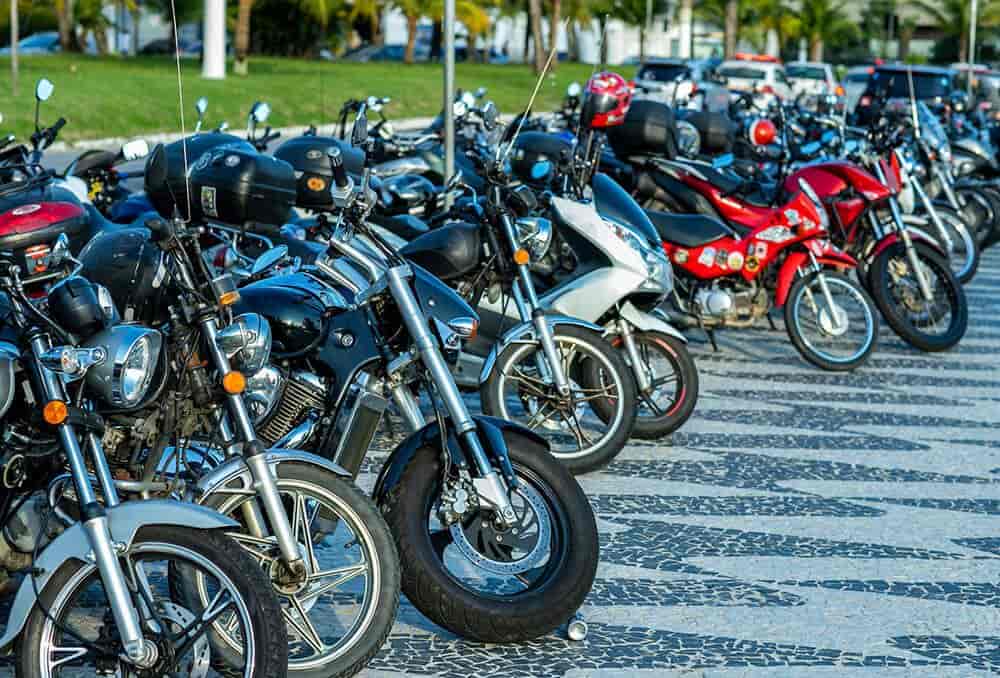
Motorcycles come in far more forms than the familiar cruiser and sport bike. There are standards and naked bikes, cafe racers and scramblers, bobbers, choppers, and baggers, full touring machines and sport-tourers, adventure bikes and dual-sports, dirt bikes built for the motocross track and for the trail, supermotos, scooters, mopeds and minibikes, electric motorcycles, and three-wheelers. Each one is built around a particular kind of riding, and each asks something different of the person riding it.
This guide walks through every major category in production, from 124cc minibikes to three-wheel touring machines. For each type you get what defines it, typical seat heights and weights drawn from current manufacturer specification sheets, what it does well, where it costs you, and who it suits best. The differences run deeper than styling: the seat on an entry-level cruiser sits more than ten inches lower than the seat on a motocross bike, and a full touring bike weighs nearly four times as much as a minibike.
After the types, the guide covers the practical questions that come with choosing one: which categories are growing, how to tell whether a motorcycle fits your body, what the law counts as a motorcycle, what license you need, what ownership costs beyond the sticker price, and how much space each type needs when the riding season ends.
We will also tell you plainly when you should not rent motorcycle storage. A motorcycle is small, and for a lot of owners the right answer is a corner of the garage and a good cover. We would rather say so than sell you a unit you do not need.
Table of Contents
- How Motorcycle Types Are Classified
- Standard and Naked Motorcycles
- Retro Motorcycles: Cafe Racers, Scramblers, and Modern Classics
- Cruiser Motorcycles
- Bobbers, Choppers, and Power Cruisers
- Baggers
- Touring Motorcycles
- Sport-Touring Motorcycles
- Sport Bikes: Supersport, Superbike, and Hyperbike
- Adventure Motorcycles
- Dual-Sport Motorcycles
- Dirt Bikes: Motocross, Enduro, Trail, and Trials
- Supermoto Motorcycles
- Scooters and Maxi-Scooters
- Mopeds, Minibikes, and Small-Displacement Motorcycles
- Electric Motorcycles and the E-Bike Gray Zone
- Three-Wheel Motorcycles: Trikes, Reverse Trikes, and Sidecars
- Which Motorcycle Types Are Growing: The Market in Numbers
- Fit Before Style: Seat Height, Weight, and Reach
- Which Type Is Right for a New Rider
- What Legally Counts as a Motorcycle
- Licensing, Endorsements, and Street Legality by Type
- The Costs That Arrive After the Purchase Price
- Storage Footprint by Motorcycle Type: What Fits Where
- When Renting Motorcycle Storage Does Not Make Sense
- Frequently Asked Questions About Motorcycle Types
- Finding the Right Space for Your Motorcycle
How Motorcycle Types Are Classified
There is no official, universal list of motorcycle types. Manufacturers, magazines, insurers, and regulators all sort motorcycles differently, and the labels drift with marketing.
The types covered in this guide
- Standard and naked: upright, unfaired all-rounders
- Retro: modern motorcycles with 1950s–1980s styling, including cafe racers and scramblers
- Cruiser: low seat, feet-forward controls, and a torque-focused engine
- Bobber, chopper, and power cruiser: cruiser variants defined by stripped bodywork, an extended front end, or high performance
- Bagger: a cruiser with a fairing and hard saddlebags
- Touring: the largest two-wheelers, built for long days with a passenger
- Sport-touring: sport bike performance with luggage and long-distance comfort
- Sport bike: built for performance on pavement, from entry models to superbikes
- Adventure: street-legal long-distance motorcycles that handle unpaved roads
- Dual-sport: street-legal dirt bikes
- Dirt bike: off-road machines for motocross, enduro, trail, and trials riding
- Supermoto: a dirt bike chassis on street wheels and tires
- Scooter: step-through and automatic, from small city scooters to highway-capable maxi-scooters
- Moped and minibike: the smallest road-going machines
- Electric: a powertrain that now appears across most of these categories
- Three-wheel: trikes, reverse trikes, sidecar rigs, and autocycles
The common core
Most classification schemes agree on a core of six categories: standard, cruiser, touring, sport, off-road, and dual-purpose. Sport-touring is often treated as a seventh. Everything else, including bobbers, baggers, adventure bikes, supermotos, and scooters, is either a subtype of one of those or a category that some schemes include and others leave out.
How regulators sort them
The federal emissions rules ignore style completely. The Environmental Protection Agency classifies highway motorcycles by engine displacement under 40 CFR 86.419:
- Class I-A: under 50cc, which captures most mopeds and small scooters
- Class I-B: 50cc to 169cc
- Class II: 170cc to 279cc
- Class III: 280cc and over, which covers the overwhelming majority of full-size motorcycles
Off-highway motorcycles are certified under a separate EPA program for recreational vehicles entirely. So a regulator’s view of the market is two-dimensional: on-road or off-road, and how big is the engine.
Reading a motorcycle by its ergonomic triangle
To identify a motorcycle type at a glance, look at three points: where the seat is, where the handlebars are, and where the footpegs are. Riders call this the ergonomic triangle, and it predicts how a bike will feel more reliably than its model name does.
- Upright triangle: bars close and high enough that your back is roughly vertical, feet below your hips. Standards, adventure bikes, dual-sports, and most scooters
- Feet-forward triangle: low seat, feet out in front, arms reaching forward or up. Cruisers, baggers, and many touring bikes
- Forward-leaning triangle: low bars, high and rearward footpegs, torso tipped toward the tank. Sport bikes, and to a lesser degree cafe racers and sport-tourers
Two more physical clues finish the job. Wheel and tire choice tells you where the bike is meant to go: a 21-inch front wheel with knobby tires says dirt, 17-inch wheels with sticky street rubber say pavement. Suspension travel tells you how much rough ground it is built to absorb, and long travel almost always means a tall seat.
Use the triangle, the wheels, and the suspension, and you can classify nearly any motorcycle on a showroom floor, including the crossover models whose names deliberately blur the lines.
Standard and Naked Motorcycles
The standard is the baseline motorcycle, the one the other categories are variations on. It has an upright ergonomic triangle, an exposed engine, a conventional fuel tank above it, and little or no fairing. The industry and riders use “naked bike” for the modern, performance-leaning version of the same idea. In practice the two terms overlap almost entirely.
Typical characteristics:
- Riding position: upright or slightly forward, feet roughly below the hips
- Seat height: commonly around 30 to 32 inches
- Displacement: spans the whole range, from 125cc learner bikes to liter-class machines
- Examples: Yamaha MT-07, Honda CB650R, Triumph Trident, Kawasaki Z650
What a standard does well
Almost everything adequately and nothing badly. The neutral riding position is comfortable around town and tolerable on the highway. The absence of bodywork keeps weight down and repair costs low, which matters the first time a new rider tips one over in a parking lot. Standards are the easiest motorcycles to fit with luggage, windscreens, and comfort seats, so one bike can be shaped toward commuting, light touring, or weekend backroads.
The middleweight naked segment, roughly 650cc to 900cc, is one of the most competitive in the industry. That competition produces genuinely good motorcycles at reasonable prices, and it is a large part of why so many instructors steer new riders here.
Streetfighters: the performance end
At the top of the category sit streetfighters, which are essentially superbikes with the fairings removed and higher, wider handlebars fitted. The style began as a custom practice, with riders stripping crashed sport bikes rather than replacing expensive bodywork, and manufacturers eventually started building them from the factory. The engines are close to superbike tune, so do not mistake the upright posture for a gentle bike.
Where it costs you
Wind. With no fairing, your chest is the windscreen, and sustained highway speed is tiring on a naked bike in a way it is not on a sport-tourer. Passenger accommodations are usually an afterthought. And the jack-of-all-trades nature that makes standards sensible also means a dedicated cruiser, tourer, or sport bike will do its own specialty better.
Who it is for
New riders, commuters, and anyone who wants one bike to do several things. If you are not sure what kind of riding you will end up doing, a standard is the category least likely to be wrong.
Retro Motorcycles: Cafe Racers, Scramblers, and Modern Classics
Retro motorcycles are built to look like motorcycles from roughly the 1950s through the 1980s, with period tank shapes, round headlights, spoked or styled wheels, and twin rear shocks, while using modern fuel injection, brakes, and electronics underneath. Mechanically most of them are standards. What separates them is the look, and three distinct looks dominate.
Modern classics
The broadest group: an upright standard with heritage styling. The Triumph Bonneville family, the Kawasaki Z900RS, and the Royal Enfield Classic 350 all sit here. Ergonomics are neutral and seat heights are commonly in the high 20s to low 30s, which makes this one of the more approachable corners of the market.
Cafe racers
A style born in postwar Britain, named for riders who raced between roadside cafes. A cafe racer takes a standard and pushes the ergonomic triangle forward with low, narrow handlebars or clip-ons, rearward footpegs, and a long, flat seat, often with a small cowl behind it. The Royal Enfield Continental GT 650 and Triumph Thruxton are current examples. Expect a sportier posture than a standard and less comfort than a standard, in exchange for one of the most recognizable silhouettes in motorcycling.
Scramblers
A scrambler is a street motorcycle dressed for light dirt use: wider handlebars, upswept exhaust, more ground clearance, and dual-purpose tires. The important distinction is direction of travel. A dual-sport starts as a dirt bike and is made street legal. A scrambler starts as a street bike and is made a little more capable off pavement. The Ducati Scrambler line and Triumph Scrambler 400 X are examples. They handle gravel roads and graded fire roads well and genuine trail riding poorly.
Where retro bikes cost you
Style carries weight. Steel tanks, chrome, and spoked wheels add pounds compared with a modern naked bike of the same displacement. Some retro models trade suspension travel and adjustability for the look. And spoked wheels often mean tube-type tires, which complicate roadside flat repair.
Who they are for
Riders who care how a motorcycle looks and are willing to give up a little performance for it. That is a perfectly legitimate priority, and the modern versions are far more reliable than the originals they imitate.
Cruiser Motorcycles
The cruiser is the motorcycle most Americans picture first: long, low, and relaxed, styled after American motorcycles of the 1930s through the 1960s. The defining features are a low seat, a feet-forward ergonomic triangle, a long wheelbase, and an engine tuned for torque at low speed rather than horsepower at high speed. V-twin engines are traditional, though not universal.
Typical characteristics:
- Riding position: reclined, feet forward on pegs or floorboards, hands at a mid or high bar
- Seat height: the lowest of any category, commonly in the mid to high 20s. The 2026 Honda Rebel 300 lists a 27.2-inch seat
- Weight: from under 400 pounds for entry models to well over 700 for large-displacement big twins. Honda lists the Rebel 300 at 379 pounds ready to ride
- Examples: Honda Rebel series, Harley-Davidson Softail family, Indian Chief and Scout, Kawasaki Vulcan S
What a cruiser does well
The low seat is the headline. Being able to put both feet flat on the ground at a stop is a genuine confidence advantage, and it is the reason small cruisers are one of the most common first motorcycles. The low center of gravity makes the bike feel planted at parking-lot speeds. Torque-heavy engines are relaxed and forgiving, with no need to rev them to make progress.
Cruisers are also the most customizable category in motorcycling. An enormous aftermarket exists for seats, bars, pegs, exhausts, and lighting, and a cruiser can be reshaped substantially to fit its owner.
Where it costs you
Ground clearance and lean angle. A low bike runs out of cornering clearance early, and the footpegs or floorboards will scrape in turns that a standard takes easily. Feet-forward posture puts your weight on your tailbone and leaves your back to absorb bumps, which some riders find uncomfortable over long days. Weight on the larger models is substantial, and it matters most when you are pushing the bike backward out of a parking space or a storage unit.
And the cruiser segment is the one losing share. Industry data shows cruiser sales down 6 percent in 2025, which tends to mean a buyer-friendly used market.
Who it is for
Riders who want a relaxed pace, shorter riders who value a low seat, and anyone who wants a motorcycle they can personalize heavily. A small cruiser is also a defensible first bike for riders who are nervous about reaching the ground.
Bobbers, Choppers, and Power Cruisers
These three are cruiser subtypes, and they are frequently confused with one another and with cruisers generally. Each is defined by a specific change to the cruiser formula.
Bobbers
A bobber is a cruiser stripped down to the minimum: shortened or “bobbed” fenders, a small solo seat, a small tank, and as little extra hardware as possible. The style traces back to riders removing weight from their bikes to go faster. Modern factory bobbers, such as the Triumph Bonneville Bobber and several Harley-Davidson Softail models, are styling exercises more than performance machines. Expect a solo seat, limited suspension travel, and minimal passenger or luggage capacity.
Choppers
A chopper is defined by its front end: a steering head raked out at a steep angle and extended fork tubes that push the front wheel far ahead of the rider, usually with tall handlebars. The style is largely custom-built rather than factory-produced, and its moments of mainstream popularity have come and gone. Long rake and trail make a chopper stable in a straight line and slow to turn, which is the trade-off for its look.
Power cruisers
A power cruiser keeps cruiser styling and adds sport-bike performance: a high-output engine, stronger brakes, better suspension, and usually a wide rear tire. The Ducati Diavel and Triumph Rocket 3 are clear examples. The category is defined by engine output, brakes, and suspension rather than styling. Power cruisers are fast, heavy, and expensive, and they are not beginner motorcycles.
Who these are for
Bobbers suit solo riders who want a minimalist look and mostly short rides. Choppers suit people who value the build and the statement over handling. Power cruisers suit experienced riders who want straight-line performance in a relaxed riding position.
Baggers
A bagger is a cruiser with a fork-mounted or frame-mounted fairing and hard saddlebags, but without the top case and full passenger accommodations of a full touring bike. It sits low, it looks long, and in the American market it is one of the most popular configurations on the road. The Harley-Davidson Street Glide and Road Glide and the Indian Chieftain and Challenger define the category.
Typical characteristics:
- Seat height: low, commonly in the high 20s. Harley-Davidson lists the 2026 Street Glide at 28.1 inches unladen
- Weight: heavy. Harley-Davidson lists the 2026 Street Glide at 811 pounds in running order
- Length: long. The same model measures 94.9 inches, just under eight feet
- Engine: large-displacement V-twin as a rule
Bagger versus touring bike
The two terms are often used interchangeably, but they describe different motorcycles. A bagger has a fairing and saddlebags. A full touring bike, sometimes called a full dresser, adds a top case, a passenger backrest, and usually more wind protection and more electronics. That difference changes the dimensions: Harley-Davidson lists the Street Glide Limited, which adds the top case and passenger amenities, at 103.3 inches long, 40.7 inches wide, and 893 pounds in running order. That is about eight and a half inches longer and roughly 80 pounds heavier than the base Street Glide, which matters later when you are measuring a parking space.
What a bagger does well
Long-distance comfort with a lower, sleeker profile than a full dresser. The fairing takes the wind off your chest, the bags carry a weekend’s gear, and modern infotainment systems put navigation and audio in front of you. For one or two people on day trips and weekend runs, it is hard to beat.
Where it costs you
Mass. A bagger at over 800 pounds is manageable on the move and demanding at walking pace, particularly on a slope, on gravel, or when you need to push it backward. Low cornering clearance limits how hard it can be ridden. Purchase prices are high, and the custom culture around baggers can make it very easy to spend substantially more on wheels, audio, and performance parts.
Who it is for
Experienced riders who ride far, mostly solo or two-up on pavement, and who want comfort without the full bulk of a touring rig. Not a first motorcycle.
Touring Motorcycles
A full touring motorcycle is built to cover hundreds of miles a day, for days in a row, with two people and their luggage. Large fairings, tall windscreens, hard saddlebags, a top case, a passenger seat with a backrest, and a long list of comfort electronics are standard. The Honda Gold Wing, Harley-Davidson Ultra Limited, BMW K 1600 GTL, and Indian Roadmaster represent the category.
Typical characteristics:
- Weight: the heaviest two-wheelers in production. Specification sheets for the 2026 Gold Wing Tour list roughly 845 pounds ready to ride
- Length: often past eight and a half feet. The 2026 Gold Wing Tour measures 102.9 inches
- Width: around three feet across the fairing and bags. The Gold Wing Tour is listed at about 36 inches wide
- Seat height: lower than you might expect for the size. The Gold Wing Tour lists 29.3 inches
What a touring bike does well
Distance, with a passenger, in comfort. The passenger experience on a full tourer is in a different class from any other motorcycle, which is why so many two-up riders end up here. Weather protection is extensive, luggage capacity is real, and features such as heated seats and grips, cruise control, and integrated audio and navigation make a twelve-hour day survivable.
Some touring models also offer a feature almost no other motorcycle has: reverse. The Gold Wing lineup includes models with a reverse function, and given the weight, it is not a gimmick. It is the difference between backing out of a sloped parking space under power and recruiting a stranger to help push.
Where it costs you
Everything that makes a tourer comfortable makes it heavy, and weight governs the ownership experience at low speed. U-turns on a crowned road, tight parking lots, and gravel driveways all demand skill. Dropping one is expensive, and lifting one requires technique. Purchase prices are the highest in two-wheel motorcycling, and the electronics add complexity.
The category is also contracting. Touring sales fell 13 percent in 2025, according to the Motorcycle Industry Council, which makes the used market a good place to look if you want one.
Who it is for
Experienced riders who travel long distances, especially two-up, and who value comfort and carrying capacity above agility. If most of your rides are under an hour, a tourer is more motorcycle than the job requires.
Sport-Touring Motorcycles
A sport-tourer combines a sport bike’s engine and chassis with a touring bike’s fairing, luggage, and more upright ergonomics. The goal is to cover long distances quickly on twisting roads rather than slowly on straight ones. The BMW R 1300 RT, Kawasaki Ninja 1000SX, and Yamaha Tracer 9 GT are representative.
Typical characteristics:
- Riding position: upright to slightly forward, with footpegs higher than a tourer for cornering clearance
- Seat height: commonly in the low 30s
- Weight: substantially lighter than a full tourer, typically in the 500- to 600-pound range
- Luggage: hard or semi-rigid side cases, often removable
What it does well
Real-world versatility at speed. A sport-tourer can commute during the week, carve a mountain road on Saturday, and carry two people and their gear across several states on vacation. Its suspension is usually adjustable and frequently electronic, and its brakes and handling are far ahead of a full tourer’s.
Where it costs you
It is a compromise in both directions. Passenger accommodations are more spartan than on a full tourer, and wind protection is good but not cocoon-like. Next to a pure sport bike it is heavier and less sharp. Prices are high, since you are buying both a performance engine and touring hardware.
Who it is for
Experienced riders who want to go far and fast, often on backroads, and who would rather have one capable motorcycle than separate weekend and vacation bikes.
Sport Bikes: Supersport, Superbike, and Hyperbike
Sport bikes are built for performance on pavement: acceleration, braking, and cornering. Full fairings for aerodynamics, a forward-leaning ergonomic triangle with low clip-on handlebars and rearward footpegs, and engines that make their power high in the rev range define the category. Within it, three tiers matter.
- Entry and middleweight sport bikes: roughly 300cc to 700cc, built for the street with sporty styling and approachable power. The Kawasaki Ninja 500, Yamaha YZF-R3 and R7, and Honda CBR650R live here. This is where the industry’s growth is: sport bike sales rose 13 percent in 2025, all of it from models under 750cc
- Supersports and superbikes: race-derived machines. Supersports have traditionally been 600cc-class bikes; superbikes are liter-class machines closely related to what races in World Superbike and MotoAmerica. Suspension is fully adjustable, electronics are sophisticated, and the riding position is aggressive
- Hyperbikes: very high-horsepower machines built for straight-line speed and stability, such as the Suzuki Hayabusa. Longer and heavier than superbikes, and among the fastest production vehicles of any kind
What a sport bike does well
Precision. Nothing else in this guide brakes, turns, and responds to rider input as sharply. A middleweight sport bike can also be a reasonable commuter for riders who do not mind the posture, because sport bikes are relatively light and narrow.
Where it costs you
Comfort: the forward lean puts weight on your wrists, and long days hurt. Passengers: the rear seat is a token gesture on most models. Insurance: the higher-performance end of the category carries the highest insurance losses of any motorcycle type, and Section 23 covers why. Risk: the supersport class has the worst rider death rate in the published research, a finding with a real methodological dispute attached, covered in Section 20.
Who it is for
Entry and middleweight sport bikes can suit motivated new riders who have taken training seriously. Supersports, superbikes, and hyperbikes are for experienced riders, and many of their owners will tell you the right place to use the performance is a track day, not a public road.
Adventure Motorcycles
An adventure motorcycle, or ADV bike, is a street-legal machine designed to travel long distances on pavement and keep going when the pavement ends. Upright ergonomics, long-travel suspension, a large fuel tank, wind protection, crash protection, and mounting points for luggage are standard. The BMW R 1300 GS, KTM 890 Adventure, Honda Africa Twin, and Kawasaki KLR 650 span the category.
Typical characteristics:
- Seat height: tall. BMW lists the R 1300 GS at 33.4 inches in standard form, and some variants sit near 35 inches
- Weight: from under 400 pounds for small-displacement models to roughly 520 to 600 pounds for large ones. BMW lists the R 1300 GS at 523 pounds road ready and fully fueled
- Width: wide at the bars. The R 1300 GS measures 39.4 inches across its hand guards, before side cases
- Wheels: commonly a 19-inch front for road-biased models or a 21-inch front for dirt-biased models
Why it is the growth category
Adventure sales are up 52 percent since 2019, according to the Motorcycle Industry Council, and the recent growth has come from smaller models: units under 600cc rose 10 percent in 2025. The appeal is versatility. An ADV bike commutes comfortably, tours with luggage, handles gravel and forest roads, and rides over the potholes and broken pavement that punish a sport bike.
How an adventure bike handles the dirt
A large adventure bike is at its best on gravel roads, fire roads, and long stretches of mixed surface. On steep, technical trail it becomes demanding: a 500-pound-plus motorcycle with a tall seat is hard to maneuver at walking pace and hard work to pick up alone on a slope. For that kind of riding, a lighter dual-sport (Section 11) is the better tool. For covering long distances when the route includes unpaved miles, the adventure bike is in its element.
Where it costs you
Height and mass. Tall seats shut out many shorter riders, and lowering a bike changes its geometry and ground clearance, so do it with dealer guidance rather than guesswork. Some current models offer electronically adjustable ride height to address exactly this. Large ADV bikes are also expensive, and protective bars and luggage add cost.
Who it is for
Riders who want one bike for commuting, touring, and unpaved roads. Smaller models in the 300cc to 600cc range are a strong, increasingly popular choice for newer riders who want that versatility without the weight.
Dual-Sport Motorcycles
A dual-sport is a dirt bike that is street legal. It starts from an off-road chassis, with long suspension travel, a tall seat, a narrow body, and usually a single-cylinder engine, and adds the equipment required for public roads: lights, mirrors, turn signals, a horn, DOT-approved tires, and emissions certification for highway use. The Honda CRF300L, Kawasaki KLX300, Suzuki DR-Z4S, and KTM 690 Enduro R are examples.
Typical characteristics:
- Seat height: high, commonly in the mid-30s
- Weight: light by street standards, commonly around 280 to 350 pounds
- Engine: usually a single cylinder, roughly 250cc to 700cc
- Fuel range: limited, because tanks are small
A long history
Manufacturers have sold street-legal dirt bikes since the late 1960s, and the category has a long and loyal following. Interest has grown sharply in recent years: off-highway-capable motorcycles as a group have gained about eight points of market share since 2019.
Dual-sport versus adventure
The two categories overlap, and the difference comes down to weight and intent. A dual-sport is a dirt bike that can ride to the trail. An adventure bike is a road bike that can handle the dirt. A 300-pound dual-sport can be picked up easily, ridden over logs, and taken down a rutted single-track. A 500-pound adventure bike is far more comfortable on a 200-mile highway stretch to get there.
Where it costs you
Highway comfort. Narrow seats, buzzy single-cylinder engines, and minimal wind protection make long interstate stretches tiring. Tall seats are a barrier for shorter riders, although many dual-sports offer lowering options. Knobby tires that grip in dirt wear quickly on pavement.
Who it is for
Riders whose main interest is dirt and trail riding but who want to ride from the garage to the trailhead without a truck and trailer. Also an excellent and forgiving way to learn, since a light bike is easy to pick up and cheap to repair.
Dirt Bikes: Motocross, Enduro, Trail, and Trials
“Dirt bike” covers several distinct machines built for off-road use, most of which cannot be registered for public roads. The differences among them are bigger than the shared knobby tires suggest.
- Motocross bikes: pure competition machines built for closed tracks with jumps. No lights, no mirrors, no kickstand on many models, and long, stiff suspension. Honda lists the 2026 CRF450R with a 37.8-inch seat height and a 249-pound curb weight, which tells you everything about the category: tall and light
- Enduro and cross-country bikes: built for long off-road races and trail riding, with softer suspension tuning, wider-ratio gearboxes, larger fuel tanks, and often lights. Lights alone do not make an enduro bike street legal
- Trail bikes: recreational machines with lower seats, softer power, and less suspension travel, priced well below competition models. Many come in smaller sizes for younger and smaller riders. Air-cooled four-stroke engines are common, and so is a forgiving nature
- Trials bikes: a specialized niche built to pick through obstacle sections at walking pace without touching a foot down. Little or no seat, very short suspension travel, and extraordinary low-speed control
How federal rules mark a competition bike
Off-highway motorcycles are certified for emissions under a separate EPA program for recreational vehicles, and manufacturers can obtain an exemption for models used solely for competition. Under 40 CFR 1051.620, the features EPA treats as indicating a competition-only motorcycle include the absence of a headlight or other lights and the absence of a spark arrestor, and exempted machines must carry a permanent label stating that they are for competition use only. If a bike wears that label, it was not certified for trail riding on public land, let alone the street.
Two-stroke or four-stroke
Both are sold new. Two-strokes are lighter, simpler, and punchy, and they need fuel mixed with oil and more frequent top-end rebuilds. Four-strokes are heavier and more complex but deliver smoother, more tractable power and longer service intervals. Maintenance schedules on competition bikes are measured in engine hours rather than miles, and they are short.
Where dirt bikes cost you
You need somewhere to ride. That means private land, a track, or a designated off-highway area, and many public riding areas set their own equipment rules, such as spark arrestors and sound limits, along with their own registration or permit requirements. You also need a way to get there, which usually means a truck, a trailer, or a hitch carrier, plus ramps. And you need somewhere to keep all of it, which is the part most first-time buyers do not plan for.
Who they are for
Anyone whose riding happens off pavement. A trail bike is also one of the best ways to learn motorcycle control. Falling in the dirt at low speed is how many very skilled street riders learned what a motorcycle does at the limit of traction.
Supermoto Motorcycles
A supermoto starts with a dirt bike chassis, usually a motocross or enduro platform, and fits 17-inch wheels with sticky street tires, a larger front brake, and street-oriented suspension tuning. The result is tall, narrow, light, and very quick to change direction. The sport began as a race format combining pavement and dirt sections, and street-legal versions, such as the Husqvarna 701 Supermoto, KTM 690 SMC R, and Suzuki DR-Z4SM, are sold from the factory.
What it does well
Urban riding and tight, technical pavement. A supermoto is narrow enough to slip through congested streets, light enough to flick around at low speed, and upright enough to see over traffic. On a tight mountain road it can be startlingly fast. Riders also love them for being fun at legal speeds, which is not true of every high-performance motorcycle.
Where it costs you
The seat is tall, inherited from the dirt chassis. Fuel tanks are small, so range is short. The single-cylinder engines vibrate on the highway, and the seats are narrow and firm. Wind protection is essentially nonexistent. A supermoto is a terrific second motorcycle and a demanding only motorcycle for anyone who rides long highway distances.
Who it is for
City riders, canyon riders, and experienced riders who want maximum fun per mile at moderate speeds. Tall riders tend to find them more comfortable than most motorcycles.
Scooters and Maxi-Scooters
A scooter is defined by its layout: a step-through frame with a flat floorboard for the rider’s feet, bodywork enclosing the engine, small wheels, and nearly always an automatic continuously variable transmission. Federal safety rules treat a scooter as a motorcycle, and a small one may also count as a motor-driven cycle, as Section 21 explains.
Scooters split into two groups that serve very different purposes.
- Small scooters: 50cc to roughly 200cc, built for short urban trips. Light, cheap to buy and run, and easy to park. The smallest are limited in speed and should stay off fast arterial roads
- Maxi-scooters: roughly 300cc to 750cc and up, capable of sustained highway speeds, with larger fuel tanks, real wind protection, and often enough under-seat storage for a full-face helmet. The Yamaha XMAX, Honda ADV350, Suzuki Burgman 400, and Kymco AK 550 are examples
What a scooter does well
Practicality. No clutch, no shifting, a flat floor, weather protection for your legs, and lockable storage make a scooter the most commuter-friendly two-wheeler in this guide. Fuel economy is excellent. For a rider who wants transportation rather than a hobby, a scooter often makes more sense than any motorcycle.
Where it costs you
Small wheels are less stable over potholes and broken pavement than full-size motorcycle wheels. Small scooters can feel dangerously slow in fast traffic. And the licensing is less simple than many buyers assume: whether you need a motorcycle license or endorsement typically depends on the scooter’s engine size and top speed under your state’s rules. Section 22 covers how that layer works.
Who it is for
Urban commuters, riders who do not want to learn a manual clutch, and anyone who values storage and weather protection. A maxi-scooter is a legitimate long-distance machine and is underrated by riders who have never tried one.
Mopeds, Minibikes, and Small-Displacement Motorcycles
“Moped” is often used loosely to mean any small, slow two-wheeler, but the word has a specific legal meaning, and the small end of the market includes several distinct machines.
Mopeds
The original moped was a motorized bicycle with pedals, which is where the word comes from. Today the term is primarily a legal one, and the definition belongs to the states. Federal safety rules group very low-powered motorcycles into the motor-driven cycle subcategory, and NHTSA has referenced a top speed of 30 miles per hour or less when applying certain standards to mopeds. Many states define a moped with a combination of engine size, commonly around 50cc, and a speed cap, commonly around 30 miles per hour, but the exact thresholds and the license requirements attached to them vary by state.
The practical point is that the difference between a moped and a scooter is legal, not visual. Two machines that look identical can be classified differently because one is a 49cc model limited to around 30 miles per hour and the other is a 150cc model capable of 60. On the emissions side, the EPA places engines under 50cc in a separate subclass, Class I-A.
Minibikes and small-displacement motorcycles
A minibike is a full motorcycle shrunk down: manual transmission, real suspension, real brakes, and small wheels. The Honda Grom is the defining example, and its specification sheet shows how small this category runs: a 124cc engine, 12-inch wheels, a 30.0-inch seat, a curb weight of 224 pounds, and an overall length of about 69 inches.
Do not mistake small for moped. A 124cc minibike is a motorcycle under federal rules and, in most states, requires a motorcycle license or endorsement to ride on the street. It is also generally not fast enough for highways, which limits it to surface streets.
Who these are for
Mopeds suit very short, low-speed trips where state rules make them simple to own. Minibikes suit urban riders, riders who want to learn manual-transmission skills on something forgiving, and experienced riders who want a toy. Both are among the cheapest vehicles in this guide to buy, insure, and store.
Electric Motorcycles and the E-Bike Gray Zone
Electric motorcycles are not a style, they are a powertrain, and they appear in almost every category in this guide: commuter scooters, naked street bikes, dual-sports, and small dirt bikes. LiveWire, which began inside Harley-Davidson, and Zero Motorcycles are two of the best-known dedicated electric brands in the U.S. market.
What electric does well
Instant torque, little routine maintenance, no oil changes, and quiet operation. Most electric motorcycles have no clutch and no gears to shift, which removes a major learning hurdle for new riders. For a commute of known length with charging at both ends, the ownership experience can be excellent.
Where it costs you
Range, especially at sustained highway speed, where electric motorcycles consume energy fastest. Charging time is measured in hours on a household outlet. Battery packs add weight and represent a large share of the purchase price. And resale values in a young, fast-changing category are hard to predict.
The gray zone: electric dirt bikes sold like e-bikes
A fast-growing category of light electric off-road machines, often called e-motos, is marketed and talked about as if it were a kind of e-bike. Under the federal definition covered in Section 21, it is not. A legal low-speed electric bicycle must have operable pedals, a motor under 750 watts, and a motor-only top speed under 20 miles per hour. Many of these machines have no pedals at all, carry motors rated well into the thousands of watts, and are capable of speeds far beyond 20 miles per hour.
That makes them motor vehicles, and since most are not built to federal on-road standards, they are generally treated as off-road electric motorcycles: legal on private land and in designated riding areas, and not legal on public streets, bike lanes, or multi-use paths. Regulators in California have taken the position that adding pedals after the fact does not change the classification, because it follows the machine’s power and original design. If someone in your household wants one, check your state’s rules before you buy, not after a traffic stop.
Most states that regulate e-bikes use a three-class system: Class 1 is pedal-assist to 20 miles per hour, Class 2 adds a throttle with the same 20 mile-per-hour limit, and Class 3 is pedal-assist to 28 miles per hour. Anything outside those classes is something else.
Who electric is for
Commuters with predictable distances and reliable charging, and riders who want to skip the clutch. Long-distance tourers and anyone without a place to charge should look hard at the range figures for their actual riding before committing.
Three-Wheel Motorcycles: Trikes, Reverse Trikes, and Sidecars
Because the federal motorcycle definition allows up to three wheels, three-wheelers are a legitimate and growing part of the category. They appeal to riders who want stability at a stop, riders returning after an injury or with balance concerns, and two-up tourers who want a car-like level of security without giving up the open-air experience.
- Traditional trikes: one wheel in front, two in back. The Harley-Davidson Tri Glide Ultra is the factory example, and conversion kits turn many touring motorcycles into trikes
- Reverse trikes: two wheels in front, one in back. The Can-Am Spyder line is the best-known example. Two front wheels make for strong braking and cornering stability
- Sidecar rigs: a conventional motorcycle with a one-wheeled passenger car bolted alongside. Asymmetric handling makes them a specialized skill, and riders who love them really love them
- Autocycles: three-wheelers with a steering wheel and side-by-side seats rather than handlebars and a saddle, such as the Polaris Slingshot. Federally they are still motorcycles, but many states now classify them separately
Size changes everything
Three wheels mean width, and width is the dimension most people never think to check. Specification sheets for the Can-Am Spyder RT list it at about 61 inches wide, roughly 109 to 111 inches long depending on model year and trim, and roughly 1,000 pounds dry. That is wider than a five-foot-wide storage unit, which is the single most important fact in Section 24 for anyone who owns one.
How three-wheelers ride
Differently. A three-wheeler does not lean into turns the way a two-wheeler does, so the rider steers it more like a car, and riders coming from two wheels need to unlearn countersteering. Stability at low speed and at a stop is the major advantage. The trade-offs are weight, cost, width in traffic and parking, and in some states, a different licensing path.
Licensing is not uniform
The American Association of Motor Vehicle Administrators recommended in its 2013 best practices that an autocycle, meaning a three-wheel motorcycle with a steering wheel and seating the operator does not straddle, be operable with a regular driver’s license, while riders of other three-wheel motorcycles keep a motorcycle endorsement. Many states have since adopted autocycle definitions, and some offer an endorsement restricted to three-wheel motorcycles. Check your state’s current rules for the specific machine.
Who they are for
Riders who value stability over lean, riders with physical limitations that make balancing a heavy two-wheeler difficult, and touring couples who want maximum security and capacity.
Which Motorcycle Types Are Growing: The Market in Numbers
Not every type sells in the same numbers, and the direction of the market over the last several years is one of the more useful things a buyer can know, because it shapes used inventory, resale value, insurance pricing, and which models manufacturers keep investing in.
The Motorcycle Industry Council, the industry’s trade association, tracks new retail sales from the leading manufacturers and distributors in the United States. Its 2025 year-end data showed:
- Overall sales fell. New motorcycle and scooter sales declined 7.6 percent from 2024. Motorcycles and scooters made up about 73 percent of new powersports units in the data, with ATVs making up the rest
- Sport bikes grew 13 percent, and according to the MIC, all of that growth came from models under 750cc
- Adventure bikes kept climbing. The category is up 52 percent since 2019, and in 2025 its growth was driven by smaller models, with units under 600cc up 10 percent year over year
- Trail bikes were flat overall, but midsize trail models over 125cc rose 9 percent
- Touring sales fell 13 percent and cruiser sales fell 6 percent
The longer trend
Stretch the window back to 2019 and the shift is clearer still. Off-highway-capable motorcycles, a group that includes adventure, dual-sport, trail, and off-road competition models, gained about eight points of market share, two of them in 2025 alone. Sport bikes gained about seven points. Traditional on-highway motorcycles lost a combined fifteen points over the same period.
The MIC attributes the change to broader model lineups, changing demographics, and more interest from younger and female riders. It also notes something every new rider should hear: smaller-displacement motorcycles are generally more affordable, easier to insure, and more approachable.
What the numbers tell you
The stereotype is the shrinking segment. The heavy cruiser and the full-dress tourer still define the popular image of a motorcycle, but they are the categories losing ground. If you are shopping used, that tends to mean deep inventory and soft pricing in exactly those segments.
The growth is small, light, and versatile. Sub-750cc sport bikes and sub-600cc adventure bikes are where manufacturers are competing hardest, which is good news for buyers: more choice, more features, and more aggressive pricing in the size class that suits most riders.
Dirt is not a niche. Off-road and dual-purpose machines now take a meaningful share of new sales. That matters in the licensing and storage sections that follow, because off-road bikes come with their own registration rules, their own transport problem, and their own storage footprint.
Fit Before Style: Seat Height, Weight, and Reach
Fit decides whether you will enjoy the motorcycle you buy. Style is a preference. Fit is physics. Before you fall for a category, check whether its typical dimensions work for your body.
The spread is enormous
Pull the numbers from manufacturer specification sheets and the range across categories is wider than most people expect:
- Seat height: the 2026 Honda Rebel 300 cruiser lists 27.2 inches. The 2026 Honda CRF450R motocross bike lists 37.8 inches. That is a spread of more than ten inches between two motorcycles from the same manufacturer
- Weight: the Honda Grom lists 224 pounds. The Honda Gold Wing Tour lists roughly 845 pounds. A Can-Am Spyder RT runs to roughly 1,000 pounds dry
- Width: a Grom is about 29 inches wide. A BMW R 1300 GS is 39.4 inches across its hand guards. A Spyder RT is about 61 inches wide
How to read a seat height number
A published seat height is measured unladen, meaning with no rider aboard, and it does not tell the whole story. Two things change what you actually feel.
Suspension sag. When you sit down, the suspension compresses. Harley-Davidson publishes both figures for the 2026 Street Glide: 28.1 inches unladen and 26.4 inches laden. Long-travel suspension on adventure and dirt bikes sags more, which is part of why a tall dirt bike can feel less tall than its number.
Seat width. A wide seat spreads your legs apart and effectively raises the reach to the ground. A narrow seat lets your legs drop straight down. That is why a 31-inch seat on a slim standard can feel more approachable than a 30-inch seat on a wide cruiser. The only real test is to sit on the motorcycle with both feet down, in the boots you will ride in.
How to read a weight number
Manufacturers do not all measure weight the same way, and the differences can be large:
- Curb or wet weight: the motorcycle with all fluids and a full tank of fuel, ready to ride. Honda, for example, defines its curb weight this way. This is the number that matters
- Running order or road ready: similar in intent. Harley-Davidson lists both an “as shipped” weight and a heavier “in running order” weight, and BMW lists “road ready, fully fueled”
- Dry weight: excludes fuel and often other fluids, and sometimes the battery. It flatters the motorcycle by tens of pounds. Treat it as a marketing number unless it is the only one available
Weight matters most at walking pace
On the move, a heavy motorcycle feels lighter than it is. The weight shows up when you are stopped, turning around, parking on a slope, pushing the bike backward, or picking it up after it tips over. Every motorcycle eventually tips over, usually at zero miles per hour. If you cannot comfortably push a bike around a dealer’s parking lot, that is your answer.
Reach and posture
Finally, check the distance from the seat to the handlebars and the angle it puts your wrists and back in. A sport bike that fits a tall rider perfectly can leave a shorter rider stretched over the tank with locked elbows. Many bikes allow adjustable levers, bar risers, or alternative seats, but none of those turn a poorly fitting motorcycle into a well-fitting one.
Which Type Is Right for a New Rider
There is no single right answer, but there is a clear pattern in what works, and it starts with the risk picture.
The risk is real
According to the National Highway Traffic Safety Administration, 6,335 motorcyclists were killed in traffic crashes in 2023, about 15 percent of all traffic deaths, and the highest number since at least 1975. Per vehicle mile traveled, motorcyclists were about 28 times more likely than passenger car occupants to die in a crash. That is not a reason to avoid riding. It is a reason to make the first motorcycle decision deliberately.
What the research says about type
The most cited study on motorcycle type and risk comes from the Insurance Institute for Highway Safety. Its analysis found that supersport riders had a driver death rate of about 22.5 per 10,000 registered motorcycles in 2005, roughly four times the rate for cruisers and standards. Supersports made up less than 10 percent of registered motorcycles but more than 25 percent of rider deaths.
That finding has a genuine dispute attached, and it is worth knowing both sides. The American Motorcyclist Association criticized the analysis, arguing that the classification system was hard to interpret and that the results reflected who rides supersports, a notably young group, as much as the motorcycles themselves. IIHS’s own published study acknowledged it could not completely separate the effect of motorcycle type from rider characteristics such as age. The data is also old, drawn from 2000 and 2005. The reasonable reading is that very high-performance motorcycles and inexperienced riders are a dangerous combination, whichever one is doing more of the work.
What tends to work as a first motorcycle
- A small or middleweight standard: neutral posture, manageable power, low repair costs
- A small cruiser: the lowest seats in motorcycling, which helps riders who are nervous about reaching the ground
- A small dual-sport or trail bike: light, forgiving, cheap to repair, and an excellent way to build skills in the dirt
- A small adventure bike or entry sport bike: the growth segments, with a wide choice of approachable models under 600cc to 750cc
- A scooter: for riders who want transportation and do not want to learn a manual clutch
What tends not to work
Supersports, superbikes, and hyperbikes. Full touring bikes and heavy baggers, whose weight punishes low-speed mistakes. Large adventure bikes for shorter riders. And the bike you plan to “grow into,” which is the most common first-motorcycle mistake and the one experienced riders warn against most consistently.
Two habits that matter more than type
Take a formal rider training course before you buy, not after. And consider a used first motorcycle. New riders drop bikes, and a scratch on an inexpensive used motorcycle is a lesson, while the same scratch on a new one is a repair bill.
What Legally Counts as a Motorcycle
Every type in this guide sits inside a legal definition, and that definition is broader than most riders assume. Federal motor vehicle safety regulations, administered by the National Highway Traffic Safety Administration, define a motorcycle in 49 CFR 571.3 as a motor vehicle with motive power, a seat or saddle for the rider, and a design that travels on not more than three wheels in contact with the ground.
Read that carefully and several things follow.
- Three-wheelers are motorcycles. The federal definition caps the wheel count at three, not two. NHTSA has confirmed in interpretation letters that the arrangement does not matter: two wheels in front and one in back, or one in front and two in back, both qualify. That is why a Can-Am Spyder and a Harley-Davidson Tri Glide sit in the same federal category as a sport bike
- Scooters are motorcycles. There is no separate federal definition of a scooter. NHTSA has said so directly in its interpretations: a scooter is a motorcycle, and depending on its power it may also fall into a smaller subcategory
- Small engines get their own subcategory. The same regulation defines a motor-driven cycle as a motorcycle whose motor produces 5 brake horsepower or less. This is where mopeds and many small scooters land federally, and it is why some safety equipment requirements apply differently to them
Where e-bikes fall out of the definition
Electric bicycles are the one major exception, and the line is drawn by statute. Under the Consumer Product Safety Act, as amended in 2002, a low-speed electric bicycle is a two- or three-wheeled vehicle with fully operable pedals, an electric motor of less than 750 watts, and a top speed under 20 miles per hour on motor power alone with a 170-pound rider. A vehicle that meets all three conditions is regulated as a consumer product, like a bicycle, rather than as a motor vehicle.
Miss any one of the three conditions, by removing the pedals, exceeding the wattage, or exceeding the speed, and the vehicle is back in motor vehicle territory. Section 16 covers why that matters for a fast-growing category of electric dirt bikes.
Why a buyer should care about any of this
Because the definition drives everything downstream. Whether a vehicle is a motorcycle determines how it is titled and registered, what license you need to operate it, what insurance you can buy, where you can legally ride it, and what a storage facility will ask you to show before you park it. States layer their own definitions on top of the federal one, sometimes carving out mopeds by engine size or top speed, sometimes creating a separate category for steering-wheel three-wheelers. But the federal definition is the floor, and it is wider than the word “motorcycle” suggests.
One practical tell: a motorcycle built to be street legal leaves the factory with a certification label stating that it conforms to the applicable federal safety standards. If a machine has no such label, it was not built for public roads, whatever the seller says.
Licensing, Endorsements, and Street Legality by Type
Motorcycle licensing is a state matter, and states do not agree on the details. What follows is the general framework, not a statement of what your state requires. Requirements change, and the only authoritative answer for your situation comes from your state driver licensing agency.
The basic structure
Most states require either a separate motorcycle license or a motorcycle endorsement added to a regular driver’s license, often designated with an “M.” Getting one typically involves a written knowledge test and an on-motorcycle skills test, often preceded by a learner’s permit with restrictions. Many states accept completion of an approved rider training course in place of the state skills test, and some require training for certain applicants or for all of them.
The license matters more than many riders treat it. NHTSA reports that 34 percent of motorcycle riders involved in fatal crashes in 2023 were riding without a valid motorcycle license.
How type changes the licensing question
- Mopeds and small scooters: the category where state rules differ most. Depending on the state and the machine’s engine size and top speed, the answer can range from a regular driver’s license to a full motorcycle endorsement
- Minibikes and all full-size motorcycles: expect a motorcycle license or endorsement, regardless of how small the bike looks
- Three-wheelers: some states require a standard motorcycle endorsement, some offer a three-wheel-only endorsement, and many treat steering-wheel autocycles separately, often allowing a regular license
- Electric motorcycles: licensed like gasoline motorcycles. A vehicle that falls outside the e-bike definition does not escape licensing because it is electric
Street legality is a separate question from licensing
Whether a particular motorcycle can be registered for road use depends on how it was built. Street-legal models leave the factory certified to federal safety standards and carry the matching label, along with highway emissions certification. Dual-sports and supermotos sold as street models have all of this. Motocross and competition-only off-road bikes do not, and some carry a permanent competition-only label.
Converting an off-road motorcycle to street use is governed by state law, and states take very different positions, from allowing it with the right equipment and inspection to effectively prohibiting it. Do not buy an off-road bike on the assumption that you can plate it later. Confirm with your state first.
Off-road motorcycles have their own paperwork in many states too, including off-highway vehicle registration, decals, or trail permits, and riding areas commonly set their own equipment rules.
Helmets
Helmet laws also vary by state, ranging from universal requirements to age-based rules. Whatever your state requires, the federal standard for motorcycle helmets is FMVSS 218, and a helmet certified to it carries a DOT marking. NHTSA emphasizes that wearing a DOT-compliant helmet is especially important for preventing rider deaths.
The Costs That Arrive After the Purchase Price
The sticker price is the easiest cost to see and frequently not the one that determines whether ownership is affordable. Several recurring costs vary sharply by motorcycle type.
Insurance
Motorcycle insurance pricing depends heavily on the type of bike, and the published loss data explains why. A Highway Loss Data Institute analysis of 2002 to 2006 model-year motorcycles found that supersports had the highest collision insurance losses of any type, almost four times the losses for touring motorcycles and more than six times the losses for cruisers. Supersports were also popular targets for theft. That analysis is old, so treat the multiples as directional rather than current, but the pattern still shows up in quotes. The Motorcycle Industry Council notes that smaller-displacement motorcycles are generally easier to insure.
Get a quote on the specific model before you buy, not after. The difference between two bikes that look similar can be larger than the difference in their purchase prices.
Riding gear
A helmet, jacket, gloves, boots, and riding pants are not optional extras, and quality gear is a meaningful line item for a new rider. Dirt riding adds its own gear: goggles, a roost guard or chest protector, knee braces, and off-road boots. Budget for gear as part of the purchase, not as something to add later.
Tires
Motorcycle tires wear faster than car tires, and the rate depends on type. Soft sport compounds can wear out in a few thousand miles of spirited riding. Knobby dirt tires wear quickly on pavement. Touring tires last longer but are large and expensive. Tires also age on a calendar, so a bike that sits most of the year may need new rubber before the tread is gone.
Maintenance and final drive
How the engine’s power reaches the rear wheel affects ongoing maintenance:
- Chain drive: the most common setup on sport, standard, adventure, and dirt bikes. Needs regular cleaning, lubrication, and adjustment, and periodic replacement along with the sprockets
- Belt drive: common on cruisers and baggers. Clean, quiet, and low maintenance, though expensive to replace when it does wear out
- Shaft drive: common on touring bikes, including the Gold Wing. The lowest routine maintenance of the three, at the cost of weight
Competition dirt bikes are a special case. Their service intervals are measured in engine hours, and two-stroke engines in particular need regular top-end rebuilds. A motocross bike ridden hard is a maintenance project as much as a vehicle.
Transport
Off-road motorcycles that cannot be registered for the road have to be hauled to wherever you ride them. That means a pickup, a trailer, or a hitch carrier, and ramps, tie-downs, and the vehicle to tow with.
Storage
The cost most first-time owners never budget for. A motorcycle is small, but it still needs a secure, sheltered place that keeps it out of sun and rain, away from thieves, and out of the way of the household car. If your home has that place, the cost is close to zero. If it does not, because you rent an apartment, your HOA restricts what can sit in the driveway, or your garage is already full, storage becomes a monthly expense for as long as you own the bike. The next section covers what each type needs.
Storage Footprint by Motorcycle Type: What Fits Where
The type you choose determines the space you need when the riding season ends. Most motorcycles fit comfortably in a small unit, the largest touring bikes leave little room to spare, and some three-wheelers do not fit a standard motorcycle-sized unit at all.
Three rules govern everything below.
Rule one: measure the motorcycle as you actually own it. Specification-sheet length and width describe the bike as it left the factory. Side cases, a top case, crash bars, hand guards, a luggage rack, and wide aftermarket handlebars all change the footprint. Measure overall length tip to tail, and width at the widest point, which is usually the mirrors, the hand guards, or the saddlebags.
Rule two: the door is the constraint, not the floor. Unit sizes are nominal, and a roll-up door opening can be narrower than the unit behind it. For anything wide, ask for the door opening width before you reserve.
Rule three: plan which way the bike faces. Most motorcycles have no reverse gear. If you ride in nose first, you will be pushing it out backward, and pushing an 800-pound bagger backward up even a slight grade is genuinely hard. Most riders back the bike in by hand once, while fresh, so they can ride straight out.
The arithmetic, using real motorcycles
A 5x10 unit is nominally 60 inches wide and 120 inches deep. Here is how motorcycles from across this guide fit inside it, using manufacturer dimensions:
- Honda Grom (about 69 by 29 inches): roughly 50 inches of length and 31 inches of width to spare. Plenty of room for gear
- Honda Rebel 300 (86.8 by 32.4 inches): about 33 inches of length and 28 inches of width to spare. Comfortable, with room for a helmet, jacket, and stand
- Honda CRF450R (85.9 by 32.6 inches): nearly identical to the Rebel, with room for a stand and a gear bag
- BMW R 1300 GS (87.1 by 39.4 inches across the hand guards): about 33 inches of length to spare but only about 21 inches of width before side cases. Most owners remove the cases and store them separately
- Harley-Davidson Street Glide (94.9 inches long): about 25 inches of length to spare. It fits, with less room for gear
- Honda Gold Wing Tour (102.9 by about 36 inches): about 17 inches of length and 24 inches of width to spare. It parks, but there is little room to walk around it
- Harley-Davidson Street Glide Limited (103.3 by 40.7 inches): about 17 inches of length and 19 inches of width to spare, which leaves less than ten inches on each side if the bike is centered. You can park it, but you cannot comfortably climb off it inside the unit
- Can-Am Spyder RT (about 61 inches wide and 109 to 111 inches long): does not fit a five-foot-wide unit at all. It is wider than the unit. A 10x10 is the practical minimum, with less than a foot of length to spare, and a 10x15 is more comfortable. Confirm the door opening first
What size each type needs
- 5x10 enclosed unit: minibikes, scooters, standards, retro bikes, cruisers, sport bikes, sport-tourers, supermotos, dual-sports, dirt bikes, most adventure bikes, and most baggers. This is the most common motorcycle storage setup, and it leaves room for a helmet, gear, and a stand
- 10x10 enclosed unit: two motorcycles with room for gear, a full touring bike or a top-case bagger when you want space to work around it, or one motorcycle plus a significant amount of other storage
- 10x10 or larger, after checking the door: trikes, reverse trikes, and sidecar rigs
- A longer unit or a parking space: a motorcycle on its trailer, or a toy hauler carrying dirt bikes
Enclosed unit or outdoor space
Outdoor parking spaces cost less and are available at many locations, but for a motorcycle an enclosed drive-up unit is the usual choice: it keeps the bike out of sun and rain and out of sight, and it gives you a locked place for helmets and gear. If you are considering a climate-controlled unit, which protects against extreme temperatures, confirm it has drive-up access. Many climate-controlled units are reached through interior hallways, and you cannot ride or easily push a motorcycle through a building.
What to have ready before you reserve
- Current registration and proof of insurance. Vehicle storage requires both. If your motorcycle is an off-road model your state does not register for road use, confirm what documentation the facility accepts before you reserve
- An operable motorcycle with no fluid leaks
- A plan for the battery. Storage units are not powered, so a battery tender is not an option inside one. Disconnect the negative terminal for shorter stays, or remove the battery and maintain it at home for longer ones
- A plan for fuel. Stabilized fuel in the tank is normal preparation. Spare fuel cans and other flammables do not belong in a storage unit
- An insurance conversation. A protection plan is required at checkout, and storage protection plans commonly exclude vehicles because they are expected to be covered by the vehicle’s own policy. Ask your motorcycle insurer what applies while the bike is parked and not ridden
Maintenance, repairs, and washing are not permitted on site, so do your fall service before move-in rather than planning to do it in the unit.
For a starting size based on what you are storing and how much gear goes with it, the vehicle storage size estimator takes two questions. Our vehicle storage guide covers motorcycle preparation and rental requirements in more detail, and the storage unit size guide lists standard unit dimensions. If your dirt bikes travel in a toy hauler, our guide to RV types covers how toy haulers are built and what parking they need, and RV and trailer storage covers parking for the trailer itself.
When Renting Motorcycle Storage Does Not Make Sense
We rent storage units, and we would rather tell you when not to rent one than sell you space you do not need. A motorcycle is one of the smallest vehicles there is, and for a lot of owners, paying monthly to store it is the wrong answer.
You have a garage corner, a shed, or a secure covered spot
A motorcycle needs roughly the floor area of a small closet. If you have a garage with a little room, a lockable shed with a solid floor, or a covered and secure space on your own property, use it. Add a breathable cover, a wheel chock or stand, and a good lock, and you have solved the problem for close to nothing.
You ride year-round and often
If your climate lets you ride most weeks and you actually do, off-site storage adds friction to every ride: the drive to the facility, the gate, the unit, the reverse trip. That friction quietly costs riding time. Owners who ride constantly are usually better served by solving the at-home parking question, even if it means a smaller motorcycle or a creative arrangement with a landlord.
You want to work on it over the winter
Many riders spend the off-season on maintenance and modifications. Storage facilities do not permit maintenance or repairs on site, so a storage unit is a place to park a motorcycle, not a place to wrench on one. If winter projects are part of your plan, you need a garage or shop space.
You want it on a battery tender all season
Storage units are not powered. If you prefer to keep a battery on a maintainer for months at a time and cannot remove it easily, home storage is the better fit.
You are about to sell it
If the motorcycle is going on the market this season, compare the cost of a few months of storage against a slightly lower asking price that sells it faster. Paying to store a bike you are actively trying to get rid of is rarely the best use of the money.
It has not moved in two seasons
This is the honest one. If the motorcycle has sat unridden through two riding seasons and no ride is on the calendar, the storage bill is not solving a storage problem. It is postponing a decision. Tires age, fuel goes stale, and seals dry out whether or not the bike is ridden. Storage should serve a plan, not substitute for one.
When it does make sense
Off-site storage earns its cost when your apartment complex or HOA prohibits motorcycles in parking areas or on patios, when you have no garage and street parking leaves the bike exposed to theft and weather, when a northern winter takes the riding season off the calendar for months, when you will be away for an extended deployment or work assignment, or when you own more motorcycles than your garage holds. Those are real problems, and a small unit solves them well.
Frequently Asked Questions About Motorcycle Types
Most classification schemes recognize six core types: standard, cruiser, touring, sport, off-road, and dual-purpose, with sport-touring often treated as a seventh. Common subtypes include naked bikes, cafe racers, scramblers, bobbers, choppers, baggers, adventure bikes, supermotos, and motocross, enduro, and trail bikes. Scooters, mopeds, minibikes, electric motorcycles, and three-wheelers are usually treated as separate categories.
In practice, very little. Both have an upright riding position, an exposed engine, and little or no fairing. “Naked bike” is usually used for modern, performance-oriented standards, and the most powerful versions, built from superbike engines, are called streetfighters.
A cruiser is built for relaxed riding with a low seat, feet-forward controls, and minimal bodywork. A touring motorcycle is built for long distances with a large fairing, hard luggage including a top case, passenger amenities, and comfort electronics. Touring bikes are considerably heavier and longer than most cruisers.
A bagger is a cruiser fitted with a fairing and hard saddlebags but without the top case and full passenger accommodations of a touring bike. It sits low, carries a weekend’s gear, and is usually built around a large V-twin engine. Baggers commonly weigh more than 800 pounds.
A dual-sport is a light, street-legal dirt bike, typically around 300 pounds, built primarily for trails. An adventure motorcycle is a larger, heavier road bike built for long-distance travel that can handle gravel and unpaved roads. The dual-sport is better on technical trails, and the adventure bike is better on long highway stretches.
Most are not. Motocross and competition off-road motorcycles are built without the equipment and certification required for public roads, and competition models may carry a label stating they are for competition use only. Dual-sports are the exception, since they are sold street legal from the factory. Whether an off-road bike can be converted for street use depends on state law.
New riders generally do best on light, manageable motorcycles: a small or middleweight standard, a small cruiser, a small dual-sport or trail bike, an entry-level sport or adventure bike, or a scooter. Fit matters as much as type, so a new rider should be able to reach the ground comfortably and push the bike around a parking lot. Formal rider training before buying is strongly recommended.
Under federal safety regulations, yes. There is no separate federal definition of a scooter, so NHTSA treats it as a motorcycle, and a small one may also qualify as a motor-driven cycle. Licensing for scooters is set by each state and usually depends on engine size and top speed.
The difference is mainly legal, not visual. “Scooter” describes a step-through design with a floorboard and an automatic transmission. “Moped” is a legal category defined by each state, commonly using engine size and a top-speed limit. A small, speed-limited scooter may be a moped in one state, while a larger scooter is a motorcycle everywhere.
It depends on the vehicle and the state. Three-wheelers with handlebars and a straddle seat generally require a motorcycle license or endorsement, and some states offer an endorsement limited to three-wheel motorcycles. Many states classify steering-wheel three-wheelers, called autocycles, separately and allow a regular driver’s license. Check with your state licensing agency.
Usually not. Under federal law, a low-speed electric bicycle must have operable pedals, a motor under 750 watts, and a motor-only top speed under 20 miles per hour. Many electric dirt bikes have no pedals and far more power, which generally makes them off-road electric motorcycles that are not legal on public roads or bike paths. Check your state’s rules.
Full touring motorcycles are the heaviest two-wheelers, with large models commonly weighing 850 pounds or more ready to ride. Three-wheel touring machines are heavier still, with some weighing around 1,000 pounds dry. Motocross bikes and minibikes are among the lightest, at roughly 220 to 250 pounds.
Industry sales data points to where growth is rather than a single winner. According to the Motorcycle Industry Council, sport bike sales rose 13 percent in 2025, all from models under 750cc, and adventure sales are up 52 percent since 2019. Touring and cruiser sales declined in 2025.
It depends heavily on type. Cruisers are lowest, often in the mid to high 20s in inches. Standards and sport bikes are commonly around 30 to 33 inches. Adventure bikes and dual-sports usually sit in the mid-30s, and motocross bikes can approach 38 inches. Suspension sag and seat width change how tall a seat actually feels.
A 5x10 unit fits most motorcycles with room for a helmet, gear, and a stand. A 10x10 fits two motorcycles with gear, or gives working room around a large touring bike. Three-wheel motorcycles can be wider than five feet and need a 10x10 or larger, after confirming the door opening width.
Often not. A 5x10 unit is nominally 60 inches wide, and some three-wheel touring machines are wider than that. The Can-Am Spyder RT, for example, is listed at about 61 inches wide. Measure your machine at its widest point and confirm the unit’s door opening before reserving.
Finding the Right Space for Your Motorcycle
Whichever type you choose, measure it as you will actually own it, check the width as carefully as the length, and decide which way it will face before you need to push it.
10 Federal Storage offers drive-up enclosed units and outdoor parking spaces for vehicles, with availability varying by location. Leases are month to month, which suits a seasonal motorcycle: store it through the winter and stop when riding season starts. Nearly all of our locations offer 24/7 gate access, so an early Saturday ride does not wait on office hours, and you can find a unit, sign the lease, and get your gate code online without visiting an office.
We do not operate in every state, so check the facility finder for a location near you. If we are not nearby, the measurements and rules of thumb in this guide work at any storage facility.
About the Author
10 Federal Storage
Our team at 10 Federal Storage has been in the self storage industry for decades. With knowledge gained from multiple universities and in the field, we are well-prepared and excited to assist with your storage needs. When you rent a unit with us, you can feel confident that our seasoned customer service team’s help will make your transition as seamless as possible. Customer satisfaction is our number one priority, and we strive to make your experience exceptional with our automated leasing options, diverse unit sizes, and a strong commitment to sustainability.